




Managing a law firm involves more than winning cases and meeting clients. Law firm accounting plays a critical role in keeping your practice financially healthy. Whether you are a new attorney or a practice manager, understanding the basics of law firm accounting will help you manage client funds, track expenses, and ensure compliance with tax rules.
In this blog, we will cover all the essential elements of legal firm accounting and how it can benefit your practice.
Proper accounting ensures that your firm can make informed financial decisions, avoid costly mistakes, and maintain the trust of your clients. With clear systems in place, you can focus more on providing legal services while staying on top of your firm’s financial health.
This blog will also show practical steps and tools to make accounting manageable, even for those with no prior experience.
What You Will Learn From This Blog
- The fundamentals of law firm accounting and how it differs from standard business accounting.
- Key principles that every attorney and practice manager should follow.
- Common challenges law firms face with finances and how to overcome them.
- How law firm accounting solutions can simplify record-keeping, reporting, and compliance.
- Practical steps for implementing effective accounting practices in your law firm.
Understanding Law Firm Accounting
Law firm accounting is the process of tracking, managing, and reporting all financial transactions within a legal practice. This includes handling client funds, recording operating expenses, and tracking revenue generated from legal services.
Unlike standard business accounting, legal firm accounting must comply with strict regulations, particularly regarding client trust accounts, billing practices, and tax requirements unique to legal firms.
The key components of law firm accounting involve managing client trust accounts, accurately tracking billable hours, and reconciling firm expenses against revenue. These practices ensure that a law firm operates efficiently while maintaining transparency and compliance with legal and financial regulations.
Both attorneys and practice managers play an essential role in understanding these principles, as their actions directly affect the firm’s financial stability and ethical standards.
Accurate record-keeping is another critical aspect of accounting for law firms. Maintaining detailed and organized records not only simplifies audits but also provides valuable insights for making informed financial decisions.
By keeping precise accounts of all transactions, a firm can avoid legal complications, ensure client trust, and make strategic choices that support long-term growth.
Why Law Firm Accounting Is Crucial for Attorneys and Practice Managers
Protecting Client Funds
Proper accounting ensures client funds are held securely and not mixed with firm funds. This protects both your clients and your firm from potential legal and ethical issues.
Meeting Legal Requirements
Law firms must follow strict regulations regarding trust accounts, billing practices, and financial reporting. Complying with these rules helps maintain your firm’s good standing with regulatory authorities.
Avoiding Financial Penalties
Poor accounting can lead to fines, sanctions, or even license suspension for attorneys. Staying organized and accurate prevents costly mistakes and protects your professional reputation.
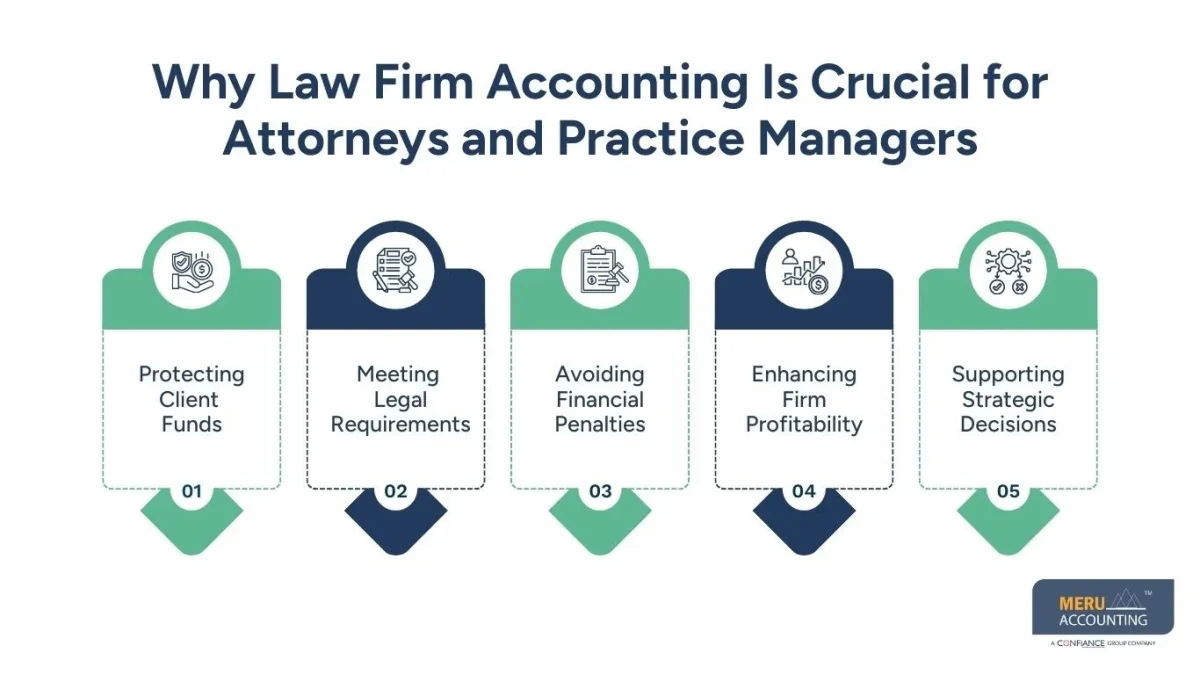
Enhancing Firm Profitability
Tracking expenses and revenues helps identify profitable areas and reduce unnecessary costs. This also allows firms to allocate resources more efficiently for growth and sustainability.
Supporting Strategic Decisions
Well-maintained accounts provide data for hiring, expansion, and investment decisions in the firm. Accurate financial insights help leaders make informed choices for long-term success.
Core Principles of Law Firm Accounting
Separation of Funds
Always maintain a clear distinction between client funds and firm funds to avoid ethical violations. This ensures that client money is never misused and keeps your firm compliant with legal standards.
Accurate Billing
Ensure that billing reflects the exact hours worked and costs incurred, supporting transparency with clients. Accurate invoices also help maintain client trust and reduce disputes over charges.
Regular Reconciliation
Reconcile bank statements, trust accounts, and internal records frequently to prevent discrepancies. Regular checks make it easier to spot errors early and maintain financial accuracy.
Proper Record Maintenance
Keep all financial documents, invoices, and receipts organized for audits and reporting purposes. Well-maintained records save time during reviews and protect your firm in case of disputes or investigations.
Compliance With Regulations
Follow state bar and IRS rules for reporting income, taxes, and client funds management. Adhering to regulations protects your firm from penalties and demonstrates professionalism and integrity.
What Are the Common Challenges in Law Firm Accounting?
Handling Trust Accounts
Managing client trust accounts incorrectly can result in serious legal consequences. Mistakes in these accounts can damage client trust and expose the firm to penalties or disciplinary action.
Tracking Billable Hours
Attorneys often struggle with accurate timekeeping, which affects invoicing and revenue. Inaccurate tracking can lead to lost income and disputes with clients over billing.
Complex Taxation Rules
Law firms face unique tax regulations that can be confusing without proper guidance. Understanding these rules is critical to avoid fines and ensure compliance with federal and state laws.
Managing Overhead Costs
Balancing office expenses, salaries, and operational costs is often a challenge. Poor cost management can reduce profitability and limit the firm’s ability to invest in growth.
Adapting to Accounting Software
Switching to modern law firm accounting solutions can take time and training for staff. However, once adopted, these tools improve efficiency, accuracy, and overall financial management.
How Can Law Firm Accounting Solutions Help Your Practice?
Automated Record-Keeping
Accounting solutions reduce manual entry and errors, making financial management easier. This allows attorneys and staff to focus more on client services rather than tedious bookkeeping tasks.
Real-Time Reporting
Access up-to-date financial data for informed decisions about your practice. Real-time insights help track cash flow, revenue trends, and expenses accurately.
Simplified Trust Accounting
Many solutions offer features to handle client trust accounts safely and efficiently. This ensures compliance with regulations while protecting client funds from accidental misuse.
Expense Tracking
Monitor operational expenses and identify areas where the firm can save money. Tracking costs closely also helps in budgeting and improving overall profitability.
Tax Preparation Support
Accounting solutions can generate reports that make filing taxes less stressful and more accurate. Proper reporting reduces errors and ensures your firm meets all tax obligations on time.
How to Plan and Report Finances in a Law Firm
Budgeting for the Firm
Set a clear budget covering salaries, rent, software subscriptions, and other operational costs. A well-planned budget helps the firm control expenses and allocate resources effectively.
Forecasting Revenue
Estimate future revenue based on client projects and historical trends. Accurate forecasting allows the firm to plan for growth, staffing, and investments confidently.
Monthly Financial Reporting
Generate monthly profit and loss statements to monitor performance and cash flow. Regular reporting highlights trends, identifies issues early, and supports strategic decision-making.
Expense Management
Keep a detailed record of firm expenses and categorize them for easier analysis. Proper expense management helps identify unnecessary costs and improve overall profitability.
Regular Review Meetings
Schedule meetings to review financial reports with attorneys and practice managers to make informed decisions. Collaborative reviews ensure everyone understands the firm’s financial health and priorities.
What Tax and Compliance Issues Do Law Firms Face?
Income Tax Obligations
Law firms must report all income accurately and pay taxes on profits in compliance with federal and state laws. Staying organized reduces errors and ensures timely payment.
Sales and Service Taxes
Some jurisdictions require law firms to track and pay service-related taxes. Proper tracking avoids penalties and ensures compliance with local regulations.
Trust Account Compliance
Bar associations mandate strict rules for maintaining client trust accounts. Following these rules protects clients and prevents disciplinary actions against the firm.
Payroll Taxes
Ensure proper calculation and payment of payroll taxes for employees. Accurate payroll management avoids fines and maintains employee trust and satisfaction.
Reporting Deadlines
Missing tax and compliance deadlines can result in penalties or audits. Keeping track of deadlines helps the firm remain compliant and avoid costly mistakes.
How Can New Attorneys and Practice Managers Implement Best Practices?
- Establish accounting policies that outline processes for billing, trust accounting, and expense tracking. Clear policies create consistency across the firm and help prevent mistakes.
- Adopt trusted law firm accounting solutions to reduce errors and streamline processes. Using the right tools ensures accurate financial records and simplifies daily accounting tasks.
- Keep all receipts, invoices, and financial statements organized for easy access. Well-maintained records make audits, reporting, and decision-making much easier for the firm.
- Ensure attorneys and staff understand accounting procedures and legal requirements. Ongoing training helps maintain compliance and strengthens the team’s financial skills.
- Review financial reports frequently to identify trends, issues, and opportunities for improvement. Regular monitoring allows for proactive adjustments to keep the firm financially healthy.
How Meru Accounting Support for Law Firms
Expertise in Law Firm Accounting
Meru Accounting specializes in law firm accounting, offering services tailored for attorneys and practice managers. Our team understands the unique financial challenges faced by legal practices and provides practical solutions.
Customized Accounting Solutions
We provide law firm accounting solutions that meet the unique needs of each practice. Each solution is designed to fit your firm’s size, structure, and specific financial requirements.
Trust Account Management
Meru Accounting ensures client funds are managed ethically and accurately. We help maintain compliance with bar association rules, giving clients and attorneys peace of mind.
Tax Compliance Assistance
Our team helps law firms meet federal, state, and local tax requirements without stress. We provide accurate reporting and timely filing to avoid penalties and ensure compliance.
Ongoing Support
From bookkeeping to reporting, we provide continuous support to ensure your practice runs smoothly. Our experts are available to guide you through challenges and improve overall financial management.
Key Takeaways
- Law firm accounting is essential for financial stability, ethical compliance, and informed decision-making.
- Understanding client funds, billing, and trust accounts is critical for new attorneys and practice managers.
- Using law firm accounting solutions can reduce errors, simplify reporting, and improve financial oversight.
- Regular monitoring, proper record-keeping, and compliance with tax and bar regulations are fundamental.
- Partnering with professional accounting services like Meru Accounting can save time and prevent costly mistakes.
FAQs
Law firm accounting tracks a law firm’s finances, including client funds, expenses, and income, helping ensure accuracy and compliance.
Client trust accounts must always be separate from firm accounts, with regular reconciliation and proper record-keeping.
Software like QuickBooks, Xero, or specialized law firm accounting solutions help manage billing, expenses, and trust accounts efficiently.
By maintaining clear records, using accounting software, and following consistent policies for billing and expenses.
Mixing client funds with firm money, missing reconciliations, inaccurate billing, and not following tax or bar regulations.


