




Managing client funds is one of the most critical responsibilities of any law firm. Law firm trust accounting ensures that client money is handled correctly, recorded accurately, and safeguarded from misuse.
For legal professionals, maintaining proper trust accounting is not just about compliance. It also helps build strong client trust and prevents serious financial and legal penalties.
In this blog, we will explore expert tactics for handling multiple client accounts efficiently and explain how QuickBooks law firm trust accounting can simplify this complex task. You will learn practical methods to organize client funds, reduce errors, and maintain accurate records.
This guidance is useful for both small and large law firms managing several trust accounts at the same time.
What You Will Learn From This Blog
- How law firm trust accounting works in practice. You will understand the key responsibilities involved in handling client funds.
- Why proper trust accounting is essential for lawyers. This knowledge helps avoid legal complications and maintain professionalism.
- Common challenges faced when managing multiple client accounts. Awareness of challenges allows firms to prepare effective solutions.
- Effective strategies for keeping client funds organized and accurate. These strategies save time and reduce accounting errors.
- How QuickBooks law firm trust accounting can make accounting simpler. You’ll see how automation can improve accuracy and efficiency.
What Is Law Firm Trust Accounting?
Law firm trust accounting refers to the process of managing money that belongs to clients and is held by a law firm for specific purposes. These funds must be recorded accurately and used only when authorized by the client.
Proper trust accounting ensures transparency and helps law firms meet their ethical and legal responsibilities. A trust account is kept separate from a law firm’s operating account, which is used for business expenses.
This separation prevents the accidental or improper use of client funds for firm-related costs. Keeping accounts separate is a core rule of trust accounting and is strictly enforced by regulatory bodies.
Law firms must closely oversee all client fund transactions to maintain accountability. Clear records of deposits, withdrawals, and balances help ensure accuracy and make it easier to respond to client inquiries.
Detailed documentation also supports internal reviews and financial checks. State bar associations require lawyers to follow specific trust accounting rules. These regulations are designed to protect client money and maintain professional standards.
Proper recording and reporting ensure that account balances match financial records, making audits smoother and reducing the risk of penalties.
Importance Of Proper Trust Accounting In Legal Practice
Protecting Client Funds
The primary goal of law firm trust accounting is to protect client money. Safeguarding these funds prevents misuse and builds credibility.
Maintaining Client Trust
Accurate law firm trust accounting shows clients that their money is handled responsibly. This trust is critical for long-term client relationships.
Legal Compliance
Failure to maintain correct trust accounts can result in fines or suspension. Staying compliant keeps your firm in good legal standing.
Efficient Financial Management
Proper law firm trust accounting helps law firms track payments and client reimbursements. It also ensures financial clarity across multiple accounts.
Simplifying Audits
Correct accounting ensures smooth audits. This saves time and reduces stress for the firm and its clients.
Common Challenges In Managing Multiple Client Accounts
High Volume of Transactions
Law firms often handle many clients, making it easy to confuse payments. Implementing QuickBooks law firm trust accounting can help manage large transaction volumes efficiently.
Maintaining Accurate Records
Recording every transaction correctly can be time-consuming. Mistakes can lead to serious compliance issues if unchecked.
Tracking Retainers
Managing retainers across different clients requires attention. Mismanagement can cause disputes or financial shortfalls.
Reconciliation Issues
Reconciling trust accounts with bank statements is challenging. Errors can occur if transactions are not monitored consistently.
Compliance with Rules
Each state may have unique trust accounting rules. Staying updated prevents violations and protects the firm’s reputation.
Limited Staff Training
Staff members may lack proper trust accounting knowledge. This increases the risk of errors and non-compliance.
Manual Processes and Errors
Manual tracking increases the chance of data entry mistakes. These errors can create reporting and reconciliation problems.
Expert Tactics For Managing Multiple Client Accounts Efficiently
Use Separate Accounts
Maintain separate trust accounts for each individual client. This prevents fund mix-ups and simplifies financial reporting. Separate accounts improve transparency and client fund accountability.
Implement Standard Procedures
Create clear procedures for deposits withdrawals and record keeping. Standard processes ensure consistency across the entire law firm. Written guidelines reduce confusion and support accurate execution.
Regular Account Reconciliation
Reconcile trust accounts regularly to identify errors early. Frequent reviews reduce overdrafts and unresolved discrepancies quickly. Timely reconciliation strengthens financial control and accuracy.
Maintain Detailed Records
Record every transaction with receipts approvals and clear descriptions. Detailed documentation supports audits and accurate client reporting. Complete records help resolve disputes and answer client questions.
Periodic Internal Audits
Conduct internal audits to review trust accounting compliance. Early reviews help correct issues before external examinations. Internal checks improve confidence in financial practices.
Use Trust Accounting Software
Use QuickBooks law firm trust accounting to manage multiple client trust accounts. Automation reduces manual errors, improves overall efficiency, and supports accurate tracking and reporting.
Assign Dedicated Responsibility
Assign specific staff members to oversee trust account activities. Clear ownership increases accountability and improves financial accuracy. Defined roles reduce errors and improve task consistency.
Provide Ongoing Staff Training
Train staff regularly on trust accounting rules updates. Ongoing education reduces mistakes and strengthens compliance efforts. Training ensures staff follow correct accounting procedures.
Review Client Balances Frequently
Review client trust balances frequently to avoid overdrafts. Regular monitoring ensures funds remain accurate and available. Frequent checks prevent negative balances and compliance issues.
Essential Principles Of Law Firm Trust Accounting
Segregation Of Funds
Client money should never be used for personal or firm expenses. Keeping accounts separate ensures clear tracking of all client funds. This practice protects both clients and the firm during audits.
Transparency
Clients should have clear visibility of all transactions in their accounts. Providing regular statements helps maintain trust and accountability. Transparent records reduce misunderstandings and prevent potential disputes.
Accuracy In Recording
Every deposit, withdrawal, and transaction should be logged correctly. Accurate entries prevent errors and reduce legal and financial risks. Consistent recording makes reconciliation and reporting easier for audits.
Compliance With Regulations
Follow all state rules and bar association requirements carefully. Understanding regulations reduces the risk of fines or disciplinary action. Regular checks ensure the firm stays compliant with trust accounting laws.
Timely Reporting
Generate trust account reports regularly to monitor client funds. Timely reporting ensures discrepancies are identified and corrected quickly. Frequent updates give clients confidence in the firm’s financial management.
How QuickBooks Simplifies Law Firm Trust Accounting
Automated Tracking
QuickBooks law firm trust accounting automates deposits, payments, and reconciliations. Automation reduces the risk of human error significantly. It also saves time by handling repetitive accounting tasks efficiently.
Client Account Separation
The software allows the creation of individual client accounts easily. This keeps each client’s funds organized and simple to manage. Separate accounts prevent mix-ups and improve overall financial transparency.
Real-Time Reporting
QuickBooks generates real-time financial statements for trust accounts. Lawyers can track balances and activity at any moment. Real-time reporting provides better oversight and supports quick decision-making.
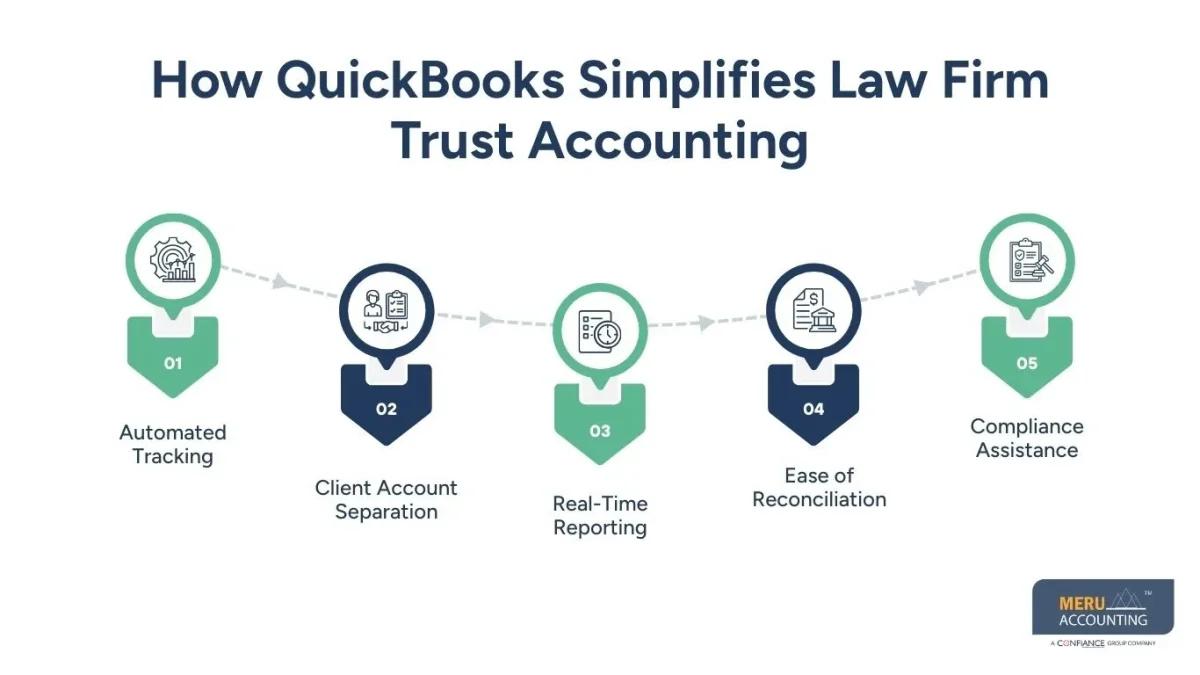
Ease of Reconciliation
Bank feeds and transaction matching simplify account reconciliations. This saves time and ensures accuracy across multiple client accounts. QuickBooks flags discrepancies, making corrections faster and easier.
Compliance Assistance
QuickBooks helps ensure all trust accounting rules are followed. This reduces the risk of legal penalties and compliance issues. It also simplifies audits by keeping records organized and up-to-date.
Advanced Strategies For Streamlined Trust Accounting
Batch Transaction Processing
Process similar transactions together to save time and effort. This reduces repetitive work and improves overall efficiency. Batch processing also minimizes the chance of data entry errors.
Custom Alerts
Set up notifications for unusual or suspicious transactions. Alerts help prevent errors, overdrafts, or potential compliance issues. Immediate notifications allow staff to act quickly and resolve problems.
Integration With Billing Systems
Link trust accounting with billing software for smooth updates. This ensures client invoices and payments are always accurate. Integration reduces manual work and keeps financial records consistent.
Periodic Client Statements
Send statements to clients regularly to show account activity. This keeps clients informed and builds trust in fund management. Regular updates also help identify discrepancies early and resolve them.
Staff Training
Ensure staff handling trust accounts are trained correctly and regularly. Proper training reduces mistakes and ensures compliance with regulations. Skilled staff can manage accounts more efficiently and confidently.
How Meru Accounting Helps Law Firms With Trust Accounting
Expert Accounting Services
Meru Accounting specializes in law firm trust accounting. Our team can manage multiple client accounts efficiently.
QuickBooks Implementation
We implement QuickBooks law firm trust accounting for accurate tracking. Our setup ensures smooth operations from day one.
Compliance Support
Our team ensures trust accounting practices meet regulatory requirements. This minimizes the risk of penalties for your firm.
Custom Solutions
We provide solutions based on your firm’s size and client volume. Each plan is tailored for maximum efficiency.
Ongoing Support
Meru Accounting offers continuous support to maintain up-to-date trust accounts. Our experts are available to resolve issues anytime.
Key Takeaways
- Law firm trust accounting is critical for protecting client funds and maintaining trust. Proper accounting strengthens client relationships.
- Managing multiple client accounts requires accurate record-keeping, reconciliation, and adherence to regulations.
- Using QuickBooks law firm trust accounting can simplify processes and reduce errors significantly.
- Expert guidance from Meru Accounting ensures compliance and efficient financial management for any firm.
- Regular audits, staff training, and automated software solutions help maintain accuracy and transparency.
FAQs
Law firm trust accounting manages client funds separately from the firm’s money. It protects client funds and ensures legal compliance.
Use separate accounts, record every transaction, and reconcile regularly. Software like QuickBooks law firm trust accounting can simplify this.
Yes, QuickBooks law firm trust accounting tracks deposits, withdrawals, and balances. It also helps generate reports and maintain compliance.
Mixing client and firm funds, missing transactions, and late reconciliations. These can cause compliance issues and penalties.
Trust accounts should be reconciled at least monthly. Frequent reconciliation ensures accuracy and prevents errors or fund mismanagement.


