



Accurate manufacturing accounting services are essential for any business aiming to maintain profitability and operational efficiency. Manufacturing companies deal with multiple cost factors, including raw materials, labor, overheads, and logistics, making precise financial tracking crucial.
Without clear accounting records, businesses risk overpaying suppliers, mismanaging budgets, and losing negotiation power. Proper accounting not only tracks expenses but also provides actionable insights into cost-saving opportunities. It enables manufacturers to evaluate supplier performance, plan bulk purchases strategically, and maintain transparent financial records.
With accurate manufacturing accounting services, businesses can make informed decisions, improve supplier relationships, and gain a competitive edge in procurement negotiations.
What You Will Learn From This Blog
- The meaning and importance of manufacturing accounting services.
- How accounting accuracy influences supplier negotiations.
- The connection between Manufacturing Outsourcing and financial precision.
- Strategies to improve accounting processes for stronger supplier relationships.
- How expert services, like those from Meru Accounting, help manufacturers succeed.
By understanding these elements, companies can improve profitability and maintain healthy supplier relationships.
Understanding Manufacturing Accounting Services
Manufacturing accounting services play a crucial role in managing all financial activities within a production environment. They cover cost allocation, inventory tracking, and expense monitoring to ensure that businesses have a clear view of where every dollar is spent. By maintaining accurate records, manufacturers can avoid unexpected losses and make informed financial decisions.
A key part of these services is cost tracking. Manufacturing involves multiple expenses, such as raw materials, labor, and overheads.
Accurate accounting captures all these costs in detail, helping companies understand their true production expenses and manage budgets effectively. This level of precision is vital for controlling spending and preparing for supplier negotiations.
Inventory management is another critical aspect. Proper accounting ensures that inventory levels are monitored closely, reducing the risk of shortages or overstock situations.
Accurate inventory data gives businesses the information they need to order the right quantities, negotiate better deals, and optimize supply chain operations.
Compliance and reporting are also central to manufacturing accounting services. Businesses must adhere to tax rules and industry standards, and accurate records help prevent fines and maintain credibility with suppliers.
Additionally, organized accounting provides valuable insights for decision-making, from evaluating supplier contracts to planning bulk purchases. Transparent financial reporting builds trust, making supplier negotiations more effective and beneficial.
The Role of Manufacturing Accounting Services in Business Success
Profit Optimization
Accurate manufacturing accounting services identify profitable and unprofitable production lines, as well as opportunities for manufacturing outsourcing to improve margins.
Businesses can then focus on suppliers offering the best value. This allows manufacturers to allocate resources efficiently and maximize overall profitability.
Expense Monitoring
Regular reviews of expenses allow manufacturers to spot inefficiencies and reduce waste. Correct accounting data supports cost-cutting during supplier negotiations, ensuring every purchase aligns with financial goals.
Budget Planning
With detailed accounting, companies can create realistic budgets based on actual costs and forecasts. Suppliers respond better to businesses with clear financial plans, improving negotiation outcomes and payment terms.
Risk Management
Manufacturing accounting services detect potential financial risks, such as overspending on materials or unexpected supplier price hikes. Identifying risks early helps businesses take preventive measures and maintain stable operations.
Performance Evaluation
Accounting services evaluate the efficiency of production and procurement processes. This insight strengthens negotiating positions with suppliers and highlights areas where operational improvements can reduce costs.
Strategic Growth
Accurate accounting provides data to plan expansions and outsourcing decisions. Companies can negotiate long-term contracts with suppliers confidently while avoiding overcommitment or financial strain.
Key Components of Effective Manufacturing Accounting Services
Cost Accounting
Cost accounting breaks down production expenses into materials, labor, and overhead. It provides a clear picture of the cost structure. Accurate cost accounting helps businesses identify areas to reduce spending and improve profitability.
Job Order Accounting
Tracking costs for individual production batches allows businesses to identify supplier cost impacts accurately. This also helps in evaluating the efficiency of each production run.
Inventory Valuation
Proper inventory accounting ensures stock is valued correctly. This helps in setting fair purchasing prices with suppliers and prevents overstock or stockouts.
Financial Reporting
Detailed reports give insights into spending patterns, margins, and cash flows. Regular reporting supports informed decision-making and strengthens supplier negotiations.
Accounts Payable and Receivable
Managing payments and receipts ensures timely transactions with suppliers and prevents disputes. It also helps maintain positive relationships and secure better payment terms.
Auditing and Reconciliation
Regular auditing of accounts ensures errors are caught early, preventing supplier conflicts. Reconciliation also guarantees that financial statements accurately reflect the company’s financial position.
How Manufacturing Accounting Services Impact Supplier Negotiations
Understanding True Costs
Accurate manufacturing accounting services reveal the real cost of production. This information allows manufacturers to request fairer prices from suppliers. Knowing true costs also helps prevent overpaying and ensures profitability on every order.
Negotiating Payment Terms
With clear financial data, companies can negotiate favorable payment schedules or discounts with suppliers. Transparent records make suppliers more willing to offer flexible terms.
Reducing Overhead Costs
Proper cost analysis identifies areas for savings. Suppliers appreciate businesses that understand and manage expenses. Reducing overhead also increases bargaining power during negotiations.
Volume and Bulk Purchase Decisions
Accounting reports help determine which materials can be ordered in bulk, giving leverage in supplier negotiations. Accurate data ensures the company does not overstock or face unnecessary storage costs.
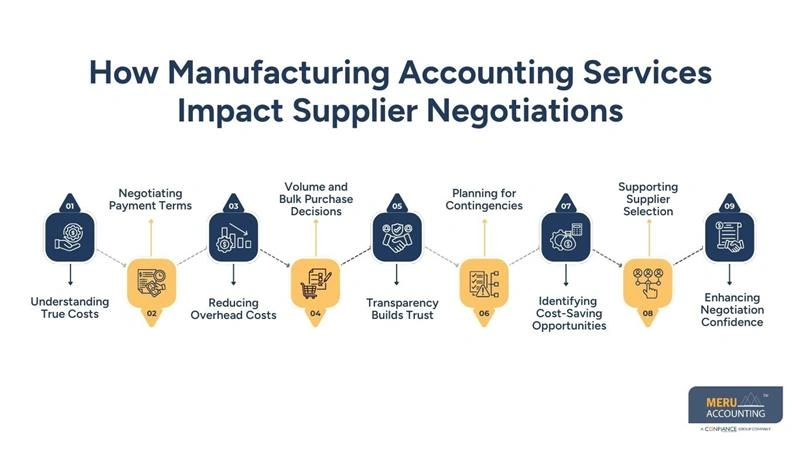
Transparency Builds Trust
Suppliers prefer partners with clear and reliable financial reporting, which improves negotiation outcomes. Trust strengthens long-term relationships and opens doors to better pricing agreements.
Planning for Contingencies
Accounting insights allow manufacturers to negotiate flexible contracts, including those involving manufacturing outsourcing, protecting both parties in fluctuating markets. Preparedness ensures smooth operations even when supplier prices or availability change unexpectedly.
Identifying Cost-Saving Opportunities
Detailed accounting highlights inefficiencies in production and procurement. Suppliers are more likely to offer discounts when they see proactive cost management.
Supporting Supplier Selection
Financial records help evaluate multiple suppliers based on pricing, reliability, and performance. This ensures manufacturers choose partners offering the best value for their business.
Enhancing Negotiation Confidence
With accurate accounting, manufacturers approach supplier discussions with solid data. Confidence backed by numbers often leads to stronger deals and long-term agreements.
The Connection Between Manufacturing Outsourcing and Accounting Accuracy
Cost Control in Outsourcing
Manufacturing Outsourcing can reduce production costs but requires precise accounting to track outsourced expenses. Proper tracking ensures that savings from outsourcing are realized and not lost due to hidden costs.
Supplier Evaluation
Accounting data helps assess which outsourcing partners provide the best value for money. Detailed records also highlight supplier reliability and consistency in delivery.
Contract Management
Accurate records ensure outsourced agreements are honored, preventing cost overruns. This helps maintain transparency and accountability in supplier relationships.
Performance Metrics
Manufacturing Outsourcing performance can be measured using accounting data, helping negotiate better supplier terms. Metrics also allow businesses to compare actual costs against projections.
Risk Assessment
Outsourcing introduces financial risk; accurate accounting minimizes surprises during supplier interactions. Early detection of cost deviations helps manufacturers mitigate potential losses.
Strategic Sourcing Decisions
Accounting information guides decisions on which parts of production to outsource and which suppliers to prioritize. Clear financial data ensures that outsourcing aligns with the overall business strategy.
Common Challenges in Manufacturing Accounting Services
Complex Cost Structures
Manufacturers often deal with multiple raw materials and overheads, making accounting complex. Without proper systems, it becomes difficult to track each cost accurately.
Data Accuracy
Errors in recording costs can lead to incorrect supplier negotiations. Inaccurate data may also result in financial losses and misinformed business decisions.
Inventory Discrepancies
Inaccurate inventory tracking may cause overspending or shortages. This can disrupt production schedules and weaken supplier relationships.
Compliance Issues
Failing to meet tax or regulatory standards can affect supplier trust. Non-compliance may also result in fines or legal complications for the business.
Technology Integration
Integrating accounting software with production systems can be challenging without expertise. Misaligned systems can lead to incomplete or inconsistent financial data.
Outsourcing Tracking
Monitoring outsourced production costs requires detailed accounting processes. Without proper tracking, businesses may overpay suppliers or mismanage outsourced operations.
Strategies to Enhance Accounting Accuracy for Better Supplier Deals
Use Specialized Accounting Software
Implement software tailored for manufacturing accounting services. This ensures accurate tracking of costs and inventory. Using the right tools also streamlines reporting and reduces human errors.
Regular Audits
Frequent account audits help detect errors before they impact supplier negotiations. Audits also improve financial transparency and strengthen supplier trust.
Staff Training
Training teams on best accounting practices ensures precision in cost recording. Well-trained staff can identify discrepancies early and maintain accurate financial data.
Integrate Outsourcing Costs
Include Manufacturing Outsourcing expenses in accounting systems to maintain clear financial visibility. This allows businesses to compare outsourced costs with in-house production effectively.
Standardize Reporting
Consistent reporting formats help analyze supplier costs quickly and negotiate effectively. Standardization also makes it easier to share information with stakeholders and suppliers.
Continuous Monitoring
Regular monitoring of production expenses ensures timely and accurate supplier interactions. Continuous oversight helps businesses adapt quickly to cost changes and avoid financial surprises.
How Meru Accounting Supports Manufacturers
Expert Accounting Team
Meru Accounting has experienced professionals specializing in manufacturing accounting services. Our experts ensure every transaction is recorded accurately for better financial clarity.
Custom Solutions
We tailor services to match each manufacturer’s specific cost structure and outsourcing model. Personalized solutions help optimize accounting processes and improve supplier negotiations.
Accurate Supplier Reporting
Our services ensure all financial data is precise, helping businesses negotiate better with suppliers. Accurate reporting also allows manufacturers to make data-driven procurement decisions.
Outsourcing Integration
We help incorporate Manufacturing Outsourcing expenses into accounts for a complete financial picture. This ensures outsourced costs are tracked and managed efficiently alongside in-house production.
Compliance Assurance
Meru Accounting ensures all accounting practices meet local tax regulations and reporting standards. Compliance reduces legal risks and strengthens trust with suppliers and stakeholders.
Strategic Support
We provide actionable insights from accounting data to enhance business and supplier relationships. These insights help manufacturers plan growth, manage costs, and secure favorable supplier agreements.
Key Takeaways
- Accurate manufacturing accounting services are essential for supplier negotiations.
- Financial transparency builds trust and strengthens negotiating positions.
- Manufacturing Outsourcing requires careful tracking to control costs and manage supplier contracts.
- Regular auditing and accurate reporting prevent errors that may affect negotiations.
- Partnering with expert accounting firms like Meru Accounting ensures reliable data and better supplier outcomes.
FAQs
They provide accurate cost and inventory data, helping manufacturers negotiate fair prices.
Precise accounting ensures correct production costs and avoids losses during supplier deals.
Outsourced production costs must be tracked properly to negotiate better supplier agreements.
Businesses gain cost transparency, improve budgeting, and strengthen supplier relationships.
Yes, clear financial data from accounting services allows informed and stronger negotiations.


