



Outsourced tax preparation has become a trusted solution for CPA firms aiming to improve efficiency, reduce workload, and deliver better client services. By outsourcing tax preparation, accounting practices can focus on strategic financial advice while experts handle detailed tax work.
This approach allows firms to manage seasonal workload spikes without hiring temporary staff and ensures clients’ taxes are handled accurately and on time. Additionally, outsourced tax preparation provides access to specialized expertise, helping CPA firms stay compliant with ever-changing tax laws and regulations.
In this blog, we explain how outsourced tax preparation works for CPA firms and why it’s a valuable tool for modern accounting practices.
What You Will Learn From This Blog
- Learn what outsourced tax preparation is and how it differs from in-house tax processing.
- Understand the key advantages CPA firms gain by outsourcing tax preparation.
- Get a clear idea of how outsourcing tax preparation works, from document collection to filing.
- Know the important factors to consider when selecting a service provider for outsourcing tax preparation.
- Gain insights on pricing, risk management, and regulatory compliance related to outsourced tax preparation.
What Is Outsourced Tax Preparation And Why CPA Firms Use It
Outsourced tax preparation refers to hiring external experts to handle tax filings, returns, and related tasks for a CPA firm’s clients. CPA firms often face heavy workloads during tax season, and outsourcing tax preparation helps distribute this work more effectively.
By relying on specialized teams, firms gain access to professionals with experience across various industries, ensuring accurate tax filing and strict adherence to regulations.
This approach also minimizes errors by using trained staff and advanced tools, allowing CPA firms to deliver high-quality services to their clients consistently.
In addition to improving accuracy and efficiency, outsourced tax preparation helps CPA firms meet deadlines with ease. With the extra support, all client taxes can be prepared and submitted on time, reducing stress for internal staff.
Outsourcing also supports firm growth by enabling CPA firms to take on more clients without overloading their existing team. This combination of expertise, efficiency, and scalability makes outsourced tax preparation a valuable strategy for modern accounting practices.
How Outsourcing Tax Preparation Helps CPA Firms Streamline Operations
Centralizing Tax Tasks
Outsourcing tax preparation allows firms to centralize all complex tax tasks. A dedicated external team ensures accuracy and efficiency in tax processing.
Reducing Administrative Burden
Internal teams can focus entirely on client consulting and advisory services. Manual tax data entry is handled by the outsourced professional team.
Enhancing Workflow Management
Outsourcing provides structured processes that improve overall workflow efficiency. Teams follow consistent procedures to ensure smooth tax preparation operations.
Optimizing Staff Utilization
Internal accountants can focus more on high-value client financial tasks. Repetitive and time-consuming tax work is handled externally with expertise.
Maintaining Quality Control
Service providers follow strict checks to ensure accurate tax returns. Fewer revisions are required due to careful review of every filing.
Increasing Client Satisfaction
Faster and error-free tax filing helps firms maintain strong client trust. Clients appreciate timely submissions and well-organized, professional tax services.
Step-By-Step Process Of Outsourced Tax Preparation For CPA Firms
Initial Client Document Collection
Clients provide financial records, previous returns, and income statements promptly. Accurate documentation ensures a smooth and efficient outsourced tax preparation process.
Secure Data Transfer
Outsourced providers guarantee safe and encrypted transmission of client information. Secure transfer protects sensitive data from unauthorized access or potential breaches.
Review And Verification
The external team carefully reviews documents for accuracy and completeness. They identify missing items and confirm that all client information is correct.
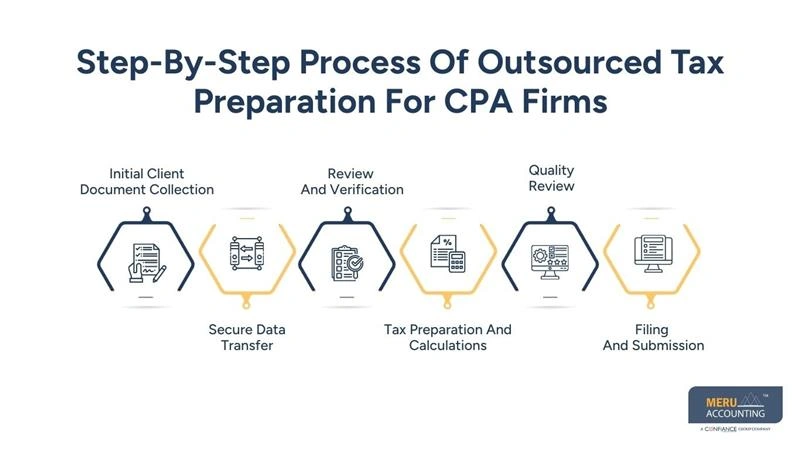
Tax Preparation And Calculations
Experts handle calculations, deductions, and credits for every client return. Each return is prepared efficiently according to current tax laws and regulations.
Quality Review
All prepared returns undergo thorough internal checks before submission deadlines. This ensures compliance with tax regulations and reduces potential filing errors.
Filing And Submission
Returns are filed electronically or manually, depending on client requirements. Timely submission ensures clients meet all federal and state filing deadlines.
Key Benefits Of Outsourced Tax Preparation For Accounting Practices
- Outsourcing tax preparation reduces hours spent on repetitive and time-consuming tax tasks.
- Firms save costs by avoiding hiring full-time staff for seasonal workloads.
- CPA firms gain access to experienced professionals handling complex tax filings.
- Skilled teams help minimize mistakes and improve overall tax return accuracy.
- Outsourced tax preparation helps firms manage fluctuating workloads during busy seasons.
- Internal accountants can spend more time providing valuable financial advisory services.
Common Services Covered Under Outsourced Tax Preparation
Individual Tax Returns
Professionals prepare personal tax returns accurately for individual clients. Common forms include 1040, 1041, and other required tax documents.
Business Tax Returns
Experts prepare business tax returns for corporations and partnerships as part of outsourcing tax preparation services. Common filings include forms 1120, 1120-S, and 1065.
State Tax Filing
Service providers manage state tax filings for multi-state business clients. Accurate reporting ensures compliance with different state tax regulations.
Tax Planning Support
Professionals suggest deductions, credits, and strategies to reduce tax liability. Proper planning helps clients manage taxes and improve financial outcomes.
Audit Support
Outsourced teams assist CPA firms during audits with proper documentation. Detailed records help explain filings and resolve audit queries quickly.
Amended Returns
Experts prepare amended returns to correct previously filed tax information. This process ensures accurate reporting and compliance with updated records.
Cost Considerations When Implementing Outsourced Tax Preparation
Pricing Models
Providers offer pricing models such as flat fees and hourly rates. Some providers charge per return depending on complexity and workload.
Seasonal Workload Adjustments
Costs for outsourcing tax preparation may increase during peak tax season due to a higher workload. Firms should plan budgets according to expected seasonal tax return volumes.
Value Over Cost
Focus on service quality and accuracy rather than choosing the lowest price. Reliable providers help reduce errors and improve overall tax preparation outcomes.
Hidden Fees
Always review agreements carefully to identify possible additional service charges. Extra fees may apply for amendments, urgent work, or audit support.
Long-Term Savings
Outsourcing may reduce expenses compared to hiring additional full-time staff. Firms also save operational costs related to training and employee benefits.
ROI Assessment
CPA firms should evaluate benefits like saved time and improved accuracy. Better efficiency and fewer errors help increase overall return on investment.
Risks And Compliance Considerations In Outsourced Tax Preparation
Data Security Risks
Sensitive client information must be protected using strong encryption systems. Secure platforms help prevent unauthorized access to confidential financial data.
Regulatory Compliance
Providers must follow IRS regulations and applicable state tax laws carefully. Compliance helps CPA firms avoid penalties and maintain accurate tax filings.
Confidentiality Agreements
Legal agreements protect confidential client data and intellectual property rights. Such agreements ensure providers maintain strict privacy and professional responsibility.
Quality Assurance
CPA firms should apply quality checks during outsourced tax preparation process. Regular reviews help reduce errors and maintain strong client trust.
Communication Gaps
Clear communication channels help prevent confusion during tax preparation tasks. Defined processes ensure proper handling of documents and important deadlines.
Backup And Contingency Plans
Providers should maintain backup systems to prevent operational disruptions. Contingency plans help manage unexpected system failures or technical issues.
Case Studies: CPA Firms Successfully Using Outsourced Tax Preparation
A small CPA firm serving individual and small business clients struggled with heavy workloads during tax season due to limited staff. After adopting outsourced tax preparation, routine tax filings and documentation were handled by external professionals, allowing the internal team to focus on client communication and advisory services. This change helped the firm manage more clients efficiently, complete returns faster, and improve overall client satisfaction.
A mid-sized CPA firm managing multi-state clients faced challenges with complex tax compliance and large volumes of returns. By using outsourced tax preparation, the firm gained access to professionals experienced in multi-state regulations and accurate tax documentation. The external support reduced preparation errors, saved significant working hours during tax season, and helped the firm respond effectively to client audit requirements.
Why Choose Meru Accounting For Outsourcing Tax Preparation
- Meru Accounting has a team of certified tax experts with strong experience in supporting CPA firms and handling complex tax preparation tasks.
- Our professionals manage federal and state tax filings and also assist with international taxation requirements for clients.
- Meru Accounting offers cost-effective outsourced tax preparation services that help firms reduce operational overheads.
- Our team works efficiently with major accounting and tax software platforms to ensure smooth and accurate processing.
- We maintain strict confidentiality standards and secure systems to protect sensitive client financial information.
- Meru Accounting provides responsive support throughout the tax preparation and filing process for CPA firms.
Key Takeaways
- Outsourced tax preparation is a practical solution for CPA firms facing heavy workloads.
- It provides access to tax experts, reduces errors, and ensures timely filing.
- CPA firms can focus on advisory services while external teams handle detailed tax work.
- Choosing the right partner is crucial for quality, compliance, and data security.
- Meru Accounting offers reliable, affordable, and secure outsourced tax preparation services.
FAQs
Outsourced tax preparation means hiring external experts to prepare tax returns for a CPA firm’s clients.
It saves time, reduces errors, lowers costs, and allows internal staff to focus on advisory work.
Services include individual and business tax returns, state filings, tax planning, audit support, and amended returns.
Check their experience, compliance standards, security measures, client references, and technology integration.
Yes, if the provider uses encryption, secure systems, and confidentiality agreements to protect client data.


