


Managing taxes is one of the most demanding parts of running an accounting firm. Deadlines come fast, rules change often, and the workload can rise sharply during busy seasons. Many firms feel pressure to keep up while also maintaining accuracy and client trust. This is where outsourcing tax return preparation becomes a practical option.
Instead of handling every task in house, firms can share part of their tax work with skilled external teams. This approach is not just about saving time. It is about improving workflow, reducing stress, and making space for higher value services. Over time, many firms realize that outsourcing tax return preparation is not a temporary fix, but a long term strategy.
In this blog, we will explore how outsourcing tax return preparation actually works for firms. We will also look at its benefits, possible challenges, and how firms can make the most of tax outsourcing in a simple and effective way.
What You Will Learn From This Blog
- Understand the basics of outsourcing tax return preparation and how it fits into modern firms.
- Learn how tax outsourcing helps manage workload during busy tax seasons.
- Explore the step by step process of outsourcing tax return preparation in a simple way.
- Discover how data is shared, handled, and protected in the process.
- Identify the key benefits of outsourcing tax return preparation for firms.
- Recognize common challenges and risks involved in tax outsourcing.
- Learn how firms maintain control and quality while outsourcing tax return preparation.
Along with that, you will discover the key benefits of outsourcing tax return preparation, including cost savings and improved accuracy.
What Is Tax Outsourcing?
Tax outsourcing is the process of giving tax related tasks to an outside service firm instead of handling them fully within your firm. These tasks can include making tax returns, checking documents, and ensuring use of tax laws.
When firms choose outsourcing tax return preparation, they often work with professionals who focus on tax work. These experts follow clear methods and use modern tools to give correct results. This allows firms to keep quality while reducing internal workload.
Tax outsourcing does not mean losing control. Firms still review the final output and stay involved in decision making. It simply means sharing the workload with a trusted partner who can handle routine and time taking tasks well.
How Outsourcing Tax Return Preparation Actually Works for Firms
Understanding how outsourcing tax return preparation works can make the process feel much more easy. It often follows a clear and simple flow.
Initial Planning and Requirement Discussion
The process starts with a discussion between the firm and the outsourcing team. The firm explains its needs, types of clients, and expected workload. This helps the team understand the scope of outsourcing tax return preparation.
Clear communication at this stage is very important. It ensures that both sides agree on timelines, data formats, and quality needs. This forms the base of a smooth workflow.
Data Collection and Sharing
Once the plan is set, the firm gathers client data such as financial records, income details, and supporting documents. This data is then shared safely with the outsourcing team.
Most teams use safe systems to protect sensitive data. This step is a key part of outsourcing tax return preparation, as correct data leads to correct tax returns.
Tax Return Preparation
After receiving the data, the outsourcing team starts making the tax returns. They follow tax rules and use simple software to finish the work well.
This is the core stage of the process. Skilled professionals handle calculations, apply deductions, and ensure use of rules. Their experience helps reduce errors and improve consistency.
Review and Quality Check
Once the returns are made, they go through a review process. The outsourcing team checks for errors and ensures all details are correct.
After this, the work is sent back to the firm for final review. This step ensures that outsourcing tax return preparation does not reduce control. The firm still has the final say before submission.
Final Submission and Client Delivery
After approval, the firm submits the tax returns to the authorities and shares them with clients. The outsourcing team may help with final changes if needed.
This full cycle shows how the process works in a simple and clear way. It allows firms to handle large volumes of work without feeling overwhelmed.
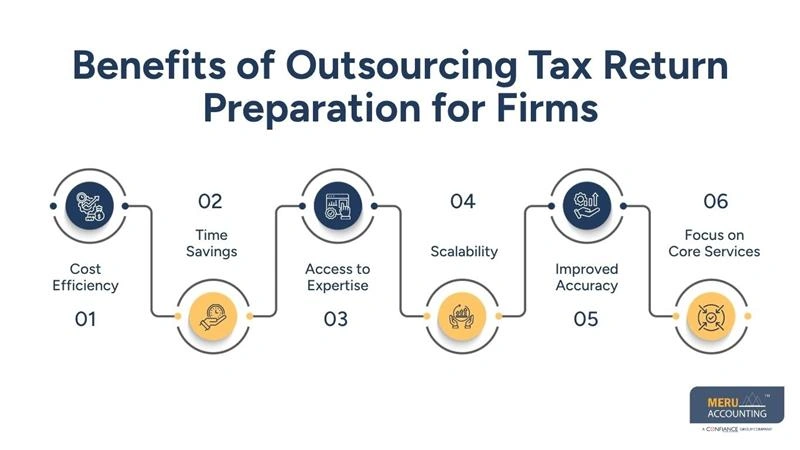
Benefits of Outsourcing Tax Return Preparation for Firms
This approach offers many advantages that go beyond basic support.
Cost Efficiency
Hiring and training staff can be expensive. With this approach, firms can access skilled professionals without long term costs. This makes it a cost effective solution. It also helps firms manage their budgets more efficiently without compromising on quality.
Time Savings
Tax work often requires long hours, especially during peak season. Outsourcing tax return preparation helps firms save time and focus on important tasks like client relationships. This allows teams to work more productively without feeling overburdened.
Access to Expertise
Outsourcing providers have teams with strong knowledge of tax laws. This ensures that returns are prepared correctly and follow current regulations. This approach gives firms access to this expertise without hiring full time specialists. It also keeps firms updated with changing tax rules and practices.
Scalability
Workload can change throughout the year. Outsourcing tax return preparation allows firms to scale up or down based on demand. This flexibility is very helpful during busy periods. It ensures that firms can handle peak workloads without delays or pressure.
Improved Accuracy
Experienced professionals and proper review systems help reduce errors. This improves the quality of work and builds client trust. This method can lead to more reliable results over time. It also reduces the risk of penalties caused by incorrect filings.
Focus on Core Services
When routine tax tasks are handled externally, firms can focus on advisory services and business growth. This approach helps firms move beyond basic compliance work. It gives more time to build stronger client relationships and expand service offerings.
Challenges and Risks in Tax Outsourcing
While outsourcing tax return preparation has many benefits, it also comes with certain challenges.
Data Security Concerns
Sharing financial data with an external provider can raise concerns. Firms must ensure that the outsourcing partner uses secure systems. Strong data protection practices are essential in this approach. Regular security audits and compliance checks can further reduce potential risks.
Communication Gaps
Working with external teams may sometimes lead to delays or misunderstandings. Clear communication and regular updates are important to avoid issues in this process. Setting defined communication channels and timelines can help improve coordination.
Quality Control
If the provider does not maintain proper standards, the quality of work may suffer. Firms should always review the output carefully. A strong review process helps maintain quality in this approach. Clear guidelines and performance benchmarks can also support consistent results.
Dependency on External Teams
Relying too much on an outsourcing partner can be risky. Firms should maintain some internal knowledge to stay in control. Outsourcing tax return preparation should support the firm, not replace its expertise. Keeping a balanced approach helps ensure long term stability.
Compliance Risks
Different regions may have different tax rules. The outsourcing provider must understand the relevant laws. Firms should choose partners with proper knowledge and experience. Regular updates on legal changes can help avoid compliance issues.
Why Choose Meru Accounting’s Outsourcing Tax Return Preparation Services
At Meru Accounting, we understand the real challenges firms face during tax season. Our outsourcing tax return preparation services are designed to make your work easier while maintaining high standards.
Experienced Tax Professionals
Our team has deep knowledge of tax processes and compliance requirements. We handle different types of tax returns with care and accuracy. This ensures reliable results in every case. Our professionals stay updated with changing tax rules to provide consistent support.
Secure Data Handling
We use secure systems to protect your client information. Data safety is a key part of this approach. You can trust us to manage sensitive information responsibly. We follow strict security protocols to maintain confidentiality at every step.
Flexible Support
Our services are designed to match your needs. Whether you have a small workload or a large volume, we can adjust accordingly. This flexibility makes our support more practical. It also allows your firm to manage workload changes without stress.
Timely Delivery
We understand the importance of deadlines. Our team works efficiently to deliver tax returns on time. This helps your firm maintain a strong reputation. Consistent delivery also improves client satisfaction and trust.
Quality Assurance
Every tax return goes through a proper review process. This ensures accuracy and reduces the chances of errors. Our focus on quality makes our services more dependable. We maintain strict quality checks to ensure reliable outcomes every time.
Key Takeaways
- Outsourcing tax return preparation helps firms handle large workloads more efficiently.
- Tax outsourcing allows firms to save time and reduce internal pressure during peak seasons.
- The process of outsourcing tax return preparation follows a clear and structured workflow.
- Firms can maintain full control by reviewing all work before final submission.
- Outsourcing tax return preparation improves accuracy through expert support and review systems.
- This approach provides flexibility to scale services based on workload needs.
- Data security and clear communication are important for successful implementation.
By choosing the right partner and maintaining clear processes, firms can use this solution as a strong tool for growth and efficiency.
FAQs
It means hiring an external provider to handle tax return tasks instead of doing them in house. It helps firms save time and improve efficiency.
Yes, this approach can be safe if the provider uses secure systems and follows strong data protection practices. Firms should always verify security measures before sharing data.
Firms maintain control by reviewing all prepared tax returns before submission. This process supports the workflow but does not replace final approval.
Yes, small firms can benefit greatly from this approach. It helps them manage workload without hiring additional staff and allows them to focus on growth.
Firms should look for experience, data security, clear communication, and quality assurance. These factors ensure successful implementation.


