




Real estate and accounting play a major role in managing finances for property owners, investors, and real estate businesses. When financial records are clear and accurate, it becomes easier to understand profits, control costs, and plan for growth.
Many businesses struggle when they do not pay enough attention to accounting practices related to property transactions.
In the modern business environment, real estate and accounting are closely connected. From tracking rental income to managing property expenses, proper accounting ensures that every financial activity is recorded and analyzed. This helps businesses make better decisions and avoid financial mistakes.
What You Will Learn From This Blog
- Understanding the basics of real estate and accounting
- Importance of financial management in property businesses
- How real estate in accounting impacts cash flow
- Key components of real estate accounting
- Ways to track income and expenses effectively
- Role of bookkeeping in real estate businesses
- Impact of depreciation on financial records
- Importance of tax planning and compliance
- How financial reports support better decisions
What Is Real Estate and Accounting? An Overview for Businesses
Real estate and accounting refer to the process of recording, managing, and analyzing all financial transactions related to property. This includes activities such as buying, selling, renting, and maintaining properties.
In business operations, real estate and accounting cover important tasks like tracking income, managing expenses, and preparing financial reports, which help maintain clear and organized financial data.
For investors, real estate in accounting plays a key role in measuring returns and managing risks. It allows them to evaluate whether a property investment is profitable and worth continuing.
At the same time, property owners depend on real estate and accounting to monitor rental income, maintenance costs, and taxes, ensuring better financial control and planning.
In commercial settings, real estate in accounting is used to manage lease agreements, operating expenses, and tenant income efficiently.
This structured approach helps businesses maintain accuracy in financial records and supports better decision-making related to property management.
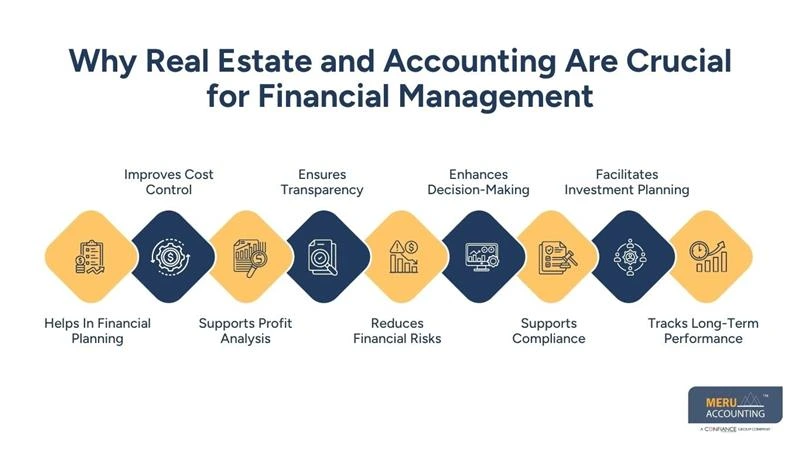
Why Real Estate and Accounting Are Crucial for Financial Management
Helps In Financial Planning
Real estate and accounting provide accurate financial data, which helps businesses plan their budgets and future investments. Clear financial records make it easier to set realistic growth goals.
Improves Cost Control
By using real estate and accounting, businesses can monitor expenses and reduce unnecessary costs. Regular tracking allows companies to identify areas where spending can be optimized.
Supports Profit Analysis
With proper records, real estate in accounting helps businesses understand which properties are generating profit. This analysis aids in deciding where to invest or divest.
Ensures Transparency
Financial clarity is improved through real estate accounting, making it easier to track every transaction. Transparent records also build trust with investors and stakeholders.
Reduces Financial Risks
Accurate accounting reduces the chances of errors, which can lead to financial losses. Consistent monitoring helps prevent mistakes and unforeseen financial issues.
Enhances Decision-Making
Real estate and accounting provide insights into property performance, helping managers make informed decisions. Timely data allows for quick adjustments to strategies.
Supports Compliance
Proper accounting ensures adherence to tax laws and legal regulations. This reduces the risk of penalties and legal complications.
Facilitates Investment Planning
Real estate in accounting helps forecast returns on new property investments. It provides the financial clarity needed to make profitable long-term decisions.
Tracks Long-Term Performance
By keeping detailed records, businesses can monitor property performance over time. This helps in evaluating trends and planning for future growth.
How Real Estate in Accounting Affects Cash Flow Planning
Tracks Rental Income
Real estate in accounting helps record rental income regularly, ensuring steady and predictable cash inflow tracking. This consistent tracking allows businesses to plan for operational expenses without surprises.
Monitors Operating Expenses
It tracks all expenses, including maintenance, utilities, and property management fees, which helps in managing outgoing cash more efficiently. Clear expense monitoring prevents overspending and keeps operations smooth.
Improves Cash Flow Forecasting
With real estate and accounting, businesses can predict future cash needs more accurately and plan for upcoming payments. Forecasting also helps prepare for unexpected costs and seasonal fluctuations in income.
Identifies Payment Delays
Delayed payments from tenants can be tracked using real estate in accounting, allowing businesses to take prompt action. This reduces the risk of prolonged cash flow shortages and missed opportunities.
Supports Liquidity Management
Proper financial records ensure that businesses always have enough funds for operational and emergency requirements. Liquidity management enables timely investments and payment of obligations without stress.
What Are the Key Financial Components in Real Estate Accounting?
Revenue Tracking
Real Estate Accounting involves recording rental income, lease payments, property sales, and other revenue sources accurately. Clear revenue tracking allows businesses to assess profitability and plan for future investments.
Expense Management
Expenses, such as repairs, property taxes, insurance, and utilities, are recorded under real estate in accounting to maintain a clear view of operational costs. This helps businesses identify areas to reduce unnecessary spending.
Asset Valuation
Property values are monitored to understand the business’s total worth and financial position over time. Accurate asset valuation supports strategic decisions like selling, upgrading, or investing in new properties.
Liability Recording
Loans, mortgages, and other financial obligations are recorded as liabilities in real estate accounting. Tracking liabilities ensures that repayment schedules are managed efficiently to avoid penalties or interest buildup.
Equity Calculation
Equity represents the ownership value of properties after deducting liabilities. Regular calculation of equity allows investors and owners to measure their actual stake and potential returns accurately.
How to Track Income and Expenses in Real Estate and Accounting
Maintain Proper Records
Using real estate and accounting, businesses should record every transaction with full details and supporting documents. Accurate records prevent confusion and create a reliable financial history for audits.
Use Accounting Software
Accounting software tools help automate income and expense tracking, reducing manual errors and saving time. These tools also allow easy generation of reports for quick financial analysis.
Categorize Transactions
Income and expenses should be grouped under relevant categories, such as rent, utilities, repairs, and management fees. Proper categorization makes it easier to identify trends and evaluate performance.
Reconcile Accounts Regularly
Regular account reconciliation ensures that all recorded transactions match the actual bank statements. This reduces discrepancies and improves confidence in financial statements.
Monitor Cash Flow
Tracking all inflows and outflows of money helps maintain financial stability and plan for future needs. Continuous monitoring ensures businesses can meet obligations and invest wisely.
Why Accurate Bookkeeping Matters in Real Estate in Accounting
Ensures Correct Financial Data
Accurate bookkeeping in real estate in accounting helps prevent errors in financial records and ensures that all figures reflect reality. Correct data builds trust with investors and stakeholders.
Supports Tax Filing
Maintaining proper records makes tax filing easier, faster, and more accurate. It also ensures compliance with laws while reducing the risk of penalties or audits.
Improves Decision-Making
Businesses can make informed and confident decisions when financial data is complete and reliable. Accurate bookkeeping provides a foundation for strategic planning.
Reduces Risk Of Fraud
Clear and organized records reduce opportunities for financial misuse and fraud. Businesses can easily identify unusual transactions and take action promptly.
Maintains Compliance
Proper bookkeeping helps meet legal and regulatory requirements consistently. This ensures smooth operations and protects the business from potential legal complications.
How Depreciation Impacts Real Estate and Accounting Records
Understanding Depreciation
Depreciation is the gradual reduction in the value of a property over time, recorded systematically in real estate and accounting. It reflects wear and tear, usage, or obsolescence in financial statements.
Affects Profit Calculation
Depreciation reduces taxable income, which directly impacts overall profit. Accounting for depreciation provides a realistic picture of financial performance.
Helps In Tax Benefits
Businesses can claim depreciation as a tax deduction, lowering their overall tax liability. This helps in saving money while complying with regulations.
Impacts Asset Value
The recorded value of properties in financial statements decreases due to depreciation over time. This ensures that asset values reflect current market and usage conditions.
Improves Financial Accuracy
Including depreciation ensures that financial statements present a true and fair view of business performance. Accurate reporting aids in better planning and investment decisions.
Why Compliance and Tax Planning Are Important in Real Estate and Accounting
Ensures Legal Compliance
Real estate and accounting help businesses adhere to tax laws, regulations, and reporting standards. Compliance avoids unnecessary legal disputes and maintains business credibility.
Reduces Tax Liabilities
Proper tax planning in real estate in accounting allows businesses to minimize tax obligations legally. Strategic planning can result in significant cost savings over time.
Avoids Penalties
Accurate and timely record-keeping reduces the chances of fines, penalties, or interest from missed obligations. This keeps finances clean and operations uninterrupted.
Supports Audit Preparation
Well-maintained accounting records make audits faster, smoother, and less stressful. It ensures that all necessary documentation is available when needed.
Enhances Financial Stability
Compliance and careful tax planning create a stable financial environment, allowing businesses to focus on growth and investment opportunities without worrying about legal issues.
How Financial Reporting Enhances Decision-Making in Real Estate Businesses
Provides Financial Insights
Reports generated through real estate and accounting give a clear picture of income, expenses, and overall performance. These insights help businesses evaluate their current position.
Helps In Investment Decisions
Businesses can decide where to invest, sell, or hold properties based on detailed financial data. Proper reporting highlights profitable areas and potential risks.
Tracks Business Performance
Regular financial reports show trends, growth patterns, and areas that need improvement. This allows businesses to make adjustments in real-time.
Improves Budget Planning
Financial data from reports helps create realistic budgets and allocate resources effectively. It ensures that every dollar is accounted for and optimally used.
Supports Strategic Planning
Accurate and timely reports guide long-term decisions and business strategies. Businesses can plan expansion, renovations, or acquisitions based on reliable financial information.
Meru Accounting’s Expertise in Real Estate and Accounting Services
Expert Real Estate Accounting Services
Meru Accounting offers specialized real estate and accounting services tailored to property businesses. Our team provides professional guidance to help you make informed financial decisions and maximize property returns.
Accurate Bookkeeping Solutions
We ensure error-free records, helping you manage your finances efficiently. Accurate bookkeeping also makes tax filing, reporting, and audits easier, giving you peace of mind.
Advanced Software Integration
Our team works with modern tools to simplify accounting processes and automate routine tasks. This integration improves accuracy, saves time, and allows real-time financial tracking.
Tax Planning And Compliance Support
We help you stay compliant while reducing your tax burden. Strategic tax planning ensures your business meets legal requirements while optimizing savings.
Customized Financial Solutions
Meru Accounting provides solutions based on your specific business needs. From cash flow management to investment analysis, our services are designed to support your growth and long-term success.
Contact Meru Accounting to simplify your real estate and accounting needs and make smarter financial decisions. Get expert support today to optimize your property finances, ensure compliance, and boost long-term growth.
Key Takeaways
- Real estate and accounting are essential for managing property finances
- Proper accounting improves cash flow and cost control
- Real estate in accounting helps track income and expenses clearly
- Accurate bookkeeping ensures better financial decisions
- Depreciation plays an important role in financial records
- Tax planning and compliance protect businesses from penalties
- Financial reporting helps in planning and growth
FAQs
Real estate and accounting involve recording, tracking, and analyzing financial transactions related to property, including sales, rentals, and maintenance.
It helps investors monitor income, track expenses, calculate profits, and make informed decisions about property investments.
By recording all property-related income and expenses, real estate accounting helps businesses plan payments and maintain steady cash flow.
Bookkeeping ensures that financial records for properties are accurate, organized, and ready for reporting, tax filing, and audits.
Depreciation lowers the recorded value of properties over time, reduces taxable income, and provides tax benefits for property owners.


