




Understanding what is real estate accounting is essential for anyone involved in property-related activities. Whether you manage rental properties, invest in commercial assets, or run a real estate firm, proper financial management is the foundation of long-term success.
Real estate transactions are different from regular business operations, and this is where real estate business accounting plays a crucial role.
In this blog, we will explain what is real estate accounting, how it works, and how it supports smooth financial operations for property businesses.
Real estate is not just about buying and selling properties. It involves managing income, expenses, taxes, and financial records in a structured way. This is where understanding what is real estate accounting becomes important.
Unlike standard accounting, real estate business accounting focuses on property-specific financial activities such as rental income, property valuation, depreciation, and maintenance costs.
What You Will Learn From This Blog
- Meaning and importance of what is real estate accounting
- Key differences between real estate business accounting and traditional accounting
- Important components of real estate accounting systems
- Accounting methods used in property businesses
- Common challenges faced in property business accounting
- Role of bookkeeping and tax planning
- Benefits of outsourcing accounting services
What Is Real Estate Accounting?
To understand what is real estate accounting, it is important to look at its core purpose and how it applies to property businesses. In simple terms, what is real estate accounting refers to the process of tracking, recording, and managing all financial transactions related to real estate activities.
This includes handling rental income, monitoring property-related expenses, and keeping a clear record of investments. Unlike general accounting, it focuses specifically on financial data linked to properties, making it more structured for real estate operations.
Another key aspect of real estate business accounting is its focus on property-based transactions. It involves managing lease agreements, tracking property costs, and ensuring that all income and expenses are properly recorded.
From maintenance costs and property taxes to rental earnings, everything is organized in a way that gives a clear financial picture. This helps business owners understand how each property is performing and where improvements may be needed.
In addition, what is real estate accounting also includes managing multiple property investments and ensuring compliance with financial and tax regulations. It helps track returns across different properties and ensures that all reporting requirements are met.
With proper systems in place, businesses can maintain accurate records, avoid errors, and stay aligned with legal obligations, making financial management more efficient and reliable.
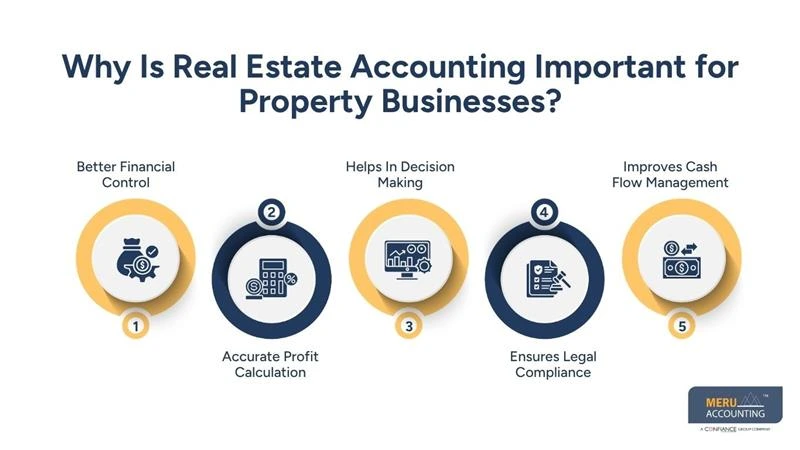
Why Is Real Estate Accounting Important for Property Businesses?
Knowing what is real estate accounting helps businesses make better financial decisions.
Better Financial Control
It gives a clear view of income and expenses, helping owners control their finances effectively. This clarity helps identify unnecessary costs and improve overall financial discipline.
Accurate Profit Calculation
With proper property business accounting, businesses can calculate real profits after expenses. It ensures that hidden costs are not missed while measuring actual returns.
Helps In Decision Making
Financial reports help investors decide whether to buy, sell, or hold properties. They also support planning for future investments with more confidence.
Ensures Legal Compliance
It helps businesses follow tax regulations and avoid penalties. Proper records make it easier to respond to audits and legal checks.
Improves Cash Flow Management
Understanding what is real estate accounting ensures smooth cash flow tracking and planning. It helps maintain enough funds for expenses, repairs, and new opportunities.
How Real Estate Business Accounting Differs from Traditional Accounting
There are key differences between general accounting and real estate business accounting.
Basis | Real Estate Business Accounting | Traditional Accounting |
Nature Of Transactions | Involves long-term property investments and infrequent but high-value transactions. | Focuses on regular, day-to-day business transactions. |
Revenue Recognition | Rental income and property sales are recorded based on lease terms and deal structures. | Revenue is usually recognized at the time of sale or service delivery. |
Asset Management | Properties are treated as major assets and tracked individually. | Assets are generally managed in bulk without property-level tracking. |
Depreciation Handling | Depreciation is a key factor used to reduce taxable income over time. | Depreciation is applied but usually has less impact on overall tax planning. |
Complex Financial Structures | Includes partnerships, joint ventures, and multiple property ownerships. | Typically involves simpler ownership and financial structures. |
What Are the Key Components of Real Estate Accounting Systems?
A strong system is essential to understand what is real estate accounting effectively.
Chart Of Accounts
This includes categories like rental income, repairs, taxes, and utilities. It helps organize financial data in a structured and easy-to-analyze format.
Lease Tracking
Tracking lease terms and payment schedules is a core part of real estate business accounting. It ensures timely rent collection and reduces the risk of missed payments.
Expense Management
Proper recording of property-related expenses ensures financial accuracy. It also helps identify cost-saving opportunities across properties.
Financial Reporting
Reports such as profit and loss statements help evaluate business performance. They provide clear insights for planning and improving financial results.
Property-Level Accounting
Each property is tracked separately to measure its profitability. This allows better comparison and performance analysis of individual properties.
What Accounting Methods Are Used in Real Estate Businesses?
Different methods are used to manage property business accounting efficiently.
Cash Basis Accounting
Income and expenses are recorded when cash is received or paid. It is simple to use and works well for small property owners.
Accrual Accounting
Transactions are recorded when they occur, not when cash is exchanged. This method gives a more accurate picture of financial performance.
Modified Accrual Method
A mix of both methods is commonly used in real estate. It offers flexibility while maintaining better financial accuracy.
Percentage Of Completion Method
Used in large construction projects to track revenue over time. It helps match income with project progress for better reporting.
Cost Segregation Method
Understanding what is real estate accounting includes using this method to separate property components for tax benefits. It allows faster depreciation and helps reduce overall tax liability.
What Are the Common Challenges in Property Business Accounting?
Managing real estate business accounting comes with several challenges.
Managing Multiple Properties
Tracking finances across different properties can be complex. Maintaining accuracy becomes difficult without a proper system in place.
Handling Tax Regulations
Real estate taxes vary and require proper planning. Frequent changes in tax rules can create confusion for business owners.
Tracking Expenses Accurately
Missing or incorrect entries can affect financial reports. Errors in data can lead to incorrect profit calculations and decisions.
Managing Cash Flow
Irregular income patterns can create cash flow issues. Planning expenses becomes harder when rental income is inconsistent.
Data Organization
Understanding what is real estate accounting helps maintain organized and error-free records. Proper organization also supports easier reporting and financial analysis.
Why Accurate Bookkeeping Is Essential in Property Business Accounting
Bookkeeping plays a major role in real estate business accounting.
Maintains Financial Records
All financial data stays organized and updated. Easy access to records improves overall financial management.
Supports Tax Filing
Accurate records make tax filing easier and error-free. Proper documentation ensures all eligible deductions are claimed.
Tracks Business Performance
Regular bookkeeping helps monitor profits and losses. Clear insights help evaluate the performance of each property.
Prevents Financial Errors
Reduced chances of mistakes improve financial reporting accuracy. Early identification of issues helps avoid bigger problems later.
Helps In Audits
Understanding what is real estate accounting ensures smooth audits with proper documentation. Well-maintained records make the audit process faster and more manageable.
How Tax Planning Works in Real Estate Accounting
Tax planning is a key part of what is real estate accounting, helping property owners manage their tax obligations effectively while improving overall financial outcomes.
Use Of Depreciation
Depreciation reduces taxable income over time by spreading the cost of a property across its useful life.
Spreading costs across multiple years allows property owners to manage tax liability more efficiently and improve cash flow.
Deductible Expenses
Expenses like repairs, maintenance, property management fees, and utilities can be claimed as deductions.
Lower taxable income through these deductions leads to better financial savings and improved profitability.
Capital Gains Planning
Planning helps reduce tax on property sales by choosing the right time and method of selling assets.
Strategic timing of sales and holding periods can significantly improve overall returns and reduce tax burden.
1031 Exchange Benefits
Investors can defer taxes by reinvesting the proceeds into similar types of properties under specific rules.
Continued investment growth becomes easier with deferred taxes, allowing more capital to remain invested.
Long-Term Tax Strategy
Property business accounting helps build a tax-efficient strategy that aligns with business goals.
Structured and well-planned tax strategies support long-term financial stability, growth, and better investment outcomes.
Why Outsourcing Real Estate Business Accounting Can Be Beneficial
Many businesses choose to outsource real estate business accounting services.
Saves Time
Outsourcing allows business owners to focus on property management. More time becomes available for business growth activities.
Access To Experts
Professionals understand what is real estate accounting in detail. Expert guidance improves financial accuracy and decision-making.
Reduces Errors
Experienced accountants ensure accurate financial records. Fewer mistakes lead to more reliable financial reports.
Cost-Effective Solution
Eliminates the need for in-house accounting teams. Lower operational costs improve overall business efficiency.
Better Compliance
Outsourcing helps meet tax and legal requirements easily. Timely filings reduce the risk of penalties and issues.
How Meru Accounting Supports Real Estate Businesses
At Meru Accounting, we specialize in helping businesses understand what is real estate accounting and apply it effectively to achieve accurate financial management and compliance.
Customized Accounting Solutions
We offer tailored services based on your property portfolio and business needs. Each solution is designed to match the unique requirements of different types of real estate businesses for maximum efficiency.
End-To-End Bookkeeping Services
Our team manages everything from data entry to financial reporting. Detailed and organized records ensure you always have a clear view of your property finances.
Tax Planning And Compliance
We ensure your business follows all tax regulations while saving costs. Proactive planning helps minimize liabilities and take advantage of all applicable deductions.
Software Integration
We work with advanced accounting tools to simplify real estate business accounting. Automated processes reduce errors and improve the speed of financial reporting.
Experienced Team Support
With years of experience, we help you manage your finances with clarity and accuracy. Expert guidance ensures better decision-making and smooth management of multiple properties.
Contact Meru Accounting to manage your property finances accurately and ensure full compliance with all regulations. Let Meru Accounting streamline your property business accounting for clearer insights and smarter financial decisions.
Key Takeaways
- What is real estate accounting focuses on managing property-related financial transactions
- Real estate business accounting is different from traditional accounting methods
- Accurate bookkeeping and financial tracking are essential for success
- Tax planning plays a major role in reducing liabilities
- Outsourcing accounting services can save time and improve accuracy
- Strong accounting systems help in better decision-making
FAQs
Real estate accounting tracks and manages financial transactions for properties. It is important for monitoring income, expenses, and profitability accurately.
Property business accounting focuses on property-specific transactions like rental income and depreciation. Regular accounting covers general business income and expenses.
Key components include income tracking, expense management, lease tracking, and property-level financial reporting. These help keep property finances organized and clear.
Common methods include cash basis, accrual basis, modified accrual, and percentage-of-completion for construction projects. Each method helps record transactions accurately.
Yes, outsourcing ensures accurate bookkeeping and expert guidance. It also saves time and allows property owners to focus on managing their properties.


