




Seasonal demand changes are a regular part of manufacturing. Orders rise during peak months and slow down at other times, creating pressure on cash flow, inventory, staffing, and production planning. This is where accountants for manufacturers play a vital role.
By using accurate financial data and practical planning methods, they help manufacturers stay ready for both high-demand and low-demand periods without stress.
In this blog, you will see how accountants for manufacturers support seasonal planning through structured financial analysis and strong manufacturing accounting practices. You will also understand how the right accounting approach helps manufacturers maintain stability throughout the year.
What You Will Learn From This Blog
- Learn how seasonal demand changes affect manufacturing operations, production planning, and overall financial performance.
- Understand why planning ahead is important for managing costs, cash flow, and operational stability.
- See how accountants for manufacturers support businesses during both high-demand and low-demand periods.
- Learn how accounting data helps in making better decisions for inventory control and workforce planning.
- Explore how strong manufacturing accounting practices support steady growth and long-term business stability.
Understanding Seasonal Demand Fluctuations In The Manufacturing Industry
Seasonal demand fluctuations vary across manufacturing industries, with each sector experiencing its own demand cycles. Weather conditions and annual events often influence customer orders, causing sudden increases or decreases in production requirements.
During high-demand periods, manufacturers may face supplier delays and higher material costs due to increased demand across the supply chain. At the same time, production capacity must be managed carefully to avoid overloading equipment and labor resources.
Another common challenge is the timing gap between expenses and revenue. Manufacturers usually pay for materials, labor, and logistics before receiving payments from customers, which can put pressure on cash flow if not planned properly.
Importance Of Seasonal Demand Planning In Manufacturing
Cost Control During Peak Periods
Planning helps control rising raw material and labor costs. Careful budgeting ensures spending matches seasonal production demands efficiently.
Cash Flow Stability
Accurate forecasting helps maintain stable cash flow for operations. Maintaining reserves prevents shortages during high-demand or slow periods.
Better Production Scheduling
Seasonal planning allows accurate and efficient production scheduling. Adjusting production runs avoids overloading machines and workforce stress.
Reduced Financial Surprises
Proper planning reduces unexpected financial risks and sudden losses. Advance preparation helps cover extra costs during peak months.
Improved Decision-Making
Reliable financial data supports confident and informed business decisions. Timely insights guide management actions during demand fluctuations effectively.
Optimized Inventory Management
Planning helps maintain optimal stock without overbuying or shortages. Monitoring inventory levels reduces storage costs and ensures availability.
The Strategic Role Of Manufacturer Accountants In Demand Planning
Financial Forecast Preparation
Accountants for manufacturers prepare forecasts based on past performance. Analyzing trends helps predict demand and plan production accurately.
Budget Planning For Seasonal Changes
Budgets are adjusted to align with seasonal demand cycles. Proper allocation ensures resources are available during peak periods.
Cost Tracking And Monitoring
Accountants track costs carefully during both busy and slow periods. Regular reviews help control expenses and protect profit margins.
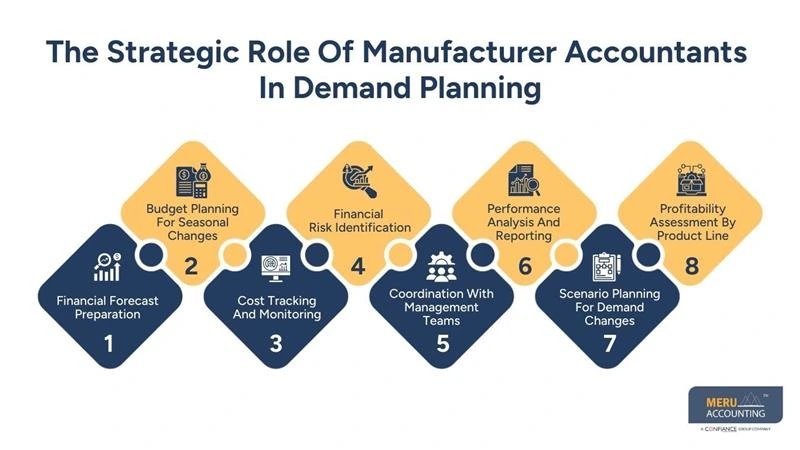
Financial Risk Identification
Early warning signs help manufacturers prevent unexpected financial losses. Identifying risks allows timely actions to safeguard cash flow.
Coordination With Management Teams
Accounting data supports informed operational planning and management decisions. Sharing insights improves collaboration across production, sales, and finance teams.
Performance Analysis And Reporting
Accountants provide detailed reports on production and financial performance. Clear reporting highlights areas needing improvement or cost adjustments.
Scenario Planning For Demand Changes
Different demand scenarios are analyzed for better preparedness. Planning ahead ensures smooth operations during both high and low demand.
Profitability Assessment By Product Line
Costs and revenues are tracked for each product category. This helps identify which products maximize profits during seasonal peaks.
How Accountants for Manufacturers Use Past Trends to Improve Forecasting and Planning
Reviewing Past Sales Data
Sales trends help predict future demand cycles accurately. Accountants for manufacturers analyze past orders to provide insights for better inventory planning.
Studying Production Volumes
Production history reveals capacity limits and cost patterns. Monitoring output trends ensures efficient scheduling and resource allocation.
Identifying Peak And Off-Peak Periods
Patterns are mapped across months or quarterly periods. Accountants for manufacturers use these trends to help prepare staffing and inventory needs.
Matching Costs With Revenue
Costs are aligned carefully with expected sales timelines. Tracking expenses against revenue prevents overspending during production cycles.
Improving Forecast Accuracy
Historical analysis strengthens the accuracy of future demand forecasts. Better predictions allow manufacturers to plan resources and cash flow.
Manufacturing Accounting Practices That Support Seasonal Forecasting
Sales And Cost Classification
Clear classification improves the accuracy of demand forecasting significantly. Organizing costs and sales data helps plan production effectively.
Inventory Cost Tracking
Inventory values are monitored carefully for accurate financial insights. Tracking stock costs prevents overstocking and reduces storage expenses.
Expense Timing Analysis
Expenses are aligned carefully with seasonal production schedules. Timing costs properly ensures smooth cash flow during peaks.
Profit Margin Monitoring
Margins are tracked closely across different demand cycles. Accountants for manufacturers analyze margins to maintain profitability throughout high and low periods.
Reliable Financial Reporting
Strong manufacturing accounting ensures accurate and dependable financial reports. Consistent reporting supports informed decisions and long-term business planning.
Workforce And Overhead Planning During High-Demand Manufacturing Periods
Temporary Workforce Cost Planning
Staffing costs are estimated carefully ahead of peak seasons. Proper planning ensures enough workers without overspending on labor.
Overtime Expense Monitoring
Overtime costs are tracked closely to avoid unexpected expenses. Accountants for manufacturers monitor overtime to balance workloads and prevent employee fatigue during peaks.
Utility And Facility Cost Review
Energy and facility costs increase during high production periods. Tracking these expenses helps control overhead and improve profitability.
Fixed Cost Management
Accountants help manage fixed overhead without unnecessary spending. Careful oversight ensures costs remain sustainable across demand cycles.
Labor Productivity Analysis
Productivity data supports smarter staffing and operational decisions. Monitoring output ensures workers are efficiently utilized during peaks.
Using Manufacturing Accounting Data To Prevent Overstocking And Stockouts
Inventory Demand Forecasting
Demand forecasts guide inventory purchases accurately for seasonal needs. Accountants for manufacturers plan effectively to prevent overstocking and ensure product availability.
Monitoring Inventory Turnover
Inventory turnover rates highlight slow-moving or excess stock items. Tracking turnover helps optimize purchasing and reduce storage costs.
Purchase Timing Decisions
Purchases are planned according to predicted demand cycles. Manufacturing accounting guides timing decisions to reduce costs and prevent supply shortages.
Storage Cost Management
Excess storage costs are avoided through careful inventory monitoring. Optimizing stock levels saves money and improves cash flow.
Sales And Inventory Alignment
Strong manufacturing accounting links sales with available stock. Alignment prevents lost sales and reduces unnecessary inventory buildup.
How Accountants For Manufacturers Improve Profitability Across Demand Cycles
Cost Control During High Demand
Spending is monitored carefully when production levels increase. Manufacturing accounting ensures cost oversight and maintains profitability during peak manufacturing periods.
Expense Reduction In Slow Periods
Costs are reduced without negatively affecting production operations. Minimizing expenses preserves cash flow during low-demand cycles.
Pricing Strategy Support
Accountants analyze costs to support accurate product pricing decisions. Proper pricing helps maximize profit while remaining competitive.
Cash Reserve Planning
Funds are set aside to cover slow or low-demand periods. Reserves help maintain operations without financial stress during slow months.
Long-Term Profit Tracking
Accountants for manufacturers track profits across all demand cycles. Consistent monitoring helps identify trends and improve future planning.
Common Seasonal Challenges Manufacturers Face Without Proper Accounting Support
Poor Cash Flow Planning
Unexpected expenses can strain finances during seasonal fluctuations. Without planning, businesses may face difficulties paying suppliers and staff.
Excess Inventory Build-Up
Overbuying leads to storage issues and higher costs. Excess stock ties up capital and increases the risk of waste.
Missed Sales Opportunities
Stockouts result in lost revenue and dissatisfied customers. Proper planning ensures products are available when demand is high.
Uncontrolled Labor Costs
Overstaffing during slow periods increases unnecessary expenses. Monitoring labor helps balance costs with production needs effectively.
Limited Financial Insight
Lack of accurate data leads to poor business decisions. Without accounting support, planning for seasonal demand becomes difficult.
The Role of Accountants for Manufacturers in Seasonal Readiness
Industry-Specific Knowledge
Accountants for manufacturers understand manufacturing cost structures deeply. This knowledge allows tailored solutions for different production models.
Experience With Demand Cycles
Past experience helps anticipate seasonal fluctuations accurately. Experienced accountants prepare businesses to handle both peaks and lows.
Strong Cost Control Methods
Costs are monitored at every stage of production and inventory. Effective controls prevent overspending and preserve profit margins.
Accurate Forecasting Support
Forecasts are based on real sales and production data. Accurate predictions improve planning and resource allocation across seasons.
Better Business Stability
Accountants for manufacturers help maintain balance year-round. Stable operations ensure long-term profitability and reduced financial stress.
How Meru Accounting Supports Manufacturers Through Seasonal Fluctuations
Preparing for seasonal demand requires accurate financial planning and expert guidance. Meru Accounting provides specialized support to help manufacturers manage costs, inventory, and cash flow effectively.
Manufacturing-Focused Accounting Expertise
Meru Accounting works closely with manufacturers across multiple industries. Manufacturing accounting expertise ensures accounting aligns with production and operational needs.
Seasonal Forecast And Budget Support
We prepare forecasts that match seasonal demand cycles accurately. Budgets are adjusted to ensure resources are available when needed.
Inventory And Cost Tracking
Our team maintains accurate manufacturing accounting records consistently. Monitoring stock and costs prevents overbuying and reduces financial waste.
Cash Flow And Profit Planning
We help businesses plan cash needs before high-demand periods. Advanced planning ensures smooth operations and protects profit margins.
Ongoing Financial Guidance
Our support continues throughout the entire year consistently. Regular insights help manufacturers make informed decisions during all cycles.
Key Takeaways
- Seasonal demand is predictable, as most changes follow clear patterns.
- Strong financial planning is essential to reduce risks and stress.
- Accurate accounting data drives better decisions and improves outcomes.
- Specialized accounting support matters, as general accounting is often insufficient.
- Choosing the right accounting partner ensures long-term business success.
FAQs
Seasonal demand fluctuates due to weather, holidays, and shifts in customer buying patterns. These factors directly impact production schedules and inventory requirements.
Accountants for manufacturers analyze historical sales and production data to plan budgets and costs. They also manage cash flow to ensure readiness for peak and low-demand periods.
Manufacturing accounting tracks production costs, inventory levels, and profitability. It provides actionable insights for better decision-making in manufacturing operations.
Yes, accurate data helps prevent overstocking and stock shortages. Monitoring inventory turnover ensures optimal stock levels and reduces storage costs.
They have expertise in manufacturing costs and seasonal demand cycles. This knowledge allows them to optimize operations and maintain profitability year-round.


