



Manufacturing businesses deal with many layers of expenses on a daily basis. From purchasing raw materials to paying factory workers and managing production overheads, every cost must be recorded properly. This is why accountants for manufacturers play such an important role in financial management.
By using structured cost accounting, they help manufacturing companies understand where money is spent, control unnecessary expenses, and make informed pricing and planning decisions that support steady business growth.
What You Will Learn From This Blog
- Understand the meaning of cost accounting in the manufacturing sector and how it differs from basic accounting. It focuses on tracking and managing all production-related expenses.
- Learn how accountants for manufacturers handle cost records and reports, providing strong support for cost control and financial clarity.
- Explore common costing methods used in manufacturing businesses, with explanations of how each method serves specific production needs.
- See how costs are monitored and reviewed regularly, helping manufacturers prevent overspending and maintain operational efficiency.
- Explore the key factors to consider when selecting accounting support, ensuring a choice that improves long-term cost management.
The Importance of Cost Management in Manufacturing
Manufacturing Cost Challenges
Manufacturing involves many departments, machines, and materials together. Without proper cost tracking, expenses can rise without a clear reason.
Need For Clear Cost Records
Clear cost records help manufacturers understand actual production expenses. They also reduce confusion during financial reviews and company audits.
Support From Accountants
Accountants for manufacturers organize cost data in structured ways. Their support makes production cost information easier to understand.
Importance Of Cost Accuracy
Accurate cost figures help avoid mistakes and financial losses. They also improve trustworthiness in all company financial reports.
Long-Term Business Stability
Strong cost systems support steady and reliable business operations. They help manufacturers plan effectively for long-term company growth.
What Makes Cost Accounting Critical For Manufacturing Businesses
Control Over Expenses
Cost control accounting lets manufacturers track every production expense carefully. Proper control prevents unnecessary spending and improves financial efficiency.
Product Pricing Support
Knowing exact costs helps manufacturers price products accurately, and accountants for manufacturers ensure these cost calculations are precise. Reducing the risk of underpricing or overpricing supports profitability.
Waste Reduction
Cost tracking identifies material waste and operational inefficiencies early. Corrective actions can be taken before losses become significant.
Budget Planning
Accurate cost data, maintained by accountants for manufacturers, supports better and more realistic budgeting decisions. Future production planning benefits from fewer unexpected financial surprises.
Profit Visibility
Manufacturers can clearly see which products generate higher profits. Smart production planning improves overall company profitability and strategy.
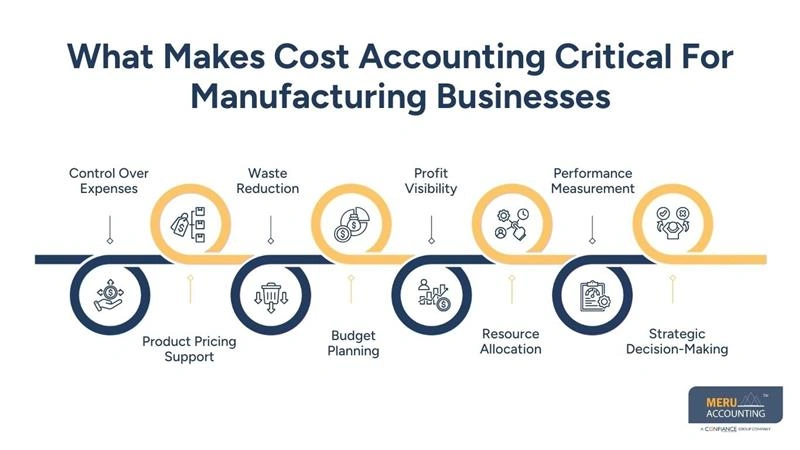
Resource Allocation
Proper allocation of materials, labor, and machinery ensures resources are used efficiently, reducing expenses while maximizing production output.
Performance Measurement
Tracking production costs helps evaluate department and machine efficiency. Insights into performance support continuous improvement across manufacturing processes.
Strategic Decision-Making
Detailed cost data guides informed decisions on pricing and expansion. Manufacturers gain confidence in planning long-term business strategies.
Accountants For Manufacturers: Ensuring Accurate Cost Management And Efficiency
Manufacturing Knowledge
Accountants for manufacturers have a deep understanding of production workflows and cost behavior. This knowledge allows them to manage and control manufacturing costs more accurately.
Accurate Cost Records
They ensure that all production costs are recorded correctly and consistently. Maintaining precise records significantly reduces the risk of missing important expenses.
Cost Monitoring
Regular cost monitoring helps identify any increases or anomalies at early stages. Problems can then be addressed promptly before they escalate into larger issues.
Financial Guidance
Accountants provide valuable insights and recommendations based on detailed cost reports. These insights enable manufacturers to make more informed and effective business decisions.
Business Support
They provide continuous support to manufacturers through ongoing cost analysis processes. This guidance helps maintain financial order and improve overall operational efficiency.
The Role Of Accountants In Cost Accounting Systems
System Design
Accountants design cost control accounting systems tailored to specific manufacturing production needs. These systems are created to fit the overall business structure effectively.
Cost Data Collection
They collect cost data from materials, labor, and overhead sources carefully. Accurate collection of cost data is essential for proper financial tracking.
Expense Classification
Accountants for manufacturers classify costs into direct and indirect categories for clarity. Proper classification significantly improves understanding of overall production expenses.
Ongoing Review
Costs are reviewed regularly to ensure accuracy and reliability. Frequent reviews help maintain trustworthy financial reporting and decision-making.
Reporting
Clear cost reports are prepared and delivered to management efficiently. These reports provide crucial information to support informed business decisions.
Types Of Cost Management Methods Used In Manufacturing
Job Order Costing
Accountants for manufacturers often use job order costing to track costs for individual production batches precisely. It works particularly well for manufacturers handling custom production orders.
Process Costing
Process costing is applied for continuous or large-scale production lines. Costs are averaged across all units produced during the production process.
Standard Costing
Standard costing uses estimated costs as benchmarks for production. Variances between actual and standard costs are reviewed regularly for accuracy.
Activity-Based Costing
Costs are assigned based on activities performed within the manufacturing process. This approach improves cost accuracy and highlights areas for efficiency improvements.
Marginal Costing
Marginal costing focuses solely on variable costs incurred during production. It provides useful insights for short-term pricing and operational decisions.
How Accountants For Manufacturers Track Direct And Indirect Costs
Direct Material Tracking
Raw materials used in production are tracked meticulously every day. This helps manufacturers control material usage and reduce unnecessary waste.
Labor Cost Tracking
Production labor costs are recorded accurately for all employees involved. Proper tracking ensures fair allocation of labor costs to products.
Factory Overheads
Accountants for manufacturers monitor indirect costs such as electricity, rent, and maintenance carefully. These overheads significantly affect total production cost and profitability.
Cost Allocation
Indirect costs are fairly allocated across products based on usage. Accurate allocation improves overall cost visibility and decision-making accuracy.
Cost Reviews
Regular reviews of all costs help maintain accuracy over time. These reviews reduce errors and improve the reliability of financial reports.
How Accountants For Manufacturers Ensure Compliance And Accuracy
Accounting Standards
Cost accounting is performed following accepted accounting standards and rules. This ensures consistent reporting and compliance with legal requirements.
Internal Controls
Checks and balances are used to reduce errors in cost accounting. Strong controls improve reliability and trustworthiness of financial information.
Record Keeping
All costs are supported by proper and organized documentation. Maintaining records improves transparency and simplifies audits and reviews.
Audit Preparation
Accountants prepare cost data carefully for internal or external audits. This preparation saves time and ensures smooth audit procedures.
Consistent Methods
Using consistent cost control accounting methods improves comparability across periods. Consistency supports better long-term analysis and strategic decision-making.
Choosing The Right Accountants For Manufacturers For Cost Management Needs
Industry Experience
Select accountants for manufacturers with proven experience in the manufacturing industry. Industry knowledge helps deliver accurate and actionable cost accounting results.
Cost Management Skills
They should understand multiple cost control accounting methods and approaches thoroughly. This allows them to provide flexible support for various production needs.
Clear Communication
Cost details must be explained in a simple and understandable manner. Clear communication builds trust between accountants and manufacturing managers.
Flexible Services
Accounting services should scale to match business growth and changes. Flexibility ensures long-term support as production and operations expand.
Reliable Assistance
Accountants should provide quick support to resolve cost-related issues efficiently. Reliability is essential for smooth operations and informed financial decision-making.
How Meru Accounting Supports Manufacturers
Manufacturing-Focused Services
Meru Accounting provides accounting services tailored specifically for manufacturing businesses. Our approach emphasizes accuracy, clarity, and efficient financial management practices.
Cost Control System Setup
We help manufacturers build structured cost control accounting systems for operations. These systems provide strong support for daily production and financial tracking.
Cost Tracking Support
Our team carefully tracks both direct and indirect production costs. Accurate tracking improves overall visibility and understanding of manufacturing expenses.
Compliance Assistance
We ensure cost records comply with all regulatory and reporting requirements. Maintaining compliance reduces risks and avoids potential financial or legal issues.
Ongoing Guidance
Meru Accounting supports better cost control and reliable financial reporting. Our guidance helps manufacturers achieve sustainable long-term business stability.
Key Takeaways
- Cost accounting helps manufacturers effectively manage and control production expenses.
- Proper cost management supports overall financial discipline and operational efficiency.
- Accountants for manufacturers provide clarity and structure to all cost data.
- Clear guidance reduces confusion and improves understanding of production costs.
- Using the correct costing method ensures accuracy in tracking and reporting.
- Accurate cost information supports better operational and financial planning decisions.
- Reliable cost data builds confidence in management and business decision-making.
- Expert professional support strengthens cost management and improves business growth.
- Skilled accountants provide guidance that helps manufacturers expand operations successfully.
FAQs
Accountants for manufacturers track all production costs, including materials, labor, and overheads. Accurate cost tracking helps manufacturers understand expenses and improve profitability.
Cost accounting shows the exact cost of producing each product. It helps manufacturers set prices, plan budgets, and control spending effectively.
Direct costs like labor and materials are recorded separately from indirect costs like rent and utilities. Correct allocation of costs ensures accurate product costing and financial clarity.
Job order, process, and activity-based costing are used depending on production type. Choosing the right method helps monitor costs accurately and make informed decisions.
Look for accountants who have hands-on experience in manufacturing. Accurate reporting, regular insights, and ongoing support help your business manage expenses efficiently and improve overall operational performance.


