


Accounting for commercial real estate leases can seem hard at first. Each lease may have base rent, extra fees, or costs for upkeep. Without clear tracking, mistakes may happen.
Real estate accounting helps property owners and managers keep clear records. It tracks rent income, costs, and tenant payments. When done right, it gives a full view of each property’s finances.
Many businesses have trouble keeping the same method for multiple buildings. Mistakes can cause lost money, poor cash flow, or missed deadlines. Accounting for commercial real estate leases is key to long-term success. It builds trust and gives clear reports for owners and investors.
What You Will Learn From This Blog
- Best ways for accounting for commercial real estate leases.
- How real estate accounting helps track rent, costs, and tenant payments.
- Common mistakes to avoid in lease accounting.
- Practical steps to follow for accurate record keeping.
- Tips to keep accounts clear and organized.
- How to handle lease records effectively for better results.
Understanding Accounting for Commercial Real Estate Leases
Accounting for commercial real estate leases means keeping track of all money in and out for leased buildings. Real estate accounting helps record rent, costs, and other fees accurately.
Key Elements of Lease Accounting Include:
- Check if a lease is long-term or short-term.
- Record rent and other fees on time each month.
- Track costs like repair taxes and utilities for the property.
- Keep deposits and lease perks separate for each tenant.
- Maintain a clear schedule for rent increases each year.
Good accounting for commercial real estate leases helps find risks and trends. It also shows where income may grow.
Benefits of Proper Real Estate Accounting
Correct accounting for commercial real estate leases brings many benefits.
Clear Records
Shows all income and costs for each property. Clear records help owners review data fast and avoid confusion.
Better Cash Flow
Helps track payments and outgoing money on time. This makes it easier to plan bills and avoid cash gaps.
Fewer Mistakes
Reduces errors in rent charges and billing work. Accurate records lower the risk of disputes or rework.
Better Planning
Gives useful data for repairs, upgrades, or new leases. Good planning helps avoid sudden costs or delays.
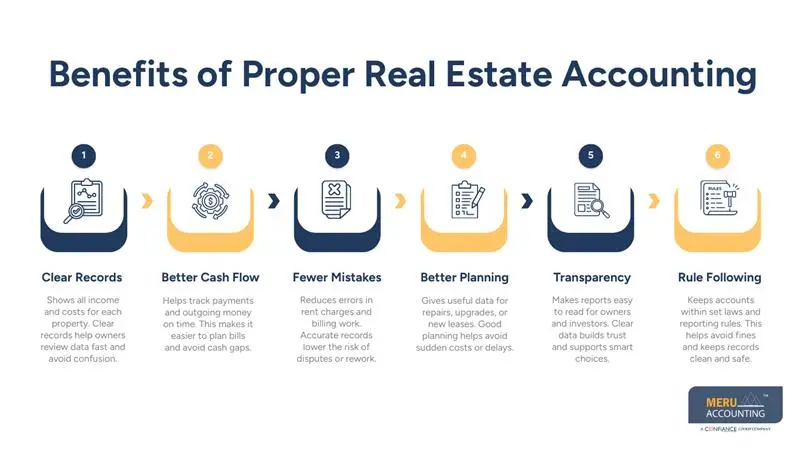
Transparency
Makes reports easy to read for owners and investors. Clear data builds trust and supports smart choices.
Rule Following
Keeps accounts within set laws and reporting rules. This helps avoid fines and keeps records clean and safe.
When records are clear, property managers can forecast money, plan repairs, and budget upgrades without stress.
Importance of Accounting for Commercial Real Estate Leases
Accounting for commercial real estate leases is very important for property owners. Without it, errors, lost income, or legal issues may occur.
Spot Problems
Helps find missed rent or late payments quickly and clearly. Early checks prevent small issues from becoming major problems.
Plan Money
Helps plan funds for repairs, upgrades, and future needs. Better planning supports smooth cash flow and steady operations.
Follow Rules
Keeps records in line with tax and lease rules. Proper records help avoid fines and legal trouble.
Clear Reports
Shows owners and investors clear and simple financial data. Clear reports support trust and better financial decisions.
Tax Help
Tracks costs and deductions to avoid tax issues. Accurate tax records support stress-free yearly filings.
Better Tenant Relations
Clear bills reduce disputes and improve tenant trust. Good records help solve issues faster and more fairly.
Good accounting helps owners track many properties with ease. It also supports better lease planning and long-term growth.
Steps to Effective Lease Accounting
Here are the key steps for good accounting for commercial real estate leases:
1. Check Lease Agreements
Check rent, raises, and tenant tasks with care. Review terms often to avoid missed or wrong details.
2. Classify Leases
Mark leases as long or short for clear tracking. Clear tags help keep records neat and easy.
3. Record Rent and Costs
Record rent, fees, fixes, and tax costs clearly for accurate accounting for commercial real estate leases. Quick notes help stop errors and lost data.
4. Track Deposits and Perks
Keep deposits and perks apart from rent income. Clear notes help avoid mix-ups and later claims.
5. Use Accounting Tools
Use tools to cut errors and track tasks fast. These tools save time and support daily work.
6. Reconcile Accounts
Match records with bank and tenant payments monthly. This step helps find errors before they grow.
7. Make Reports
Reports show cash flow, rent, and space use. Clear reports guide smart choices and planning steps.
8. Use Controls
Set clear roles and check work on a set plan. Strong checks help stop loss and reduce mistakes.
These steps make real estate accounting easy, save time, and cut errors.
Common Challenges in Lease Accounting and How to Fix Them
Even skilled property managers face challenges with accounting for commercial real estate leases.
1. Hard Lease Terms
Some leases have rent that changes or shared costs. Keep clear notes for each lease and tenant. Check terms often to stop small problems from growing.
2. Many Properties
Handling accounts for many buildings can be hard. Use one tool or software for all buildings. Central tracking saves time and avoids repeated work.
3. Rule Changes
Rules may change often or have new updates. Train staff and check rules every month. Staying up to date keeps all accounts correct and clear.
4. Wrong Deposit Tracking
Mixing deposits with rent can cause big mistakes. Keep deposits in a separate bank account. Proper tracking helps avoid disputes with tenants later.
5. Manual Errors
Writing records by hand can cause many mistakes. Use software tools to track all entries fast. Automation keeps data clear, correct, and easy to check.
6. Poor Reports
Owners need simple and clear reports on time. Make reports on a set and fixed schedule. Clear reports help managers make smart choices quickly.
7. Late Reviews
Late checks can hide errors for many weeks. Reconcile accounts each month to stay correct.
Regular checks catch issues before they get worse.
How Real Estate Accounting Helps Decision Making
Good records help managers make clear and smart choices. It also shows income trends and points out possible risks.
Spot Weak Units
In accounting for commercial real estate leases, check each unit’s rent and tenants’ stay. This helps find units that need care or quick fixes.
Plan Upgrades
Use cash flow to set repair budgets. It makes sure money is ready before work begins.
Negotiate Leases
Look at past data before the tenant talks. This helps offer fair and clear lease terms to tenants.
Plan Taxes
Clear books help avoid fines and errors. It also makes filing tax returns quick and simple.
Investor Reports
Show clear reports to keep trust high. Simple reports help show how the units earn and run.
Real estate books give a clear view of results. It helps with short-term moves and long-term plans.
Case Study: Better Accounting with Software
A property owner had trouble with accounting for commercial real estate leases. Mistakes in rent and costs were common. After using structured accounting and software:
- Rent collection was almost 100% correct
- Expense tracking became clear and simple
- Monthly checks caught errors early
- Reports helped plan and show investors the results
This shows how structured processes and tools help with lease accounting.
Why Choose Meru Accounting?
Meru Accounting handles accounting for commercial real estate leases. We keep all records clear, correct, and follow rules.
Tailored Plans
Accounts are made to fit each building. We plan books to match the size and type clearly.
Software Support
Use software to cut errors and save time. Automation helps track rent, costs, and payments easily.
Follow Rules
Keep books correct for taxes and all leases. We make sure all accounts meet the set rules.
Clear Reports
Show owners and investors what is happening. Reports are easy to read and show all details.
Skilled Team
Handle tricky lease and tenant details well. Our team tracks each lease and all tenant records.
Key Takeaways
- Lease accounting works best with clear steps
- Real estate accounting reduces mistakes and improves clarity
- Software saves time and lowers errors
- Regular checks keep accounts accurate
- Expert help ensures good property control and planning
FAQs
It tracks rent, bills, and tenant payments for each building. This helps keep books correct and cuts errors in all leases.
Write rent, fees, taxes, and insurance on time each month. Keep all schedules updated to make tracking simple and clear.
It keeps money records clear, stops mistakes, and follows rules. Good records help plan repairs, upgrades, and tenant care.
Late rent, missed bills, or wrong deposits happen often. Wrong entries and poor checks can cause more errors later.
Use software or tools to track rent, bills, and fees. This cuts errors and saves time on monthly account checks.


