



Accounting for construction companies is a crucial part of managing a successful construction business. Proper financial management helps companies track project costs, control budgets, and make informed business decisions. For construction firms, understanding the nuances of accounting ensures that profits are maximized, risks are minimized, and financial stability is maintained.
This blog will explore how accounting for construction companies can improve decision-making and how tools like accounting software for construction contractors can make the process more effective.
What You Will Learn From This Blog
- The basics of accounting for construction companies and why it is essential
- Common financial challenges faced by construction businesses
- Key accounting principles to manage projects efficiently
- How accounting impacts decision-making and business growth
- The benefits of accounting software for construction contractors
- Practical tips for implementing accounting best practices in construction firms
By the end of this blog, construction business owners and managers will have a better understanding of how to manage their finances effectively and make smarter financial decisions.
Introduction to Accounting for Construction Companies
Accounting for construction companies involves recording, analyzing, and reporting all financial transactions related to construction projects. Unlike general accounting, it focuses specifically on project-based costs, contracts, and labor management, providing a detailed view of each project’s financial performance.
Proper construction accounting helps track costs, revenue, and profitability for every project. By maintaining accurate records, companies can stay within budget, control expenses, and ensure financial obligations are met on time.
It also plays a key role in project management by offering insights into project performance. Managers can use this information to make informed decisions about resource allocation, timelines, and cost control, improving overall project efficiency.
Additionally, construction accounting supports financial planning and forecasting. It helps businesses predict future costs and revenue, ensures compliance with tax laws and contractual requirements, and reduces legal and financial risks, providing a stable foundation for growth.
Common Financial Challenges Faced by Construction Companies
Cost Overruns
Unexpected expenses can quickly exceed project budgets. Accounting for construction companies helps monitor costs in real-time to prevent overruns.
Delayed Payments
Clients may delay payments, affecting cash flow. Proper accounting practices track receivables and ensure timely follow-ups.
Complex Payroll Management
Construction companies often have a mix of permanent staff, subcontractors, and temporary labor. Accurate payroll tracking is essential for compliance and cost control.
Tracking Multiple Projects
Managing finances for multiple ongoing projects can be overwhelming. Accounting software for construction contractors simplifies this process by consolidating project data.
Tax Compliance Challenges
Construction companies face complex tax regulations, including VAT, GST, and other local taxes. Proper accounting ensures compliance and reduces penalties.
Material and Equipment Management
Keeping track of materials and equipment costs can be challenging. Accounting for construction companies helps monitor usage, reduce waste, and ensure expenses are allocated correctly to each project.
Key Principles of Accounting for Construction Companies
Job Costing
Job costing, a key part of accounting for construction companies, involves tracking all costs related to a specific project, including labor, materials, and overheads. It helps measure project profitability.
Revenue Recognition
Construction projects may span months or years. Recognizing revenue at the right time ensures accurate financial reporting and prevents discrepancies.
Accrual vs. Cash Accounting
Most construction companies use accrual accounting, which records expenses and revenue when incurred rather than when cash changes hands. This provides a clearer picture of financial performance.
Budget Monitoring
Regularly comparing actual costs with budgeted costs helps identify variances and take corrective action before they impact profitability.
Project-Specific Reporting
Generating reports for each project allows construction companies to track performance, evaluate risks, and make informed decisions.
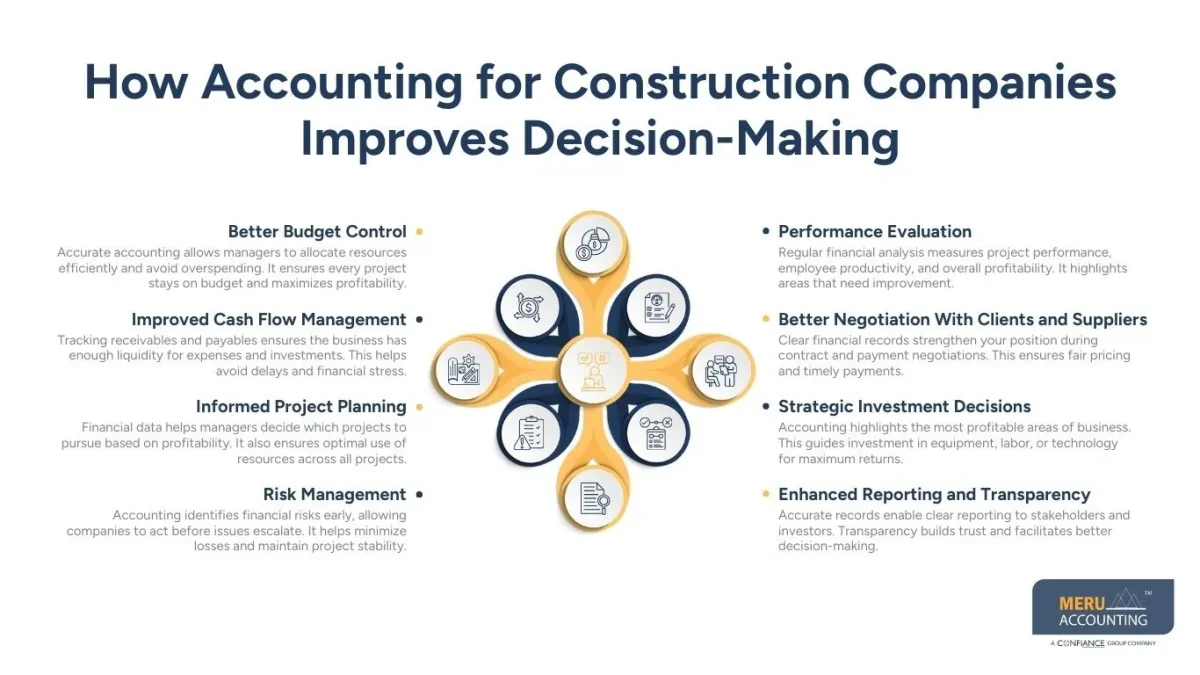
How Accounting for Construction Companies Improves Decision-Making
Better Budget Control
Accurate accounting allows managers to allocate resources efficiently and avoid overspending. It ensures every project stays on budget and maximizes profitability.
Improved Cash Flow Management
Tracking receivables and payables ensures the business has enough liquidity for expenses and investments. This helps avoid delays and financial stress.
Informed Project Planning
Financial data helps managers decide which projects to pursue based on profitability. It also ensures optimal use of resources across all projects.
Risk Management
Accounting identifies financial risks early, allowing companies to act before issues escalate. It helps minimize losses and maintain project stability.
Performance Evaluation
Regular financial analysis measures project performance, employee productivity, and overall profitability. It highlights areas that need improvement.
Better Negotiation With Clients and Suppliers
Clear financial records strengthen your position during contract and payment negotiations. This ensures fair pricing and timely payments.
Strategic Investment Decisions
Accounting highlights the most profitable areas of business. This guides investment in equipment, labor, or technology for maximum returns.
Enhanced Reporting and Transparency
Accurate records enable clear reporting to stakeholders and investors. Transparency builds trust and facilitates better decision-making.
Top Benefits of Using Accounting Software for Construction Contractors
Automation of Financial Tasks
Accounting software for construction contractors automates invoicing, payroll, and expense tracking, reducing manual errors and saving time. This allows teams to focus on project execution rather than paperwork.
Real-Time Project Tracking
Accounting software for construction contractors provides real-time data on project costs, enabling managers to make quicker decisions. Project managers can immediately spot cost overruns or delays.
Simplified Compliance
Accounting software ensures tax compliance and generates reports required by regulatory authorities. It also helps avoid penalties and ensures smooth audits.
Enhanced Accuracy
Automated calculations and error detection reduce mistakes in financial records, improving reliability. This ensures financial statements are trustworthy for decision-making.
Integration with Other Tools
Many accounting solutions integrate with project management software, providing a unified view of operations. It also streamlines communication between finance and project teams.
Tips for Implementing Accounting Best Practices in Construction Firms
Train Your Team
Ensure your finance team understands accounting for construction companies principles and software tools. Regular training keeps them updated on best practices and reduces errors.
Maintain Accurate Records
Track all financial transactions accurately, including receipts, invoices, and payroll records. Well-organized records make audits and reporting much easier.
Regular Financial Reviews
Conduct monthly or quarterly financial reviews to monitor performance and detect discrepancies early. This helps in making timely adjustments to stay on budget.
Use Accounting Software for Construction Contractors
Adopting accounting software for construction contractors improves efficiency, accuracy, and reporting. It also provides real-time insights into project costs and cash flow.
Hire Professionals When Needed
Consider partnering with firms like Meru Accounting to handle complex accounting needs and provide expert guidance. Professional support ensures compliance and smarter financial decisions.
Why Choose Meru Accounting for Construction Companies
Experienced Construction Accountants
Meru Accounting has a dedicated team experienced in accounting for construction companies, providing expert guidance for complex projects. Their expertise ensures accurate tracking of costs and profitability for every project.
Tailored Solutions
We offer customized accounting solutions based on your business size, project types, and financial goals. This approach ensures that your accounting system fits your specific operational needs.
Implementation Support
Our team assists in setting up accounting systems, training staff, and ensuring smooth transitions to new software. We make sure your team can confidently use the tools for efficient financial management.
Compliance Assurance
Meru Accounting ensures your company stays compliant with local tax regulations and reporting requirements. This minimizes risks of penalties and simplifies regulatory reporting.
Real-Time Insights
We provide actionable financial insights to help construction companies make smarter business decisions. These insights help identify opportunities for cost savings and improved project performance.
Cost-Effective Services
Meru Accounting offers services at competitive rates, helping construction companies manage finances without overspending. This ensures you get maximum value from professional accounting support.
Dedicated Client Support
We provide ongoing support to answer questions and resolve issues promptly. Our team acts as a trusted partner for your accounting and financial management needs.
Take control of your construction company’s finances with professional accounting support. Contact Meru Accounting today to simplify your construction accounting and boost project profitability.
Key Takeaways
- Accounting for construction companies is essential for financial stability and project profitability.
- Common challenges include cost overruns, delayed payments, payroll complexity, and tax compliance.
- Key principles like job costing, revenue recognition, and accrual accounting are critical for accurate financial reporting.
- Accounting improves decision-making, cash flow management, and risk mitigation.
- Accounting software for construction contractors enhances efficiency, accuracy, and compliance.
- Following best practices and partnering with experts like Meru Accounting ensures long-term success.
FAQs
Accounting for construction companies tracks all project costs, revenue, and profits. Proper accounting helps businesses stay on budget and make smarter financial decisions.
Labor, materials, and overheads are tracked for each project. This approach identifies cost overruns early and keeps spending under control.
Accounting software automates invoicing, payroll, and project reporting. Popular solutions include QuickBooks and Buildertrend.
Receivables, payables, and project expenses are monitored closely. This ensures timely payments and sufficient cash for ongoing projects.
Poor cost tracking, mixing personal and business finances, and not using construction accounting software are common errors. Avoiding them improves accuracy and efficiency.


