


Accounting for construction companies is a fundamental part of running successful projects. Construction firms handle multiple projects, materials, labor, and equipment, making financial management complex.
Integrating mobile apps in accounting allows companies to track costs, manage budgets, and maintain financial accuracy directly from job sites. Mobile accounting solutions provide real-time insights, ensuring construction projects are profitable and compliant with regulations.
Delayed cost reporting and manual entries often cause budget gaps and billing issues. Strengthening accounting for construction companies with mobile apps allows field teams to record expenses on-site and share data instantly with the office. This improves cost control, reduces errors, and supports accurate project-level financial tracking.
What You Will Learn From This Blog
- How accounting for construction companies improves project management
- Common challenges faced by construction companies in field accounting
- Benefits of integrating mobile apps into construction accounting
- Key features of accounting software for small construction companies
- How mobile apps enhance job costing, expense tracking, and project reporting
- Practical tips for implementing mobile apps in construction accounting
- Real-world case studies showing improvements from mobile accounting
The Importance Of Accounting For Construction Companies
Accurate Budget Management
Tracking expenses in real-time using accounting software for small construction companies helps firms stay within project budgets. Accounting for construction companies ensures that labor, materials, and equipment costs are monitored consistently.
Timely Financial Reporting
Field data from mobile apps can be quickly consolidated into reports, enabling management to review project financials without delays. Accurate reporting helps make informed business decisions.
Improved Cash Flow
By keeping track of invoices, payments, and subcontractor costs, accounting for construction companies ensures steady cash flow. This reduces the risk of delays in paying suppliers or staff.
Compliance With Tax Regulations
Proper accounting maintains records of all transactions, which simplifies tax filing and ensures compliance with financial regulations. Mobile accounting helps store receipts and invoices digitally.
Enhanced Project Profitability
With accurate cost tracking and reporting, construction companies can identify profitable projects and areas of overspending. This insight allows better allocation of resources and improved project margins.
Challenges Faced By Construction Companies In Field Accounting
Multiple Project Sites
In accounting for construction companies, managing several projects simultaneously is a common operational challenge. Manual accounting can lead to errors when consolidating financial data from multiple locations.
Tracking Labor Costs
Employee wages, overtime, and subcontractor payments can be difficult to track accurately. Field teams need tools that provide precise labor cost recording.
Managing Material Expenses
Construction projects involve significant material costs. Without accounting software for small construction companies, improper material tracking can quickly impact project profitability.
Delayed Expense Reporting
In accounting for construction companies, delayed expense reporting often creates gaps in real-time financial visibility and cost control. Mobile apps help capture costs as they occur.
Limited Access to Accounting Data
Managers and accountants need access to project financials at any time. Traditional systems often require physical paperwork or office-only access, limiting efficiency.
Error-Prone Manual Processes
Paper-based or spreadsheet systems increase the risk of errors in accounting for construction companies, often resulting in inaccurate financial statements and budget issues.
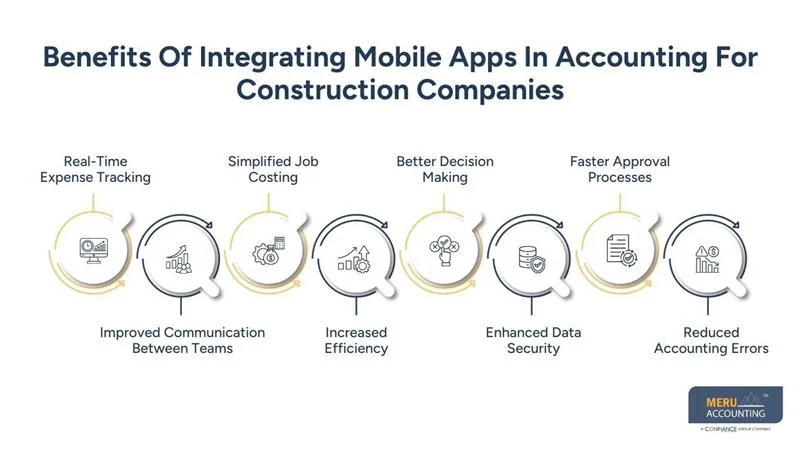
Benefits Of Integrating Mobile Apps In Accounting For Construction Companies
Real-Time Expense Tracking
Real-time expense tracking through mobile apps significantly improves accuracy in accounting for construction companies.
Improved Communication Between Teams
Field teams and office accountants can share data instantly. This ensures everyone is on the same page and reduces miscommunication.
Simplified Job Costing
Mobile apps make it easier to track labor, equipment, and material costs against each project. Accurate job costing helps evaluate project profitability.
Increased Efficiency
Manual paperwork and duplicate data entry are eliminated. Mobile apps save time, allowing teams to focus on project execution.
Better Decision Making
Access to real-time data supports proactive decision-making in accounting for construction companies, helping managers address budget issues early. It helps project leaders take action before small issues become major problems.
Enhanced Data Security
Digital accounting ensures sensitive financial data is encrypted and securely stored, reducing the risk of loss or theft. Access controls help protect financial information from unauthorized users.
Faster Approval Processes
Mobile apps allow managers to review and approve expenses directly from their devices. This reduces delays and keeps project workflows moving smoothly.
Reduced Accounting Errors
Direct data entry from the field minimizes manual mistakes. Accurate entries improve financial records and reduce correction work later.
Key Features Of Accounting Software For Small Construction Companies
Project-Based Accounting
Project-based tools within accounting software for small construction companies allow firms to track revenues and expenses for each project with precision. This helps compare estimated costs with actual spending for better control.
Mobile Expense Entry
Employees can capture costs directly from the job site, reducing delays and errors in reporting. Receipt uploads also improve record accuracy and audit readiness.
Integration With Payroll
Software can integrate labor cost tracking with payroll, simplifying wage calculations for permanent and subcontracted workers. This reduces manual work and payroll mistakes.
Inventory And Material Management
Inventory tools within accounting software for small construction companies help track material purchases, usage, and stock levels efficiently.
Customizable Reports
Generate financial reports tailored to projects, departments, or clients, giving a clear picture of financial performance. Reports support better planning and review meetings.
Invoice And Payment Management
Create, send, and track invoices directly from the app, improving receivables management. Faster invoicing helps maintain steady cash flow.
How Mobile Apps Streamline Job Costing And Project Accounting
Labor Cost Tracking
Accurate labor tracking is essential in accounting for construction companies, and mobile apps simplify on-site hour logging and cost calculation.
Material Usage Recording
Materials can be scanned or entered into the app as they are used, providing real-time insight into project expenses.
Equipment Expense Monitoring
Track usage, rental costs, and maintenance for construction equipment to ensure accurate accounting.
Budget Comparison
Compare actual project expenses against the budget in real-time to identify deviations and take corrective action.
Multi-Project Management
Multi-project tracking is a major advantage of accounting software for small construction companies, especially for firms handling several sites at once.
Simplified Cost Allocation
Assign costs to specific projects, phases, or departments easily, ensuring precise financial records.
Real-Time Expense Tracking With Mobile Accounting Solutions
Instant Expense Logging
Employees can record receipts and costs immediately, reducing the risk of missing transactions. This ensures expenses are captured while details are still accurate.
Geo-Tagging Expenses
Mobile apps often allow location-based tagging, ensuring expenses are logged for the correct project site. This helps avoid cost allocation errors between projects.
Automated Categorization
Apps can automatically categorize expenses into labor, materials, or overheads, reducing manual entry errors. This saves time and improves reporting accuracy.
Notifications And Alerts
Managers receive notifications for unusual or high-cost expenses, helping prevent budget overruns. Early alerts allow quick review and action.
Cloud-Based Storage
Cloud-based access is essential in accounting for construction companies, allowing authorized personnel to review financial data anytime, anywhere.
Cloud-based storage within accounting software for small construction companies reduces the risk of data loss from physical records.
Audit-Friendly Records
Maintaining audit-ready records is a critical benefit of accounting for construction companies using digital and mobile solutions. Organized records support compliance and faster reviews.
Top Mobile Accounting Software Options For Small Construction Companies
QuickBooks Online
Popular for its ease of use, QuickBooks offers project tracking, invoicing, and mobile access suitable for small construction companies.
Xero
Xero provides mobile expense tracking, cloud reporting, and easy integration with other project management tools.
Zoho Books
Zoho Books allows mobile invoice management, expense recording, and project-specific accounting features.
Sage 50cloud
Sage combines desktop and mobile solutions, offering job costing and real-time project tracking.
Buildertrend
Designed specifically for construction, Buildertrend integrates project management with mobile accounting for field teams.
FreshBooks
FreshBooks provides simple invoicing, expense tracking, and mobile access for small construction projects.
Best Practices For Implementing Mobile Apps In Construction Accounting
Train Your Team
Ensure all staff, from field workers to office accountants, understand how to use mobile apps effectively. Proper training ensures teams use accounting software for small construction companies correctly, reducing errors and improving confidence.
Standardize Expense Categories
Create consistent categories for labor, materials, and equipment to maintain uniform accounting practices. This makes reports easier to review and compare.
Set Permissions
Limit access to sensitive financial data and assign roles within the app to prevent unauthorized changes. Proper access control improves data security.
Regularly Update Data
Encourage employees to update expenses and hours daily to maintain accurate real-time records. Timely updates prevent missing or incorrect entries.
Integrate With Existing Systems
Mobile apps should sync with existing accounting software to maintain continuity and prevent data loss. Integration also reduces duplicate data entry.
Monitor Performance
Regularly review project financials to identify trends, inefficiencies, or potential savings. Ongoing performance review using accounting software for small construction companies supports stronger cost control and financial discipline.
Case Studies: How Accounting For Construction Companies Improved With Mobile Apps
Case Study 1: Small Residential Construction Firm
A small residential builder integrated the QuickBooks mobile app, reducing time spent on manual expense entry by 60%. Real-time cost tracking improved project profitability by 15%.
Case Study 2: Commercial Construction Project
A mid-sized commercial contractor used Buildertrend to manage multiple sites. Mobile logging of labor and materials reduced errors and allowed managers to identify cost overruns quickly.
Case Study 3: Renovation Company
A renovation company adopted the Zoho Books mobile app. Field teams could upload receipts and update labor costs on-site, allowing accountants to generate daily financial reports.
How Meru Accounting Supports Construction Companies
Tailored Accounting Solutions
Meru Accounting offers specialized services for construction firms, providing accurate financial records and on-site expense tracking. Our solutions are aligned with project-based accounting needs.
Expertise In Field Accounting
Our team understands construction project accounting, including labor, materials, and equipment cost tracking. This ensures reliable reporting from both the field and office.
Mobile Integration
We help integrate mobile apps with existing accounting systems, ensuring real-time updates and accurate reporting. This improves coordination between field teams and accountants.
Compliance And Reporting
Meru Accounting ensures all financial records comply with tax laws and industry regulations, reducing the risk of audits. Organized documentation supports smooth reviews.
Advisory Services
Our experts provide insights on cost optimization, job profitability, and budget management to improve overall financial performance. Strategic advisory services enhance accounting for construction companies by supporting better planning and long-term financial decisions.
Managing construction finances does not have to be complex or time-consuming. Contact Meru Accounting to simplify construction accounting and improve financial control.
Key Takeaways
- Accounting for construction companies is essential for managing project costs and improving profitability.
- Mobile apps provide real-time expense tracking, job costing, and improved communication between field teams and accountants.
- Accounting software for small construction companies offers features like project-based accounting, expense management, and mobile access.
- Best practices include staff training, standardized expense categories, and integrating mobile apps with existing systems.
- Case studies show mobile accounting significantly improves efficiency, accuracy, and financial visibility.
FAQs
Mobile apps allow real-time expense tracking and job costing directly from the field, reducing errors and delays.
Yes, there are affordable solutions designed for small businesses that provide essential accounting and project tracking features.
It ensures the timely recording of expenses and invoices, giving an accurate view of receivables and payables.
No, most apps are user-friendly, and simple training sessions can make staff comfortable with recording expenses and hours.
Yes, most apps can integrate with existing accounting software, ensuring smooth data flow and continuity.


