



Accounting for construction contractors has become more important than ever as inflation and material price swings continue to affect the construction industry. Rising costs, uncertain supply chains, and frequent price changes make financial control difficult for contractors of all sizes. Without strong financial systems, even profitable projects can quickly turn into losses.
In high-inflation periods, accounting for construction contractors helps businesses stay aware of cost increases, protect profit margins, and make informed pricing decisions.
Construction firms that rely on outdated or generic accounting practices often struggle to keep up with fast-changing expenses. This is where structured accounting methods designed specifically for construction operations play a major role.
What You Will Learn From This Blog
- How inflation increases material, labor, and overhead costs across construction projects
- Why rising prices affect both short-term and long-term construction contracts
- Why general bookkeeping is not enough for construction projects
- How accounting for construction contractors helps improve cost control
- Practical ways to manage changing material prices
- Methods that help protect profit margins during unstable market conditions
- How accurate cost tracking improves project planning and budgeting
- Why clear financial data helps contractors make timely decisions
- How structured financial reporting reduces financial risk
- How reliable accounting data helps contractors respond quickly to cost changes
Understanding The Financial Impact Of Inflation On Construction Contractors
Inflation has a direct impact on construction contractors, making accounting for construction contractors crucial to track rising costs of essential materials such as cement, steel, fuel, and other supplies.
These rising material prices can quickly push projects over budget and cause delays, especially when estimates are based on older pricing.
When material costs change frequently, contractors must adjust budgets and timelines using accounting for construction contractors practices to avoid financial strain. Labor costs also tend to rise during inflation as wages increase to keep up with living expenses.
Along with higher payroll, contractors face growing operating costs, including office rent, utilities, and equipment expenses. If these costs are not tracked closely, overall profit margins can shrink without warning, making it harder to maintain financial stability.
Inflation also creates cash flow pressure, as higher upfront costs require more working capital at the start of a project. Fixed-price contracts become particularly risky in such conditions, since rising expenses cannot always be passed on to clients.
Without proper accounting for construction company practices and regular financial monitoring, these losses may remain hidden until the project is completed, leaving contractors with reduced or negative profits.
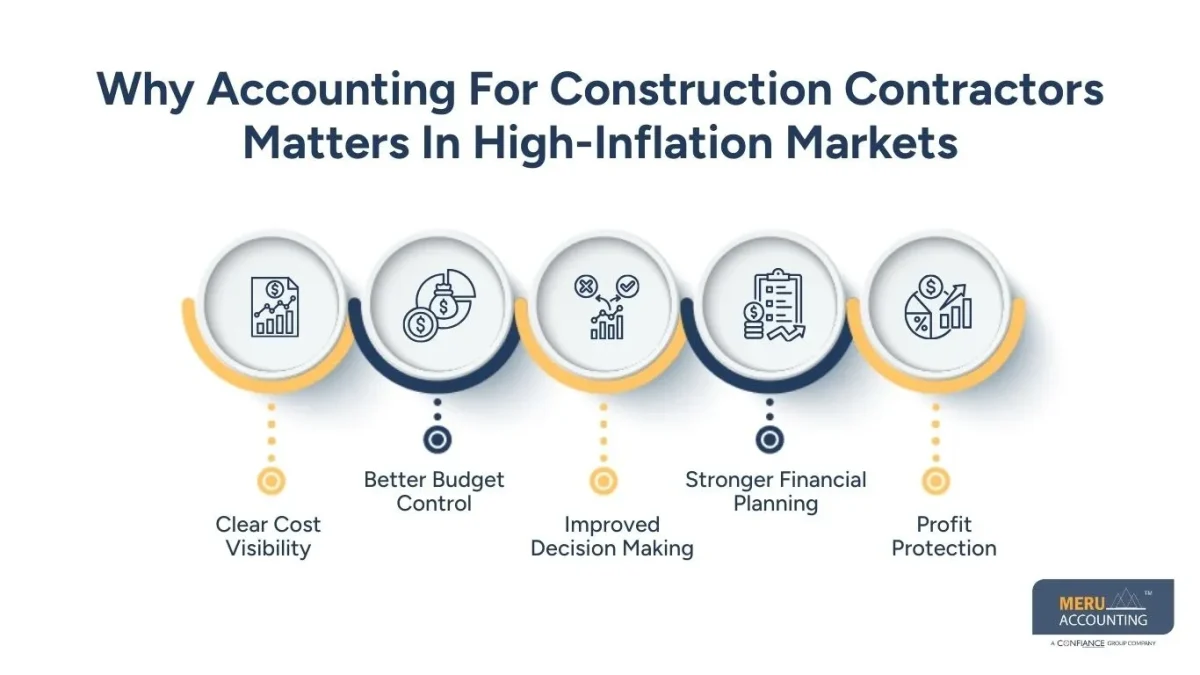
Why Accounting For Construction Contractors Matters In High-Inflation Markets
Clear Cost Visibility
Implementing accounting for construction company processes provides a clear view of rising costs. This helps businesses respond before problems grow.
Better Budget Control
Accounting for construction company ensures spending is tracked against budgets in real time, preventing cost overruns.
Improved Decision Making
Reliable data supports smarter pricing and purchasing decisions. Contractors can adjust plans based on real numbers.
Stronger Financial Planning
Using accounting for construction contractors systems ensures forecasts are based on accurate data, helping prepare for inflation and reducing surprises during long projects.
Profit Protection
Implementing accounting for construction contractors systems allows contractors to track margins closely and protect profits during inflationary periods.
How Uncertain Material Prices Disrupt Project Budgets And Profit Margins
Unplanned Cost Increases
Through accounting for construction company, contractors can quickly detect sudden price hikes and adjust budgets proactively. Without proper monitoring, these increases reduce profits very quickly.
Supplier Price Changes
Vendors may change prices with little notice during projects. This makes accurate cost planning far more difficult overall.
Delayed Purchasing Decisions
Effective accounting for construction contractors systems help determine the best purchase timing to avoid cost escalation.
Contract Estimate Gaps
Original project estimates may not reflect current market prices. Updated accounting data helps revise projections with better accuracy.
Margin Erosion
Using accounting for construction contractors methods helps track these incremental cost changes to prevent overall margin erosion. Poor financial tracking often leads to shrinking profit margins.
Why Traditional Accounting Methods Fall Short For Construction Company Operations
Lack Of Project-Level Tracking
Traditional methods fail to implement accounting for construction company practices that track costs accurately at the project level. This lack of tracking hides critical project-specific financial issues.
Delayed Financial Updates
Traditional methods often lack accounting for construction company practices that provide timely, actionable financial updates. Construction companies require frequent updates to manage ongoing projects.
Limited Cost Categories
Basic accounting lacks enough detailed classifications for construction costs. Construction projects need deeper cost breakdowns to track spending accurately.
Poor Change Order Tracking
Accounting for construction contractors ensures all change orders are tracked accurately, protecting project revenue.
Inaccurate Profit Measurement
Without proper job costing, reported profits can appear misleading. This inaccuracy negatively affects future project planning and decision-making.
How Accounting For Construction Contractors Helps Manage Rising Material Costs
Real-Time Cost Monitoring
Accounting for construction contractors tracks expenses accurately as they occur. This tracking helps detect material price increases very early.
Supplier Cost Comparison
Financial data allows effective comparison between different project suppliers. This comparison supports smarter and more cost-efficient purchasing choices.
Budget Adjustments
Updated accounting data helps revise project budgets quickly and accurately. This timely revision prevents unexpected financial surprises on projects.
Price Trend Analysis
Tracking historical material costs reveals long-term pricing patterns. This analysis helps plan purchases strategically for future projects.
Better Contract Pricing
With accounting for construction contractors, accurate cost data allows construction companies to set fair pricing and protect profit margins. This approach protects profit margins during high-inflation periods.
Waste Reduction Tracking
Monitoring material usage helps reduce unnecessary waste on projects. This tracking lowers overall costs and improves project efficiency.
Contingency Planning
With accounting for construction contractors, contractors can plan for unexpected cost increases and reduce financial risks. This preparation minimizes risks associated with Uncertain material prices.
Vendor Payment Scheduling
Timely tracking of expenses improves scheduling of vendor payments. This scheduling ensures better cash flow management for contractors.
Key Cost Tracking Strategies For Construction Projects During Inflation
Detailed Expense Categorization
Breaking costs into clear categories improves financial visibility for projects. This categorization supports more accurate and effective cost analysis overall.
Daily Expense Recording
Recording expenses daily prevents any missing or overlooked financial data. This practice ensures that financial reports remain accurate and timely.
Labor Cost Tracking
Through accounting for construction company practices, monitoring labor hours and wages becomes systematic, supporting accurate budgeting.
Material Usage Tracking
Accounting for construction company enables detailed tracking of material usage to reduce waste and manage inflated costs effectively.
Overhead Allocation
Accounting for construction contractors ensures overhead costs are allocated correctly, giving a true picture of project finances. This allocation ensures that true project costs are properly reflected.
The Role Of Job Costing In Accounting For Construction Company Profitability
Project-Specific Cost Tracking
Using accounting for construction contractors, job costing tracks expenses per project to determine true profitability.
Better Budget Comparisons
Actual project costs are compared closely with original cost estimates. This comparison highlights problem areas and potential budget overruns quickly.
Improved Forecast Accuracy
Job costing data improves the accuracy of future project cost estimates. This improved forecasting reduces errors in pricing upcoming construction work.
Change Order Impact Analysis
Accounting for construction company systems allow detailed tracking of change orders to ensure revenue is not lost.
Clear Profit Measurement
Accurate job costing clearly shows true profit margins for projects. This clarity supports informed decisions for ongoing business growth planning.
How Accurate Cost Forecasting Reduces Financial Risk In Uncertain Markets
Early Risk Detection
Accurate forecasts highlight potential cost risks well in advance. This early detection allows timely action to prevent financial losses.
Improved Cash Flow Planning
Forecasts provide a clear view of future cash requirements. This planning prevents delays in payments and avoids unnecessary penalties.
Better Contract Decisions
Forecast data support selecting the most appropriate contract types. This selection reduces exposure to rising costs and inflation risks.
Scenario Planning
Cost forecasting helps prepare for possible material price changes. This preparation improves financial readiness and reduces project uncertainties.
Reduced Budget Shocks
Updated financial forecasts help prevent unexpected budget overruns from occurring. This proactive approach protects profit margins during Uncertain market conditions.
Using Real-Time Financial Reporting To Support Better Pricing Decisions
Current Cost Visibility
Real-time financial reports provide a clear view of current expenses. This visibility supports accurate and informed pricing for construction projects.
Faster Decision Making
Updated accounting data allows quick adjustments to project plans. This fast access to information reduces delays in critical decisions.
Improved Client Quotes
Accurate cost data helps create fair and precise client quotes. This accuracy protects profit margins and avoids unexpected financial losses.
Margin Monitoring
Real-time financial data continuously tracks changes in project profitability. This monitoring highlights issues early before they affect overall margins.
Better Project Control
Frequent financial reporting improves oversight of all ongoing construction projects. This control strengthens overall financial management and project execution reliability.
How Meru Accounting Supports Construction Contractors
Managing finances in construction projects can be challenging, especially during inflation and fluctuating material prices. Meru Accounting provides specialized accounting and bookkeeping services designed to help contractors maintain control over costs, track profits, and plan effectively. With industry-focused expertise, our solutions support better decision-making and long-term financial stability.
Industry-Focused Accounting Support
Meru Accounting specializes in accounting specifically for construction contractors. Our services help manage inflation and material price changes effectively.
Accurate Job Costing Systems
We help construction companies set up clear and precise job costing. Project-level profit tracking becomes easier with properly implemented systems.
Real-Time Financial Reporting
Our real-time financial reporting allows contractors to monitor costs constantly. Better pricing decisions and accurate budgets result from updated insights.
Cost Control And Forecasting
We assist contractors with cost forecasting and proactive financial planning. Uncertain market risks are reduced through structured cost control measures.
Dedicated Construction Accounting Experts
Our accounting team has deep experience in construction operations management. Long-term financial stability is supported by our expert guidance.
Take control of your construction finances today with Meru Accounting’s expert support. Contact us to manage costs, improve profits, and plan confidently.
Key Takeaways
- Inflation increases financial pressure on construction projects
- Accounting for construction contractors improves cost control
- Job costing is essential for accurate profit tracking
- Real-time reporting supports smarter pricing decisions
- Specialized accounting reduces financial risk during uncertainty
FAQs
Inflation increases material and labor costs across all construction projects. Proper accounting helps contractors track expenses and protect project profits.
Job costing shows the exact expenses for each individual construction project. It helps identify which projects are profitable or are losing money.
Yes, real-time cost data allows contractors to price projects accurately. Updated reports provide insight needed for better pricing decisions.
Generic bookkeeping lacks job-level tracking and detailed construction cost data. Without proper data, contractors cannot measure project profitability correctly.
Construction accounting systems provide clear visibility into project costs and profits. They help contractors manage budgets and make better financial decisions.


