



Accounting for contract manufacturing is not just about keeping books—it is a strategic tool that helps contract manufacturers set pricing that protects margins, improves profitability, and wins more business.
When a contract manufacturer understands the true cost of production, overhead, and supply chain expenses, it can build pricing models that are accurate and competitive.
In this blog, we will explain how accounting for contract manufacturing supports strategic pricing models and helps contract manufacturers make smarter decisions.
What You Will Learn From This Blog
By the end of this blog, you will understand:
- Why accounting for contract manufacturing is essential for pricing
- The types of accounting data needed for strategic pricing
- How cost tracking methods affect pricing decisions
- Pricing models used in the manufacturing industry
- How accounting supports value-based and cost-plus pricing
- How Meru Accounting can help contract manufacturers build pricing strategies
Understanding Contract Manufacturing in the Manufacturing Industry
Contract manufacturing is a model where a company hires a third-party manufacturer to produce products on its behalf. This approach is widely used in the manufacturing industry because it helps companies scale production without heavy investment in facilities or equipment.
However, pricing products correctly becomes challenging when multiple parties, costs, and production steps are involved. That is where accounting for contract manufacturing becomes essential. Accurate accounting provides clear cost visibility and helps contract manufacturers set prices that are fair, profitable, and sustainable.
Clear accounting also helps manage hidden costs like setup fees, quality checks, and shipping. When all expenses are tracked accurately, contract manufacturers can avoid pricing disputes and maintain steady profitability.
What Is Strategic Pricing for Contract Manufacturers?
Strategic pricing is the process of setting prices based on accurate cost data, market demand, competition, and long-term business goals. For contract manufacturers, pricing must cover direct costs like materials and labor, and indirect costs like equipment depreciation, facility rent, and management expenses.
Accounting for contract manufacturing provides the necessary data to understand all cost components. Without this insight, contract manufacturers may set prices that are too low (leading to losses) or too high (losing customers).
Strategic pricing also helps contract manufacturers stay flexible during market changes. With accurate accounting data, they can quickly adjust prices when material costs rise or demand shifts, ensuring steady profitability.
Cost Structure Essentials in Accounting for Contract Manufacturing
Strategic pricing depends on the following accounting data:
1. Direct Material Costs
This includes raw materials, packaging, and components used in production. Accounting for contract manufacturing tracks these costs in detail to avoid underpricing.
2. Direct Labor Costs
Labor cost includes wages, benefits, overtime, and subcontractor fees. Accurate accounting ensures labor costs are properly allocated to each product.
3. Overhead Costs
Overhead includes rent, utilities, equipment maintenance, and administrative expenses. Accounting for contract manufacturing allocates overhead based on production volume or machine hours.
4. Variable and Fixed Costs
Variable costs change with production volume, while fixed costs stay constant. Strategic pricing must consider both to set prices that cover all costs, even during low production periods.
5. Supply Chain and Logistics Costs
Shipping, customs, and inventory handling must be tracked. Contract manufacturing accounting ensures these costs are not ignored in pricing.
Cost Tracking Methods Used in Accounting for Contract Manufacturing
There are different cost tracking methods that help contract manufacturers manage pricing effectively through accounting for contract manufacturing:
Job Costing
Job costing assigns costs to a specific batch or order. This method is ideal when contract manufacturers produce custom orders or small batches.
Process Costing
Process costing assigns costs to production stages. This method is best for continuous manufacturing where products move through multiple steps.
Activity-Based Costing
Activity-based costing assigns costs based on activities like machine setup, inspection, or testing. This method improves accuracy by capturing the real cost drivers.
Standard Costing
Standard costing sets a fixed cost per unit based on expected material, labor, and overhead. This method helps contract manufacturers compare actual costs against standards and identify cost variances early.
Batch Costing
Batch costing tracks costs for a specific production batch or run, especially when products are manufactured in groups. It helps in pricing products that are produced in repeated batches and ensures cost control for each run.
Accounting for contract manufacturing often uses a mix of these methods to track costs accurately.
How Accounting Helps Identify True Product Costs
Many contract manufacturers only consider direct costs when setting prices. However, this leads to incomplete pricing that ignores overhead and indirect costs.
Contract manufacturing accounting helps identify true product costs by:
- Tracking indirect expenses
- Allocating overhead properly
- Monitoring production waste and scrap
- Measuring cost variances
- Identifying cost drivers
When contract manufacturers know the true cost per unit, they can price products with confidence.
Using Accounting Insights to Set Competitive Pricing
Accounting for contract manufacturing provides data that supports competitive pricing. Here’s how:
1. Accurate Cost Per Unit
Accounting reveals the true cost per unit, helping contract manufacturers set prices that cover all costs and protect margins.
2. Better Negotiation with Clients
When pricing is based on real data, contract manufacturers can justify price increases or discounts with confidence.
3. Faster Response to Cost Changes
If raw material prices rise or labor costs increase, accounting for contract manufacturing helps quickly update pricing to stay profitable.
4. Clear Profit Margin Targets
Accounting helps contract manufacturers set margin targets and track performance against them.
Pricing Models Common in the Manufacturing Industry
The manufacturing industry uses several pricing models. Contract manufacturing accounting supports each model by providing cost visibility and data accuracy.
1. Cost-Plus Pricing
This model adds a markup to the total cost of production. Accounting for contract manufacturing helps calculate the correct cost base and ensure the markup covers overhead.
2. Value-Based Pricing
Pricing is based on the value delivered to the client, not just cost. Accounting data helps identify the true value by comparing cost, quality, and performance.
3. Fixed Price Contracts
A fixed price is set for a contract term. Contract manufacturing accounting helps forecast costs and prevent losses during long-term agreements.
4. Tiered Pricing
Prices change based on volume or order size. Accounting data helps set pricing tiers that reward volume while protecting margins.
How Accounting Supports Value-Based Pricing
Accounting for contract manufacturing provides the data and insights needed to prove the value delivered to customers. It supports value-based pricing in the following ways:
1. Identifying Cost Savings from Efficiency Improvements
Accounting helps track and analyze production efficiency. When manufacturing processes become more efficient, costs decrease. This data allows manufacturers to demonstrate savings to customers and justify higher pricing.
2. Measuring Quality Improvements
Accounting records the financial impact of quality enhancements, such as reduced scrap and fewer reworks. These improvements directly show the value delivered to customers.
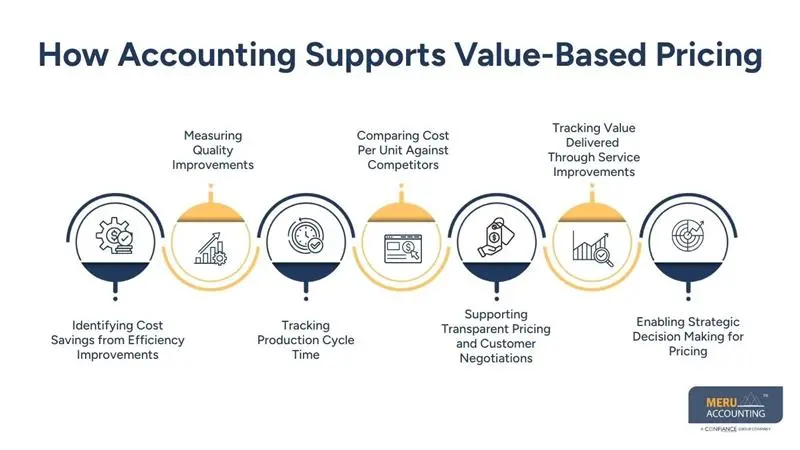
3. Tracking Production Cycle Time
Accounting systems help track the time taken for each production cycle. Faster cycle times mean faster delivery, which is valuable to customers. This data supports pricing based on faster turnaround.
4. Comparing Cost Per Unit Against Competitors
Accounting for contract manufacturing provides accurate cost per unit data. Manufacturers can compare this against industry standards and competitor pricing to position their pricing strategy based on value.
5. Supporting Transparent Pricing and Customer Negotiations
Accounting provides detailed cost breakdowns and performance reports. When contract manufacturers share this information with customers, it builds trust and makes price negotiations easier.
6. Tracking Value Delivered Through Service Improvements
Accounting helps quantify improvements such as better packaging, reliable delivery, and lower defect rates. When these improvements are backed by financial data, manufacturers can confidently justify premium pricing.
7. Enabling Strategic Decision Making for Pricing
Accounting data helps identify which products, contracts, or customers generate the most value. Manufacturers can then focus on high-value contracts and adjust pricing strategy accordingly.
When contract manufacturers can prove value through accounting data, they can justify higher prices and improve profitability.
How Accounting for Contract Manufacturing Helps with Cost-Plus Pricing
Cost-plus pricing is one of the most common models in the manufacturing industry. It relies heavily on accurate cost data.
Accounting for contract manufacturing helps cost-plus pricing by:
- Calculating total production cost accurately
- Allocating overhead correctly
- Tracking waste and rework
- Updating cost figures in real-time
- Ensuring markup covers all expenses
When costs are accurate, contract manufacturers can apply a consistent markup and protect their margins.
Pricing Strategies for Long-Term Contracts
Long-term contracts are common in contract manufacturing. Pricing strategies for these contracts must consider future cost changes. Accounting for contract manufacturing supports long-term pricing by:
1. Cost Forecasting
Accounting helps forecast future costs based on historical data and trends.
2. Price Adjustment Clauses
Accounting data supports clauses that adjust pricing based on raw material or labor changes.
3. Profit Margin Protection
Accounting helps set prices that protect margins even during cost fluctuations.
4. Performance Tracking
Accounting tracks profitability by contract and helps identify contracts that may need renegotiation.
How Meru Accounting Supports Contract Manufacturers With Strategic Pricing Models
Meru Accounting provides specialized accounting services for contract manufacturing. These services help contract manufacturers gain clear cost visibility, which is essential for setting accurate and profitable prices.
Cost Tracking and Allocation
Detailed cost tracking and allocation for materials, labor, overhead, and logistics ensure every product is priced based on its true cost.
Job Costing and Process Costing
Job costing and process costing services are provided based on production type, helping calculate accurate costs for each order or production stage.
Financial Reporting and Analysis
Financial reports and profitability analysis by product, customer, and contract help identify the most profitable offerings and pricing gaps.
Budgeting and Forecasting
Budgeting and forecasting services help plan future costs and set realistic pricing that remains profitable even when costs change.
Pricing Model Support
Support for pricing models like cost-plus pricing, value-based pricing, and fixed-price contracts is provided through accurate accounting data and cost analysis.
Monthly and Quarterly Performance Review
Regular performance review services help monitor profitability and pricing effectiveness, enabling timely pricing adjustments.
Key Takeaways
- Accounting for contract manufacturing is essential for accurate pricing in the manufacturing industry.
- Strategic pricing relies on correct cost data, including direct and indirect costs.
- Cost tracking methods like job costing, process costing, and activity-based costing improve pricing accuracy.
- Accounting helps contract manufacturers set competitive pricing models like cost-plus and value-based pricing.
- Meru Accounting supports contract manufacturers with accounting systems that build strong pricing strategies.
FAQs
Accounting for contract manufacturing tracks all costs involved in production. It helps contract manufacturers set accurate prices and protect profit margins.
It records direct materials, labor, overhead, and waste. This helps identify the true cost per unit, which is essential for pricing.
Cost-plus pricing and value-based pricing are commonly used. The best model depends on cost structure, market demand, and contract terms.
Accounting helps calculate total cost accurately and adds a markup to set the final price, ensuring the manufacturer earns a profit.
Accounting provides cost forecasts and helps set price adjustment clauses, ensuring profits are protected during long-term agreements.


