



Accounting for food manufacturing is not just a back-office task. It is the foundation that keeps production profitable, compliant, and stable. In food manufacturing, margins are thin, raw material prices fluctuate, and regulations are strict. Without strong accounting, companies can easily lose money without even realizing it.
In this blog, we explain why accounting for food production is essential for managing margins and compliance, and how cost accounting for food manufacturing plays a key role in pricing, inventory, and profitability.
What You Will Learn From This Blog
By the end of this blog, you will understand:
- What makes accounting for food manufacturing different from other industries
- Common accounting challenges in food manufacturing
- How accounting for food production helps control production costs
- How cost accounting for food manufacturing supports pricing decisions
- Why accurate accounting is critical for inventory and COGS
- The compliance risks in food manufacturing and how accounting helps manage them
- Common accounting mistakes that reduce margins
What Makes Accounting for Food Manufacturing Different from Other Industries
Accounting for food manufacturing is unique because food products are perishable, production processes are complex, and margins are often small. Unlike many other industries, food manufacturing must track raw materials that can spoil, maintain strict batch records, and monitor production losses. This makes accounting for food manufacturing more detailed and more sensitive to errors.
Food manufacturers also deal with many types of costs at once. There are raw material costs, labor costs, packaging costs, and overheads.
Tracking all of these accurately is essential. Without accurate food manufacturing accounting, companies may misprice products, overstock inventory, or fail to meet regulatory requirements.
Accounting Challenges in the Food Manufacturing Industry
Accounting for food manufacturing faces several challenges that do not exist in other industries. Some of the main issues include:
1. Perishable Inventory
Food raw materials and finished goods can spoil. This means inventory value can drop quickly. This requires regular inventory checks and write-downs when needed.
2. Batch Tracking
Food manufacturing often uses batch production. Each batch may have different costs due to raw material price changes or production issues. Without proper systems, batch cost tracking becomes impossible.
3. Waste and Shrinkage
Food production has waste due to trimming, spoilage, and production errors. This waste must be captured to avoid misleading profit figures.
4. Variable Raw Material Costs
Food raw material prices change frequently due to seasons and supply changes. These price changes must be tracked accurately to avoid underestimating costs.
5. Complex Compliance Requirements
Food manufacturers must follow strict regulations for safety, labeling, and reporting. Accurate records are necessary to support these compliance requirements.
Understanding Profit Margins in Food Manufacturing Operations
Profit margins in food manufacturing are usually tight. This is why accounting for food manufacturing must be accurate and detailed. A small error in cost calculation can cause a major drop in profit.
Margins in food manufacturing depend on three main factors:
1. Raw Material Costs
The price of ingredients is the biggest factor in margins. Raw material price changes and their impact on costs must be tracked carefully.
2. Production Efficiency
Production waste, machine downtime, and labor inefficiencies directly affect margins. These costs should be captured clearly.
3. Selling Price
Food manufacturers must price products based on costs, competition, and demand. Cost accounting for food manufacturing helps in setting the correct selling prices.
4. Packaging and Transportation Costs
Packaging materials, storage, and delivery expenses directly impact margins. These costs must be included to avoid underestimating the total cost per product.
5. Quality Control and Compliance Costs
Quality testing, certification, and regulatory compliance add to production expenses. These costs must be tracked accurately to ensure they are reflected in product pricing and profitability.
When accounting is done correctly, profit margins become easier to monitor and control. This allows manufacturers to identify problem areas and improve them quickly.
How Accounting for Food Manufacturing Helps Control Production Costs
Accounting for food manufacturing helps in identifying the real cost of production. It includes raw materials, labor, overheads, and waste. When all costs are tracked accurately, food manufacturers can make better decisions.
1. Raw Material Cost Control
By tracking raw material costs, manufacturers can avoid overpaying for ingredients. It also helps in identifying which ingredients are costing more than expected.
2. Labor Cost Control
Labor costs can rise due to overtime or low productivity. Detailed labor cost tracking helps manufacturers identify areas of improvement.
3. Overhead Cost Control
Overhead includes electricity, machine maintenance, and rent. Proper accounting helps distribute these costs correctly across products.
4. Waste Control
Food waste is a major cost in food manufacturing. Tracking waste and identifying the root cause helps reduce waste and improve margins.
The Role of Cost Accounting for Food Manufacturing in Pricing Decisions
Cost accounting is essential for setting the right product price. Without accurate cost accounting, pricing decisions become guesswork. This can lead to selling products at a loss or setting prices too high, causing loss of customers.
Cost accounting helps calculate:
- Cost per batch
- Cost per unit
- Cost of wastage
- Overhead allocation
These figures help management set prices that cover costs and ensure profit. When cost accounting for food manufacturing is done correctly, pricing becomes easier and more accurate.
Managing Inventory and COGS Through Accurate Accounting for Food Manufacturing
Inventory management is a key part of food manufacturing. Inventory includes raw materials, work-in-progress, and finished goods. Each stage must be tracked carefully to avoid losses and ensure accurate financial statements.
The Importance of Inventory Accuracy
Inventory errors can lead to incorrect cost of goods sold (COGS). If COGS is wrong, profit figures will also be wrong. Accurate inventory values are essential.
Inventory Tracking Methods
Food manufacturers often use methods like FIFO (First In, First Out) due to perishable items. These methods must be supported to ensure inventory valuation is accurate.
Reducing Stockouts and Overstocks
Proper accounting helps balance inventory levels. Too much inventory leads to spoilage. Too little inventory leads to production delays. Accurate tracking helps maintain the right balance.
Tracking Batch and Lot Numbers
Batch and lot tracking help identify which products were made with specific raw materials. This improves traceability and reduces risk during recalls.
Handling Inventory Write-Downs and Spoilage
Batch and lot tracking help identify which products were made with specific raw materials. This improves traceability and reduces risk during recalls.
Why Accounting for Food Manufacturing Is Essential for Regulatory Compliance
Food manufacturing is one of the most regulated industries. Compliance requirements include safety standards, labeling rules, and reporting. Accounting for food production plays a major role in meeting these regulations.
1. Traceability
Regulators require traceability of ingredients and finished products. Tracking batches and costs supports traceability.
2. Food Safety Records
Maintaining records related to production, waste, and quality checks is essential during audits.
3. Tax Compliance
Food manufacturers must file accurate tax returns. Proper accounting ensures all expenses and revenues are recorded correctly.
4. Financial Reporting
Regulators may require accurate financial reports. Proper accounting ensures that financial statements are correct and compliant.
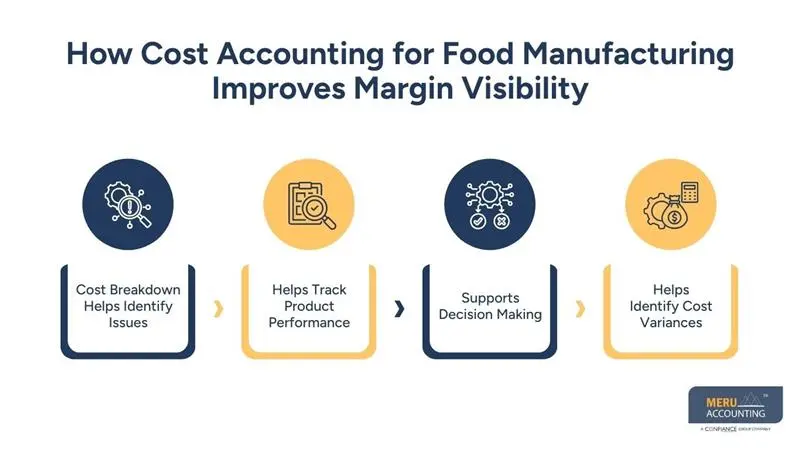
How Cost Accounting for Food Manufacturing Improves Margin Visibility
Cost accounting for food manufacturing provides clear visibility into profit margins. It helps break down costs into different categories, making it easier to see where profits are coming from and where losses are happening.
Cost Breakdown Helps Identify Issues
Cost accounting for food manufacturing separates costs into raw materials, labor, overhead, and waste. This helps management identify which area is causing margin pressure.
Helps Track Product Performance
Cost accounting helps evaluate product performance by comparing costs and profits. This helps decide which products should be continued, improved, or discontinued.
Supports Decision Making
With accurate cost accounting, managers can make decisions based on real numbers. This improves profitability and reduces risk.
Helps Identify Cost Variances
Cost accounting for food manufacturing highlights differences between expected and actual costs. This helps pinpoint where expenses are rising unexpectedly and where corrective action is needed.
Common Accounting Mistakes That Reduce Margins in Food Manufacturing
Many food manufacturers lose profit due to accounting mistakes. These mistakes may seem small, but they can significantly reduce margins.
1. Ignoring Waste Costs
Not recording waste properly leads to underestimating costs. This reduces profit margins without the business knowing.
2. Incorrect Inventory Valuation
Wrong inventory values lead to wrong COGS and profit figures. This affects pricing and financial planning.
3. Poor Cost Allocation
If overheads are not allocated correctly, some products may appear more profitable than they actually are. This can lead to poor pricing decisions.
4. Not Tracking Batch Costs
Batch costs can vary. Not tracking batch costs properly leads to wrong product cost calculations and poor decisions.
5. Delayed Accounting
Delays in recording costs and revenues cause wrong financial reports. This makes it difficult to manage margins and compliance.
Why Choose Meru Accounting for Your Food Manufacturing Accounting Needs?
At Meru Accounting, we understand the unique challenges of accounting for food production. Our team provides accurate accounting services that help you manage margins and stay compliant. We offer:
- Detailed cost accounting for food manufacturing
- Inventory tracking and COGS management
- Batch cost tracking and waste reporting
- Financial reporting and tax compliance
- Customized solutions based on your production model
With Meru Accounting, you can focus on growing your food manufacturing business while we handle the accounting and compliance work.
Key Takeaways
- Accounting for food production is essential to manage margins and stay compliant.
- Food manufacturing has unique accounting challenges due to perishability, waste, and batch production.
- Cost accounting for food manufacturing helps set the right price and improve profit margins.
- Accurate accounting for food production supports inventory control and proper COGS calculation.
- Strong accounting practices reduce compliance risks and support better decision-making.
FAQs
Food manufacturing deals with perishable materials, waste, batch production, and strict regulations. This makes accounting more detailed and complex.
Cost accounting for food production is a way to track all costs in production, like raw materials, labor, waste, and overhead. It helps calculate the real cost of each product.
Accurate accounting tracks waste and identifies where it happens. This helps businesses fix production issues and reduce losses.
Inventory is crucial because food items can spoil. Proper inventory tracking helps prevent spoilage and ensures correct cost calculations.
Accounting helps maintain records needed for audits, traceability, and tax reporting. This ensures the business meets legal requirements.


