




Accounting for manufacturing business is essential for companies looking to make informed pricing and profit decisions. Without accurate accounting, manufacturers risk underestimating costs, mispricing products, and losing potential profits.
By tracking costs precisely and analyzing financial data, businesses can gain insights into profitability and create effective pricing strategies that support growth. Accurate accounting provides a clear view of production costs, helps avoid financial errors, and ensures that pricing decisions align with actual expenses and desired profit margins.
What You Will Learn From This Blog
- The basics of accounting for manufacturing business and why it matters.
- How manufacturing cost accounting helps evaluate expenses and pricing.
- Methods to use accounting data to optimize product profitability.
- Key performance indicators (KPIs) every manufacturing company should track.
- How Meru Accounting supports businesses with precise manufacturing accounting services.
Introduction To Accounting For Manufacturing Business
Accounting for manufacturing business involves tracking all financial transactions related to production, including materials, labor, and overhead costs. By maintaining detailed records, businesses can understand the total cost of producing each product, which is essential for making informed pricing decisions.
Accurate accounting ensures that manufacturers know exactly where money is spent, helping prevent underpricing products or overspending on production.
Manufacturing accounting differs from accounting in service or retail businesses because it includes additional layers like direct material costs, labor, and factory overhead. These elements require careful tracking and reporting to reflect the true cost of production.
Proper accounting forms the foundation for effective business planning, enabling companies to budget accurately, forecast expenses, and allocate resources efficiently.
Understanding all costs involved also allows manufacturers to set prices that cover expenses and generate healthy profits. Accurate accounting gives business owners and managers the confidence to make pricing and profit decisions that safeguard margins, improve profitability, and support long-term growth.
Understanding Manufacturing Cost Accounting
Manufacturing cost accounting is a specialized branch of accounting that focuses on calculating the total cost of producing goods. It tracks all elements of production, including raw materials, labor, and overhead, to give manufacturers a complete picture of their expenses.
Accurate cost accounting is essential for understanding product profitability and supporting informed pricing decisions, making accounting for manufacturing business critical for sustained growth.
Direct costs are expenses directly tied to production, such as raw materials and labor. Tracking these costs precisely ensures that each product is priced appropriately and that profits are not eroded by overlooked expenses.
Indirect costs, on the other hand, include utilities, maintenance, and administrative expenses. These are part of manufacturing overhead, and proper allocation of these costs is necessary to reflect the true cost of production. Without accurate allocation, pricing and profitability analysis can be misleading.
Businesses can use various cost methods, such as standard costing, job costing, or process costing, to calculate product costs. Choosing the right method is critical, as it directly impacts pricing strategies and profit analysis.
By knowing exact production costs, manufacturers can set competitive prices while protecting profit margins and ensuring long-term business sustainability.
How Accurate Accounting Influences Pricing Strategies
Cost-Based Pricing
Accounting for manufacturing business provides the data needed to adopt cost-based pricing. This ensures prices cover production costs plus a margin for profit.
Competitive Pricing Analysis
Accurate accounting allows manufacturers to compare costs against competitors and adjust prices strategically without sacrificing profits.
Margin Assessment
Detailed cost data helps evaluate gross and net margins. Understanding margins through accounting for manufacturing business supports decisions on which products to promote or discontinue.
Dynamic Pricing Adjustments
Manufacturers can respond to changes in material or labor costs quickly, adjusting pricing based on accurate accounting records.
Supporting Strategic Goals
Pricing strategies based on accounting data align with long-term business goals, ensuring sustainability and profitability.
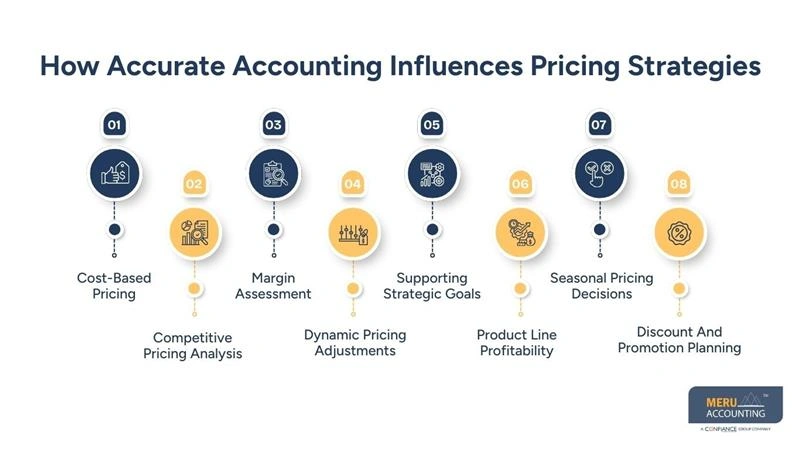
Product Line Profitability
Accurate accounting highlights which product lines generate the highest profits and which may need pricing or cost adjustments.
Seasonal Pricing Decisions
Manufacturers can plan pricing around seasonal demand changes by analyzing cost data and past sales trends.
Discount And Promotion Planning
Accounting insights help determine how much discount can be offered without negatively impacting overall margins, making accounting for manufacturing businesses essential for promotional planning.
Evaluating Product Profitability With Manufacturing Accounting
Product Cost Breakdown
Manufacturing cost accounting allows businesses to analyze costs per product, which is a core function of accounting for manufacturing businesses. This helps identify high-cost products that may need price adjustments.
Identifying Profitable Products
Accurate accounting highlights products with strong profit margins. Businesses can focus resources on profitable lines.
Loss Analysis
Products with low or negative margins can be identified, and accounting helps determine whether to improve efficiency, raise prices, or discontinue them.
Contribution Margin Calculation
Contribution margin analysis shows how much each product contributes to covering fixed costs and generating profit, a key insight provided by accounting for manufacturing businesses.
Informed Decision Making
Reliable accounting data ensures decisions on product lines are based on facts, reducing financial risks and maximizing profitability.
The Role Of Cost Accounting In Decision-Making
Budget Planning
Manufacturing cost accounting supports accurate budgeting, ensuring resources are allocated efficiently. It also helps businesses track spending against planned budgets and make timely adjustments.
Investment Decisions
Data from cost accounting informs decisions on purchasing new equipment, expanding production, or launching new products. This ensures that investments are backed by a clear understanding of expected costs and returns.
Labor Management
Understanding labor costs helps manufacturers plan staffing efficiently, reducing overhead without affecting output. It also highlights areas where productivity can be improved or overtime costs minimized.
Material Procurement
Cost accounting provides insights into material usage and waste, enabling smarter procurement decisions and cost control. It helps negotiate better rates with suppliers by identifying cost-saving opportunities.
Risk Assessment
Accounting data helps identify cost overruns and financial risks, allowing businesses to act proactively and prevent losses. It also supports contingency planning by revealing potential areas of financial exposure.
Role Of Financial Reporting In Strategic Manufacturing Decisions
Monthly Reports
Regular financial reporting helps manufacturers monitor expenses and profitability, enabling timely decisions, and is a key aspect of accounting for manufacturing businesses. These reports also allow managers to spot trends and anticipate future financial challenges.
Cost Variance Analysis
Comparing actual costs against budgets identifies variances, helping management adjust operations or pricing. This analysis also highlights inefficiencies and areas where cost savings can be achieved.
Profit And Loss Statements
Accurate P&L statements based on accounting for manufacturing business provide clear insight into overall performance. They also help evaluate which products or departments are driving profits and which may need attention.
Cash Flow Management
Reports help track inflows and outflows, ensuring sufficient cash for production and operational needs. Effective cash flow management also prevents liquidity issues that could disrupt manufacturing schedules.
Strategic Planning
Financial reports guide long-term strategies, including product development, pricing, and market expansion. They also provide a reliable basis for making informed investment and growth decisions.
Integrating Cost Accounting With Supply Chain Management
Inventory Tracking
Accurate accounting supports proper inventory valuation, reducing overstock and stockouts. Inventory tracking helps identify slow-moving or excess inventory for better decision-making, a task simplified by accounting for manufacturing businesses.
Supplier Cost Analysis
Cost accounting helps evaluate supplier pricing and negotiate better rates, improving profitability. This ensures that procurement decisions are backed by clear cost insights.
Production Scheduling
Accounting data informs production scheduling to minimize waste and control costs, reinforcing the value of accounting for manufacturing businesses in operational efficiency. It also allows for more efficient allocation of labor and machinery resources.
Transportation And Logistics Costs
Tracking logistics costs ensures these are included in product pricing and profitability calculations. It helps identify opportunities to reduce shipping expenses and improve delivery efficiency.
Collaboration Across Departments
Integrating accounting with supply chain management fosters cross-department collaboration and accurate cost tracking. This alignment ensures everyone works with the same financial data for better planning.
KPIs Every Manufacturer Should Track
Cost Per Unit
Tracks the total cost to produce a single product, which is a vital metric in accounting for manufacturing businesses and helps in setting accurate pricing
Gross Margin
Measures profitability after direct costs are deducted. Supports product-level profitability analysis.
Inventory Turnover
Shows how quickly inventory is sold and replaced, helping optimize storage costs.
Production Efficiency
Tracks labor and machine efficiency, identifying areas for improvement.
Overhead Percentage
Helps determine the proportion of indirect costs and manage overhead expenses.
Return On Investment
Assesses the effectiveness of capital expenditures, guiding strategic investment decisions.
How Meru Accounting Supports Manufacturing Businesses
Expert Team
Meru Accounting has a team of Xero Certified professionals skilled in accounting for manufacturing business, ensuring accurate financial tracking.
Tailored Solutions
We provide customized manufacturing cost accounting solutions that fit your production processes and business needs.
Cost Analysis
Our team helps evaluate direct and indirect costs, enabling better pricing strategies and profit optimization.
Financial Reporting
Meru Accounting offers detailed reporting services, including P&L statements, variance analysis, and KPI tracking, for informed decision-making.
Ongoing Support
From regular bookkeeping to strategic financial guidance, we ensure your manufacturing accounting is precise and actionable.
Compliance Assistance
We help manufacturing businesses stay compliant with accounting standards and regulatory requirements, reducing risk of penalties.
Process Improvement Guidance
Our experts provide insights to optimize accounting processes and streamline cost tracking for more efficient operations.
Key Takeaways
- Accurate accounting for manufacturing business is critical for pricing and profitability decisions.
- Manufacturing cost accounting ensures all costs, including materials, labor, and overhead, are tracked properly.
- Accounting data helps set competitive prices and evaluate product profitability.
- Integrating cost accounting with supply chain and financial reporting optimizes operations.
- Partnering with experts like Meru Accounting provides reliable insights and peace of mind.
FAQs
Accurate accounting shows the total cost of production, including materials, labor, and overhead. This helps manufacturers set prices that cover costs and ensure a profit.
Manufacturing cost accounting tracks all production costs to calculate the true cost per product. It is important for making informed pricing and profitability decisions.
Yes, by identifying cost overruns and high-expense areas, accurate accounting allows manufacturers to adjust pricing or reduce costs, improving overall profit margins.
Profit and loss statements, cost variance reports, and product cost breakdowns help manufacturers analyze expenses and make informed pricing decisions.
By analyzing the costs and profitability of each product, manufacturing cost accounting helps identify high-margin products. This allows businesses to focus on items that maximize profit.


