




Running a manufacturing business requires careful attention to production costs, labor, inventory, and financial planning. This is where accounting for manufacturing business becomes crucial. Accurate and structured accounting helps manufacturers track costs, monitor efficiency, and make informed decisions that drive long-term operational efficiency.
Without proper accounting, businesses may struggle with overspending, inventory mismanagement, and delayed financial insights, all of which can affect growth and profitability.
In this blog, we’ll explore manufacturing accounting 101, breaking down key concepts, strategies, and real-life applications that help manufacturing businesses maintain efficiency while planning for sustainable growth.
What You Will Learn From This Blog
By reading this blog, you will gain:
- A clear understanding of accounting for manufacturing businesses and its importance
- The fundamentals of manufacturing accounting 101
- Strategies to optimize inventory, labor, and production costs
- How accounting aids in smarter decision-making and long-term planning
- Real-life examples of efficient accounting practices in manufacturing
What is Manufacturing Accounting?
Manufacturing accounting is a branch of accounting dedicated to managing and recording all financial aspects of production. It includes:
- Tracking raw material purchases
- Recording labor and overhead costs
- Monitoring work-in-progress (WIP)
- Evaluating finished goods inventory
- Analyzing production efficiency and cost control
- Managing production scheduling costs to align with financial plans
- Tracking and reporting on scrap, waste, and rework costs to reduce losses
By applying manufacturing accounting 101, businesses can distinguish between direct and indirect costs, understand profit margins per product, and make decisions that minimize waste and maximize efficiency.
It also helps companies plan for future production needs, allocate resources effectively, and identify opportunities to improve overall operational performance.
Accurate manufacturing accounting ensures that financial insights translate into smarter business strategies and long-term growth.
Understanding Accounting for Manufacturing Business
Accounting for manufacturing business is the process of recording, analyzing, and managing financial transactions related to manufacturing operations. Unlike standard business accounting, it focuses specifically on production costs, raw materials, labor, and overhead.
The goal is to provide a clear picture of a company’s financial health while helping managers make cost-effective decisions.
Manufacturing businesses face unique challenges, such as fluctuating raw material prices, complex supply chains, and varying labor costs. Proper accounting ensures these challenges are addressed systematically.
Companies that adopt accounting for manufacturing business practices gain a detailed understanding of where money is spent and how resources are utilized, supporting sustainable growth and efficiency.
Manufacturing Accounting 101 and the Basics You Need to Know
Manufacturing accounting 101 covers the essential principles every manufacturing business should understand:
Cost Classification
Separating costs into direct (raw materials, labor) and indirect (utilities, maintenance) helps identify where improvements can be made.
Inventory Valuation
Accurate valuation of raw materials, WIP, and finished goods prevents financial misrepresentation and supports better planning.
Cost of Goods Manufactured (COGM)
Calculating COGM helps businesses understand the true cost of producing products.
Overhead Allocation
Spreading indirect costs across products ensures pricing is realistic and profitable.
Variance Analysis
Comparing actual costs with budgeted costs identifies inefficiencies and helps reduce wastage.
Understanding these basics is the foundation of accounting for manufacturing business, enabling smarter financial management and operational efficiency.
Why Accounting for Manufacturing Business is Key to Long-Term Growth
Long-term growth depends on consistent financial insights. Here’s why accounting for manufacturing business is critical:
Cost Control
Detailed records help identify areas of overspending and opportunities to reduce costs.
Resource Optimization
Tracking materials and labor ensures resources are used efficiently.
Risk Management
Financial visibility allows businesses to anticipate cash flow issues and plan accordingly.
Strategic Planning
Historical data from accounting informs decisions about expansion, production scaling, and product pricing.
Without proper accounting, manufacturing businesses may make decisions based on incomplete information, leading to inefficiencies and reduced profitability.
Manufacturing Accounting 101 Tips for Smarter Inventory and Cost Management
Manufacturing accounting 101 provides actionable tips for better inventory and cost management:
Regular Inventory Audits
Conducting frequent audits ensures inventory records are accurate, reducing losses.
Monitor Work-In-Progress
Keep track of partially completed products to avoid production delays and overstocking.
Track Direct and Indirect Costs
Separating costs helps identify areas to optimize and reduce unnecessary spending.
Implement Cost Allocation Methods
Apply methods such as standard costing or activity-based costing to allocate costs accurately.
Automate Reporting
Using accounting software streamlines the tracking of costs and inventory, saving time and reducing errors.
Applying these tips as part of accounting for manufacturing businesses can significantly enhance operational efficiency.
How Accounting for Manufacturing Business Supports Better Decision Making
Effective accounting provides data-driven insights that guide decisions. Here’s how:
Pricing Decisions
Knowing the true cost of production helps set profitable prices.
Product Mix Analysis
Accounting highlights which products are most profitable, guiding production priorities.
Investment Planning
Accurate financial records support decisions about purchasing machinery or expanding facilities.
Cash Flow Management
Monitoring receivables, payables, and production costs ensures liquidity for operations.
By integrating manufacturing accounting 101 practices, businesses can base decisions on facts rather than estimates, reducing errors and inefficiencies.
Cutting Costs Without Cutting Corners Using Manufacturing Accounting 101
One major benefit of manufacturing accounting 101 is helping businesses reduce costs responsibly:
Identify Waste
Accounting highlights overuse of materials or inefficient processes.
Optimize Labor
Detailed labor tracking ensures fair allocation and reduces idle time.
Negotiate Supplier Contracts
Understanding material costs enables better bargaining with suppliers.
Prevent Overproduction
Accurate inventory records avoid unnecessary production, saving money.
Smart cost management through accounting for manufacturing business ensures quality is maintained while improving profit margins.
The Role of Accounting for Manufacturing Business in Operational Planning
Accounting isn’t just about numbers; it’s essential for operational planning:
Production Scheduling
Financial data informs the planning of production runs based on available resources and demand.
Maintenance Planning
Accounting tracks equipment costs, helping budget for repairs and reduce downtime.
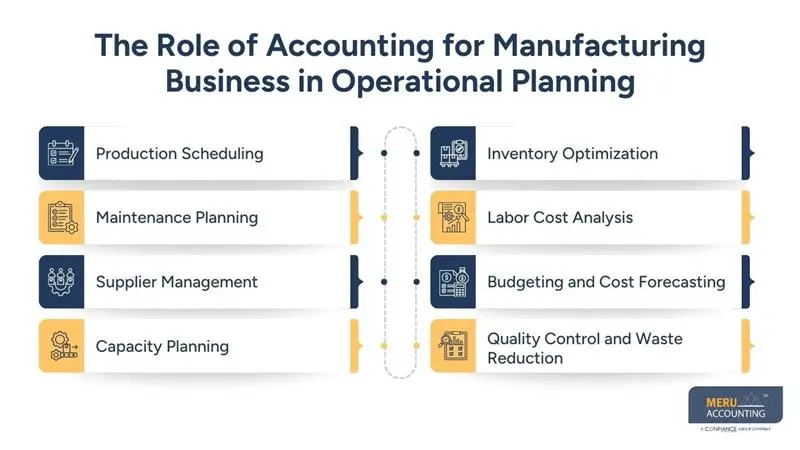
Supplier Management
Insights into material costs and supplier performance improve procurement decisions.
Capacity Planning
Monitoring costs and resource usage helps plan for expansion or new product lines.
Inventory Optimization
Accounting helps track raw materials and finished goods, enabling efficient stock management and reducing excess inventory costs.
Labor Cost Analysis
Detailed accounting of labor expenses allows manufacturers to allocate workforce efficiently and control overtime costs.
Budgeting and Cost Forecasting
Financial records provide a foundation for realistic budgeting and forecasting, helping anticipate production and operational expenses.
Quality Control and Waste Reduction
Monitoring costs associated with defects and waste supports investments in quality improvements and reduces unnecessary losses.
In essence, accounting for manufacturing business provides the clarity needed to align financial management with operational goals.
Manufacturing Accounting 101: Transforming Data into Actionable Insights
Data from accounting is only useful if it leads to actionable insights. Manufacturing accounting 101 helps with:
Cost Trend Analysis
Identifying rising costs in materials, labor, or overhead.
Profitability Analysis
Determining which products or production lines generate the most profit.
Performance Metrics
Tracking efficiency indicators like labor productivity and material usage.
Forecasting
Using historical data to anticipate future costs and revenue.
Resource Utilization Review
Assessing how effectively materials, labor, and machinery are being used to minimize waste.
Budget Variance Analysis
Comparing actual expenses with budgeted figures to pinpoint overspending and opportunities for cost savings.
These insights empower manufacturers to act strategically, ensuring operations remain efficient and profitable.
How Accounting for Manufacturing Business Helps Optimize Labor and Overhead
Labor and overhead are major cost components in manufacturing. Accounting for manufacturing business supports optimization by:
Tracking Labor Hours
Recording time spent on each production process helps identify inefficiencies.
Allocating Overhead Accurately
Proper distribution of overhead ensures product pricing reflects true costs.
Reducing Idle Time
Monitoring productivity highlights opportunities to optimize workforce scheduling.
Cost-Benefit Analysis
Evaluating the cost of overhead against productivity helps reduce unnecessary spending.
Through these practices, businesses can maximize output while controlling expenses effectively.
Inventory Management and Accounting for Manufacturing Business
Inventory is a critical aspect of manufacturing efficiency. Proper accounting for manufacturing business ensures:
Avoidance of Stockouts
Accurate records prevent production delays due to missing materials.
Reduced Holding Costs
Maintaining optimal inventory levels reduces storage costs.
Tracking Finished Goods
Knowing what is ready for sale improves order fulfillment and cash flow.
Integration with Production
Accounting ensures inventory management aligns with production schedules.
By combining manufacturing accounting 101 methods with inventory control, businesses can achieve smoother operations and cost savings.
Budgeting and Forecasting in Manufacturing Accounting
Budgeting and forecasting are essential for long-term operational efficiency. Accounting for manufacturing business enables:
Accurate Cost Projections
Forecasting material, labor, and overhead costs for better planning.
Profit Planning
Setting realistic revenue targets based on production capacity and market demand.
Scenario Analysis
Understanding the financial impact of changing material prices or labor costs.
Resource Allocation
Planning budgets for machinery, labor, and inventory more effectively.
Using manufacturing accounting 101, businesses can plan smarter and avoid surprises that affect operations and profitability.
Real-Life Example
Consider a mid-sized furniture manufacturer:
- Without proper accounting, they often overstocked wood and materials, leading to high storage costs and waste.
- By implementing accounting for manufacturing business practices, they accurately tracked raw materials, labor, and overhead costs.
- Using manufacturing accounting 101 principles, they allocated costs to each product line and identified the least profitable items.
Result
Production efficiency increased by 20%, inventory costs dropped by 15%, and the company improved profit margins.
This example shows how accounting directly impacts operational efficiency and long-term growth.
How Meru Accounting Supports Manufacturing Companies
At Meru Accounting, we provide specialized services for manufacturing businesses, helping them implement accurate accounting for manufacturing business practices. Our team of professionals ensures:
1. Full Cost Tracking
We track all production costs, including raw materials, labor, and overhead, ensuring you have a complete view of where your money is going.
2. Efficient Inventory Management
Our team helps align inventory with production schedules, reducing waste, avoiding stockouts, and optimizing storage costs.
3. Budgeting, Forecasting, and Financial Planning
We assist in creating realistic budgets, forecasting future costs, and planning financial strategies to support long-term growth.
4. Detailed Financial Reports
We provide comprehensive financial reports that highlight cost trends, profitability, and performance metrics, helping you make smarter, data-driven decisions.
5. Customized Solutions for Manufacturing Sectors
Every manufacturing business is unique. We offer tailored solutions that fit your specific industry, production processes, and business goals.
By partnering with Meru Accounting, manufacturers can focus on operations while we handle the complexities of accounting for manufacturing businesses, ensuring efficiency, accuracy, and growth.
Key Takeaways
- Accounting for manufacturing businesses is critical for tracking costs, optimizing resources, and supporting growth.
- Manufacturing accounting 101 covers essentials like cost classification, inventory valuation, and variance analysis.
- Proper accounting improves decision-making, operational planning, and cost management.
- Accurate labor and overhead tracking, inventory control, and budgeting enhance efficiency and profitability.
- Partnering with professional accounting services, such as Meru Accounting, ensures long-term operational success.
FAQs
It is the process of managing financial records, tracking costs, and analyzing production expenses specifically for manufacturing operations.
It helps businesses track production costs, manage inventory, and make informed decisions to improve efficiency and profitability.
Key topics include cost classification, inventory management, overhead allocation, cost of goods manufactured, and variance analysis.
By tracking material usage, labor hours, and overhead, accounting highlights inefficiencies and areas for cost reduction without affecting quality.
Yes, Meru Accounting provides expert services to manage costs, inventory, labor, and financial planning for manufacturing businesses, improving operational efficiency.


