



Accounting for manufacturing companies is essential for maintaining precise financial records, controlling costs, and ensuring smooth operations. Manufacturing businesses deal with complex production processes, multiple expenses, and inventory management, making accurate accounting crucial.
By integrating enterprise resource planning (ERP) systems with production accounting, companies can improve accuracy, reduce errors, and make better decisions.
With accurate accounting for manufacturing companies, businesses can gain clear insights into production costs, streamline operations, and identify areas to improve efficiency. Integrating ERP ensures that all financial and operational data is connected, providing a reliable foundation for growth and decision-making.
What You Will Learn From This Blog
- Understand the key principles of manufacturing accounting and how it differs from standard business accounting.
- Learn about the common challenges manufacturing businesses face in managing finances and how ERP can help overcome them.
- Explore how ERP systems improve accounting accuracy and provide a clearer view of production costs.
- Gain practical strategies for integrating ERP with manufacturing accounting to enhance efficiency.
- Learn why partnering with experts like Meru Accounting can simplify and streamline your manufacturing accounting process.
Understanding Accounting for Manufacturing Companies
Accounting for manufacturing companies is a system designed to track all costs related to production, including raw materials, labor, and overhead. It provides businesses with clear insights into profitability, cost control, and overall financial health.
This ensures that management can plan budgets and allocate resources effectively. Unlike standard accounting, manufacturing accounting focuses specifically on production-related costs, inventory valuation, and the cost of goods sold.
This specialized approach helps manufacturers understand the true expense of producing each product and identify areas to reduce unnecessary spending.
Accurate cost tracking is essential for setting the right product prices and avoiding losses. It ensures that every expense is accounted for, giving businesses the information needed to make informed financial decisions and improve profit margins.
Accounting for manufacturers also plays a key role in inventory management, monitoring raw materials, work-in-progress, and finished goods. Additionally, maintaining proper accounting practices ensures compliance with financial regulations, audits, and taxation requirements, minimizing the risk of legal or financial penalties.
Importance of Accurate Manufacturing Accounting
- Accurate accounting for manufacturers allows companies to track costs at every stage, helping to avoid budget overruns. This makes accounting for manufacturing companies more precise and insightful.
- Manufacturers can calculate profit margins for each product line, supporting better profitability analysis.
- Understanding expenses and production costs helps optimize labor and material usage.
- Reliable accounting data guides management in making informed business decisions.
- Maintaining accurate records reduces financial risks and prevents errors in taxation and reporting. This is a core aspect of accounting for manufacturing companies.
- Monitoring cash inflows and outflows ensures the business has sufficient funds to cover operational expenses.
- Precise financial records support better inventory tracking, reducing waste and preventing stock shortages or overstocking.
The Fundamentals of Manufacturing Accounting
Direct Material Costs
Tracking raw materials used in production helps in calculating the exact cost per unit. Proper monitoring also ensures that material wastage is minimized, improving overall cost efficiency.
Direct Labor Costs
Recording wages paid to production workers ensures accurate cost allocation. This also helps in analyzing labor productivity and controlling payroll expenses.
Manufacturing Overhead
Expenses like factory rent, electricity, and maintenance are included under overhead costs. Proper accounting of overhead ensures that indirect costs are fairly distributed across products.
Work-in-Progress Accounting
Accounting for partially completed products ensures inventory is valued correctly. This prevents under- or overstatement of assets in financial reports, reinforcing the accuracy of accounting for manufacturing companies.
Finished Goods Valuation
The cost of finished goods is calculated for accurate reporting and pricing strategies. Correct valuation supports better sales planning and profit margin analysis.
Production Efficiency Analysis
Measuring production efficiency helps identify bottlenecks and optimize processes. This allows businesses to reduce waste and improve output.
Cost Allocation Accuracy
Ensuring all costs are assigned to the correct products helps maintain precise financial statements. Accurate allocation supports better decision-making and pricing strategies.
Common Challenges in Accounting for Manufacturing Companies
Complex Production Costs
Multiple stages of production make it difficult to track costs accurately. Without proper tracking, businesses may miscalculate the total cost of each product, affecting profitability.
Inventory Errors
Mismanagement of raw materials or finished goods can result in incorrect financial records. This can lead to stock shortages, overstocking, or inaccurate reporting of assets, which is why precise accounting for manufacturing companies is critical.
Manual Data Entry Mistakes
Relying on spreadsheets can lead to errors in calculations and reporting. Such mistakes may cause incorrect financial statements and hinder decision-making.
Delayed Reporting
Slow accounting processes affect timely decision-making and forecasting. Delays in reports can prevent management from responding quickly to financial or operational issues.
Cost Allocation Issues
Assigning overhead and indirect costs accurately is a frequent challenge. Improper allocation can distort product costs and misrepresent profitability, which is a key focus in accounting for manufacturing companies.
The Role of ERP Systems in Manufacturing Accounting
Centralized Data Management
ERP systems consolidate financial and production data into a single platform. This allows teams across departments to access consistent and reliable information at any time.
Real-Time Reporting
Businesses can access up-to-date financial information for quicker decisions. Real-time reports also help in identifying issues early and improving operational efficiency.
Automation of Processes
ERP reduces manual entry, minimizing errors in accounting for manufacturing companies. Automation saves time and ensures more accurate and consistent financial records.
Inventory and Cost Tracking
ERP helps track raw materials, production costs, and finished goods efficiently. Accurate tracking supports better planning, reduces waste, and optimizes inventory levels.
Compliance Support
ERP maintains records required for audits, taxes, and regulatory reporting. This ensures that companies remain compliant with industry standards and legal requirements.
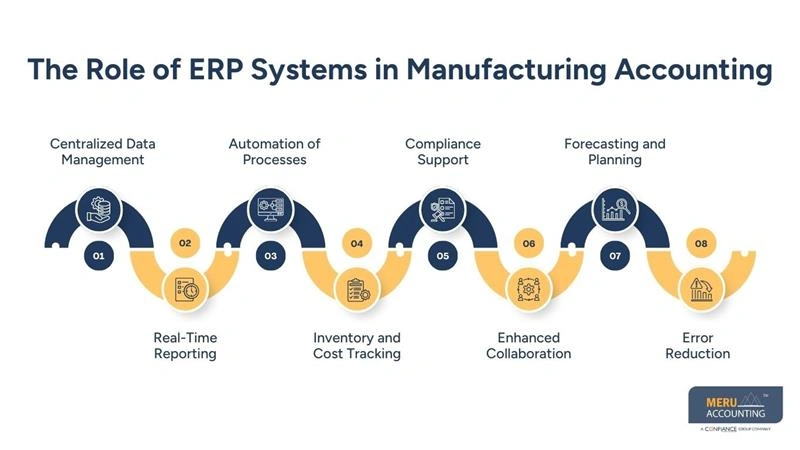
Enhanced Collaboration
ERP allows different departments, such as production, finance, and procurement, to collaborate effectively. Improved communication reduces miscalculations and enhances overall efficiency.
Forecasting and Planning
ERP systems provide tools for financial and production forecasting. This helps businesses prepare budgets, anticipate demand, and manage resources more effectively.
Error Reduction
By automating calculations and integrating data across systems, ERP minimizes human errors. This increases accuracy in cost allocation, reporting, and decision-making.
Best Practices for Integrating ERP With Manufacturing Accounting
Choose the Right ERP System
Select an ERP system that suits your production scale and accounting needs. Consider features, scalability, and ease of use to match your business requirements.
Customize Modules for Manufacturing
Configure ERP modules to track manufacturing costs, inventory, and labor expenses accurately. Tailoring the system ensures it aligns with your specific production processes and reporting needs.
Train Staff Effectively
Ensure employees understand how to use ERP for accounting tasks to maintain accuracy. Proper training reduces errors and maximizes the benefits of ERP integration.
Regular Data Review
Perform routine audits of ERP data to catch discrepancies early. Regular checks help maintain data integrity and ensure reliable financial reporting, an important practice in accounting for manufacturing companies.
Integrate With Accounting Software
Sync ERP data with accounting platforms for streamlined financial reporting. Integration eliminates duplicate entries and provides a unified view of financial and operational performance.
Key Benefits of ERP-Integrated Accounting for Manufacturing Companies
Enhanced Accuracy
Integration reduces errors in cost tracking and financial reporting. Accurate data ensures reliable financial statements and minimizes the risk of costly mistakes, strengthening accounting for manufacturing companies.
Time Efficiency
Automated processes save time and allow accountants to focus on analysis. This streamlines operations and improves productivity across the organization.
Better Cost Visibility
ERP provides detailed insights into material, labor, and overhead costs. Clear visibility helps identify areas to reduce expenses and improve profitability.
Improved Decision Making
Management can make informed decisions with accurate real-time data. Access to timely information enables proactive planning and strategic choices.
Scalability
ERP systems grow with your business, supporting more complex manufacturing processes. Flexible systems can adapt to increased production volume and new product lines without disrupting accounting.
Why Choose Meru Accounting for Manufacturing Accounting
Industry Expertise
Meru Accounting specializes in accounting for manufacturing companies, ensuring precise cost tracking and reporting. This expertise helps businesses maintain accurate financial statements and manage production costs effectively.
ERP Integration Support
We help manufacturing firms integrate ERP systems with accounting processes for better efficiency. Proper integration reduces errors, automates reporting, and connects financial and operational data seamlessly.
Customized Solutions
Meru Accounting offers tailored solutions based on production scale, industry type, and business goals. Personalized approaches ensure that accounting practices align with each company’s unique processes and challenges.
Experienced Professionals
Our team has experience handling manufacturing accounting challenges, from cost allocation to inventory management. Skilled accountants provide guidance on complex financial matters and compliance requirements.
Process Optimization
Meru Accounting identifies inefficiencies in financial workflows and recommends improvements. Streamlined processes save time, reduce costs, and enhance overall operational performance.
Regulatory Compliance Support
Our team ensures that all financial reporting meets legal and industry standards. Compliance support minimizes the risk of audits, penalties, and regulatory issues.
Key Takeaways
- Accounting for manufacturing companies is critical for accurate cost tracking, inventory management, and financial reporting.
- Specialized knowledge in manufacturing accounting is essential to understand labor, materials, and overhead for better profitability.
- Integrating ERP improves accuracy by automating accounting and production processes, reducing errors and delays.
- Following best practices such as proper system selection, staff training, and routine audits helps streamline accounting processes.
- Expert support enables manufacturing firms to maintain precise financial records and focus on business growth.
FAQs
In manufacturing accounting, businesses track direct materials, direct labor, and manufacturing overhead to know the true cost of producing products.
By recording all production costs accurately, accounting for manufacturers helps businesses set the right prices, reduce waste, and increase profit margins.
ERP systems automate cost tracking, manage inventory, and provide real-time financial reports, making accounting more accurate and efficient.
Manufacturers often face errors like incorrect inventory valuation, improper cost allocation, and delayed financial reporting. Correct accounting practices can prevent these issues.
Manufacturing companies should review their accounting records regularly, ideally monthly or quarterly, to track costs, monitor inventory, and make informed business decisions.


