




Accounting for manufacturing is an essential aspect of running a successful manufacturing business. Without proper accounting practices, a company may struggle to understand its production costs, manage finances effectively, and plan for growth.
By implementing structured accounting for manufacturing, businesses can track expenses, identify inefficiencies, and make informed decisions that support long-term success.
Effective accounting for manufacturing not only tracks costs but also provides insights into which products are most profitable, where resources can be optimized, and how cash flow can be managed efficiently. It acts as a roadmap for growth, helping manufacturing companies make data-driven decisions that improve productivity, reduce waste, and maximize profits.
What You Will Learn From This Blog
- How accounting for manufacturing works in practical terms.
- The importance of accounting in a manufacturing company for profitability.
- Key components and benefits of accurate manufacturing accounting.
- Common challenges and practical solutions in manufacturing accounting.
- How Meru Accounting can assist in managing accounting for manufacturing efficiently.
Introduction to Accounting for Manufacturing
Accounting for manufacturing is the process of recording, analyzing, and reporting all financial transactions related to production. It provides manufacturers with a clear understanding of the cost of goods produced and helps assess overall profitability.
Unlike general accounting, which tracks overall income and expenses, accounting in a manufacturing company focuses specifically on production costs, inventory management, labor, and overheads. This specialized approach ensures that every aspect of the manufacturing process is financially accounted for.
The main purpose of accounting for manufacturing is to provide accurate data that supports informed decision-making. Managers can use this information to control costs, price products appropriately, and maintain financial sustainability.
By keeping track of production expenses and monitoring financial performance, companies can make strategic choices that directly impact their profitability. On a daily basis, accounting for manufacturing plays a crucial role in monitoring production activities. It ensures that expenses are kept under control and wastage is minimized.
This ongoing financial oversight helps prevent overspending, manage resources efficiently, and maintain smooth operations within the company.
Furthermore, reliable manufacturing accounting data significantly influences decision-making. With precise insights into production costs and profitability, companies can identify which products are performing well, determine when to scale production, and implement cost-saving strategies where necessary.
The Role of Accounting in a Manufacturing Company
Tracking Material Costs
Accounting in a manufacturing company helps track the cost of raw materials, ensuring that expenses are controlled and wastage is minimized.
Monitoring Labor Expenses
It captures all labor-related costs, including wages, overtime, and benefits, giving a clear picture of production costs.
Managing Overhead Costs
Accounting for manufacturing tracks overheads such as utilities, maintenance, and factory rent, helping identify unnecessary expenditures.
Evaluating Profitability
By calculating the cost of production versus sales revenue, managers can understand which products generate the highest profit margins.
Compliance and Reporting
It ensures the company meets legal and tax obligations by maintaining accurate financial records.
Understanding Manufacturing Costs and Their Impact on Profitability
Direct Materials
These are raw materials directly used in production. Accurate tracking prevents overspending and supports correct product pricing. Proper management of materials also minimizes waste and improves overall efficiency.
Direct Labor
This includes wages of workers directly involved in manufacturing. Mismanagement can inflate product costs and reduce profits. Tracking labor accurately ensures fair allocation and keeps production costs under control.
Manufacturing Overhead
Overheads cover indirect expenses like utilities and factory equipment maintenance. Proper accounting ensures these costs are allocated fairly to products. Efficient overhead management can uncover cost-saving opportunities.
Cost of Goods Sold (COGS)
Accounting in a manufacturing company calculates COGS to determine gross profit, a key factor in assessing business health. Regularly reviewing COGS helps identify trends and optimize pricing strategies.
Effect on Profit Margins
Understanding manufacturing costs helps identify areas for cost reduction, boosting overall profitability and competitive advantage. It also guides decisions on which products to prioritize for maximum returns.
Key Components of Accounting for Manufacturing
Job Costing
Job costing tracks expenses for specific production jobs, allowing managers to see exact costs and profitability. It also helps in identifying which jobs are more cost-effective and which need process improvements.
Process Costing
This method allocates costs across similar products, helping streamline production and pricing decisions. Consistent monitoring ensures efficiency and uniform product costing.
Standard Costing
Standard costing compares actual costs with standard benchmarks to identify variances and inefficiencies. This makes it easier to control expenses and maintain production quality.
Inventory Accounting
Tracking raw materials, work-in-progress, and finished goods ensures accurate financial reporting and avoids stock losses. Proper inventory management also reduces carrying costs and prevents stockouts.
Financial Reporting
Regular reports provide insights into profit margins, cash flow, and resource allocation, guiding strategic decisions. Timely reporting allows managers to respond quickly to financial trends and challenges.
Benefits of Accurate Accounting in a Manufacturing Company
Better Cost Control
Accurate accounting for manufacturing enables companies to control expenses and optimize resource usage. It also highlights areas of unnecessary spending, helping reduce waste and save money.
Improved Decision-Making
Financial data helps managers make informed choices about production, pricing, and expansion. Access to clear insights allows quick responses to market changes and operational challenges.
Enhanced Profitability
By understanding costs precisely, businesses can set competitive prices without sacrificing profit margins. This clarity also helps identify the most profitable product lines to focus on.
Regulatory Compliance
Proper accounting ensures that all legal and tax obligations are met, avoiding fines and penalties. It also builds credibility with investors, banks, and stakeholders.
Planning and Forecasting
Reliable data support budgeting, forecasting, and long-term strategic planning. It allows companies to anticipate challenges, allocate resources effectively, and plan for sustainable growth.
How Accounting for Manufacturing Supports Growth Strategies
Identifying Profitable Products
Accounting in a manufacturing company helps determine which products generate the most profit and deserve further investment. This insight ensures resources are focused on high-return items.
Streamlining Production
Cost analysis reveals inefficiencies, allowing companies to optimize production processes and reduce waste. Streamlined production also improves delivery timelines and customer satisfaction.
Resource Allocation
Financial insights guide investment in machinery, technology, and workforce based on actual needs. Proper allocation ensures funds are used effectively to support growth.
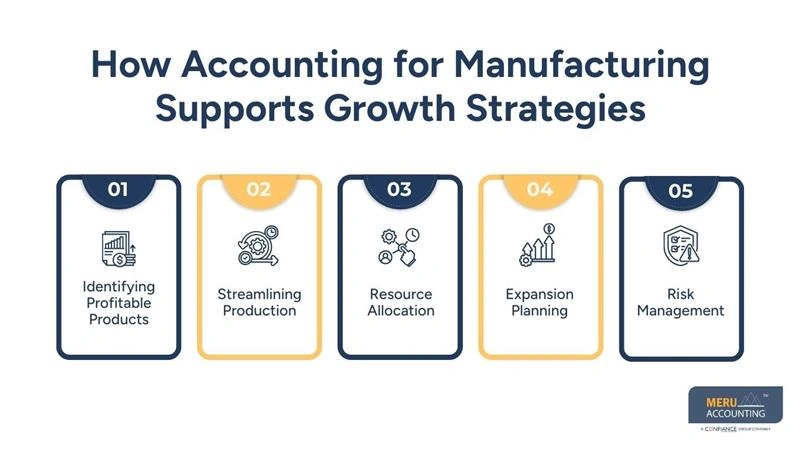
Expansion Planning
Accurate accounting provides data to support scaling operations or entering new markets. It also minimizes the risk of overextending resources during expansion.
Risk Management
Understanding costs and financial flows helps companies prepare for economic fluctuations and production challenges. Early identification of risks allows companies to implement preventive measures.
Common Challenges in Accounting in a Manufacturing Company and How to Overcome Them
Complex Cost Structures
Manufacturing often involves multiple complex cost components. Using specialized accounting systems can effectively simplify cost tracking.
Inventory Management Issues
Errors in inventory records can quickly lead to inaccurate financial statements. Implementing robust inventory accounting methods ensures accuracy.
Labor Cost Tracking
Over time, bonuses and variable pay can complicate labor cost calculations. Proper accounting software can efficiently automate tracking.
Overhead Allocation
Incorrect or inconsistent allocation of overheads may distort actual product costs. Using standardized costing methods ensures fair distribution.
Keeping Up With Compliance
Regulations and tax rules may change frequently. Regular audits and expert accounting support help maintain compliance.
How Meru Accounting Strengthens Manufacturing Accounting and Business Growth
Expertise in Manufacturing Accounting
Meru Accounting provides specialized services to manage all aspects of accounting for manufacturing efficiently. Our experts bring years of experience to handle complex production cost structures.
Tailored Accounting Solutions
We customize accounting in a manufacturing company to match your business size, production processes, and reporting needs. This ensures that every client receives solutions suited to their unique operations.
Advanced Reporting Tools
Our team ensures you receive accurate financial reports, enabling better cost control and decision-making. These insights help managers quickly spot inefficiencies and improve profitability.
Compliance Support
Meru Accounting ensures your financial records comply with all legal and tax requirements, reducing risk. We also keep you updated on regulatory changes to avoid any penalties.
Support for Growth Strategies
By providing detailed insights into costs and profitability, we help manufacturing companies plan expansions and optimize production. Our guidance helps businesses make data-driven decisions for long-term growth.
Key Takeaways
- Accounting for manufacturing is essential for tracking production costs and profitability.
- Accounting in a manufacturing company includes managing materials, labor, overheads, and inventory.
- Accurate accounting supports better decision-making, regulatory compliance, and growth planning.
- Meru Accounting offers specialized services to handle manufacturing accounting efficiently.
- Understanding costs and financial flows helps companies reduce expenses and improve profits.
FAQs
Accounting for manufacturing is the process of tracking all costs and financial transactions related to production. It is important because it helps a company understand expenses, control costs, and improve profitability.
By tracking materials, labor, and overhead expenses, accounting in a manufacturing company highlights areas where resources are wasted, helping managers reduce unnecessary costs.
The main components include direct materials, direct labor, manufacturing overhead, inventory management, and cost of goods sold (COGS).
Accurate accounting provides insights into profitable products, cost efficiency, and resource allocation, helping companies make informed decisions for expansion.
Meru Accounting specializes in accounting for manufacturing companies, offering customized solutions, accurate reporting, and compliance support to help businesses grow.


