




Cost overruns are one of the biggest reasons manufacturing businesses struggle to maintain profits. Even companies with strong sales often see margins shrink because production costs rise faster than expected. This is where accounting for manufacturing plays a critical role.
When costs are tracked properly, businesses gain control over spending, reduce waste, and prevent budget issues before they grow. Accounting for manufacturing is not just about recording numbers at the end of the month. It is about understanding where money is spent during each stage of production and using that information to control costs.
Without accurate records, manufacturers may not realize that certain products, processes, or departments are exceeding budgets.
In this blog, we explain how manufacturing accounting helps reduce cost overruns and why strong accounting in a manufacturing company is necessary for long-term financial stability.
What You Will Learn From This Blog
In this blog, you will learn:
- What do cost overruns mean in manufacturing businesses
- Why do cost overruns happen without proper accounting for manufacturing
- How accounting for manufacturing improves cost tracking and control
- How manufacturing accounting helps find hidden costs
- Ways manufacturing accounting manages labor and overhead costs
- How real-time data from accounting in a manufacturing company reduces overspending
- How outsourced manufacturing accounting helps prevent cost overruns
What Are Cost Overruns in Manufacturing Businesses
Cost overruns occur when actual production costs exceed planned or budgeted costs. In manufacturing, this can happen at many points, including raw material purchases, labor hours, machine usage, and overhead expenses.
Common examples of cost overruns include:
- Raw material prices are increasing without proper tracking
- Excess labor hours due to poor scheduling
- High machine repair and maintenance costs
- Uncontrolled utility and factory expenses
- Scrap, rework, and production waste
Without accurate accounting for manufacturing, these overruns often remain hidden until profits drop. By the time financial reports are reviewed, the damage is already done.
Why Cost Overruns Are Common Without Proper Manufacturing Accounting
Cost overruns are common when businesses rely on estimates instead of actual data. Without proper accounting for manufacturing, manufacturers often face the following issues:
Lack of Cost Tracking
When costs are not tracked by product, batch, or department, it becomes hard to know where money is being lost. Many businesses only look at total expenses, which hides problem areas.
Poor Budget Control
Without accurate cost records, budgets are based on guesswork. This makes it difficult to compare planned costs with actual costs during production.
Delayed Financial Information
If financial data is updated only monthly or quarterly, managers cannot take quick action when costs start increasing.
No Clear Cost Responsibility
Without detailed accounting in a manufacturing company, teams are unaware of cost limits. This often leads to overspending on materials, labor, or repairs.
These problems highlight why proper accounting for manufacturing is essential to control costs and reduce overruns.
How Accounting for Manufacturing Improves Cost Visibility
costs are clearly recorded and organized, businesses can see exactly where money is going.
Detailed Cost Classification
Accounting for manufacturing separates costs into categories such as:
- Direct materials
- Direct labor
- Manufacturing overhead
- Work-in-progress
- Finished goods
This breakdown helps managers understand which costs are rising and why.
Product-Level Cost Tracking
With proper manufacturing accounting, businesses can track costs per product or product line. This helps identify items that are costing more to produce than expected.
Budget vs Actual Comparison
Regular comparison of actual costs against budgets helps spot overruns early. This allows management to take corrective steps before losses increase.
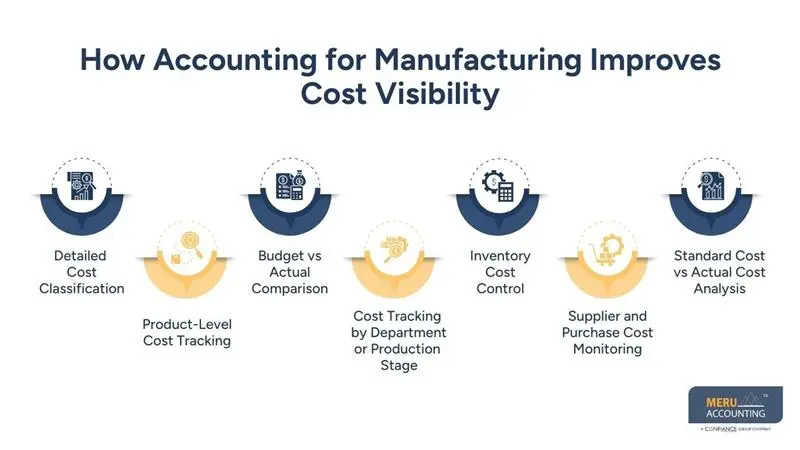
Cost Tracking by Department or Production Stage
Accounting for manufacturing allows costs to be tracked by department or production stage. This helps identify which areas are spending more than expected and need improvement.
Inventory Cost Control
Manufacturing accounting helps track inventory costs accurately, including raw materials and finished goods. This prevents stock shortages and reduces excess inventory that can cause cost overruns.
Supplier and Purchase Cost Monitoring
Accounting for manufacturing tracks supplier costs and purchase history. This helps businesses negotiate better prices and avoid overpaying for raw materials.
Standard Cost vs Actual Cost Analysis
By comparing standard costs with actual costs, manufacturing businesses can identify where inefficiencies occur and take corrective action. This analysis improves cost accuracy and reduces waste.
Better cost visibility leads to better decisions and fewer surprises.
Identifying Hidden Manufacturing Costs with Accurate Accounting
Many manufacturing businesses suffer from hidden costs that slowly reduce profits. Strong accounting in a manufacturing company helps identify these costs clearly.
Scrap and Rework Costs
Scrap materials and rework often go unrecorded or are treated as normal losses. Manufacturing accounting records these costs separately, making their impact visible.
Machine Downtime
Idle machines still generate costs such as depreciation, rent, and utilities. Proper manufacturing accounting highlights downtime costs and encourages better planning.
Small Purchases and Supplies
Minor purchases like tools, packaging materials, and spare parts add up over time. Without proper tracking, these costs often exceed budgets.
Energy and Utility Waste
Power, water, and fuel costs often rise due to inefficient machine use. Manufacturing accounting tracks these costs and shows where energy is being wasted.
Inventory Storage and Handling Costs
Excess inventory increases storage and handling expenses over time. Accounting in a manufacturing company helps identify these extra costs and control stock levels.
By identifying hidden costs, manufacturing accounting helps reduce waste and improve efficiency.
Managing Labor and Overhead Costs with Accounting in a Manufacturing Company
Labor and overhead costs make up a large portion of manufacturing expenses. Effective accounting in a manufacturing company helps manage these costs more efficiently.
Labor Cost Tracking
Accounting systems track labor hours by job, shift, or department. This helps identify overtime issues, low productivity, and staffing problems.
Overhead Cost Allocation
Overhead costs such as rent, utilities, and maintenance are often spread across products. Manufacturing accounting ensures these costs are allocated fairly and accurately.
Cost Control Policies
When labor and overhead costs are visible, management can set limits and control spending more effectively.
Overtime Monitoring
Unplanned overtime increases labor costs quickly. Accounting in a manufacturing company tracks overtime hours and helps prevent unnecessary payroll expenses.
Department-Level Cost Review
Reviewing costs by department shows where overhead spending is higher than expected. Manufacturing accounting helps managers take action to reduce these extra costs.
This level of control reduces unnecessary expenses and prevents cost overruns.
How Real-Time Accounting Data Helps Reduce Overspending in Manufacturing Companies
Real-time financial data is a powerful tool for controlling costs. Modern accounting in a manufacturing company provides timely updates that support better decisions.
Early Warning Signals
When costs exceed budget limits, real-time data alerts management quickly. This allows immediate action instead of waiting for monthly reports.
Better Purchase Decisions
Up-to-date cost data helps purchasing teams avoid over-ordering or paying higher prices for materials.
Improved Production Planning
Production managers can adjust schedules and resources based on current cost information.
Faster Cost Correction
Real-time data helps identify cost issues as they happen. Manufacturing accounting lets you fix problems before they grow.
Better Cash Flow Control
Real-time financial updates help track cash usage and avoid sudden cash shortages. This keeps production running smoothly without overspending.
Real-time accounting in a manufacturing company reduces overspending by keeping everyone informed and accountable.
How Outsourced Accounting for Manufacturing Helps Prevent Cost Overruns
Many manufacturing businesses choose outsourced accounting for manufacturing to improve accuracy and control costs.
Access to Skilled Professionals
Outsourced teams specialize in accounting for manufacturing. They understand production costs, inventory management, and overhead allocation.
Consistent Cost Monitoring
Outsourced accounting for manufacturing ensures costs are reviewed regularly and reports are prepared on time.
Reduced Internal Errors
By outsourcing accounting for manufacturing, businesses reduce errors caused by limited internal expertise or manual processes.
Focus on Core Operations
Outsourcing allows management to focus on production and sales while experts handle financial tracking.
Improved Budget Planning and Forecasting
Outsourced accounting for manufacturing helps businesses create accurate budgets based on real production data. This prevents overspending by ensuring costs are planned correctly before production begins.
Better Compliance and Audit Readiness
Outsourced accounting for manufacturing ensures financial records are maintained correctly and follow accounting standards. This reduces the risk of penalties and helps prevent unexpected costs during audits.
Outsourced accounting for manufacturing provides reliable cost control without the need to hire and train full-time staff.
Why Choose Meru Accounting?
At Meru Accounting, we specialize in accounting for manufacturing businesses of all sizes. We understand the cost challenges manufacturers face and help businesses gain control over production expenses.
Detailed cost tracking and reporting
Accurate tracking of production costs with clear and easy-to-understand reports.
Inventory and work-in-progress accounting
Proper management of inventory and WIP to ensure correct costing and stock control.
Labor and overhead cost analysis
Analysis of labor and overhead expenses to identify and reduce unnecessary costs.
Budget preparation and monitoring
Creation of realistic budgets and regular monitoring of actual costs against planned budgets.
Customized accounting in a manufacturing company setup
Tailored accounting systems designed to match specific manufacturing processes and needs.
Outsourced accounting for manufacturing support
Ongoing outsourced accounting support for consistent cost control and accurate reporting.
With Meru Accounting, you gain clear cost visibility, accurate reports, and better control over expenses.
Key Takeaways
- Cost overruns reduce profits and create cash flow issues
- Accounting for manufacturing helps track and control production costs
- Accounting in a manufacturing company improves cost visibility and planning
- Hidden costs become visible with proper accounting systems
- Labor and overhead costs can be managed better with accurate data
- Real-time manufacturing accounting reduces overspending
- Outsourced accounting for manufacturing provides expert cost control support
- Strong accounting practices lead to better cost control and healthier financial results.
FAQs
Manufacturing accounting tracks all production costs in real time, helping identify and control overspending before it becomes a major issue.
Common cost overruns include rising raw material costs, labor overtime, machine downtime, scrap waste, and high overhead expenses.
Manufacturing accounting provides accurate cost data, helping managers monitor budgets and avoid unexpected expenses.
Real-time accounting updates costs instantly, giving managers the ability to correct issues quickly and reduce unnecessary spending.
Yes, outsourcing accounting for manufacturing provides expert cost tracking and reporting, helping prevent cost overruns and improve profitability.


