




Accounting for manufacturing firms plays a direct role in helping business owners understand where money is coming from, where it is going, and how operations affect profits on a daily basis. Unlike general accounting, manufacturing requires tracking raw materials, labor, overheads, and production costs in real time. When financial data is clear and updated, manufacturers can make faster and better decisions without confusion or delay.
In this blog, you will see how accounting for manufacturing firms creates real-time financial visibility, improves cost tracking, supports planning, and strengthens control across production and finance teams. You will also learn how the right systems and expert support make financial data easier to read and act on.
What You Will Learn From This Blog
- Importance of real-time financial visibility for manufacturers and how it reduces uncertainty in daily decision-making.
- Differences between accounting for manufacturing firms and regular accounting practices, and why these differences matter for cost and profit control.
- Role of accurate cost and inventory tracking in supporting clear, reliable financial reporting.
- Ways manufacturing software helps maintain timely and dependable accounting data across production and finance teams.
- Impact of real-time financial insights on pricing, budgeting, and production planning decisions.
- Value of professional accounting services in improving financial clarity, control, and long-term financial stability for manufacturers.
Understanding Real-Time Financial Visibility In Manufacturing
Meaning Of Real-Time Financial Visibility
Real-time visibility means having updated financial information without waiting for month-end reports. It shows costs, income, and margins as they happen.
Why Manufacturers Need Timely Data
Manufacturing decisions depend on material costs, labor usage, and output levels. Delayed data can lead to wrong pricing and poor planning.
Challenges Without Proper Accounting
Without strong accounting for manufacturing firms, businesses face delayed reports, hidden costs, and unclear profit figures.
Impact On Daily Operations
Clear financial visibility helps managers control waste, manage orders, and respond quickly to cost changes.
Link Between Operations And Finance
Real-time data connects production activities with financial results, helping teams work with shared numbers.
Support For Faster Decision-Making
Up-to-date financial information allows managers to make quick adjustments in production, spending, and pricing without relying on outdated reports.
How Accounting For Manufacturing Firms Improves Cost Tracking
Tracking Raw Material Costs
Accurate material tracking ensures costs are recorded as materials move through production stages, which is a core benefit of accounting for manufacturing firms. This helps prevent material wastage and supports better purchase planning.
Monitoring Labor Expenses
Labor costs are assigned to specific jobs or batches, improving cost accuracy. This also helps identify productivity gaps and control overtime expenses.
Managing Overhead Costs
Utilities, maintenance, and factory rent are tracked and allocated correctly. Proper allocation ensures product costs reflect true production expenses.
Identifying Cost Variations
Strong accounting for manufacturing firms highlights cost differences between planned and actual spending. These insights help address inefficiencies before they impact profits.
Supporting Cost Control Decisions
Managers can take action early when costs rise unexpectedly. Timely cost data supports better budgeting and spending control.
Role Of Inventory Accounting In Financial Visibility
Real-Time Inventory Updates
Inventory levels are updated as materials are used or products are completed. This ensures stock records stay aligned with actual production activity.
Avoiding Overstock And Shortages
Accurate data prevents excess stock and production delays. It also helps balance purchasing with production needs.
Valuation Of Work-In-Progress
Partially completed goods are valued correctly for financial reports under reliable accounting for manufacturing firms practices. This gives a clearer view of ongoing production costs.
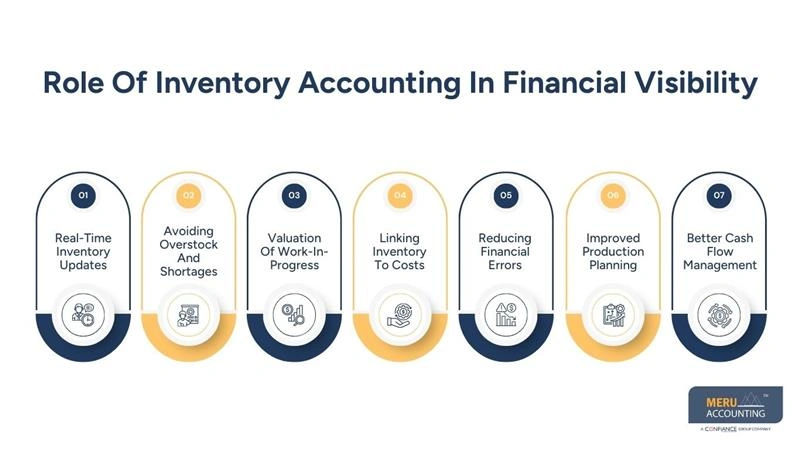
Linking Inventory To Costs
Inventory data feeds directly into cost of goods sold calculations. This supports accurate profit measurement and pricing decisions.
Reducing Financial Errors
Reliable inventory records lower the risk of reporting mistakes. Consistent data improves confidence in financial statements.
Improved Production Planning
Clear inventory records help align production schedules with available materials. This reduces downtime and workflow disruptions.
Better Cash Flow Management
Accurate inventory values help manage cash tied up in stock. This supports healthier cash planning and spending control.
How Cost Accounting Improves Cost Visibility, Profitability, and Production Control
Job Costing Visibility
Each job or batch shows its exact cost and margin. This helps manufacturers understand which orders are truly profitable.
Product-Level Profit Tracking
Manufacturers can see which products earn more and which reduce profits. Clear comparisons support better product mix decisions.
Production Efficiency Measurement
Cost data highlights areas where production efficiency can improve. This helps reduce waste and control unnecessary expenses.
Faster Financial Reviews
Updated numbers allow quicker reviews and corrections. Timely reviews reduce the risk of carrying errors forward.
Better Internal Communication
Finance and production teams work with the same data source. Shared information improves coordination and reduces misunderstandings.
How Accounting For Manufacturing Firms Supports Better Pricing Decisions
Accurate Cost Per Unit Calculation
Correct unit costs help set prices covering all production expenses, a key outcome of accurate accounting for manufacturing firms. This improves pricing accuracy and reduces unexpected profit losses.
Understanding Margin Levels
Clear margin data shows whether products are priced properly. It helps businesses maintain stable profits across product lines.
Responding To Cost Changes
Prices can adjust quickly when material or labor costs rise. Timely updates help protect margins from sudden cost increases.
Avoiding Underpricing Risks
Strong accounting for manufacturing firms prevents selling products below cost. This reduces losses caused by incorrect or incomplete cost data.
Supporting Customer Negotiations
Reliable cost data supports confident and transparent pricing discussions. Clear figures help justify prices during customer negotiations.
How Real-Time Cash Flow Monitoring Improves Financial Stability in Manufacturing
Tracking Cash Inflows
Sales receipts are recorded quickly, ensuring timely and accurate cash records. This helps businesses understand available funds without unnecessary delays.
Monitoring Cash Outflows
Payments for materials, wages, and overheads are tracked continuously. This improves control over spending and prevents unexpected cash drain.
Preventing Cash Shortfalls
Early cash visibility helps plan funding needs more effectively. It reduces the risk of payment delays and missed obligations.
Aligning Production With Cash
Production schedules can align better with available cash resources. This avoids overproduction and supports controlled operational spending.
Strengthening Financial Stability
Clear cash flow improves overall business control and planning. It supports steady operations and long-term financial confidence.
Simplifying Reporting and Compliance for Manufacturing Businesses
Timely Financial Statements
Reports reflect current operations rather than relying on outdated data. This improves decision-making and strengthens financial reporting accuracy.
Accurate Tax Calculations
Correct cost and revenue data supports proper tax filing. This helps avoid errors and ensures timely tax compliance.
Audit-Ready Records
Clear records reduce stress during internal and external audits. Well-organized data makes audit reviews faster and smoother.
Regulatory Compliance
Manufacturers meet reporting standards without unnecessary confusion. Consistent accounting practices support ongoing compliance requirements.
Reduced Risk Of Penalties
Strong accounting lowers risks related to compliance failures. This protects businesses from fines and regulatory issues.
How Accounting For Manufacturing Firms Supports Business Growth
Clear Financial Insights
Owners understand which business areas actively support sustainable growth. Clear insights help focus efforts on profitable operations.
Controlled Expansion Decisions
Growth plans are based on real and verified numbers. This reduces mistakes caused by assumptions or incomplete data.
Risk Reduction
Early financial warnings help businesses avoid unexpected losses. Timely insights allow corrective actions before issues escalate.
Improved Investor Confidence
Clear financial reports built through accounting for manufacturing firms build trust with investors and lenders. Transparency increases confidence during funding and credit discussions.
Long-Term Stability
Strong accounting for manufacturing firms supports steady business growth. Consistent reporting improves planning and long-term financial control.
Better Resource Allocation
Financial data helps allocate resources to high-performing areas. This improves efficiency and supports smarter growth decisions.
Scalable Financial Processes
Well-structured accounting systems support business expansion smoothly. They ensure financial control remains strong as operations grow.
Why Choose Meru Accounting?
Manufacturing businesses need accounting support that understands production, costs, and reporting challenges. Meru Accounting provides specialized services designed to help manufacturers maintain clarity, control, and confidence in their financial data.
Manufacturing Accounting Expertise
Meru Accounting understands the specific accounting needs of manufacturing businesses. Our experience helps address cost tracking, inventory, and production reporting accurately.
Real-Time Financial Reporting
We help clients achieve timely and accurate financial visibility. This allows manufacturers to monitor performance and make informed decisions faster.
Manufacturing Software Support
Our team works with leading manufacturing software solutions. This ensures smooth data flow between production systems and accounting records.
Customized Accounting Solutions
Services are tailored to match production processes and business models. This approach ensures accounting aligns closely with operational requirements.
Ongoing Advisory And Support
We support manufacturers beyond basic bookkeeping needs. Continuous guidance helps businesses maintain financial control as they grow.
Key Takeaways
- Real-time financial visibility supports faster decisions and more informed actions across manufacturing operations.
- Accounting systems must match manufacturing needs, as general accounting does not cover production complexities.
- Manufacturing software improves data accuracy and increases the speed of financial reporting.
- Strong cost control and clear tracking help protect profit margins consistently.
- Expert accounting support improves financial clarity, control, and overall confidence.
FAQs
Accounting for manufacturing firms tracks costs and expenses as they occur. This gives manufacturers access to updated financial data without delays.
Real-time financial visibility helps manufacturers monitor costs and cash flow. It supports quicker and better production and pricing decisions.
Manufacturing software captures production and inventory data automatically. This keeps accounting records accurate and updated at all times.
Accounting for manufacturing firms identifies cost overruns early. This allows businesses to control waste and protect profit margins.
Accounting for the manufacturing industry provides reliable financial information. This helps manufacturers plan budgets, forecasts, and production schedules.


