



Real estate projects run for years and cost a lot of money. From the day land is bought to the day a unit is sold, every step involves spending, funding, and planning cash. This is why accounting for real estate developers plays a key role across the full project life.
Each phase of a real estate project brings new costs and new risks. Early land costs, build costs, loan interest, and final sales all need close tracking. Without clear accounting for real estate development, developers may lose track of cash, miss budget limits, or face tax issues.
Good accounting gives developers a clear view of project health. It shows where money is going, what is still owed, and when income can be counted. In this blog, we will see how accounting for real estate developers works at each stage of the project lifecycle and why it matters for long term success.
What You Will Learn From This Blog
- How accounting for real estate developers works across the full project life
- What costs to track during pre build, build, and sale stages
- How to control build costs and manage cash flow
- When and how revenue is recorded in real estate projects
- Best practices to keep records clean and reports clear
- How expert help can improve accounting for real estate development
What Is Accounting for Real Estate Developers?
Accounting for real estate developers is the process of tracking money for property build projects from start to end. It is different from basic business accounting because real estate projects last for years and involve large upfront costs.
In accounting for real estate development, most costs happen long before any sale takes place. This makes careful planning and tracking very important.
Accounting for real estate development focuses on:
- Project based cost tracking
- Land and build cost records
- Loan and fund tracking
- Cash flow planning
- Sales and income timing
- Tax and rule follow up
Each project needs its own clear cost view. Developers must know how much is spent, where the money went, and what cost is still left. Without this view, control is lost and risks grow.
Strong accounting for real estate developers helps answer key questions such as:
- Is the project within budget?
- Do we have enough cash to finish the build?
- When will profit appear?
- Are we ready for audit and tax checks?
Overview of the Real Estate Development Project Lifecycle
To manage accounting for real estate development, it is important to see the full life of a project. Real estate work does not happen all at once. It moves step by step, and each step affects money in a new way.
Most real estate projects follow four main stages:
- Pre build stage
- Build stage
- Sale or lease stage
- Close out stage
Each stage brings different financial risks. Strong accounting for real estate developers adjusts with each phase to keep control.
When accounting follows the full project life, errors drop. Reports stay clear. Trust grows with banks, buyers, and partners.
Accounting for Real Estate Development During the Pre Development Phase
The pre build stage may look slow, but it costs a lot. No building has started, yet money is already going out. This is why accounting for real estate development must begin at this stage.
Common Pre Build Costs
During pre build, developers often pay for:
- Land purchase
- Legal checks
- Title search
- Design plans
- Site tests
- Permit fees
Each cost must be tracked by project. Poor records at this stage lead to errors later. Strong accounting for real estate developers keeps all early costs clear and easy to review.
Capital vs Expense
A key part of accounting for real estate developers is deciding which costs add to the project and which count as daily expenses.
In most cases:
- Land cost is added to the project
- Design and site prep costs are added
- Office rent and admin pay are treated as expense
Wrong choices can change profit figures and tax results. Clear rules help keep accounting for real estate development clean and correct.
Land Cost Tracking
Land stays on the balance sheet for many years. In accounting for real estate development, land cost remains until the project is sold or closed.
Developers also track:
- Land tax
- Holding costs
- Loan interest
This helps spread total cost in the right way when units are sold.
Construction Phase Accounting for Real Estate Developers
The build stage is the most active phase. Cash moves fast and costs rise quickly. Small mistakes can turn into big losses. This is where accounting for real estate developers must stay tight and well managed.
Job Cost Tracking
Each bill must link to the right project. Many costs also link to:
- Material
- Labor
- Sub work
- Site cost
Strong accounting for real estate development lets you compare real spend with the plan at any time.
Budget Control
Budgets guide the build, but accounting checks if real costs stay close.
With clear accounting for real estate developers, you can:
- Spot cost jumps early
- Act before cash runs low
- Change plans when needed
This helps save time, money, and stress.
Work in Progress
Build work lasts for months. Costs add up step by step.
Accounting for real estate development tracks work in progress so you know:
- Total spend to date
- Cost left to finish
- Value built so far
Banks often ask for this data before loan funds are released.
Loan and Interest Tracking
Most build projects use loans. Interest during the build is often added to the project cost.
Accounting must track:
- Loan draw dates
- Interest cost
- Bank fees
Clean loan records are a key part of strong accounting for real estate developers.
Revenue Recognition in Real Estate Development Projects
Sales bring relief, but they also bring risk. The timing of income matters a lot. Accounting for real estate developers must follow clear rules when revenue is recorded.
When Revenue Is Recorded
Revenue may be logged in different ways:
- As build work is done
- When units are sold
- At final handover
The right method depends on local law and deal terms. Accounting for real estate development must stay in line with these rules.
Matching Cost and Income
A core rule in accounting for real estate developers is matching cost with income.
- If income shows too early, profit looks false
- If income shows too late, cash plans fail
Good matching shows the real result of the project.
Tax and Report Needs
Tax rules change by place. Sales tax, stamp duty, and income tax all apply.
Strong accounting for real estate development helps avoid fines, delays, and late fees.
Best Practices for Managing Accounting Across the Development Lifecycle
Good habits play a big role in accounting for real estate developers. Clear steps help reduce risk and keep projects on track.
Use Project Based Systems
Basic tools are not enough for real estate work. Developers need systems that offer:
- Project level views
- Clear cost codes
- Budget checks
This keeps accounting for real estate development clear, useful, and easy to manage.
Keep Clear Records
Each cost should have proof. This supports:
- Tax checks
- Loan reviews
- Trust with partners
Strong records are a core part of good accounting for real estate developers.
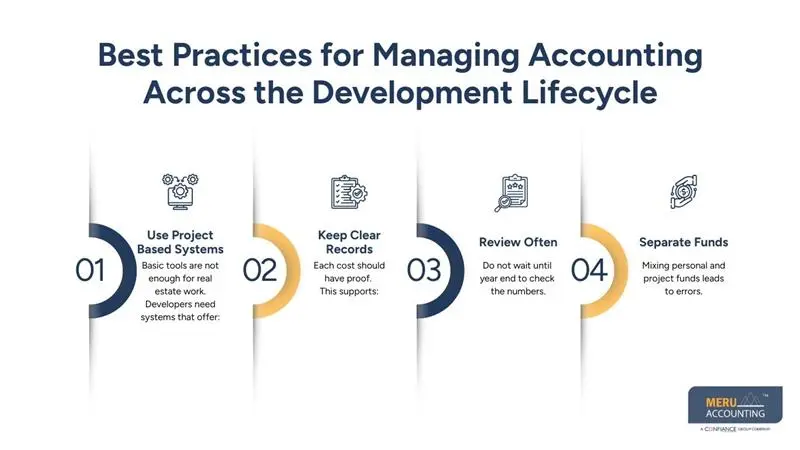
Review Often
Do not wait until year end to check the numbers.
Monthly reviews help you:
- Track cash
- Watch costs
- Fix issues fast
This keeps accounting for real estate development active, not reactive.
Separate Funds
Mixing personal and project funds leads to errors.
Each project should have:
- Its own cost list
- Clear cash flow
This makes accounting for real estate developers clean, simple, and reliable.
How Meru Accounting Helps Real Estate Developers
At Meru Accounting, we understand that accounting for real estate developers needs skill, care, and close attention. Each project is different, and each stage brings new needs.
We support real estate developers with:
- Project based bookkeeping
- Build stage cost tracking
- Maintaining loan and interest records
- Revenue timing support
- Clear reports for banks and owners
When Meru Accounting manages your accounting for real estate development, you gain valuable time and clear insight. You stay focused on land, build, and sales. We take care of the numbers, so they stay clean and reliable.
Key Takeaways
- Accounting for real estate developers matters at every stage
- Pre build costs need careful tracking
- Build stage needs strong cost control
- Revenue timing affects profit and tax
- Strong systems lead to better results
- Expert help improves accounting for real estate development
FAQs
Because projects last long, costs start early, and income comes later. Accounting for real estate developers must track all stages.
In accounting for real estate development, land, build, and some loan costs are added to project value.
It depends on rules and contracts. Accounting for real estate developers follows legal and tax guidance.
It shows spend vs plan in real time. This is a key part of accounting for real estate development.
Yes, when projects grow or time is short. Expert help improves accounting for real estate developers.


