




Accounting in a manufacturing company is more than just tracking sales and expenses. It involves detailed cost tracking, inventory valuation, labor management, and accurate reporting. When accounting is handled correctly, a manufacturing business can clearly see which products are profitable, where costs are rising, and how to improve profit margins.
Manufacturing companies operate with complex cost structures, and accurate accounting helps in making the right decisions. In this blog, we will explain how accounting in a manufacturing company affects profitability and why it is essential for long-term success.
What You Will Learn From This Blog
In this blog, you will learn:
- How accounting in a manufacturing company works
- Key accounting components that influence profits
- How cost accounting impacts profitability
- Accounting processes that drive profit
- Inventory valuation methods and their effects
- Pricing strategies based on manufacturing accounting
- Financial reporting requirements for manufacturing companies
- Common accounting challenges faced by manufacturers
- How Meru Accounting can support your manufacturing business
Importance of Accounting in a Manufacturing Company
Accounting in a manufacturing company is not just about recording transactions. It helps a manufacturing business understand where money is spent and how each product contributes to profit. Accurate accounting helps to:
Track Costs Accurately
Manufacturing companies have multiple cost layers, such as raw materials, labor, and overhead. Accounting in a manufacturing firm helps track these costs accurately, which leads to better decision-making.
Improve Profit Margins
By tracking costs and profits per product, a manufacturing company can identify high-performing products and reduce losses in underperforming ones.
Stay Compliant with Tax and Reporting Rules
Manufacturing companies must follow strict tax and reporting rules. Accounting ensures that all financial data is accurate and compliant.
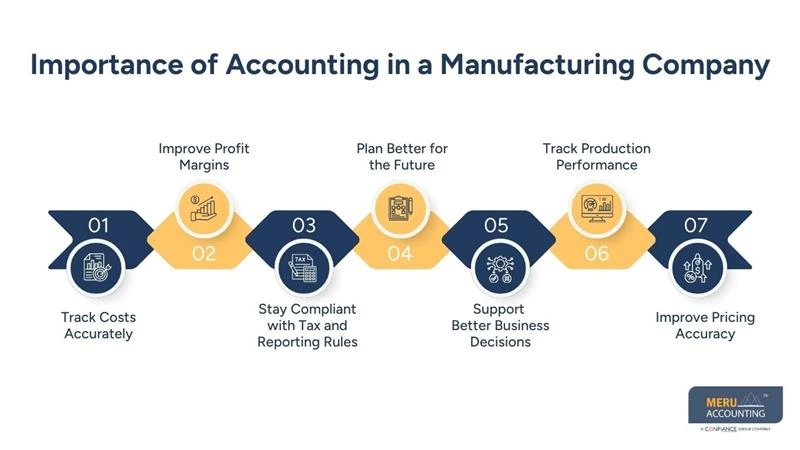
Plan Better for the Future
Manufacturing accounting helps in budgeting, forecasting, and planning. When you know the real cost of production, you can make better decisions for expansion and investment.
Support Better Business Decisions
Accounting in a manufacturing company provides insights that support strategic business decisions, such as whether to outsource production or invest in automation.
Track Production Performance
Manufacturing accounting helps track production efficiency, machine utilization, and labor productivity to improve overall performance
Improve Pricing Accuracy
Accurate accounting ensures that pricing is based on real production costs, helping businesses set competitive and profitable prices.
Key Accounting Components in Manufacturing
Accounting in a manufacturing company includes several key components. These components help a manufacturing business track costs, manage inventory, and measure profitability. The most important components are:
1. Direct Materials
Direct materials are the raw materials used to create the final product. Accounting in a manufacturing company tracks how much material is used and its cost.
2. Direct Labor
Direct labor includes wages paid to workers who directly contribute to production. This is a major cost for many production businesses.
3. Manufacturing Overhead
Manufacturing overhead includes indirect costs such as factory rent, utilities, equipment maintenance, and supervisor salaries. Accounting in a manufacturing firm allocates these costs to products accurately.
4. Work-in-Progress (WIP)
WIP represents partially completed goods. Accounting in a manufacturing company tracks WIP to ensure accurate cost allocation and inventory valuation.
5. Finished Goods Inventory
Finished goods are completed products ready for sale. Accounting helps a manufacturing business track finished goods value and manage stock levels.
The Role of Cost Accounting in Manufacturing Profitability
Cost accounting is a major part of accounting in a manufacturing company. It helps production businesses understand the true cost of production and make decisions to improve profitability.
Cost accounting helps to:
- Identify the cost per unit of each product
- Track production efficiency
- Detect cost overruns
- Compare budgeted costs with actual costs
When cost accounting is accurate, manufacturing or production businesses can adjust production methods, reduce waste, and improve profit margins.
Manufacturing Accounting Processes That Increase Profit
Accounting in a production firm includes processes that directly impact profitability. These processes help a manufacturing business control costs and increase efficiency.
1. Budgeting and Forecasting
Budgeting helps production businesses plan expenses for materials, labor, and overhead. Forecasting helps predict future sales and production needs. Accurate accounting in a manufacturing company improves budgeting and forecasting.
2. Job Costing
Job costing is used to track the cost of producing each batch or job. This helps a manufacturing firm identify which jobs are profitable and which are not.
3. Variance Analysis
Variance analysis compares actual costs with budgeted costs. Accounting in a manufacturing company helps identify variances and take corrective action.
4. Expense Control
Production businesses can reduce costs by controlling waste, improving efficiency, and managing supplier prices. Accounting helps track expenses and monitor performance.
Inventory Valuation and Its Effect on Profitability
Inventory valuation is one of the most important parts of accounting in a manufacturing company. The method used to value inventory affects profit, taxes, and financial reporting.
Common inventory valuation methods include:
1. FIFO (First In, First Out)
Under FIFO, older inventory is sold first. This method often increases profit when material costs rise, because older, cheaper stock is used first.
2. LIFO (Last In, First Out)
Under LIFO, newer inventory is sold first. This method can reduce taxable profit when costs rise, but it may lower reported profit.
3. Weighted Average Cost
This method averages the cost of inventory. It smooths out price fluctuations and makes cost tracking easier.
Accounting in a manufacturing company must choose the best inventory valuation method for the production business to optimize profit and tax benefits.
Pricing Strategies Driven by Manufacturing Accounting
Accounting in a manufacturing company helps a manufacturing business set prices that cover costs and generate profit. Without accurate accounting, pricing can be too low or too high.
Cost-Plus Pricing
This method adds a profit margin to the total cost of production. Accounting in a manufacturing company helps calculate the correct cost per unit.
Competitive Pricing
This method sets prices based on competitors. Accounting helps production businesses know if they can match competitor pricing while still making a profit.
Value-Based Pricing
This method sets prices based on the perceived value of the product. Accounting helps a production company understand the cost limits and profit potential.
Financial Reporting for Manufacturing Companies
Financial reporting is a key part of accounting in a manufacturing company. Accurate reports help a manufacturing business monitor performance, plan growth, and attract investors.
Important financial reports include:
Income Statement
The income statement shows profit and loss for a specific period and helps identify which products are generating income.
It also highlights how expenses impact profit, helping businesses make decisions to improve margins.
Balance Sheet
The balance sheet shows assets, liabilities, and equity at a specific point in time, helping businesses know what they own and owe.
It also indicates the financial strength of the manufacturing firm and supports long-term planning.
Cash Flow Statement
The cash flow statement shows cash inflows and outflows during a period and helps manage payments to suppliers and employees.
It also ensures the business has enough cash for daily operations and unexpected expenses.
Cost Reports
Cost reports show production costs and profit margins for each product, helping identify high-cost areas.
They also help production businesses improve pricing and reduce unnecessary expenses.
These reports help production businesses understand financial health and make better decisions.
Common Accounting Challenges in Manufacturing
Accounting in a manufacturing company faces several challenges. Manufacturing companies must manage complex cost structures and ensure accurate reporting.
1. Tracking Multiple Costs
Manufacturing involves direct materials, labor, and overhead. Keeping track of all costs accurately is challenging.
2. Managing Inventory Accuracy
Inventory errors can lead to incorrect profit reports and poor decision-making.
3. Controlling Production Waste
Waste and rework increase costs and reduce profit. Accounting helps identify waste and improve processes.
4. Managing Cash Flow
Production businesses often need large upfront investments for materials and labor. Cash flow must be carefully managed to avoid shortages.
5. Compliance and Reporting
Manufacturing companies must follow strict accounting and tax rules. Accurate accounting ensures compliance and avoids penalties.
Why Choose Meru Accounting for Accounting in a Manufacturing Company
Meru Accounting specializes in accounting for manufacturing companies and helps a manufacturing business improve profitability through accurate cost tracking, inventory management, and financial reporting.
Our services for manufacturing companies include:
Cost Accounting Support
Cost per unit is calculated accurately to improve profit margins. Production expenses are analyzed to identify areas where cost savings can be made.
Inventory Management
Inventory valuation and tracking are handled accurately for better decision-making. Stock discrepancies are reduced, improving inventory accuracy for a manufacturing business.
Financial Reporting
Timely and accurate reports are provided to monitor performance and support growth. Financial statements are explained in simple terms to help businesses make informed decisions.
Tax and Compliance Support
Compliance with all accounting and tax rules is ensured to avoid penalties. Tax returns are prepared and filed accurately to prevent audit issues and errors.
Customized Solutions
Tailored accounting solutions are provided to meet the needs of each production business. Service plans are flexible and designed to match the size and requirements of your manufacturing operations.
Key Takeaways
- Accounting in a manufacturing company is essential for tracking costs, managing inventory, and improving profitability.
- Cost accounting helps a manufacturing company understand the true cost of production.
- Inventory valuation methods impact profit and taxes.
- Accurate financial reporting supports growth and compliance.
- Meru Accounting provides specialized accounting services for a manufacturing business.


