


Efficient financial management is crucial for manufacturing businesses. Proper tracking of production costs, inventory, and operational expenses can make the difference between healthy profits and unnecessary losses. Accounting software for manufacturing is designed to help businesses maintain precise control over their finances while identifying opportunities to improve profitability.
By integrating specialized accounting tools into manufacturing processes, companies can streamline operations, reduce waste, and make more informed decisions.
What You Will Learn From This Blog
This blog will help you understand how accounting software for manufacturing supports cost control, improves profit margins, and enhances overall operational efficiency. You will learn:
- The fundamentals of manufacturing accounting
- How software tracks production costs effectively
- Ways to improve inventory management
- Methods for identifying cost-saving opportunities
- How to choose the right accounting software for your manufacturing business
Understanding the Role of Accounting Software in Modern Manufacturing
Accounting software for manufacturing is a specialized tool designed to meet the unique financial needs of production-based businesses. Unlike generic accounting solutions, these tools focus on areas critical to manufacturing, including cost tracking, inventory control, labor management, and overhead allocation.
Modern manufacturing businesses face complex challenges, such as fluctuating raw material prices, labor costs, and market demand. Manufacturing accounting provides a structured approach to tracking these variables. It ensures that businesses have accurate records of production costs, profit margins, and financial performance. By using accounting software for manufacturing, companies can automate calculations, generate timely reports, and maintain a clear view of all financial aspects of their operations.
Overview of Manufacturing Accounting Principles
Understanding manufacturing accounting is crucial for every production-focused business. These principles ensure precise cost tracking throughout the entire process.
Direct Material Costs
These are the costs of raw materials used during production. Accurate tracking helps prevent waste and unnecessary material expenses.
Direct Labor Costs
Wages and benefits paid to workers involved in manufacturing. Proper recording ensures labor efficiency and cost control consistently.
Manufacturing Overhead
Indirect costs include utilities, maintenance, and factory rent expenses. Tracking overhead ensures the total production cost reflects true expenses accurately.
Work-in-Progress (WIP)
Partially completed items require proper accounting adjustments regularly. Monitoring WIP helps in planning production and managing cash flow.
Finished Goods Inventory
Completed products are stored and ready for sale later. Maintaining accurate inventory prevents stockouts and excess storage costs.
Accounting software for manufacturing automates cost calculations, reducing manual errors.It also generates reports for informed financial decision-making quickly.
It allows manufacturers to track expenses accurately for each product. Software assigns costs correctly to specific production runs efficiently.
How Accounting Software for Manufacturing Tracks Production Costs
Tracking production costs is one of the most critical functions of accounting software for manufacturing. Accurate cost tracking ensures that pricing decisions reflect the true expense of production. Here’s how the software works:
Automated Cost Allocation
The software automatically allocates costs for materials, labor, and overhead to each product or production batch.
Real-Time Data
Businesses can monitor expenses as they occur, making it easier to identify overspending early.
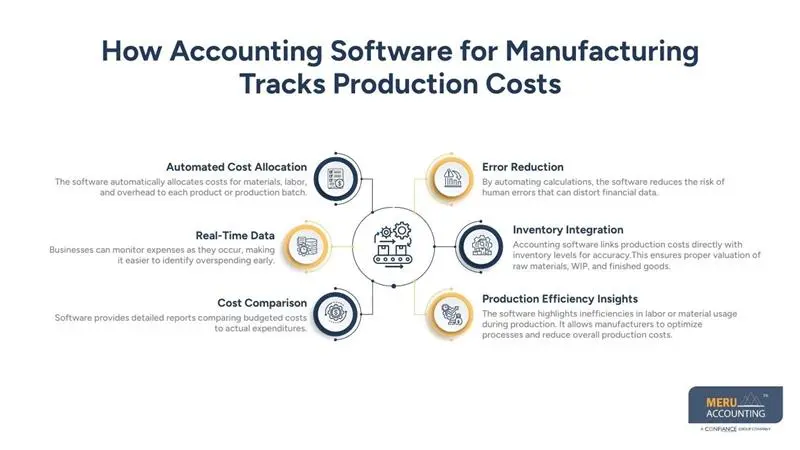
Cost Comparison
Software provides detailed reports comparing budgeted costs to actual expenditures.
Error Reduction
By automating calculations, the software reduces the risk of human errors that can distort financial data.
Inventory Integration
Accounting software links production costs directly with inventory levels for accuracy.
This ensures proper valuation of raw materials, WIP, and finished goods.
Production Efficiency Insights
The software highlights inefficiencies in labor or material usage during production. It allows manufacturers to optimize processes and reduce overall production costs.
Through these functions, manufacturing accounting becomes more precise, helping businesses understand where money is spent and where savings can be achieved.
Enhancing Inventory Management with Manufacturing Accounting Tools
Inventory management is a major concern for manufacturers, as excess stock ties up cash while stockouts can halt production. Accounting software for manufacturing offers robust inventory tracking capabilities:
Stock Level Monitoring
Real-time updates on inventory levels prevent shortages or overstock situations.
Automated Reordering
Software can trigger purchase orders when stock falls below predefined thresholds.
Inventory Valuation
Accurate valuation of raw materials, WIP, and finished goods ensures correct financial reporting.
Loss Prevention
Tracking inventory movements helps identify shrinkage, wastage, or theft.
Supplier Performance Tracking
Production accounting tools monitor supplier reliability and delivery efficiency. This data helps in choosing the best suppliers and negotiating terms.
Inventory Turnover Analysis
Software provides insights on how quickly inventory moves through production. High turnover indicates efficient operations, while low turnover highlights potential issues.
Integrating manufacturing accounting with inventory management provides a holistic view of production costs, allowing businesses to optimize resource usage and reduce unnecessary expenses.
Identifying Cost-Saving Opportunities through Accounting Software
One of the key benefits of accounting software for manufacturing is its ability to identify cost-saving opportunities. With detailed financial insights, businesses can:
- Pinpoint inefficient production processes and reduce waste
- Identify high-cost materials and find alternative suppliers
- Monitor labor costs and optimize workforce allocation
- Reduce unnecessary overhead expenses through precise tracking
- Analyze energy and utility usage to lower operational costs
- Streamline inventory management to minimize excess stock and losses
By providing actionable insights, manufacturing accounting tools help manufacturers make strategic decisions that directly improve profitability.
Improving Profit Margins Using Manufacturing Accounting Insights
Profitability in manufacturing depends on controlling costs while maintaining product quality. Accounting software for manufacturing enables businesses to:
- Analyze product-level profitability
- Adjust pricing strategies based on accurate cost data
- Forecast future expenses and revenue
- Evaluate the financial impact of new projects or product lines
- Optimize resource allocation to reduce waste and inefficiencies
- Monitor supplier costs to negotiate better terms and improve margins
These insights allow manufacturers to make informed decisions, leading to better profit margins and long-term financial stability.
Integrating Accounting Software with Other Manufacturing Systems
Integration is a key feature of modern accounting software for manufacturing. Connecting accounting tools with production management systems, ERP platforms, and supply chain solutions ensures that financial data is consistent across all operations. Benefits include:
- Improved data accuracy
- Streamlined reporting and analysis
- Faster decision-making
- Reduced duplication of work
- Enhanced collaboration between departments and teams
- Better visibility into overall production and financial performance
When manufacturing bookkeeping and accounting systems communicate with other operational tools, businesses gain a complete view of both financial and production performance.
Choosing the Right Accounting Software for Manufacturing
Selecting the right accounting software for manufacturing is essential. Consider the following factors:
Cost Tracking Features
Ensure the software accurately handles materials, labor, and overhead allocation.
Inventory Management Capabilities
Look for real-time monitoring, reordering, and valuation features.
Reporting and Analytics
Choose software that generates clear, actionable reports.
Scalability
The software should support your business as it grows.
Integration Options
Verify compatibility with existing systems for production, ERP, and supply chain management.
User-Friendliness
Select software that is intuitive and easy for staff to use.
Customer Support and Training
Ensure the provider offers reliable support and comprehensive training resources.
Choosing the right software can simplify manufacturing accounting, giving businesses greater control over costs and profitability.
How Meru Accounting Supports Manufacturing Businesses
At Meru Accounting, we help manufacturers implement accounting solutions specifically tailored to their unique needs.
Our team of experts specializes in manufacturing bookkeeping and accounting and offers comprehensive services to optimize financial performance.
Cost Tracking for Materials, Labor, and Overhead
We provide precise tracking of all production costs, including raw materials, labor, and overhead. This ensures manufacturers have a clear understanding of true product costs and profitability.
Inventory Management and Valuation Support
Our team assists with accurate inventory monitoring, valuation of raw materials, WIP, and finished goods. This helps prevent overstock, stockouts, and ensures proper financial reporting.
Detailed Financial Reporting and Analysis
We generate actionable reports that provide insights into costs, revenue, and profit margins. These reports allow manufacturers to make informed, data-driven business decisions.
Recommendations for Cost-Saving and Profit Improvement
Based on financial insights, we suggest strategies to reduce expenses and improve efficiency. Our guidance helps manufacturers enhance margins without compromising product quality.
Compliance and Regulatory Support
We ensure all accounting practices meet local tax and regulatory requirements. This minimizes risk and keeps manufacturers prepared for audits or inspections.
Customized Accounting Solutions
Meru Accounting provides tailored solutions to match each manufacturer’s unique processes. We adapt tools and workflows to support growth and operational efficiency.
Key Takeaways
- Accounting software for manufacturing helps track costs accurately and manage inventory efficiently.
- Manufacturing accounting principles ensure that all production-related expenses are accounted for.
- Software insights identify cost-saving opportunities and improve profit margins.
- Integration with other systems ensures consistent and reliable data across operations.
- Choosing the right software and professional support can significantly enhance financial management and profitability.
FAQs
Tracking materials, labor, and overhead costs highlights areas to cut waste. Manufacturers can save money and improve operational efficiency.
Manufacturing bookkeeping and accounting focuses on production costs, inventory, and overhead. Regular accounting covers general business finances without production-specific insights.
Accurate cost data helps businesses price products effectively. Informed decisions based on this data increase profit margins.
Monitoring stock levels and tracking usage prevents overstock or shortages. Optimized inventory reduces unnecessary costs and resource wastage.
Features like cost tracking, inventory management, and reporting tools ensure better control. Integration with existing manufacturing systems makes operations more efficient.


