




Farming is more than planting, growing, and harvesting. It is a full scale business that involves money flow, cost control, planning, and compliance with many rules. Every farm, whether small or large, runs on numbers. When these numbers are clear, the farm runs with ease. When the numbers are unclear, problems grow fast. This is why Agricultural Accounting is so important today.
Modern farms face many challenges. Markets change without warning. Rainfall patterns shift. Input prices increase. Labor shortages come and go. With the right accounting system, farmers can face these challenges with calm and direction. Skilled agricultural accountants help farms build strong habits that support long term growth and stability. This makes accounting not just a business need but a key tool for future success. In this blog, we will help you understand the importance of agricultural accounting in farm and agriculture business.
What is Agricultural Accounting?
Agricultural Accounting is a special type of accounting made for the farm and agribusiness world. It focuses on the unique features of agriculture such as crop cycles, cattle records, soil inputs, land valuation, machinery costs, large seasonal expenses, and uncertain income patterns.
Unlike general accounting, which deals with simple income and expenses, Agricultural Accounting looks at each part of the farm. It records feed, fertilizer, seeds, tools, equipment, labor, and fuel use. It values crops at different stages of growth. It tracks livestock numbers and their changes throughout the year. It also includes loan records, subsidy details, and farm specific tax rules.
Because farming is seasonal, this type of accounting helps farmers understand what happens during peak months and quiet months. Agricultural accountants build charts, reports, and summaries that make all these details easy to understand so farmers can make smart and steady choices.
How Agricultural Accounting Helps Farmers and Agribusinesses
Financial Planning and Budgeting for Farms
Every farm needs a budget. Costs can rise fast. Revenue can shift from month to month. Without a clear plan, farmers risk sudden shortages. Agricultural Accounting helps prevent this by creating clear budgets for the year.
These budgets show expected income, upcoming expenses, loan payments, machinery repairs, crop preparation costs, and sales cycles. Skilled agricultural accountants consider past yield, market trends, and weather patterns to build a budget that supports smooth business operations.
When farmers see their costs early, they can buy inputs at the right time, avoid overspending, and plan for long term growth.
Managing Cash Flow and Seasonal Variability
Cash flow is the lifeline of a farm. Farmers may spend money on seeds, feed, fertilizer, and labor long before they receive income from harvests. This gap creates stress.
With Agricultural Accounting, farmers get clear insight into when cash comes in and when it goes out. This helps them save during high income months and stay prepared for slow seasons. Agricultural accountants also help in scheduling payments, reducing cash pressure, and keeping operations stable all year.
Ensuring Compliance with Tax Laws and Regulations
The agriculture industry has many tax rules that differ from regular business rules. These include special deductions, crop income rules, livestock tax laws, and subsidy reporting.
Agricultural Accounting ensures that every record is kept clean. Agricultural accountants help farmers through tax deadlines, documentation needs, and legal compliance. With their support, farmers avoid penalties, reduce unnecessary tax payments, and use all available deductions wisely.
Key Benefits of Agricultural Accounting for Farmers
Accurate Profitability Analysis and Cost Management
A farm may produce a lot, but that does not always mean it earns a lot. Many farmers struggle to see the real cost of each product. Agricultural Accounting solves this problem by breaking down cost per crop, cost per livestock group, and cost per activity.
This reveals which parts of the farm bring high profit and which cause loss. With this clarity, farmers can adjust production plans, reduce waste, and improve earnings. Skilled agricultural accountants help farmers set up systems to track each cost in a simple and efficient way.
Better Decision Making and Financial Forecasting
Farmers make many decisions each year. Should they plant a new crop? Should they buy more livestock? Should they invest in new machinery? Should they expand their land?
With Agricultural Accounting, these decisions are no longer guesswork. Farmers get forecasts based on past records, cash flow, expected market changes, and future needs. With this support, farmers feel more confident about every decision they make.
Streamlining Farm Operations and Improving Efficiency
A farm works better when operations run smoothly. Agricultural Accounting shows farmers where time and money are being wasted. It highlights patterns in input use, labor needs, and equipment repairs.
This helps farmers improve workflow, reduce unnecessary expenses, and use their resources in a more organized way. Agricultural accountants also help set up digital tools that make day to day operations easier to manage.
Tax Benefits of Agricultural Accounting
One of the biggest advantages of Agricultural Accounting is tax savings. Farmers often miss deductions simply because they are unaware of them.
Some common tax benefits include:
- Depreciation on machinery and vehicles
- Deductions for seed, feed, fertilizer, fencing, and repairs
- Tax benefits for land improvements
- Special livestock tax rules
- Deductions for fuel and equipment use
- Benefits for sustainable and conservation practices
With expert agricultural accountants, farmers use every advantage legally available to them. This reduces tax stress and increases savings each year.
Why Agricultural Accounting Is Essential for Future Success
Farming Is Changing Fast
The farm world is not the same as it was in the past. Prices move fast. New tools come out each year. Costs go up. Weather is hard to predict. In this new world, effort alone is not enough. Farmers need clear numbers to guide each step. This is why Agricultural Accounting is key for the years ahead.
Staying Safe in Quick and Uncertain Markets
Crop and cattle rates shift with no warning. These changes can cut income in a short time. With Agricultural Accounting, farmers see their money flow as it happens. This helps them act fast, change plans when they must, and sell at the right time.
Rising Costs Need Better Control
Seeds, fuel, feed, tools, and labor cost more now. Good accounting shows where each rupee goes. It helps farmers cut waste, plan their spend, and keep profit safe even when the gap between cost and sale price gets small.
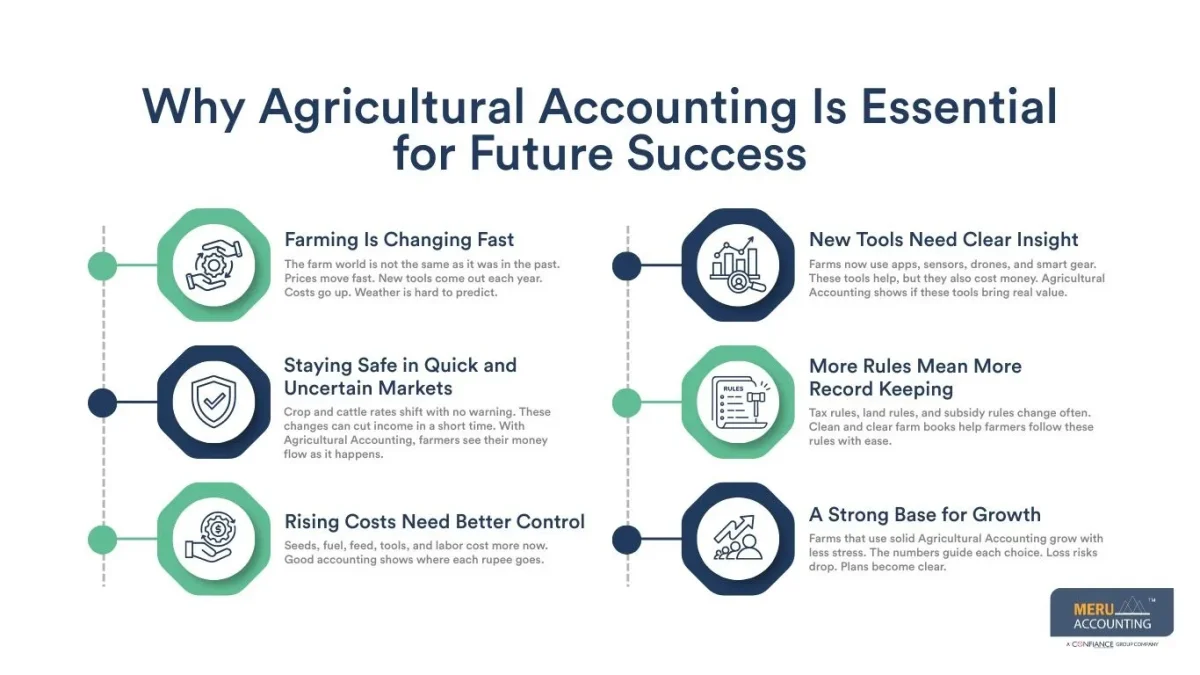
New Tools Need Clear Insight
Farms now use apps, sensors, drones, and smart gear. These tools help, but they also cost money. Agricultural Accounting shows if these tools bring real value. Farmers can see what gives gain and what does not.
More Rules Mean More Record Keeping
Tax rules, land rules, and subsidy rules change often. Clean and clear farm books help farmers follow these rules with ease. Good records also help with loans, claims, and audits.
A Strong Base for Growth
Farms that use solid Agricultural Accounting grow with less stress. The numbers guide each choice. Loss risks drop. Plans become clear. This gives farms a strong base for long term growth and success.
Meru Accounting’s Agriculture Accounting Services
At Meru Accounting, we understand the complex needs of farms and agribusinesses. Our trained agricultural accountants provide complete support that helps farmers save time, reduce stress, and improve profit.
We offer:
- Full Agricultural Accounting and bookkeeping services
- Budget planning and financial forecasting
- Seasonal cash flow management
- Complete tax filing and compliance
- Profitability analysis and cost tracking
- Cloud based accounting systems customized for agriculture
- Support for government schemes and subsidy reporting
We help farmers stay ready for each season with clean records and simple reports that make decision making easier.
Key Takeaways
- Agricultural Accounting helps farmers manage money in a clear and simple way.
- Skilled agricultural accountants offer insights, tax support, and smart planning.
- It improves cash flow, reduces risk, and boosts long term profit.
- Clear cost tracking supports better decisions and stronger operations.
- Farms that use strong accounting systems stay stable and grow faster.


