




Bookkeeping services for lawyers are no longer just about recording income and expenses. Law firms face strict rules, regular audits, and high expectations around financial transparency. From managing client trust accounts to preparing accurate financial reports, lawyers need bookkeeping systems that can stand up to scrutiny at any time.
Poor records can lead to compliance issues, penalties, and even damage to professional reputation. This blog explains how audit-ready systems work, why they matter, and how reliable bookkeeping services for lawyers help law firms stay compliant, organized, and confident during audits.
What You Will Learn From This Blog
In this blog, you will learn:
- What bookkeeping services for lawyers include
- Why audit-ready financial records are important for law firms
- The difference between bookkeeping and accounting for legal practices
- How trust accounts should be managed correctly
- Common bookkeeping mistakes lawyers make
- Key elements of audit-ready law firm bookkeeping
- How professional support improves compliance and reporting
- How to choose the right bookkeeping partner for your law firm
How Bookkeeping Services for Lawyers Support Daily Law Firm Operations
Bookkeeping services for lawyers focus on recording, organizing, and maintaining all financial transactions related to a law practice. These services are tailored to meet legal and ethical requirements that apply specifically to lawyers.
Typical services include:
- Daily transaction recording
- Client trust account tracking
- Expense categorization
- Billing and invoice reconciliation
- Payroll processing
- Monthly and yearly financial reports
Unlike general businesses, law firms must follow special rules when handling client funds. This makes Legal bookkeeping more detailed and regulated than standard bookkeeping.
By keeping financial data updated and properly organized, bookkeeping services for lawyers help law firms avoid delays, errors, and compliance risks. Accurate records also make it easier to review finances and respond quickly to audit or reporting needs.
Importance of Audit-Ready Bookkeeping Services for Lawyers
Frequent Audit Triggers in Law Firms
Audits may arise due to bar association reviews, tax authority checks, or internal financial reviews. Law firms must be prepared to present clear and verifiable financial records at any time.
Reduced Risk of Penalties
Audit-ready bookkeeping helps lower the risk of fines or disciplinary actions by ensuring records meet legal and regulatory standards.
Protection of Client Funds
Accurate tracking of trust accounts ensures client funds are handled correctly and remain fully protected.
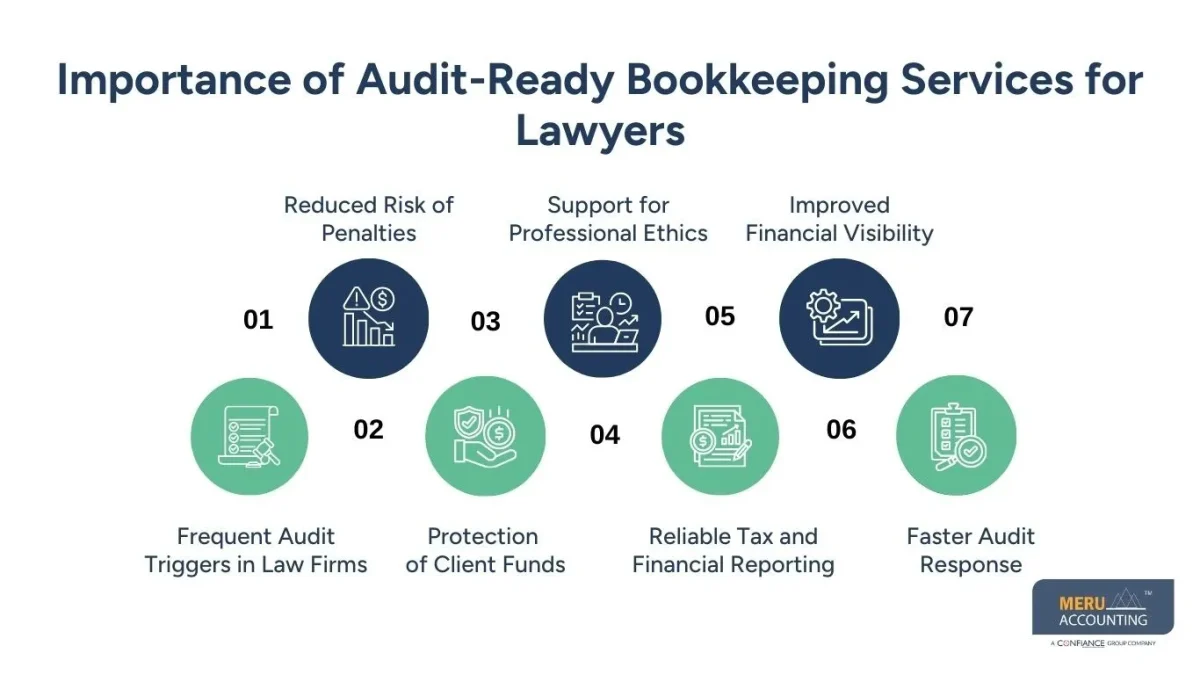
Support for Professional Ethics
Well-maintained financial records help law firms meet ethical obligations and avoid conflicts related to financial mismanagement.
Reliable Tax and Financial Reporting
Clear records support accurate tax filings and reduce errors during tax reviews or audits.
Improved Financial Visibility
Audit-ready records provide better insight into cash flow and overall firm finances.
Faster Audit Response
Organized and updated records allow law firms to respond quickly and confidently to audit requests without delays.
Understanding the Difference: Bookkeeping vs. Accounting for Law Firms
Aspect | Law Firm Bookkeeping | Accounting for Law Firms |
Primary focus | Recording and organizing financial data | Reviewing and analyzing financial information |
Daily transactions | Records daily income and expenses | Uses records prepared through bookkeeping |
Trust accounts | Manages and tracks client trust accounts | Reviews trust data for compliance and reporting |
Financial tracking | Tracks expenses and income regularly | Analyzes financial performance |
Tax support | Maintains accurate records for tax filing | Handles tax planning and tax filings |
Planning role | Supports day-to-day financial management | Supports long-term financial planning |
Why Law Firm Bookkeeping Needs to Be Audit-Ready
Law firms handle money that does not belong to them. Client trust funds must be tracked carefully and reported correctly. Any mistake can raise serious concerns during an audit.
Audit-ready Law firm bookkeeping ensures:
- Every financial transaction is recorded with proper documentation
- Trust accounts and operating accounts remain fully separate
- Financial reports match bank statements and ledger balances
- Records are updated on a regular basis and are easy to review
This level of preparation helps law firms respond confidently to audit requests.
Understanding Trust Accounts in Law Firm Bookkeeping
Trust accounts hold client funds that are not yet earned. These funds must never be mixed with business income.
In bookkeeping services for lawyers, trust account management includes:
- Maintaining separate trust and operating bank accounts to protect client funds
- Keeping individual client ledgers that clearly show deposits, withdrawals, and balances
- Performing regular trust account reconciliations to confirm accuracy
- Maintaining clear documentation for every trust-related transaction
- Ensuring trust balances always match bank statements
- Supporting compliance with bar association trust account requirements
Proper legal firm bookkeeping ensures trust balances are always accurate and available for review.
Common Trust Account Mistakes Lawyers Make and How to Avoid Them
Mixing Trust and Business Funds
Combining client trust funds with business income is a serious compliance issue. Maintaining separate accounts helps prevent this mistake.
Missing Client Ledger Updates
Failing to update client ledgers can lead to inaccurate balances. Regular updates ensure each client’s funds are tracked correctly.
Poor Recordkeeping Practices
Incomplete or unclear records make it difficult to verify transactions during an audit. Proper documentation supports transparency.
Delayed Trust Account Reconciliations
Late or missed reconciliations increase the risk of unnoticed errors. Monthly reconciliations help confirm trust account accuracy.
Incorrect Transfers Between Accounts
Errors during fund transfers can cause compliance problems. Clear approval steps and proper checks help avoid incorrect transfers.
Role of Professional Bookkeeping Support
Professional bookkeeping services for lawyers reduce these risks by using structured processes, regular reviews, and consistent compliance checks.
Key Components of Audit-Ready Law Firm Bookkeeping
Audit-ready Law firm bookkeeping includes several important elements that support accuracy and compliance.
Accurate Transaction Records
Every payment and expense must be recorded correctly. Each entry should clearly show the date, amount, and purpose of the transaction.
Regular Bank Reconciliations
Trust and operating accounts should be reconciled monthly. This helps identify errors early and keeps account balances accurate.
Clear Client Ledgers
Each client’s funds must be tracked separately. Individual ledgers make it easy to review balances and transaction history.
Proper Documentation
Invoices, receipts, and payment records should be stored safely. Well-organized documents support verification during audits and reviews.
Consistent Reporting
Financial reports should match underlying records. Consistency ensures reports can be trusted for audits and decision-making.
Strong bookkeeping services for lawyers focus on all these areas.
How Bookkeeping Services for Lawyers Ensure Compliance with Legal Regulations
Compliance is a major concern for law firms. Rules around trust accounts, billing, and financial reporting are strict.
Bookkeeping services for lawyers support compliance by:
- Following bar association guidelines
- Maintaining detailed trust records
- Preparing audit-ready reports
- Supporting tax filing requirements
Reliable Law firm bookkeeping reduces the risk of regulatory issues and helps law firms meet their obligations.
Financial Reporting for Law Firms: What Lawyers Need to Know
Financial reports help lawyers understand the financial health of their firm.
Common reports prepared through bookkeeping services for lawyers include:
- Profit and loss statements
- Balance sheets
- Cash flow reports
- Trust account summaries
Accurate legal bookkeeping ensures these reports are reliable and useful for decision-making and audits.
Benefits of Outsourcing Bookkeeping Services for Lawyers
Outsourcing has become a practical option for many law firms.
- Access to experienced professionals who understand law firm financial requirements.
- Reduced internal workload, allowing staff to focus on legal responsibilities.
- Better compliance support through structured processes and regular reviews.
- Consistent and accurate financial records that are easy to review and verify.
- Improved cost control by avoiding the expense of hiring full-time staff.
Outsourced bookkeeping services for lawyers allow legal teams to focus on clients instead of financial tasks.
How to Choose the Right Law Firm Bookkeeping Partner
Choosing the right partner is important for long-term success and audit readiness.
Understands Legal Bookkeeping Rules
They should be familiar with trust account regulations and compliance requirements.
Has Experience With Trust Account
Experience ensures accurate handling and proper tracking of client funds.
Offers Regular Reporting
Monthly or quarterly reports help you monitor financial health and compliance.
Uses Secure Systems
Secure software and data protection are essential for client confidentiality.
Communicates Clearly
They should explain financial information in a simple and understandable way.
A reliable partner strengthens Law firm bookkeeping and improves audit readiness by keeping records accurate and organized.
How Meru Accounting Supports Audit-Ready Bookkeeping for Lawyers
At Meru Accounting, we provide specialized bookkeeping services for lawyers designed to meet legal and audit requirements. Our team understands the importance of trust account accuracy, compliance, and clear financial reporting.
Trust and Operating Account Management
Client funds and business funds are managed separately and accurately to prevent mixing of accounts.
Client Ledger Maintenance
Individual client ledgers are kept updated and easy to review at any time.
Monthly Reconciliations
Trust and operating accounts are reconciled every month to prevent errors and maintain accuracy.
Audit-Ready Financial Reports
Reports are prepared in a clear format that is ready for audit review and decision-making.
Ongoing Compliance Support
Law firms receive continuous guidance to stay aligned with legal regulations and trust account rules.
With Meru Accounting, law firms gain dependable legal bookkeeping that supports growth and peace of mind.
Key Takeaways
- Bookkeeping services for lawyers must meet strict audit and compliance standards
- Trust account management is a critical part of law firm bookkeeping
- Audit-ready records reduce risk and support transparency
- Outsourcing improves accuracy and efficiency
- Choosing the right bookkeeping partner matters
FAQs
Law firms handle client trust funds and must follow special rules. This makes their bookkeeping more detailed and regulated.
Trust accounts should be reconciled every month to ensure balances are accurate.
Yes, unclear or incorrect records can lead to penalties and compliance issues.
Yes, firms of all sizes must follow the same trust and compliance rules.
Outsourcing provides expert support, accurate records, and better compliance without adding internal workload.


