Managing money is one of the most important parts of running a service-based business, where bookkeeping and tax preparation play a critical role in maintaining financial clarity.
Whether the company offers consulting, design, IT solutions, or marketing services, financial clarity decides how stable the business will be over time.
Many small firms focus heavily on clients and delivery, but often ignore proper financial systems until issues appear during tax season. Good financial recordkeeping and organized tax handling help avoid confusion, missed filings, and cash flow problems.
When records are maintained properly through bookkeeping and tax prep, business owners can understand earnings, control expenses, and plan future growth with more confidence. Without this structure, even profitable companies may struggle to understand their real financial position.
This guide explains how bookkeeping and tax preparation should be managed in service-based businesses, common mistakes to avoid, and how structured systems support long-term stability and compliance.
What You Will Learn From This Blog
- Basics of bookkeeping and tax preparation for service-based companies
- Common money-related challenges faced by small service firms
- How tax filing works in service-based business models
- Important compliance rules every business should be aware of
- Mistakes that can affect financial accuracy and reporting
- Simple and practical ways to improve financial reporting and organization
Introduction to Financial Recordkeeping and Tax Handling in Service-Based Businesses
Financial recordkeeping, bookkeeping, and tax preparation in service-based businesses refer to the structured process of tracking income, expenses, invoices, and tax-related transactions, including client billing, project payments, and operational costs.
Since service companies rely mainly on time and expertise rather than physical products, proper tracking helps clearly measure profitability for each client and project.
On a day-to-day basis, recording financial transactions ensures business owners always know how much money is coming in and going out.
This consistency not only improves financial clarity but also strengthens bookkeeping and tax preparation processes, as properly maintained records support accurate calculations and reduce errors during compliance.
Over time, disciplined financial tracking supports better budgeting, planning, and decision-making based on real data rather than assumptions. It also prevents confusion during reporting periods and creates a strong foundation for long-term financial stability and business growth.
Why Bookkeeping and Tax Preparation Matter for Service-Based Businesses
Better Cash Flow Understanding
Service companies often face delayed payments. Proper bookkeeping and tax preparation practices help monitor pending and received payments clearly. This ensures businesses can plan their expenses without liquidity stress.
Reduced Filing Errors
Mistakes in financial records can lead to penalties. Organized systems reduce errors during tax filing. This also saves time during audits and reviews.
Improved Decision Making
Clear financial data from bookkeeping and tax prep helps business owners make better decisions about pricing, hiring, and investments. It provides a realistic view of business performance before taking major steps.
Compliance With Regulations
Tax authorities require accurate reporting. Proper systems for bookkeeping and tax preparation help maintain compliance with rules and deadlines. This reduces the risk of legal or financial complications.
Transparency In Business Performance
Accurate financial records maintained through bookkeeping, tax preparation, and financial analysis clearly reflect real profit and loss, helping business owners understand true performance.
This also improves confidence in financial reporting and ensures clearer communication with stakeholders.
Support For Growth Planning
With clear financial insights, businesses can identify strong service areas and expand strategically. It also helps in allocating resources to the most profitable operations.
Common Financial Challenges Faced By Service-Based Startups
Unstable Income Flow
Many startups experience irregular payments. Without proper tracking, this creates confusion in budgeting. This makes it difficult to plan monthly expenses and commitments.
Missing Expense Records
Small daily expenses often go unrecorded, leading to inaccuracies in bookkeeping and tax prep records. Over time, these gaps can significantly distort profit calculations.
Poor Invoice Management
Delayed or missing invoices affect revenue tracking and cash flow visibility. This can also result in delayed payments from clients.
Confusion During Tax Season
Without organized records, tax filing becomes stressful and time-consuming. It may also increase the risk of errors and penalties.
Lack Of Structured Systems
Many startups rely on manual methods that are not consistent or scalable, which increases the need for structured bookkeeping and tax preparation systems. This often leads to inefficiencies as the business grows.
Limited Financial Understanding
Founders may focus more on operations than financial management, leading to gaps in recordkeeping. This can impact long-term financial decision-making.
Understanding the Basics of Financial Recordkeeping and Tax Handling
Recording Income Properly
Every client payment should be recorded accurately as part of bookkeeping and tax preparation to maintain correct financial data. This ensures there is no mismatch between actual and reported earnings.
Tracking Business Expenses
All business-related costs, including software, rent, and services, should be documented. This helps in identifying true profitability and controlling unnecessary spending.
Bank Reconciliation Process
Matching internal records with bank statements helps identify discrepancies. It ensures that no transaction is missed or incorrectly recorded.
Financial Reporting Basics
Reports generated through bookkeeping and tax preparation, such as income summaries, help business owners understand financial health. These reports provide a clear snapshot of overall business performance.
Tax Calculation Process
Taxes are calculated based on income and eligible deductions. Proper recordkeeping ensures accurate tax computation and reduces filing errors.
Importance of Regular Updates
Frequent updates prevent backlog and ensure accuracy in financial data. This also reduces stress during month-end or year-end reporting.
How Tax Filing Works In Service-Based Business Models
Income Classification
All income must be properly categorized based on service type and client payments. This helps ensure accurate reporting and compliance with tax rules.
Expense Identification
Only valid business expenses are considered during tax calculations under proper bookkeeping and tax preparation practices. This ensures that deductions are correctly applied and supported by documentation.
Estimated Payments
Some businesses may need to make tax payments periodically instead of once a year. This helps avoid large tax liabilities at the end of the financial year.
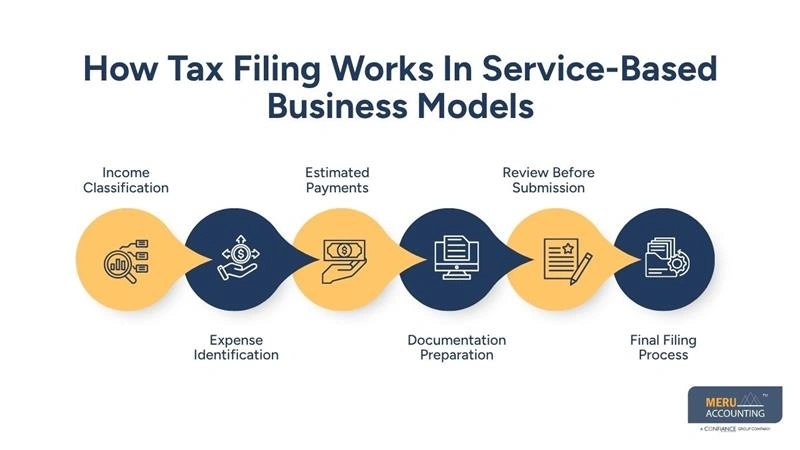
Documentation Preparation
Proper records and receipts maintained through bookkeeping and tax preparation are required for accurate filing. These documents act as proof in case of audits or verification.
Review Before Submission
Financial data must be reviewed before submission to avoid mistakes. This step helps catch errors and ensures accuracy in reporting.
Final Filing Process
Once verified, tax returns are submitted to the relevant authorities. After submission, confirmation, and records should be safely stored for future reference.
Key Tax Compliance Requirements Every Startup Should Know
Business Registration Rules
Every business must follow proper registration guidelines before operating, often supported by a startup tax accountant for compliance accuracy. This ensures the business is legally recognized and compliant from the start.
Sales Or Service Tax Rules
Depending on location, businesses may need to follow specific tax structures. These rules vary based on the type of services offered and are often managed through proper bookkeeping and tax preparation practices.
Annual Filing Requirements
Most businesses must submit yearly tax reports. Timely filing, supported by a startup tax accountant, helps avoid penalties and maintains good standing with tax authorities.
Record Retention Rules
Financial documents generated through bookkeeping and tax prep should be stored for a required number of years. This is essential for audits, verification, and future reference.
Payroll Compliance
If employees are present, payroll-related taxes should be monitored through proper bookkeeping and tax preparation systems. This includes salary deductions, benefits, and statutory contributions.
Audit Preparation
Businesses should maintain records in case of audits or inspections.Well-organized documentation maintained through bookkeeping and tax prep makes the audit process smoother and faster.
How a Startup Tax Accountant Helps Reduce Tax Liabilities
Strategic Tax Planning
A startup tax accountant helps plan taxes in advance to reduce unnecessary costs legally. This ensures tax efficiency is built into business decisions throughout the year.
Expense Review Support
They ensure all eligible expenses are properly considered for tax benefits. This helps businesses avoid missing out on deductible costs.
Accurate Filing Assistance
Professional support reduces the risk of filing errors and penalties. It also ensures the timely submission of all tax documents.
Compliance Guidance
They help businesses follow all required tax rules correctly. This reduces the chances of regulatory issues or fines.
Financial Planning Advice
A startup tax accountant provides insights for better financial decision-making. This supports long-term profitability and cash flow control.
Audit Assistance
They support businesses during tax audits and documentation checks. This makes the audit process smoother and less stressful.
Common Mistakes To Avoid In Financial Recordkeeping And Tax Handling
Mixing Personal And Business Expenses
This leads to confusion and incorrect reporting in financial records. It also makes it difficult to track true business profitability clearly.
Ignoring Small Transactions
Even small expenses affect overall financial accuracy in accounting systems. Over time, they can significantly distort financial reports and summaries.
Delayed Record Updates
Late updates increase the risk of errors and missing important data. It can also create unnecessary pressure during tax filing periods annually.
Poor Invoice Tracking
Missing invoices can distort income reports and financial statements significantly. This may also lead to revenue recognition issues in audits.
Incorrect Expense Classification
Wrong categorization affects tax calculations and financial reporting accuracy. It can result in missed deductions or compliance errors later.
Lack Of Professional Support
Without expert support in bookkeeping and tax preparation, errors often go unnoticed in systems. This increases the risk of penalties and financial mismanagement over time.
How Meru Accounting Supports Service-Based Businesses
Meru Accounting helps service-based companies manage financial records and tax requirements with clarity and accuracy. The focus is on creating structured systems that reduce errors and improve financial visibility. This ensures businesses always have a clear and reliable picture of their financial health.
The team supports businesses with bookkeeping and tax preparation, daily recordkeeping, tax filing assistance, reporting, and compliance management.
This helps founders focus more on clients and operations while financial tasks are handled in an organized manner. It also ensures deadlines are met without last-minute stress or confusion.
Meru Accounting also assists startups in setting up clean financial systems from the beginning. This reduces confusion during tax season and improves long-term financial control. It further supports scalability by building strong accounting foundations early on.
Our Expert Perspective
From our expert perspective, many small service-based companies struggle with delayed financial organization.
Business founders are often deeply focused on growth, client delivery, and daily operations, while financial structure, especially bookkeeping and tax preparation, is not given enough priority. This often results in avoidable confusion and pressure during tax filing periods.
Businesses with organized financial records and consistent bookkeeping and tax prep can manage cash flow better and make smarter business decisions.
Establishing organized financial systems early also reduces stress during reporting cycles and supports long-term business stability and compliance.
Key Takeaways
- Organized financial records are essential for service-based businesses
- Proper systems improve cash flow understanding and reduce errors
- Tax filing becomes easier with structured data from proper bookkeeping and tax preparation systems.
- Startups often face challenges due to a lack of bookkeeping and tax prep systems
- Professional support helps improve accuracy and compliance
- Regular updates prevent financial confusion
FAQs
Bookkeeping and tax preparation involve managing financial records, expenses, income, and tax documents. These processes help service businesses maintain financial accuracy and compliance.
Bookkeeping helps businesses track cash flow, monitor expenses, and maintain organized records. Accurate financial data also supports better business planning and decision-making.
Tax preparation helps businesses file taxes correctly and meet legal compliance requirements. Proper tax handling also reduces the risk of penalties and reporting errors.
A startup tax accountant can help improve tax accuracy and financial organization. Professional guidance also simplifies compliance and financial management tasks.
Financial records should be updated regularly to maintain accurate bookkeeping information. Weekly or monthly updates help businesses stay financially organized and prepared.