



Bookkeeping for a construction company plays a major role in helping family-owned construction businesses stay organized, profitable, and stable across generations. Unlike large corporate contractors, family-run construction companies often manage finances personally, mixing business decisions with family responsibilities.
This makes clear and accurate bookkeeping not just helpful, but necessary. When projects overlap, cash flow shifts, and labor costs rise, weak financial tracking can quickly lead to confusion.
Bookkeeping for a construction company gives family businesses the structure they need to control costs, track income, and plan for future growth without losing control of daily operations.
This blog explains how bookkeeping for a construction company supports family-owned construction businesses and how bookkeeping for small construction business owners can manage finances with clarity and confidence.
What You Will Learn From This Blog
In this blog, you will understand how bookkeeping for a construction company works, specifically for family-owned construction businesses. You will learn:
- The basics of construction bookkeeping
- Why family-owned construction companies need special financial tracking
- Common financial challenges faced by family contractors
- How bookkeeping for a construction company supports long-term family growth
- The importance of payroll, job costing, and tax compliance
- How can bookkeeping for small construction business owners manage multiple projects
- Ways bookkeeping improves profitability
- How Meru Accounting supports family-owned construction companies
Understanding the Basics of Bookkeeping for a Construction Company
Bookkeeping for a construction company focuses on tracking income and expenses by project instead of treating the business as one unit.
Construction businesses deal with job-based costs, progress billing, retainage, subcontractor payments, and changing material prices.
Unlike regular bookkeeping, construction bookkeeping includes:
Job costing
This helps measure profit or loss for each project.
Labor cost tracking
Labor hours and wages are assigned to specific jobs.
Equipment expense allocation
Equipment costs are divided fairly across active projects.
Progress billing records
Billing stages are tracked based on completed work.
Retainage tracking
Held payments are monitored until project completion.
For family-owned businesses, bookkeeping for a construction company also helps separate personal and business finances, which is critical for financial clarity and tax compliance.
Why Family-Owned Construction Businesses Need Specialized Bookkeeping
Family-owned construction companies often operate differently from large firms. Bookkeeping for a construction company must reflect these unique conditions.
Family Members in Multiple Roles
Many family members handle operations, supervision, and finances together. Proper bookkeeping ensures clear payment records and fair compensation.
Personal and Business Finances Overlap
Without clear bookkeeping, personal expenses may mix with business costs. Bookkeeping for a construction company creates clean financial boundaries.
Informal Decision-Making
Family businesses rely on trust. Bookkeeping adds structure so decisions are based on facts, not assumptions.
Long-Term Ownership Planning
Family businesses plan for succession. Accurate records support future ownership changes.
Cash Flow Stability
Construction cash flow changes often. Bookkeeping helps families avoid sudden shortages.
Risk Reduction
Clear financial tracking reduces disputes among family members and protects relationships.
Key Financial Challenges Faced by Family-Owned Construction Companies
Family-owned construction companies face several financial challenges that bookkeeping for a construction company helps solve.
Unclear Job Profitability
Without job costing, families may not know their profit. Bookkeeping for small construction business helps track project profits clearly. This makes project decisions unclear and risky.
Irregular Cash Flow
Delayed payments and retainage create cash gaps. Cash shortages can stop work on active projects.
Labor Cost Confusion
Tracking wages for family and non-family workers is difficult. This confusion affects payroll accuracy and job costing.
Material Price Changes
Material costs change often, affecting project budgets. Budget gaps lead to lower profits and losses.
Tax Errors
Missed deductions or late filings create penalties. Penalties reduce profits and damage business reputation.
Limited Financial Reports
Many family businesses rely only on bank balances. This limits insight into project performance and profits.
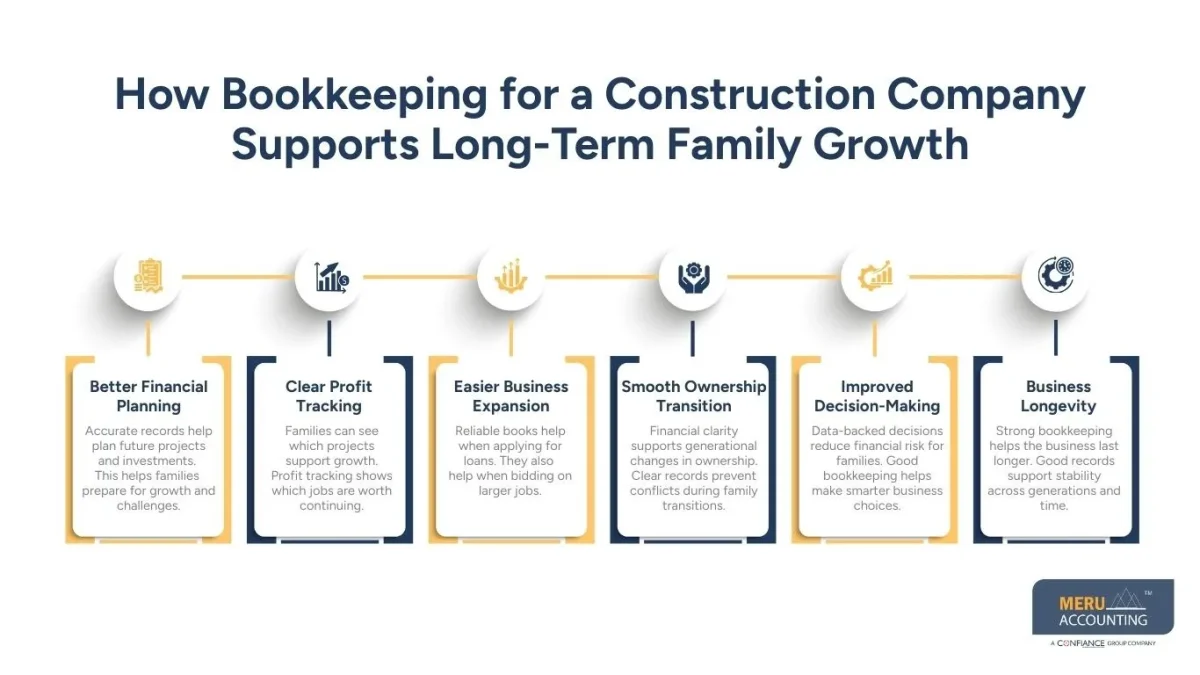
How Bookkeeping for a Construction Company Supports Long-Term Family Growth
Bookkeeping for a construction company supports long-term stability and growth for family businesses.
Better Financial Planning
Accurate records help plan future projects and investments. This helps families prepare for growth and challenges.
Clear Profit Tracking
Families can see which projects support growth. Profit tracking shows which jobs are worth continuing.
Easier Business Expansion
Reliable books help when applying for loans. They also help when bidding on larger jobs.
Smooth Ownership Transition
Financial clarity supports generational changes in ownership. Clear records prevent conflicts during family transitions.
Improved Decision-Making
Data-backed decisions reduce financial risk for families. Good bookkeeping helps make smarter business choices.
Business Longevity
Strong bookkeeping helps the business last longer. Good records support stability across generations and time.
Payroll and Labor Cost Tracking in Family-Owned Construction Companies
Labor is one of the highest costs in construction. Bookkeeping for a construction company ensures payroll is tracked correctly.
Family vs Non-Family Wages
Clear payroll records prevent confusion and disputes. This keeps family finances separate from business expenses.
Overtime and Job Hours
Labor hours must be assigned to specific jobs. This improves job costing and profit tracking.
Payroll Taxes
Accurate bookkeeping ensures payroll taxes are filed correctly. Correct filing avoids penalties and legal issues.
Compliance
Proper records protect the business during audits. Audits become simpler when records are well organized.
Cost Control
Tracking labor costs helps avoid overspending on projects. This improves cash flow and project profitability.
Job Profit Accuracy
Labor cost accuracy improves job costing results. Accurate job costing shows true project profits.
Job Costing Essentials in Bookkeeping for a Construction Company
Job costing is a core part of bookkeeping for construction. This is especially important for bookkeeping for small construction business.
Track Costs by Project
Each project should have its own cost record. This helps identify which jobs earn real profit.
Labor Allocation
Wages are assigned to the correct jobs. This prevents labor costs from being mixed incorrectly.
Material Costs
Materials are tracked per project, not in total. This helps avoid material waste and budget errors.
Equipment Usage
Equipment expenses are shared accurately across active jobs. This keeps equipment costs fair and transparent.
Overhead Distribution
Indirect costs are allocated fairly across projects. This ensures each job pays its fair share.
Profit Measurement
Job costing shows real project profitability for owners. This helps improve future bidding and planning decisions.
Tax Compliance and Reporting for Family-Owned Construction Businesses
Taxes are complex for construction companies. Bookkeeping for a construction company simplifies compliance and reporting.
Sales Tax Tracking
Construction tax rules vary by location and job. Accurate tracking prevents overpayment or missed filings.
Payroll Tax Reporting
Accurate payroll records prevent errors in filings. This keeps the business safe from penalties.
Expense Deductions
Proper bookkeeping ensures no deductions are missed. This helps lower taxable income legally.
Year-End Reports
Clean books make tax filing easier each year. This reduces stress during the tax season.
Audit Readiness
Organized records reduce stress during audits. This helps prove accuracy if records are checked.
Family Income Clarity
Clear reporting helps manage family income fairly. Bookkeeping for small construction business also improves financial clarity.
Bookkeeping for Small Construction Business Owners Managing Multiple Projects
Bookkeeping for small construction business owners often struggles with multiple jobs.
Proper bookkeeping keeps all projects organized and controlled.
Project-Level Tracking
Each project needs separate income and expense records. This helps avoid mixing costs between jobs.
Cash Flow Control
Tracking payments helps manage expenses across jobs. This prevents running out of cash during projects.
Payment Scheduling
Bookkeeping helps prioritize payments based on deadlines. This keeps suppliers and workers paid on time.
Resource Planning
Equipment and labor are assigned properly to projects. This prevents delays and reduces cost overruns.
Billing Accuracy
Invoices must match actual project progress every time. This reduces billing disputes with clients.
Reduced Confusion
Clear records keep projects organized and transparent. This improves communication among family members and staff.
How Bookkeeping for Small Construction Business Improves Profitability
Bookkeeping for small construction business improves profitability through clarity.
Clear bookkeeping helps owners make better business choices.
Cost Awareness
Owners understand where money is spent each month. Cost awareness helps reduce unnecessary spending and waste.
Better Pricing
Accurate costs lead to better estimates and bids. Better pricing improves winning chances and profit margins.
Reduced Waste
Tracking helps reduce unnecessary expenses in projects. Lower waste increases profit and project efficiency.
Stronger Cash Control
Better cash planning prevents shortages during work. Stable cash flow keeps projects running smoothly.
Smart Growth Decisions
Financial data supports steady growth planning for families. Growth planning prevents overexpansion and financial stress later.
Higher Profit Margins
Clear bookkeeping supports better results overall for businesses. Higher margins help the company grow steadily and safely.
How Meru Accounting Supports Family-Owned Construction Companies
At Meru Accounting, bookkeeping for a construction company is designed for family businesses. Our services help keep finances clear, accurate, and easy to manage. Family-owned construction companies can rely on our team for support.
Family businesses often need strong financial clarity and stability. That is why our solutions focus on accurate tracking and reporting. Our goal is to reduce confusion and improve financial control.
Job Costing Setup and Tracking
Job costing is set up for each construction project. This helps track labor, materials, and profit per job.
Payroll and Labor Cost Bookkeeping
Payroll is recorded accurately for family and non-family workers. Labor costs are assigned correctly to each project.
Tax-Ready Financial Records
Financial records are maintained in tax-ready format. This reduces errors and simplifies year-end tax filing.
Monthly Reporting for Project Performance
Monthly reports show project progress and cost trends. These reports help owners make better business decisions.
Support for Small Construction Business Owners
Multiple projects are managed with clear bookkeeping systems. Cash flow, expenses, and income are organized properly.
With Meru Accounting, family-owned construction companies gain accurate records. Our support gives clear insights and peace of mind.
Get clear and accurate bookkeeping for your family business today. Start tracking project costs, payroll, and profits with confidence. Contact Meru Accounting to secure better financial control and growth.
Key Takeaways
- Bookkeeping for a construction company is essential for family-owned construction businesses
- Proper bookkeeping supports cash flow, job costing, payroll, and taxes
- Family businesses benefit from clear financial boundaries
- Bookkeeping for small construction business improves profitability and control
FAQs
Bookkeeping helps track costs, income, and profits clearly. It also prevents confusion between family and business finances.
Bookkeeping should be updated weekly or monthly to avoid errors and missed payments.
Yes, family members should be paid through proper payroll to keep records clear and tax-compliant.
Job costing tracks all costs for each project so owners know if the job is profitable.
Outsourcing helps ensure accuracy, saves time, and supports better financial decisions.


