




Bookkeeping for manufacturing company operations plays a major role in bringing clarity to inventory and expense management. Manufacturing businesses deal with raw materials, work-in-progress, finished goods, labor costs, factory overheads, and many other moving parts.
Without proper bookkeeping for manufacturing business systems in place, tracking these elements becomes confusing and error-prone. Many manufacturers struggle to understand where money is being spent, why inventory numbers do not match physical stock, or why profits fluctuate even when sales are steady.
These problems often arise because inventory and expenses are not recorded correctly. Bookkeeping for manufacturing company processes helps organize financial data, track inventory movements, and assign costs accurately.
In this blog, we explain how bookkeeping for manufacturing companies reduces confusion around inventory and expenses, improves cost control, and supports better decision-making for manufacturing businesses.
What You Will Learn From This Blog
This blog will help you understand:
- Why inventory and expense tracking is complex in manufacturing
- How bookkeeping for manufacturing businesses brings clarity to inventory records
- The role of manufacturing bookkeeping in identifying direct and indirect costs
- How accurate records prevent stock shortages and overstatements
- Ways bookkeeping for manufacturing company improves cost of goods sold
- How better bookkeeping supports pricing and profit planning
- Common mistakes manufacturers make and how proper bookkeeping solves them
By the end, you will clearly see how bookkeeping for manufacturing company helps manufacturers stay organized, reduce errors, and gain control over inventory and expenses.
Introduction to Bookkeeping for Manufacturing Company Operations
Bookkeeping for manufacturing company operations is different from bookkeeping in service or trading businesses. Manufacturing companies must track not only sales and purchases but also production costs, inventory stages, and factory expenses.
A proper bookkeeping for manufacturing businesses system records:
- Raw material purchases
- Inventory usage during production
- Labor costs tied to production
- Factory utilities and maintenance
- Movement of goods from raw material to finished product
Manufacturing bookkeeping ensures that every cost is recorded in the correct place. This prevents confusion when reviewing financial reports and helps business owners understand the true cost of producing goods.
Without proper manufacturing company bookkeeping practices, manufacturers may underestimate costs, misstate inventory values, and make poor pricing decisions.
How Bookkeeping for Manufacturing Companies Creates Clarity in Inventory Management
Inventory is one of the largest assets in a manufacturing business. Bookkeeping for manufacturing businesses brings clarity by tracking inventory at every stage.
Clear Tracking of Raw Materials
Bookkeeping for a manufacturing company records every raw material purchase, usage, and balance. This helps manufacturers know exactly how much stock is available at any time.
Work-in-Progress Visibility
Bookkeeping for manufacturers tracks materials and labor used in unfinished products. This prevents confusion about partially completed orders.
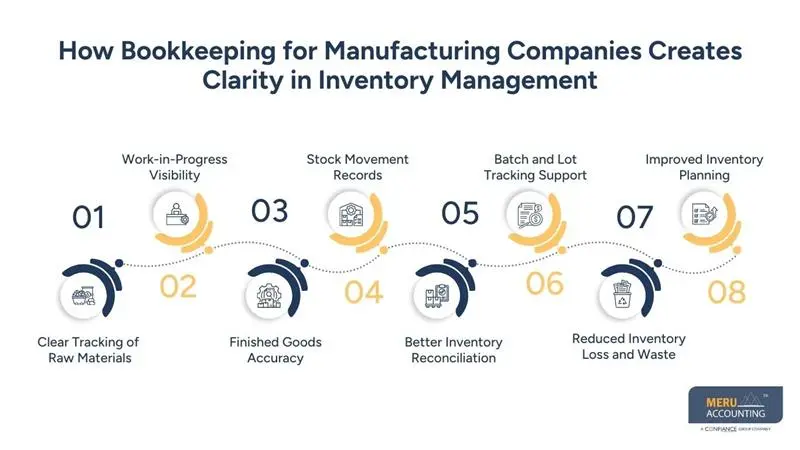
Finished Goods Accuracy
Manufacturing company bookkeeping ensures finished goods are recorded correctly and ready for sale.
Stock Movement Records
Each inventory movement is recorded, reducing errors caused by missing or duplicate entries.
Better Inventory Reconciliation
Manufacturing company bookkeeping helps match physical stock with recorded data, reducing mismatches.
Batch and Lot Tracking Support
Bookkeeping for manufacturing businesses helps track inventory by batch or lot. This makes it easier to identify where materials are used and manage quality checks or returns.
Reduced Inventory Loss and Waste
Manufacturing bookkeeping highlights unusual inventory changes. This helps businesses spot losses, damage, or waste early and take corrective action.
Improved Inventory Planning
Bookkeeping for manufacturing businesses provides clear inventory data that supports better production planning. This reduces last-minute purchases and avoids excess stock buildup.
Clear inventory records help manufacturers plan production, avoid excess stock, and reduce losses.
Why Inventory and Expense Tracking Is Challenging in Manufacturing Businesses
Manufacturing businesses face unique challenges when tracking inventory and expenses.
Multiple Cost Components
Bookkeeping for manufacturers must handle raw materials, labor, and overhead costs together.
Frequent Inventory Movement
Inventory moves constantly between storage, production, and finished goods.
Shared Expenses
Expenses like electricity and rent are shared across products, making allocation difficult.
Manual Errors
Without bookkeeping for manufacturing company systems, manual records often lead to mistakes.
Lack of Cost Visibility
Poor records make it hard to see which products are profitable.
These challenges explain why many manufacturers face confusion. Bookkeeping for manufacturing companies provides structure and accuracy.
How Bookkeeping for Manufacturing Company Prevents Inventory Overstatement and Shortages
Inventory overstatement and shortages can damage cash flow and customer trust. Bookkeeping for manufacturing company helps prevent both.
Real-Time Inventory Updates
Manufacturing company bookkeeping updates stock levels after every transaction.
Proper Stock Valuation
Manufacturing bookkeeping ensures inventory is valued using consistent methods.
Regular Reconciliation
Bookkeeping for manufacturing company supports regular checks between records and actual stock.
Controlled Material Usage
Production usage is recorded accurately, reducing unnoticed losses.
Improved Purchase Planning
Accurate data helps avoid over-ordering or running out of materials.
These practices reduce waste and improve inventory control.
Understanding Direct and Indirect Costs Using Manufacturing Bookkeeping
Manufacturing bookkeeping helps distinguish between direct and indirect costs clearly.
Direct Costs Explained
Direct costs include raw materials and labor directly tied to production.
Indirect Costs Explained
Indirect costs include factory rent, maintenance, and utilities.
Proper Cost Allocation
Manufacturing company bookkeeping assigns indirect costs fairly across products.
Cost Visibility
Manufacturing accounting and bookkeeping helps owners see where money is actually spent.
Better Cost Control
Clear cost separation helps identify areas for savings.
Understanding costs leads to better planning and pricing.
How Bookkeeping for Manufacturing Company Separates Production Expenses from Overheads
One common issue is mixing production costs with general expenses. Bookkeeping for manufacturing businesses solves this problem.
Production Cost Identification
Materials and labor are recorded under production expenses.
Overhead Classification
Office salaries and admin expenses are recorded separately.
Accurate Financial Reports
Clear separation improves profit analysis for each product.
Improved Budgeting
Manufacturers can plan production costs more accurately now.
Better Financial Decisions
Bookkeeping for manufacturing company provides clarity on where funds are used.
This separation helps businesses understand true production costs.
How Bookkeeping for Manufacturing Company Improves Cost of Goods Sold Accuracy
Cost of Goods Sold (COGS) is critical in manufacturing. Bookkeeping for manufacturing company ensures COGS is calculated correctly.
Accurate Material Costs
Raw material usage is recorded precisely each time.
Correct Labor Allocation
Labor costs are assigned to production accurately.
Overhead Distribution
Manufacturing bookkeeping includes overheads in COGS properly.
Reduced Reporting Errors
Bookkeeping for manufacturing businesses minimizes calculation mistakes consistently.
Reliable Profit Figures
Accurate COGS leads to correct profit measurement.
Better COGS accuracy improves financial reporting and tax compliance.
How Bookkeeping for Manufacturing Company Supports Better Pricing and Profit Margins
Pricing decisions depend on cost clarity. Bookkeeping for manufacturing businesses supports this process.
True Product Cost Visibility
Manufacturing accounting and bookkeeping shows the real cost of each product clearly.
Informed Pricing Decisions
Prices can be set to cover costs and desired margins.
Margin Analysis
Bookkeeping for manufacturing company compares product profitability more accurately.
Cost Control Opportunities
It identifies high-cost areas that need immediate attention.
Sustainable Profit Planning
Accurate data supports long-term profit planning and growth.
Better pricing starts with proper bookkeeping and accurate records.
Common Inventory and Expense Mistakes Solved by Bookkeeping for Manufacturing Company
Many common mistakes can be avoided with proper bookkeeping for manufacturing company practices.
Ignoring Work-in-Progress
Manufacturing bookkeeping records unfinished goods correctly every time.
Misclassifying Expenses
Bookkeeping for manufacturing businesses ensures correct expense categories always.
Overlooking Overheads
Indirect costs are included properly in all records.
Poor Inventory Valuation
Manufacturing bookkeeping uses consistent valuation methods for accuracy.
Incomplete Records
Manufacturing company bookkeeping ensures all transactions are recorded.
Solving these mistakes leads to clearer financial insight.
Why Choose Meru Accounting for Bookkeeping for Manufacturing Company
At Meru Accounting, the unique needs of manufacturing businesses are well understood. Our bookkeeping and accounting services are designed to reduce confusion around inventory and expenses. Our services include:
Accurate Inventory Tracking
Precise records are maintained for raw materials, work-in-progress, and finished goods.
Clear Cost Classification
Production costs are categorized correctly, separating direct and indirect expenses.
Proper Expense Allocation
Overheads and operating expenses are allocated accurately to the right cost centers.
Reliable Financial Reporting
Timely reports are provided that reflect real inventory values and expenses.
Ongoing Manufacturing Bookkeeping Support
Continuous support is provided to keep financial records updated and accurate.
Key Takeaways
- Bookkeeping for manufacturing company reduces confusion around inventory and expenses
- Manufacturing bookkeeping tracks inventory at every stage
- Proper records prevent stock shortages and overstatements
- Clear cost separation improves pricing and profit planning
- Accurate bookkeeping supports better business decisions
- Strong bookkeeping for manufacturing company systems is essential for long-term success.
FAQs
Bookkeeping for a manufacturing company records all production-related transactions and inventory movements. It is important because it helps avoid confusion and keeps costs and stock accurate.
Manufacturing bookkeeping tracks raw materials and finished goods in real time. This helps businesses know when to reorder and avoid production delays.
Bookkeeping for manufacturing company separates production costs from overhead expenses. This makes it easier to control costs and avoid overspending.
Common mistakes include wrong stock counts and missing work-in-progress records. Bookkeeping for manufacturing businesses ensures accurate inventory tracking.
Bookkeeping for manufacturing companies calculates true production costs, including materials and labor. This helps set better prices and improve profit margins.


