



Bookkeeping for real estate investors is more than just recording transactions. It is a crucial process that ensures your investments remain profitable, organized, and compliant with regulations. Proper bookkeeping allows investors to track income and expenses, measure property performance, and make informed financial decisions.
Whether you are managing a single rental property or a large real estate portfolio, Consistent records through bookkeeping for real estate investors support long-term success.
What You Will Learn From This Blog
In this blog, you will learn:
- Why bookkeeping for real estate investors is essential for financial clarity and profitability.
- Common bookkeeping mistakes that real estate investors should avoid.
- Advanced strategies to improve your real estate bookkeeping and enhance investment returns.
- How bookkeeping supports managing multiple properties efficiently.
- Ways bookkeeping simplifies loan applications and financial reporting.
- How to track return on investment (ROI) accurately for each property.
- Real-life examples and practical tips to make real estate bookkeeping easier and more effective.
Why Bookkeeping for Real Estate Investors Is Critical
Bookkeeping for real estate investors is critical because it helps you maintain financial clarity and control over your investments. Without proper records, it is nearly impossible to know if a property is generating profits or draining resources.
Bookkeeping for real estate investors ensures every expense, from repairs to loan payments, is tracked clearly.
Proper bookkeeping also helps investors:
- Identify profitable properties and underperforming assets
- Maintain compliance with tax laws
- Prepare accurate financial statements for lenders and investors
- Make informed decisions about buying, selling, or refinancing properties
By investing time in real estate bookkeeping, investors can reduce financial risks and ensure that their investments work efficiently to generate returns.
Common Bookkeeping Mistakes Real Estate Investors Should Avoid
Even experienced investors can make mistakes without structured bookkeeping for real estate investors, leading to lost time and money.
Avoiding these mistakes improves bookkeeping for real estate investors and simplifies tax reporting. Common mistakes include:
Mixing Personal and Business Finances
Many investors use personal bank accounts for property expenses. This makes tracking income and expenses difficult and can create tax issues. Always maintain separate accounts for personal and real estate finances.
Failing to Track All Expenses
Every cost matters in real estate. Utilities, repairs, insurance, and even small maintenance costs should be recorded. Skipping minor expenses can distort your financial statements and ROI calculations.
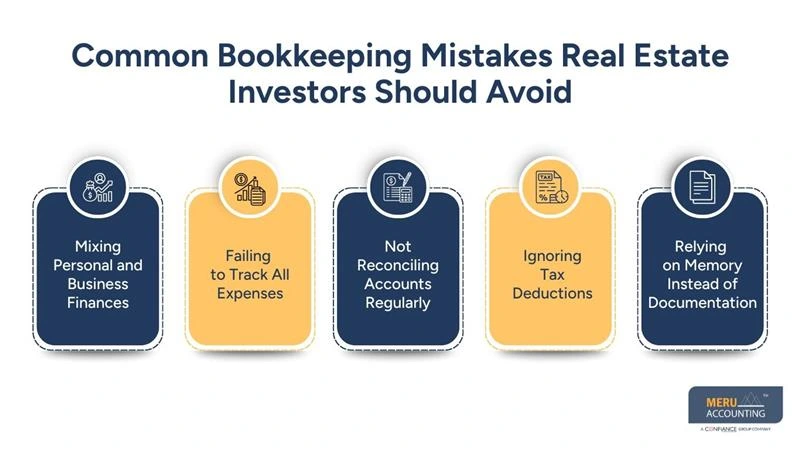
Not Reconciling Accounts Regularly
Reconciling bank statements ensures that your recorded transactions match actual account activity. Failing to do this can lead to unnoticed errors or missed payments.
Ignoring Tax Deductions
Real estate investors are eligible for many tax deductions, including mortgage interest, property taxes, and depreciation. Inaccurate bookkeeping may result in missed deductions and higher tax liabilities.
Relying on Memory Instead of Documentation
Relying on memory or informal notes can lead to errors. Keep receipts, invoices, and statements for accurate record-keeping.
Advanced Bookkeeping Strategies for Real Estate Investors
Once basic systems are in place, bookkeeping for real estate investors can be improved with advanced tracking strategies.
Use Property Management Software
Software can automate bookkeeping tasks, track rent payments, manage maintenance costs, and generate financial reports.
Create a Chart of Accounts Specific to Real Estate
Segment accounts for rental income, mortgage payments, repairs, property management fees, taxes, and other categories. This structure simplifies reporting and analysis.
Track Cash Flow and ROI for Each Property
Monitor the income and expenses for each property separately. This allows you to identify high-performing assets and areas needing improvement.
Implement Regular Financial Reviews
Schedule monthly or quarterly reviews to analyze financial statements, compare budgeted versus actual expenses, and adjust your strategies.
Use Cloud-Based Accounting Tools
Cloud-based real estate bookkeeping tools allow real-time access to financial data, ensuring you can make timely decisions from anywhere.
The Role of Bookkeeping in Real Estate Portfolio Management
Bookkeeping for real estate investors plays a central role in managing a portfolio of properties. Accurate records allow investors to assess the performance of individual properties, track overall portfolio growth, and make strategic decisions.
Real estate bookkeeping helps with:
Property Performance Analysis
Evaluate income, expenses, and net profit for each property.
Budgeting and Forecasting
Plan for future expenses, renovations, and acquisitions.
Tax Compliance
Prepare accurate reports to minimize tax liabilities.
Investment Planning
Decide when to sell or buy properties based on performance data.
With reliable bookkeeping, investors gain a clear picture of their financial position and can take actions that maximize profits and reduce risks.
How Bookkeeping for Real Estate Investors Simplifies Loan Applications
When applying for a mortgage or property loan, lenders require detailed financial information. Proper bookkeeping for real estate investors makes this process faster and more efficient.
Key ways bookkeeping simplifies loan applications include:
Providing Accurate Income Statements
Shows rental income, expenses, and net operating income. This helps lenders clearly understand the cash flow generated by each property.
Offering a Clear Financial History
Demonstrates consistent property management and responsible financial behavior. A stable financial record builds lender confidence and improves approval chances.
Supporting Collateral Valuation
Proper records help lenders assess property values and risks. Detailed expense and income data support accurate property valuation reports.
Reducing Loan Processing Time
Complete and organized records allow lenders to make faster decisions. This reduces delays and minimizes back-and-forth requests for documents.
Investors with well-maintained real estate bookkeeping often enjoy higher approval rates and better loan terms.
Common Challenges in Real Estate Bookkeeping and How to Overcome Them
Bookkeeping for real estate investors can be challenging, especially when managing multiple properties.
Managing Multiple Properties
Challenge
Tracking income and expenses for each property can become complicated.
Solution
Use property-specific accounts and software to separate financial data.
Handling Complex Tax Regulations
Challenge
Real estate taxes, deductions, and depreciation rules can be confusing.
Solution
Work with professional accountants who specialize in real estate bookkeeping.
Tracking Irregular Income and Expenses
Challenge
Rental income may fluctuate, and expenses may be unpredictable.
Solution
Maintain detailed records and create monthly cash flow statements.
Keeping Up With Receipts and Invoices
Challenge
Paperwork can accumulate quickly.
Solution
Use digital tools to scan, categorize, and store all documents.
Avoiding Errors in Recording Transactions
Challenge
Mistakes can lead to incorrect financial statements.
Solution
Regularly reconcile accounts and review reports for accuracy.
How Bookkeeping for Real Estate Investors Helps Track ROI
Return on Investment (ROI) is a critical measure for any investor. Real estate bookkeeping makes tracking ROI simple and accurate.
By maintaining organized financial records, investors can:
- Calculate net income for each property
- Compare profits to initial investment costs
- Determine the impact of expenses on returns
- Identify which properties deliver the best ROI
Accurate bookkeeping ensures that investors make data-driven decisions, avoid losses, and maximize profits over time.
Real Life Example
Consider a real estate investor managing five rental properties. Initially, finances were tracked using a simple spreadsheet, which made it difficult to manage expenses, calculate ROI, and prepare tax reports. After switching to professional real estate bookkeeping services, the investor was able to:
- Separate income and expenses for each property
- Track repairs, maintenance, and mortgage payments accurately
- Generate monthly financial statements
- Identify underperforming properties and improve profitability
By maintaining clear and accurate records, the investor reduced tax liabilities, secured better financing options, and made informed investment decisions that increased overall portfolio ROI.
How Meru Accounting Helps With Real Estate Bookkeeping
At Meru Accounting, we specialize in bookkeeping for real estate investors, providing tailored services that simplify financial management and maximize profits. Our services include:
Property Specific Accounting
Track income, expenses, and ROI for each property. Clear property level records make performance comparison easier.
Tax Preparation And Compliance
Ensure all deductions are claimed, and filings are accurate. Accurate records support correct filings and reduce tax issues.
Financial Reporting
Generate detailed reports to monitor portfolio performance. Regular reports help investors plan budgets and future investments.
Loan Application Support
Provide organized financial records for lenders. Well-prepared documentation helps speed up lender review.
Customized Solutions
Create bookkeeping systems that fit your investment strategy. Flexible systems adjust easily as the portfolio expands.
Our team of experienced professionals ensures that investors spend less time on paperwork and more time focusing on growing their real estate investments efficiently.
Key Takeaways
- Bookkeeping for real estate investors is essential for financial clarity, compliance, and profitability.
- Avoid common mistakes like mixing personal and business finances, failing to track expenses, and ignoring tax deductions.
- Advanced bookkeeping strategies, such as using property management software and creating detailed charts of accounts, improve efficiency.
- Accurate bookkeeping supports portfolio management, loan applications, ROI tracking, and investment planning.
- Meru Accounting provides specialized real estate bookkeeping services that help investors save time, reduce stress, and maximize profits.
FAQs
Bookkeeping for real estate investors focuses specifically on tracking property income, expenses, and ROI. Regular bookkeeping may not include property-specific details or tax considerations for real estate.
It is best to update records at least once a month. For active investors with multiple properties, weekly updates are recommended.
Yes. Accurate records allow you to claim all eligible deductions, such as mortgage interest, property taxes, and maintenance expenses, reducing your tax liabilities.
While it is possible to use spreadsheets, property management or accounting software can automate tracking, reduce errors, and provide detailed reports.
Investors should keep bank statements, rent receipts, repair bills, loan statements, tax records, and insurance documents. Keeping these records organized supports accurate bookkeeping.


