



Bookkeeping for the construction industry plays a vital role in keeping project finances organized and ensuring every expense is accurately recorded. From labor costs to equipment rentals, tracking on-site expenses is essential for both small and large construction projects.
Integrating these expenses into your bookkeeping system helps businesses stay compliant, manage budgets, and maximize profitability.
By systematically capturing on-site expenses, construction firms gain a clearer picture of project costs in real time. This not only prevents budget overruns but also enables better decision-making for resource allocation, subcontractor payments, and material purchases, ensuring each project stays financially on track
What You Will Learn From This Blog
- How on-site expenses affect project finances and overall profitability
- Best practices for recording and managing on-site costs
- Tools and solutions to improve construction bookkeeping efficiency
- Steps to integrate on-site expenses seamlessly into financial records
- How regular bookkeeping enhances compliance and audit readiness
What Is Bookkeeping for the Construction Industry and Why It Matters
Bookkeeping for the construction industry involves recording all financial transactions for construction projects, including labor, materials, equipment, and other operational costs.
Maintaining accurate records allows construction firms to track expenses, calculate profit margins, and make informed financial decisions that support project success.
Proper bookkeeping also ensures compliance with tax regulations, payroll laws, and contractor agreements, reducing the risk of fines or legal issues. By keeping organized records, construction companies can manage budgets effectively, avoid overspending, and allocate resources efficiently across projects.
Additionally, bookkeeping provides valuable historical data that supports long-term financial planning. With clear insights into past project costs and trends, firms can make better decisions for future projects, investments, and growth strategies.
How On-Site Expenses Impact Construction Project Finances
Direct Material Costs
Materials purchased on-site affect overall project costs and must be recorded immediately for accurate bookkeeping.
Labor Costs
Wages, overtime, and subcontractor payments need careful tracking to ensure profitability.
Equipment Rentals and Maintenance
Costs associated with machinery rentals or repairs directly influence project budgets.
Unexpected Site Expenses
Handling unplanned costs, like weather-related damages, requires precise documentation to avoid budget overruns.
Cash Flow Management
Recording on-site expenses promptly ensures steady cash flow, helping firms pay suppliers and staff on time, which is a key aspect of bookkeeping for the construction industry.
Permit and Regulatory Fees
Fees for permits, inspections, and regulatory approvals are part of on-site expenses and must be tracked carefully to avoid project delays and unexpected financial burdens.
Why Accurate Tracking Is Crucial in Bookkeeping for the Construction Industry
Preventing Budget Overruns
Tracking expenses accurately ensures projects stay within financial limits and avoids surprises, a practice central to effective bookkeeping for the construction industry. It also helps identify areas where costs can be reduced without compromising quality.
Real-Time Financial Visibility
Knowing where every dollar is spent allows project managers to make timely decisions. This visibility helps in reallocating resources quickly when unexpected costs arise.
Accurate Profit Calculation
Only precise records can provide a clear picture of a project’s profitability. Accurate profit data supports better bidding and pricing strategies for future projects.
Supporting Audit Requirements
Well-maintained records simplify audits and ensure compliance with regulations. It also reduces the risk of penalties and strengthens financial credibility.
Building Client Trust
Clients are more likely to trust firms that provide transparent cost reporting. Consistent and accurate tracking reinforces your reputation for professionalism and reliability.
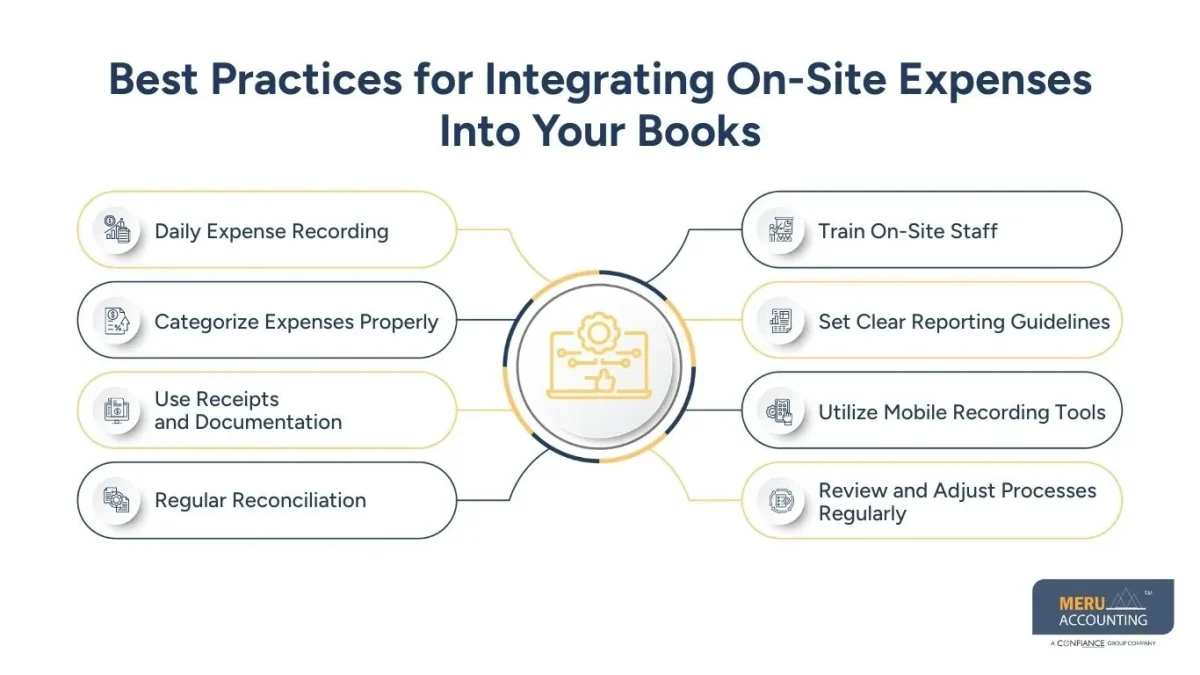
Best Practices for Integrating On-Site Expenses Into Your Books
Daily Expense Recording
Log expenses daily to reduce errors and maintain accurate financial records. Daily tracking also helps catch mistakes early and prevents data backlog.
Categorize Expenses Properly
Separate costs into categories like labor, materials, and equipment for better analysis. Proper categorization makes reporting and budgeting simpler and more effective.
Use Receipts and Documentation
Maintain receipts for all transactions to support accuracy and compliance, which is a standard practice in bookkeeping for the construction industry. Organized documentation also provides proof during audits or client reviews.
Regular Reconciliation
Compare on-site records with accounting books weekly to avoid discrepancies. Frequent reconciliation ensures that your financial statements reflect true project costs.
Train On-Site Staff
Ensure staff understand the importance of reporting expenses correctly. Well-trained staff contribute to accurate records and smooth bookkeeping processes.
Set Clear Reporting Guidelines
Define how and when expenses should be reported to ensure consistency across all projects. Clear guidelines reduce confusion and improve record accuracy.
Utilize Mobile Recording Tools
Encourage staff to use mobile apps or tools for instant expense entry. This reduces delays and errors in capturing on-site costs.
Review and Adjust Processes Regularly
Regularly assess your bookkeeping practices to identify inefficiencies, ensuring your bookkeeping for the construction industry remains accurate and up-to-date. Continuous improvement ensures expense tracking remains accurate and effective.
Top Construction Bookkeeping Solutions for Streamlined Expense Management
Cloud-Based Accounting Tools
Software like QuickBooks and Xero allows easy integration of on-site expenses into books.
Mobile Expense Tracking
Apps enable employees to record costs immediately from the construction site.
Job Costing Software
Helps track expenses by project, ensuring accurate profit calculation.
Automated Invoicing Systems
Automates billing and reduces errors in expense tracking.
Customized Construction Bookkeeping Solutions
Tailored solutions designed specifically for the construction industry simplify complex accounting processes.
Common Mistakes to Avoid When Recording On-Site Expenses
Delayed Expense Entries
Waiting too long to record expenses leads to inaccuracies and missed deductions. Prompt entries ensure financial records reflect actual project costs in real time.
Misclassification of Costs
Incorrectly categorizing expenses can distort financial reports and affect budgeting. Proper classification allows for accurate analysis of project profitability.
Ignoring Small Expenses
Even minor costs add up; overlooking them can skew profit calculations. Tracking every expense ensures nothing is left out of the budget.
Lack of Documentation
Failing to keep receipts or invoices reduces accountability and complicates audits. Organized documentation also provides evidence for disputes or client inquiries.
Using Manual Processes Only
Relying solely on spreadsheets increases errors and limits efficiency. Integrating digital tools or accounting software minimizes mistakes and saves time.
Benefits of Using Construction Bookkeeping Solutions for Project Profitability
Improved Accuracy
Digital bookkeeping solutions reduce errors in recording on-site expenses. Accurate records help avoid costly mistakes and ensure project budgets remain reliable.
Time Efficiency
Automation saves time, allowing project managers to focus on operations. Less manual work means faster reporting and more efficient project management.
Better Decision-Making
Detailed reports provide insight into cost control and project profitability. Access to real-time data helps managers make informed financial choices quickly.
Compliance Assurance
Construction bookkeeping solutions ensure records meet tax and legal requirements. This reduces the risk of fines and simplifies regulatory reporting.
Simplified Audit Processes
Organized data makes internal and external audits smoother and faster. Clear records provide proof of expenses and build trust with clients and auditors.
Steps to Implement a Smooth Expense Integration Process
Assess Current Expense Tracking Methods
Identify gaps in your current bookkeeping practices to improve accuracy and optimize bookkeeping for the construction industry processes. Understanding existing weaknesses helps you implement better systems and reduce errors.
Choose the Right Construction Bookkeeping Solutions
Select software that fits your business needs and integrates easily with existing systems. The right tools streamline expense tracking and improve overall project management.
Train Your Team
Ensure staff know how to record and categorize expenses correctly, which is crucial for effective bookkeeping for the construction industry. Well-trained employees reduce mistakes and contribute to consistent, accurate bookkeeping.
Set Daily and Weekly Recording Routines
Regular entries prevent backlogs and errors in financial records. Establishing routines ensures that every expense is captured promptly and systematically.
Monitor and Review Regularly
Check recorded expenses weekly to ensure they match actual on-site costs. Continuous monitoring helps identify discrepancies early and keeps your project finances on track.
How Regular Bookkeeping for the Construction Industry Improves Compliance and Audits
Consistent Record Maintenance
Maintaining daily or weekly records ensures readiness for audits anytime and is a fundamental principle of bookkeeping for the construction industry. Consistency also helps track project progress and keeps finances organized.
Transparent Financial Statements
Clear documentation shows clients and regulators exactly where funds are spent, which is facilitated by effective construction bookkeeping solutions. Transparent records build trust and improve stakeholder confidence.
Tax Compliance
Accurate records through bookkeeping for the construction industry help firms file taxes correctly and avoid penalties. Proper bookkeeping ensures all deductible expenses are captured and reported properly.
Easy Audit Trails
Every transaction is tracked and easily verifiable for auditors. Well-organized trails simplify internal reviews and reduce audit stress.
Reduced Risk of Errors
Regular bookkeeping for the construction industry minimizes discrepancies and ensures precise reporting, keeping project finances accurate.
How Meru Accounting Supports Construction Firms
Managing construction project finances can be challenging due to complex on-site expenses and varying project costs. Meru Accounting provides specialized bookkeeping services to ensure accuracy, compliance, and better financial control for every construction project.
Specialized Construction Bookkeeping Services
Meru Accounting provides expert bookkeeping for the construction industry, ensuring every expense is tracked accurately.
On-Site Expense Integration
Our team helps integrate daily on-site costs directly into your financial records for real-time visibility.
Customized Construction Bookkeeping Solutions
We tailor accounting solutions to match the unique needs of each construction project.
Compliance and Audit Support
Meru Accounting ensures all records meet regulatory standards, simplifying audits.
Technology-Driven Approach
Using modern tools, we streamline expense tracking, payroll, and reporting for better efficiency.
Real-Time Project Reporting
Meru Accounting provides detailed reports on project expenses and budgets, helping managers make timely financial decisions.
Cost Control and Profitability Insights
Our services include analyzing expenses and identifying areas to reduce costs, ensuring each project remains profitable.
Ensure your construction projects stay on budget and compliant. Contact Meru Accounting’s expert bookkeeping services and start tracking on-site expenses accurately today for better financial control and profitability.
Key Takeaways
- Accurate bookkeeping for the construction industry ensures financial clarity and compliance
- On-site expenses significantly affect project budgets and must be recorded daily
- Using construction bookkeeping solutions improves accuracy, efficiency, and profitability
- Training staff and implementing regular recording routines prevent errors and omissions
- Partnering with experts like Meru Accounting helps integrate expenses and maintain compliance
FAQs
Daily logging of materials, labor, and equipment costs in your accounting system ensures precise financial tracking.
Proper integration helps track costs, avoid budget overruns, and maintain project profitability.
Cloud-based accounting software and mobile expense tracking apps simplify cost management and reporting.
Categorizing costs, keeping receipts, and reconciling expenses regularly reduces mistakes and ensures accuracy.
Organized and accurate expense records simplify audits and help meet tax and legal regulations.


