




Bookkeeping for truck drivers may sound dull, but it plays a big role in the health of any trucking business. When you stay on the road for long hours, it is easy to lose track of small costs, fuel slips, repair bills and toll charges. Yet these small bits of data decide your real profit at the end of the month, since even a few missed receipts can change the full picture of your income and spending.
Accurate books help drivers plan cash flow, claim tax breaks and keep their business in shape. When your records show clear numbers, you can plan better routes, compare earnings from different clients and avoid surprise costs. With the right tools and habits, the process gets much easier. Many drivers work with a specialized accountant for truck drivers to stay on the safe side and save time, because expert help often brings long-term stability. In this blog, we will show you how you can simplify bookkeeping for truck drivers.
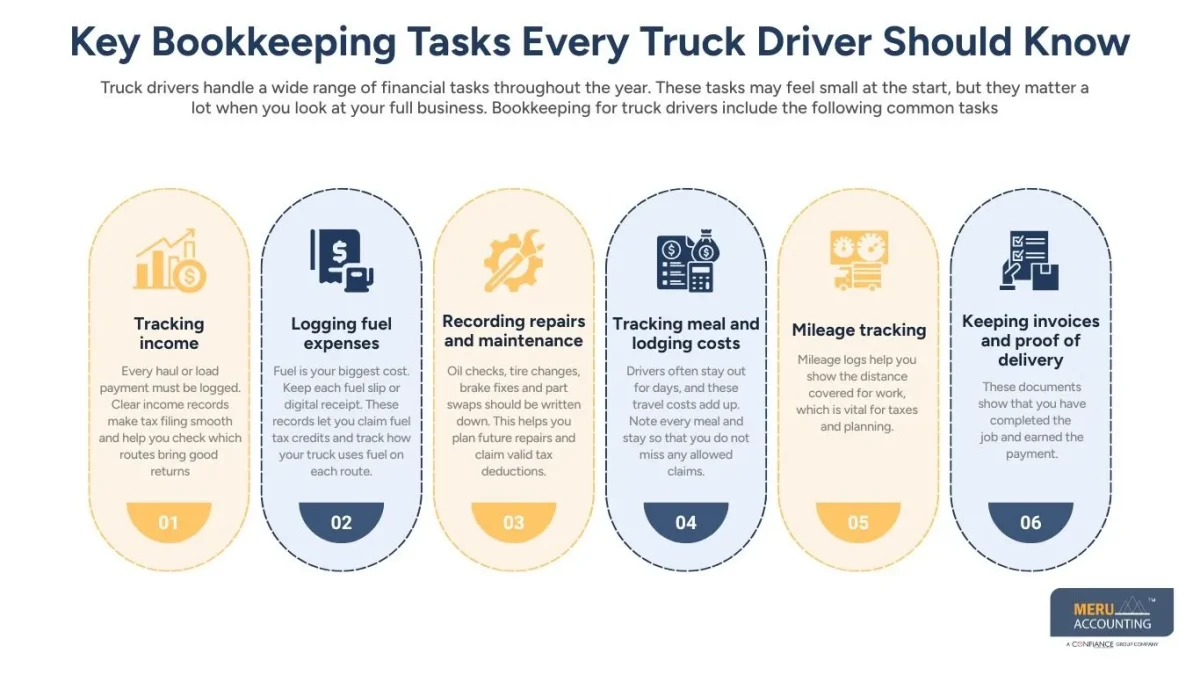
Key Bookkeeping Tasks Every Truck Driver Should Know
Truck drivers handle a wide range of financial tasks throughout the year. These tasks may feel small at the start, but they matter a lot when you look at your full business. Bookkeeping for truck drivers include the following common tasks:
Tracking income
Every haul or load payment must be logged. Clear income records make tax filing smooth and help you check which routes bring good returns. An accountant for truck drivers can help you ensure that all income is recorded properly, making your tax filing smooth and helping you track which routes are the most profitable. This is an essential aspect of bookkeeping for truck drivers, helping you see which routes are the most profitable and which clients pay consistently. When you track each payment, you can also see patterns in your earning cycle, such as which seasons bring more work and which clients pay on time.
Logging fuel expenses
Fuel is your biggest cost. Keep each fuel slip or digital receipt. These records let you claim fuel tax credits and track how your truck uses fuel on each route. Proper fuel logs also help you control waste, compare fuel stations and find ways to improve fuel efficiency. A skilled accountant for truck drivers can also help you track fuel expenses accurately and identify areas where you can cut costs or improve fuel efficiency. Fuel expenses are a huge part of bookkeeping for truck drivers, and tracking them efficiently can help you cut unnecessary costs and claim tax credits.
Recording repairs and maintenance
Oil checks, tire changes, brake fixes and part swaps should be written down. This helps you plan future repairs and claim valid tax deductions. Careful maintenance tracking also protects your truck from unexpected breakdowns and helps you decide when to replace parts before they cause bigger issues.
Tracking meal and lodging costs
Drivers often stay out for days, and these travel costs add up. Note every meal and stay so that you do not miss any allowed claims. Keeping these records helps you plan your long trips better and set a more accurate travel budget.
Mileage tracking
Mileage logs help you show the distance covered for work, which is vital for taxes and planning. They also help you judge wear and tear on your truck, estimate route profitability and prepare proper support documents during tax audits.
Keeping invoices and proof of delivery
These documents show that you have completed the job and earned the payment. They also help solve disputes, support your claims if an issue comes up with a client and prove your income in a clear way for tax authorities or financial reviews.
How to Organize Receipts and Expenses Efficiently
Organizing slips and bills can feel messy, but a few simple habits can change the game. When your records stay clean, your business stays easy to manage.
Use a digital app
Mobile apps let drivers snap a photo of each receipt. This saves time and keeps the data safe. You can upload slips right from the road, which means nothing gets lost in your pockets or truck cab. Digital tools also help you store old records without piles of paper.
Sort expenses by category
Keep fuel, food, repairs, tolls and lodging in separate folders or digital tags. When you need to file tax returns, each group is ready. With clear categories, you spend less time searching and more time driving or planning your schedule.
Update records daily
A quick five-minute update each night keeps you stress free. When you do not delay, errors stay low and the books stay clean. This simple habit stops your records from building up into a big, confusing pile at the end of the month.
Store physical receipts safely
Even when you use digital tools, keep the real slips in a small file or pouch. Some rules may still need hard copies. When your receipts stay in one place, you avoid panic during tax filing or payments.
Review weekly
Spend a short time at the end of each week to check if anything is missing. This habit makes your books neat and ready for audits. Bookkeeping for truck drivers should include weekly reviews to show if the spending is under control or if some routes are costing more than expected.
Top Bookkeeping Mistakes Truck Drivers Should Avoid
Bookkeeping for truck drivers must be done keeping the following mistakes in mind:
Mixing personal and business costs
Many drivers use one card for both. This makes books messy. Use separate accounts for clean records and clear money tracking. This is especially important in bookkeeping for truck drivers, where mixing personal and business expenses can complicate tax filings and lead to inaccuracies.
Ignoring small expenses
A bottle of water or a small meal may not feel like much, but over a month they add up. Track every small cost so you do not lose valid tax claims.
Not saving receipts
Lost slips mean lost claims. Always snap a photo at least, so you still have proof even if the paper gets damaged.
Doing books only at year-end
Waiting till tax time builds stress and creates mistakes. Bookkeeping is best done in small steps through the year, not rushed at the last minute.
Not working with a skilled accountant
A good accountant for truck drivers understands industry rules, tax benefits and compliance needs. Skipping help often leads to missed savings and wrong filings.
Best Practices for Maintaining Accurate Books Year-Round
Bookkeeping for truck drivers must follow these best practices:
Keep mileage logs up to date
Mileage is a key factor in tax claims and cost control. Use a GPS app or a simple logbook. When mileage stays accurate, your tax documents stay strong.
Use accounting software made for drivers
Some tools are built to track loads, fuel and trips. These automate data entry and keep your books error free. They also help you export reports with one click, saving hours of manual work.
Set aside time each week
Even 20 minutes each Sunday can help you stay ahead of your records. With a fixed routine, bookkeeping becomes a small task instead of a heavy burden.
Check bank statements regularly
Match each transaction with your income and expense records. This prevents large errors later and helps you catch fraud or wrong charges early.
Plan for tax season early
Stay aware of due dates, required forms and tax rules. Early prep removes stress and makes sure you get all the deductions you qualify for.
How Bookkeeping for Truck Drivers helps Boost Profit
Bookkeeping for truck drivers helps them see where their money really goes and where they can save more. When your books stay updated, you can compare fuel costs across routes, check which loads give better income and find repeated expenses that you can cut. Clear records also help you claim every valid tax deduction, which increases your yearly savings.
Proper bookkeeping also shows you slow months, busy months and the best times to plan repairs or upgrades. Many drivers notice a rise in profit simply because their data becomes clearer. With accurate books and support from an accountant for truck drivers, it becomes easier to make smart choices that grow your business steadily.
Meru Accounting’s Bookkeeping for Truck Drivers
At Meru Accounting, we specialize in bookkeeping for truck drivers. If you want to simplify your work life and stay focused on the road, contact us now. We provide efficient and cost-effective bookkeeping for truck drivers. Our remote accountant knows the unique needs of truckers, from fuel logs to repair bills to mileage tracking. With our support, you get:
- Proper setup of your accounting system
- Monthly books that are tidy and accurate
- Tax ready records that remove last-minute pressure
- Smart guidance for cash flow and cost control
- A dedicated remote accountant for truck drivers who understands your industry
We help you save time, cut errors and keep your business strong. With our help, you can stay focused on your routes while we handle the numbers behind the scenes.
FAQs
Bookkeeping shows your true income, helps control costs and keeps your tax filings smooth.
It is best to update records daily or at least once a week to avoid mistakes.
Yes, an accountant for truck drivers can help with tax rules, deductions and complex money tasks.
Bookkeeping for truck drivers needs fuel, food, lodging, repair bills, tolls, parking fees and all other work-related slips.
Yes, software tools make tracking income and expenses easier and reduce manual work.


