
Meru Accounting

The Importance of Bookkeeping for Property Management Companies

Contents
Want to learn more?
Subscribe for business tips, tax updates, financial fundamental and more


    The Importance of Bookkeeping for Property Management Companies

    Bookkeeping for property management companies is more than just tracking rent payments and expenses. Proper bookkeeping helps property managers maintain financial stability, understand cash flow, and make smarter decisions for growth. Without accurate bookkeeping, property management companies risk errors, missed payments, and financial losses that can affect both property owners and tenants.

    In this blog, we will explore why bookkeeping for property management companies is essential, how accounting in property management supports business decisions, and practical steps to improve financial management for property portfolios.

    What You Will Learn From This Blog

    • Why bookkeeping for property management companies is crucial for financial health.
    • How accounting in property management helps in decision-making and reporting.
    • Common challenges property managers face in bookkeeping.
    • Best practices and software options for efficient bookkeeping.
    • How Meru Accounting can assist property management companies with accurate bookkeeping.

    Understanding Bookkeeping for Property Management Companies

    Bookkeeping for property management companies involves recording all financial transactions related to properties, tenants, and operations. This includes:

    • Rent collection and deposits
    • Property expenses like maintenance, utilities, and repairs
    • Payroll for property staff
    • Vendor payments and invoices
    • Taxes and regulatory fees

    Accurate bookkeeping for property management companies ensures that all transactions are properly documented, categorized, and reconciled. For property managers, this means staying on top of payments, avoiding missed bills, and maintaining trust with property owners and tenants.

    Without proper bookkeeping, property managers may struggle to know which properties are profitable, which tenants are behind on payments, and where cash flow issues may arise. This can lead to late fees, financial penalties, and reduced profitability.

    The Role of Accounting in Property Management

    Accounting in property management goes beyond basic bookkeeping. While bookkeeping is about recording financial transactions, accounting in property management focuses on analyzing, summarizing, and reporting this financial data to support decision-making.

    Key roles of accounting in property management include:

    Financial Analysis

    Understanding property performance, rental income trends, and expense patterns.

    Budgeting and Forecasting

    Planning for future expenses, renovations, or property acquisitions.

    Tax Compliance

    Preparing financial records for tax filing and regulatory compliance.

    Owner Reporting

    Providing clear reports on income, expenses, and net operating income to property owners.

    By combining bookkeeping with accounting in property management, property managers can make informed decisions that improve profitability and efficiency.

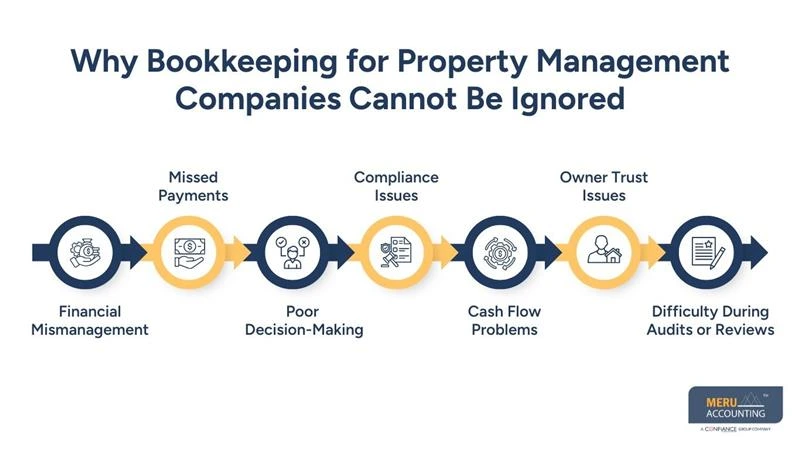
    Why Bookkeeping for Property Management Companies Cannot Be Ignored

    Many property management companies underestimate the importance of proper bookkeeping. Ignoring bookkeeping can lead to:

    Financial Mismanagement

    Without accurate records, it’s difficult to track income, expenses, and profitability. This often results in overspending or not knowing where money is being lost.

    Missed Payments

    Late vendor or tax payments can damage relationships and result in penalties. Over time, this can also interrupt services and affect daily property operations.

    Poor Decision-Making

    Lack of financial clarity can lead to bad investment decisions or operational inefficiencies. Decisions made without proper data often increase costs and reduce long-term returns.
    Why Bookkeeping for Property Management Companies Cannot Be Ignored

    Compliance Issues

    Property management companies must comply with tax regulations, local laws, and reporting standards. Poor bookkeeping for property management companies can lead to legal and reporting problems.

    Cash Flow Problems

    Without proper bookkeeping for property management companies, it becomes hard to know how much cash is available. This can cause issues in paying expenses on time or planning future repairs.

    Owner Trust Issues

    Property owners expect clear and accurate financial reports. Poor bookkeeping can create confusion and reduce trust between property managers and owners.

    Difficulty During Audits or Reviews

    Incomplete or disorganized records make audits stressful and time-consuming. This can also increase the risk of errors being found later.

    Bookkeeping for property management companies ensures that every financial transaction is accounted for, reducing errors and protecting both the business and its clients.

    How Accurate Bookkeeping Improves Cash Flow and Profitability

    Accurate bookkeeping for property management companies is key to maintaining steady cash flow and improving profits. Here’s how:

    Tracking Rent Payments

    Ensures timely collection and identification of late payments. This helps maintain steady cash flow and reduces follow-ups with tenants.

    Monitoring Expenses

    Helps identify areas where costs can be reduced without affecting property quality. It also prevents small expenses from turning into larger financial issues.

    Identifying Profitable Properties

    Bookkeeping provides a clear picture of which properties generate the most income. This allows managers to focus more on high-performing properties.

    Improving Budget Management

    Helps allocate funds for maintenance, marketing, and staff efficiently. A well-planned budget avoids sudden cash shortages.

    Forecasting Financial Needs

    Enables planning for upcoming repairs, expansions, or new acquisitions. This reduces financial stress and supports long-term stability.

    When bookkeeping is done correctly, property managers can optimize operations, avoid unnecessary expenses, and maintain financial stability.

    The Importance of Financial Reporting in Property Management

    Financial reporting is a key part of accounting in property management. Regular financial reports help property managers:

    Understand Overall Profitability

    Helps property managers see how much profit each property or portfolio is generating over time.

    Track Income and Expenses by Property

    Makes it easier to control costs and compare the performance of different properties.

    Identify Trends and Potential Risks

    Highlights recurring issues such as rising expenses or delayed rent payments before they become serious problems.

    Make Strategic Investment Decisions

    Supports better planning for property upgrades, purchases, or sales based on financial data.

    Provide Transparent Reports to Property Owners

    Builds trust by clearly showing how funds are managed and where money is being spent.

    Reports such as profit and loss statements, balance sheets, and cash flow statements provide a clear picture of financial health. Bookkeeping for property management companies ensures these reports are accurate and reliable.

    Integrating Accounting in Property Management for Better Decision Making

    Accounting in property management provides insights that go beyond numbers. By integrating accounting with daily operations, property managers can:

    • Make informed decisions on property acquisitions and sales
    • Determine which properties are underperforming and need improvement
    • Plan maintenance schedules and capital improvements based on financial data
    • Assess the performance of property managers or staff
    • Provide detailed and accurate reports to investors and owners

    Accurate accounting in property management helps companies make decisions that are data-driven, rather than relying on assumptions or guesswork.

    Top Bookkeeping Practices Every Property Management Company Should Follow

    To maintain accurate and efficient bookkeeping for property management companies, the following practices are recommended:

    Separate Personal and Business Accounts

    Keep all property management transactions separate from personal finances.

    Record Transactions Daily

    Avoid backlogs by recording rent, expenses, and invoices as they occur.

    Reconcile Accounts Monthly

    Match bank statements with bookkeeping records to catch errors.

    Track Vendor Payments

    Monitor bills and payments to avoid late fees or service disruptions.

    Maintain Proper Documentation

    Keep receipts, invoices, and contracts organized for reference and audits.

    Use Accounting Software

    Automate bookkeeping processes to reduce errors and save time.

    By following these practices, bookkeeping for property management companies becomes more accurate and less time-consuming.

    Common Bookkeeping Challenges Faced by Property Management Companies

    Even with the best intentions, bookkeeping for property management companies comes with several challenges, such as:

    Multiple Income Streams

    Rental income, late fees, and service charges can complicate record-keeping.

    High Volume of Transactions

    Managing payments for multiple properties increases the risk of errors.

    Compliance Requirements

    Tax regulations and reporting standards vary by location and property type.

    Delayed Payments

    Late rent or vendor payments can create cash flow problems.

    Manual Errors

    Spreadsheets and paper records increase the likelihood of mistakes.

    By understanding these challenges, property management companies can adopt systems and practices that minimize risks and improve accuracy.

    Choosing the Right Software for Bookkeeping for Property Management Companies

    Investing in the right software can simplify bookkeeping for property management companies. Key features to look for include:

    • Rent tracking and automated reminders
    • Expense categorization and payment scheduling
    • Financial reporting and analytics
    • Integration with bank accounts
    • Tax compliance and documentation

    Popular software options include QuickBooks, Xero, and specialized property management accounting solutions. The right software helps property managers save time, reduce errors, and make better financial decisions.

    How Meru Accounting Can Help Property Management Companies

    At Meru Accounting, we deliver specialized bookkeeping for property management companies, along with structured accounting services designed to keep property finances accurate and organized.

    Accurate Bookkeeping Services

    We handle day-to-day bookkeeping by recording rent collections, expenses, and vendor payments accurately. This ensures clean financial records and reduces the risk of errors or missing entries.

    Financial Reporting for Property Owners

    Our accounting team prepares regular financial reports that clearly show income, expenses, and property performance. These reports help property owners understand how their investments are performing.

    Cash Flow and Profitability Management

    We track cash flow closely to ensure rent income and expenses are properly managed. This helps property management companies maintain steady cash flow and identify ways to improve profitability.

    Tax-Ready Accounting and Compliance

    Our services ensure financial records are maintained in line with local tax and reporting requirements. This makes tax filing easier and helps avoid penalties or compliance issues.

    Accounting in Property Management for Better Decisions

    By combining bookkeeping with accounting in property management, we provide clear financial data for informed decision-making. This supports better planning for maintenance, budgeting, and business growth.

    Key Takeaways

    • Bookkeeping for property management companies is essential for financial stability and operational efficiency.
    • Accounting in property management provides insights to make better decisions and improve profitability.
    • Accurate bookkeeping helps track income, manage expenses, and prevent compliance issues.
    • Following best practices and using the right software reduces errors and saves time.
    • Partnering with experienced professionals like Meru Accounting ensures reliable financial management.

    FAQs

    Bookkeeping helps track income, expenses, and cash flow. It ensures accurate financial records and supports decision-making.

    Yes. Accounting provides insights into which properties are profitable, helps control expenses, and supports budgeting for growth.

    Software like QuickBooks, Xero, and specialized property management tools are ideal for automating rent tracking, payments, and reporting.

    Daily or weekly updates are best to avoid errors and ensure timely financial reports.

    Yes. Meru Accounting has experience managing bookkeeping for companies with multiple properties, ensuring accurate reporting and compliance.