



Builders bookkeeping is one of the most overlooked parts of running a profitable construction business. Many builders work hard, win good projects, and stay busy all year, yet still struggle with cash flow and thin margins.
In most cases, the problem is not the quality of work but poor builders bookkeeping that hides real costs and weakens profit on every job.
Builders bookkeeping plays a major role in how much money you actually keep from each project. Many builders stay busy year-round but still lose profit because their builders bookkeeping does not track real job costs properly. This single mistake quietly reduces earnings on every project without being noticed.
This blog explains the most common builders bookkeeping mistake, why it happens, and how fixing it can protect your income on every project.
What You Will Learn From This Blog
- The most common bookkeeping mistake that causes builders to lose money on every project. This mistake often goes unnoticed until profits start to drop.
- How bookkeeping problems show up in daily operations, cash flow, and job results. These signs usually appear long before major financial issues begin.
- How is accounting for builders different from regular small business accounting? Builders deal with projects, progress payments, and changing costs.
- How specialist support helps protect profits and improve financial control. The right support gives clearer reports and better decision-making.
- Practical ways better bookkeeping improves job costing and profit margins. This helps builders price jobs more accurately and avoid losses.
How Builders Bookkeeping Is Different From Regular Small Business Accounting
Aspect | Builders Bookkeeping | Regular Small Business Accounting |
Project-Based Income Tracking | Income is tracked separately for each project or job. | Income is usually tracked by month or quarter only. |
Job Costing Requirements | Each job has its own cost breakdown for labour and materials. | Costs are grouped together without job-level detail. |
Retention And Progress Payments | Staged payments and retention amounts are tracked carefully. | Payments are usually recorded as full invoices only. |
Materials And Labour Timing | Costs occur at different stages of a project and must be matched correctly. | Costs are recorded when paid with less timing focus. |
Compliance And Reporting Needs | Reporting follows contract terms and construction requirements. | Reporting focuses mainly on tax and basic compliance. |
The Primary Builders Bookkeeping Mistake Costing You Money On Every Project
Not Tracking Costs By Job
The biggest builders bookkeeping mistake is failing to track costs per project. Without job-level tracking, it is impossible to know which jobs are profitable. This often leads to repeating mistakes across multiple future projects.
Mixing Personal And Business Spending
This error hides real job profit and damages financial accuracy. It also creates confusion during tax time and increases reporting errors. Clean separation makes reviews easier and prevents costly compliance problems.
Ignoring Labour Cost Details
Labour costs are often under-recorded, lowering true job margins. A bookkeeper for builders ensures all hours and labour costs are recorded accurately, preventing hidden losses over long projects.
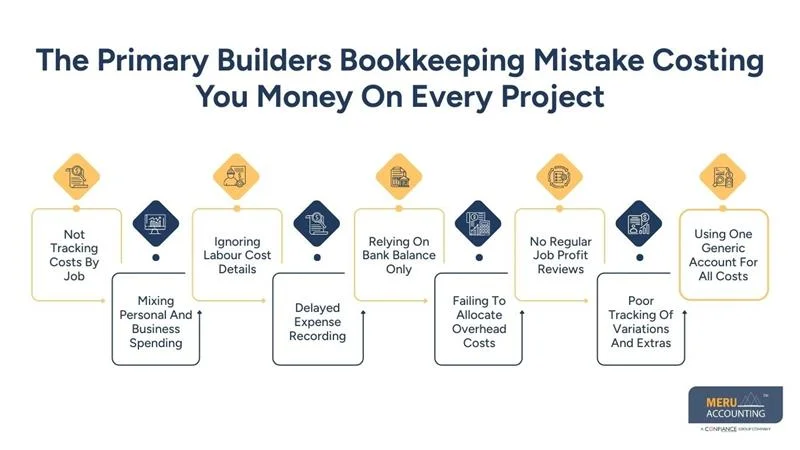
Delayed Expense Recording
Late entries distort reports and hide early overspending. By the time costs appear, fixing issues becomes difficult. Delayed updates remove chances to control costs in time.
Relying On Bank Balance Only
Financial records should show profit, not just bank balances. A healthy balance does not always mean a profitable project. Cash can hide unpaid bills and upcoming expenses.
Failing To Allocate Overhead Costs
Overhead costs are often spread incorrectly across projects. This makes some jobs look profitable when they are not. Accurate allocation shows which projects truly support business growth.
No Regular Job Profit Reviews
Many builders review profit only after projects end. Problems should be found early, before money is lost. Regular reviews help correct issues while projects are active.
Poor Tracking Of Variations And Extras
Variations are sometimes completed but never billed properly. This results in lost income and incorrect job results. Clear tracking ensures all approved work gets paid.
Using One Generic Account For All Costs
Grouping all expenses together hides where money is spent. Builders bookkeeping needs clear categories to show true job performance. Detailed accounts make decision-making faster and more accurate.
Warning Signs Your Builders Bookkeeping Is Costing You Money
Profits Look Good But Cash Is Tight
This mismatch often points to weak builders bookkeeping practices. Money may be tied up in unpaid invoices or retention amounts. Cash shortages often appear despite steady work and strong sales.
Surprise Tax Bills
Poor records lead to unexpected tax payments throughout the year. This usually means income and expenses were not tracked correctly. Unexpected bills place pressure on already tight cash flow.
Projects Feel Profitable But Aren’t
Without job reports, records give a false sense of confidence. The real profit is often much lower than expected. Hidden costs slowly reduce earnings across multiple projects.
No Clear Job Reports
Missing job summaries signal broken builders bookkeeping systems. Without reports, controlling costs or pricing becomes very difficult. Decisions are made without clear financial visibility.
Stress At BAS Or Year-End
Rushed reporting is a sign bookkeeping processes need fixing. Last-minute work increases errors and financial anxiety. Ongoing stress often points to deeper record-keeping issues.
Why DIY Bookkeeping Often Fails Builders And Contractors
Time Pressure On Builders
Builders focus on sites, not spreadsheets, hurting daily record accuracy. Bookkeeping tasks are often delayed or rushed after long workdays.
Lack Of Industry Knowledge
DIY systems miss key construction details used in job tracking. This leads to incorrect job tracking and unclear profit results.
Inconsistent Record Keeping
Irregular updates weaken overall reporting accuracy. Missing entries make financial reports unreliable and misleading.
No Job Cost Structure
Many DIY systems ignore project tracking and job costing. Without clear costing, measuring true project profit becomes impossible.
Emotional Decisions Over Data
Builders bookkeeping should guide decisions, not guesswork. Clear numbers help builders make calm and informed choices.
How A Specialized Bookkeeper For Builders Protects Your Project Profits
Accurate Job Cost Tracking
Costs are recorded against the correct job from the start. This helps builders see real project performance early.
Better Cash Flow Control
Progress payments and retention amounts are monitored carefully. This reduces cash shortages during long projects.
Clear Profit Reports
A bookkeeper for builders prepares easy-to-read job profit reports. These reports show which jobs are working and which are not.
Reduced Tax Surprises
Clean records allow better tax planning throughout the year. This lowers the risk of large, unexpected tax bills.
Support For Smarter Pricing
A bookkeeper for builders helps review past job results before quoting. This leads to fair pricing and healthier profit margins.
How Proper Builders Bookkeeping Improves Job Costing And Profit Margins
Clear Cost Breakdown Per Job
Costs for labour, materials, and overhead are clearly separated. This makes it easier to understand exactly where money goes.
Early Detection Of Overspending
Builders bookkeeping helps spot cost issues before jobs finish. Early action prevents small problems from turning into losses.
Stronger Pricing Decisions
Past job results guide more accurate pricing decisions. This reduces the risk of underpricing future construction work.
Better Forecasting
Future expenses and cash needs become easier to plan. Better planning supports smoother operations across multiple projects.
Confidence In Business Growth
Clear financial data supports safer and more controlled growth. Decisions are made using facts instead of assumptions.
How Meru Accounting Supports Builders Bookkeeping
Construction-Focused Systems
Meru Accounting designs builders bookkeeping systems for real job tracking. These systems reflect how construction projects actually run.
Dedicated Bookkeeper For Builders
Each client works with a skilled bookkeeper for builders. This ensures records match construction workflows and project needs.
Clear Monthly Job Reports
Meru Accounting delivers easy-to-read builders bookkeeping reports. Builders can quickly see job costs, profit, and problem areas.
Ongoing Support And Advice
Clients get help understanding numbers, not just reports. Questions are answered before small issues become bigger problems.
Better Control Over Cash Flow
Payment schedules and retention amounts are monitored carefully. This helps reduce cash shortages during longer projects.
If your current system does not provide this level of clarity, it may need improvement. Meru Accounting can set up builders bookkeeping that protects profits on every project. Contact us today to bring clarity and control to your project finances.
Key Takeaways
- One small bookkeeping mistake can quietly drain profits across every project.
- Accurate job costing is essential to understand real project performance.
- DIY bookkeeping often leads to repeated errors and hidden financial losses.
- A bookkeeper for builders helps protect margins and maintain healthy cash flow.
- Strong builders bookkeeping supports smarter decisions and long-term business success.
FAQs
The most common mistake is not tracking costs by each project. When expenses are mixed together, it’s hard to see which jobs are profitable and which are losing money.
If costs like labour and materials aren’t tracked properly, profit can quietly shrink on every project, even when revenue seems fine.
Job costing helps builders understand the real expenses for each project. Without it, projects can be underpriced and profits can suffer.
DIY bookkeeping often fails because construction costs are complex and easy to misrecord. Small mistakes can repeat across all projects, reducing earnings.
A bookkeeper for builders ensures project costs are recorded accurately, cash flow is monitored, and profit reports are clear, helping builders spot and fix problems early.


