




Bookkeeping for law firms is more than just maintaining financial records; it is a cornerstone for building trust with clients and ensuring transparency in financial dealings. Law firms handle sensitive client funds, and even a minor accounting error can undermine client confidence.
Effective bookkeeping allows law firms to stay organized, comply with legal regulations, and foster trust through accurate financial reporting.
In this blog, we will explore how bookkeeping for law firms contributes to better financial management, enhances transparency, and protects client funds, especially through specialized law firm trust account bookkeeping services.
In this blog, we will explore everything law firms need to know about trust accounting, including rules, compliance, best practices, and the role of the best software for trust-account compliance law firms.
What You Will Learn From This Blog
- You will understand why bookkeeping for law firms is essential for managing finances efficiently and avoiding errors that could affect clients.
- The blog explains what trust accounts are, why they are important, and how law firm trust account bookkeeping services ensure compliance.
- You will see how accurate financial records improve transparency, build credibility, and strengthen client relationships.
- Learn how investing in professional bookkeeping services can save time, reduce errors, and improve overall law firm performance.
- Understand the benefits of outsourcing bookkeeping for law firms to experts who specialize in legal accounting and trust account management.
Understanding the Role of Accurate Financial Management
Recording All Transactions Correctly
Accurate bookkeeping for law firms ensures that every financial transaction, from client payments to vendor bills, is recorded precisely. This accuracy prevents mistakes and maintains trust.
Monitoring Cash Flow
By keeping track of money flowing in and out, law firms can avoid cash shortages, ensuring smooth operations and timely payments.
Maintaining Compliance
Proper financial management helps law firms comply with legal and tax regulations, reducing the risk of penalties or legal issues.
Tracking Expenses Efficiently
Bookkeeping allows law firms to monitor operational costs, helping identify areas to save money and manage resources effectively.
Preparing for Audits
Accurate financial records make audits easier and faster, allowing law firms to respond to regulatory inquiries confidently.
The Strategic Importance of Bookkeeping for Law Firms
Building Client Confidence
Clients trust law firms that handle their money transparently. Regular bookkeeping for law firms demonstrates responsibility and accountability.
Preventing Financial Errors
Bookkeeping for law firms reduces the risk of errors that can lead to overcharging, undercharging, or mismanagement of funds.
Supporting Decision-Making
Reliable financial data helps law firm partners make informed business decisions and plan future growth.
Enhancing Operational Efficiency
Streamlined financial processes save time for lawyers and staff, allowing them to focus on client services.
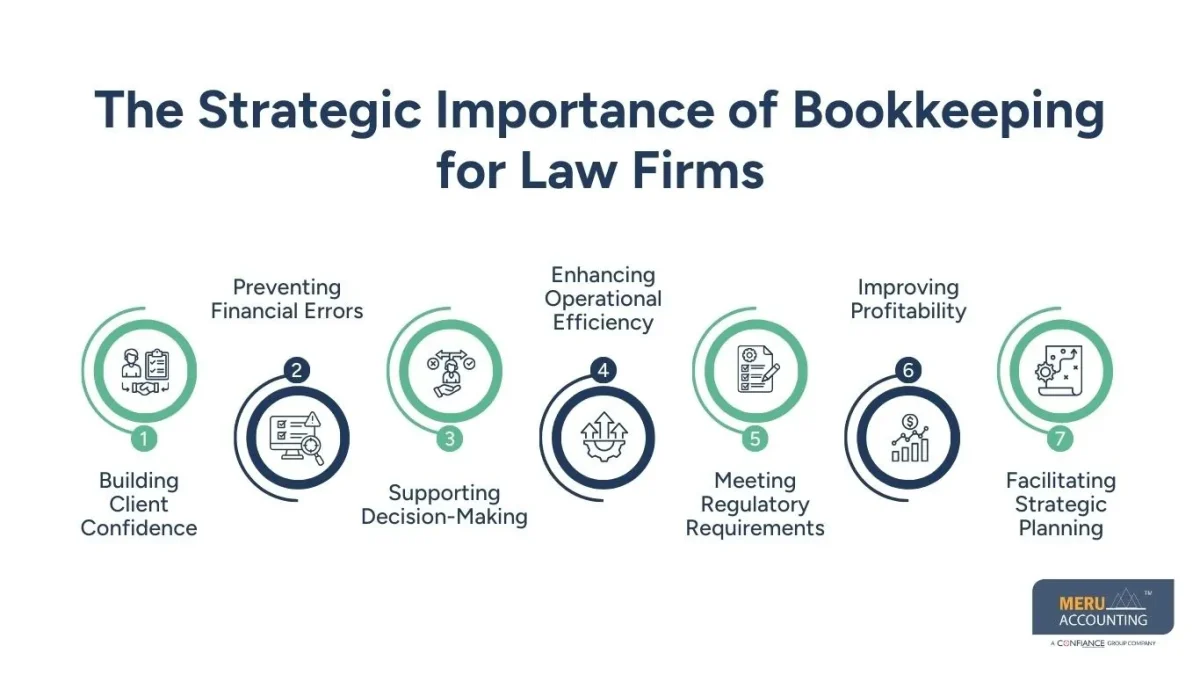
Meeting Regulatory Requirements
Law firms must comply with legal accounting standards. Bookkeeping ensures all financial activities are documented accurately.
Improving Profitability
Accurate bookkeeping helps track expenses and revenue, allowing law firms to identify profitable areas and reduce unnecessary costs.
Facilitating Strategic Planning
With clear financial records, law firms can plan for growth, invest in new opportunities, and make long-term business decisions confidently.
Core Principles of Bookkeeping for Law Firms
Accuracy and Consistency
All financial entries must be accurate and recorded consistently to maintain trust and transparency.
Confidentiality
Client information and financial data must be kept secure to protect client privacy and comply with regulations.
Timely Recording
Transactions should be recorded promptly to ensure up-to-date financial statements and reports.
Regular Reconciliation
Comparing bank statements with internal records helps detect discrepancies quickly and maintain accurate accounts.
Professional Oversight
Bookkeeping should be overseen by trained accountants who understand legal accounting standards and trust account requirements.
Transparency in Reporting
Financial records should be clear and accessible to authorized staff to maintain accountability and client confidence.
Consistent Review and Updates
Regularly reviewing and updating records ensures accuracy, prevents errors, and keeps the firm compliant with changing regulations.
What Are Trust Accounts and How Do They Protect Client Funds
Trust accounts are special bank accounts used by law firms to hold client funds separately from firm funds, a key aspect of a law firm trust account bookkeeping service. These accounts ensure that client money is never mixed with the law firm’s operating funds, providing a clear record of all deposits, withdrawals, and balances.
Legal Requirements
Most jurisdictions require law firms to manage client funds in trust accounts, ensuring they are not mixed with operating funds.
Protecting Client Money
Trust accounts prevent the misuse of client funds and safeguard them until services are rendered or expenses paid.
Managing Retainers
Client retainers are kept in trust accounts and only withdrawn for legitimate services or expenses, ensuring proper fund management.
Enhancing Credibility
Properly managed trust accounts show clients that their money is handled responsibly, enhancing the law firm’s reputation.
How Law Firm Trust Account Bookkeeping Services Ensure Accuracy and Compliance
Specialized Expertise
Law firm trust account bookkeeping services are designed to meet the unique requirements of legal accounting.
Regular Monitoring
Funds in trust accounts are monitored regularly to ensure that balances match client records and transactions.
Compliance with Regulations
Professional services help law firms comply with rules set by legal authorities and prevent financial penalties.
Detailed Reporting
These services provide transparent reports showing how client funds are used, boosting client confidence.
Risk Mitigation
Outsourcing trust account management to a professional law firm trust account bookkeeping service reduces errors and minimizes the risk of accidental misuse of client money.
Reconciliation of Accounts
Regular reconciliation of trust accounts ensures that all deposits and withdrawals are accurate and properly recorded.
Streamlined Transaction Tracking
Bookkeeping services maintain detailed logs of all client transactions, making it easier to track funds and respond to inquiries.
Error Detection and Correction
Professional services quickly identify discrepancies or unusual transactions and take corrective action before issues escalate.
Audit Preparation
Trust account bookkeeping services prepare law firms for internal and external audits, making compliance checks smoother and more efficient.
How Effective Bookkeeping Enhances Transparency in Law Firms
Clear Financial Records
Accurate bookkeeping for law firms ensures all financial activity is documented, making it easy to review and verify transactions.
Real-Time Access to Information
Modern bookkeeping for law firms allows law firm partners to access up-to-date financial data at any time, improving decision-making.
Transparent Billing Practices
Clients can see clear statements and invoices, increasing trust in the firm’s billing methods.
Accountability for Staff
Bookkeeping helps track who authorized payments or withdrawals, ensuring accountability at all levels.
Simplified Audit Processes
Transparent records reduce audit time and make it easier to respond to client or regulatory inquiries.
Why Investing in Professional Bookkeeping Brings Long-Term Value to Law Firms
Saves Time for Lawyers
Professional bookkeeping services free up lawyers to focus on client matters instead of managing financial records.
Reduces Errors and Risks
Experts in bookkeeping for law firms handle complex financial tasks accurately, reducing mistakes that could harm client relationships or cause compliance issues.
Improves Financial Planning
Accurate records help law firms forecast revenue, plan budgets, and make informed strategic decisions.
Enhances Client Relationships
Clear and transparent records show clients that their money is handled responsibly, fostering trust and loyalty.
Supports Growth
Reliable bookkeeping allows law firms to scale operations confidently, knowing that financial management is secure.
How Meru Accounting Supports Law Firms with Financial Management
Managing a law firm’s finances requires accuracy, compliance, and transparency. Meru Accounting provides professional accounting and bookkeeping services to ensure precise financial management and trust account integrity.
Specialized Services for Law Firms
Meru Accounting provides professional bookkeeping for law firms, ensuring accurate financial management and client trust.
Law Firm Trust Account Bookkeeping Services
Our experts manage trust accounts meticulously, ensuring compliance with all legal and regulatory requirements.
Customized Financial Solutions
Meru Accounting tailors bookkeeping solutions to fit the unique needs of each law firm.
Experienced Professionals
Our team consists of trained accountants with expertise in legal financial management and trust account handling.
Transparent Reporting
We provide clear, detailed reports that keep law firm partners and clients informed about all financial activities.
Key Takeaways
- Bookkeeping for law firms is essential for building client trust and ensuring financial transparency.
- Trust accounts protect client funds and require careful management through specialized bookkeeping services.
- Professional bookkeeping services help law firms maintain compliance, reduce errors, and improve efficiency.
- Transparent financial reporting enhances credibility with clients and supports long-term business growth.
- Investing in expert bookkeeping for law firms is a valuable decision that brings both operational and reputational benefits.
FAQs
Bookkeeping for law firms helps keep accurate financial records, manage client funds properly, and ensures compliance with legal regulations.
A trust account is a special bank account used to hold client money separately from the firm’s own funds to protect client funds.
These services manage client funds accurately, provide detailed reports, and ensure compliance with regulations to prevent errors.
Yes, accurate and transparent bookkeeping shows clients that their money is managed responsibly, increasing trust and confidence.
Financial records should be updated regularly, ideally daily or weekly, to maintain accuracy and transparency in reporting.


