




The cost of manufacturing is one of the most key parts of a strong and stable production business. When this cost is clear and true, it helps you set fair prices, track gains, and plan each step with ease. But when the numbers are wrong, even by a small bit, the full chain of work starts to drift. A small slip in cost notes, stock use, or time logs can turn into a large loss in the long run. These issues rise fast when firms use old tools, guess work, or rough sheets.
In this blog, we will look at the most common errors made by manufacturers in calculating the cost of manufacturing. We will also see how manufacturing accounting services help you keep your cost data clean, accurate, and viable.
Why is it important to know the cost of manufacturing?
In the production business, lots of things change each day. Changes in the price of raw materials, staff hours, and cost of plants are very frequent. So, you need cost data that is up-to-date. When firms hold on to old notes or rough rates, their cost of manufacturing goes off track. This leads to wrong quotes, poor plans, and low gains. Clear cost data gives you trust in each step and helps you act fast when the market moves.
What is the Cost of Manufacturing?
The cost of manufacturing is the sum of all costs used to turn raw goods into a full product. Each tiny step in this chain has a cost. When these costs stay true and up-to-date, you can see the real unit cost with ease.
Key Components in the Cost of Manufacturing
Materials
These are the raw goods or parts used to make the final item. Their price moves due to supply, demand, or time of year. A small rise in these costs can change your total cost by a large amount.
Labour
This is the pay for people who take part in the plant floor work. It includes base pay, extra hours, and small staff costs. When labour hours are not tracked right, your unit cost gets skewed.
Overhead
Overhead is the group of plant costs that help you run the site. This includes rent, power, tools, repairs, and gear wear. These costs support the whole plant, so they must be shared in the right way.
Why Accurate Calculations Are Essential for Manufacturers
When your cost data is right, you can set fair prices, plan cash flow, and keep stock values true. It also helps you plan new work, make smart deals, and track gains with more care.
Common Mistake 1: Misclassifying Direct and Indirect Costs
A large and common mistake in the cost of manufacturing is the wrong tag on costs. Many firms mix direct and indirect costs and put them in the wrong place.
Effects on Total Cost of Manufacturing
This leads to a wrong view of unit cost. Your prices may be too low or too high. Your gains may seem more or less than they are. With time, this harms your plant and weakens your cash plan.
How Professionals can Fix Classification Issues
With our manufacturing accounting services, each cost gets a clear place based on its role. We use clean charts, clear tags, and strict rules to map each cost. This keeps your cost sheet fair and true.
Common Mistake 2: Ignoring Overhead Allocation
Overhead costs play a large role in your total cost. Yet many firms skip or spread them in the wrong way.
Why Overhead Matters More Than Ever
Plant rent, power, upkeep, and wear now rise at a fast rate. If you do not share these costs right, your unit cost becomes false. This hurts price, sales, and the gains from each job.
Role of Manufacturing Accounting Services in Proper Allocation
Our experts study how your plant works. They track the hours, load, and use of each machine. Then they spread overhead in a fair way so that each item shows its true cost.
Common Mistake 3: Poor Inventory Tracking and Valuation
Stock is a large part of the cost of manufacturing. If you track it wrong, all your cost reports go off track.
Impact on COGM and COGS
Wrong stock notes lead to:
- false COGM
- false COGS
- wrong gains
- confused year end books
How to Avoid Errors in Raw Materials, WIP, and Finished Goods
You must track raw goods, work in progress, and full goods with care. Use the same method each time, check stock often, match book stock with real stock, and record waste in time.
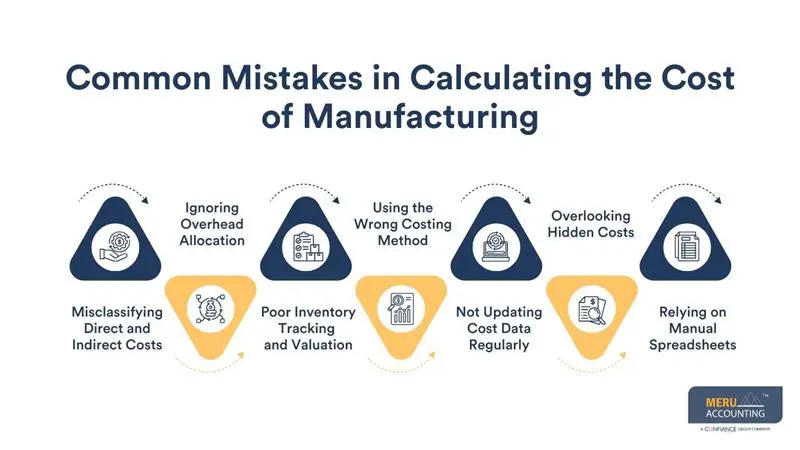
Common Mistake 4: Using the Wrong Costing Method
The wrong cost method can twist your cost sheet and hide the true rate of your product.
Job Costing vs. Process Costing vs. Activity-Based Costing
- Job Costing: best for small, custom jobs.
- Process Costing: best for bulk flow work.
- ABC: best for plants with many steps and more cost drivers.
How Inaccurate Costing Leads to Inflated Cost of Manufacturing
A wrong cost method spreads cost in a poor way and hides the true unit cost. You may set a low price or a high one and lose deals or gains.
Common Mistake 5: Not Updating Cost Data Regularly
Cost notes grow old fast. When you use old rates, your cost of manufacturing loses its truth.
Fluctuating Material Prices, Labour Costs, Overhead Changes
Materials rise in price, staff pay shifts, and plant costs change with time. When these changes are not in your books, your whole cost sheet becomes weak.
How Outdated Data Leads to Poor Decisions
This leads to the wrong price, weak plans, low bids, and low gains. You may plan a job with a rate that no longer fits the cost of work.
Common Mistake 6: Overlooking Hidden Cost
Hidden costs grow slow but can drain your gains over time.
Downtime, Scrap, Rework, Machine Inefficiencies
Idle gear, waste, and rework add to your cost. These may not show up at once, but they hurt gains if left unchecked.
How Manufacturing Accounting Services Identify Hidden Expenses
Experts look at trends, track hours of use, and match output with input. They find gaps that point to waste, fault, or poor flow. This helps you cut losses and raise gains.
Common Mistake 7: Relying on Manual Spreadsheets
Manual work leads to slip ups. One bad cell or lost file can break the whole sheet.
High Risk of Human Error
You may type a wrong value, copy a wrong link, or save the wrong file. These errors spread fast in a sheet and harm your full cost plan.
Benefits of Automated Tools and Accounting Systems
Smart tools give real time data. They cut errors, track stock, and share costs with more care. You can see trends, plan jobs, and set prices with more peace of mind.
How Manufacturing Accounting Services Help Avoid These Mistakes
With the help of experts, you get strong cost notes, smart tools, and clean reports. They track each cost, fix errors in time, and help you see the full picture. This leads to better plans, fair prices, and true gains. A skilled team also helps you shift from old sheets to new tools with ease.
Why Choose Meru Accounting for Manufacturing Accounting Services
Meru Accounting has years of experience in managing accounting for manufacturers around the world. We help in determining costs by tracking stock, mapping overheads, and building cost sheets that match the flow of your business.
We work with the real time data, provide reports, and use the latest accounting software. To know the true cost of manufacturing in your business, contact us now! Get everything you need to know for growing your plant and protecting your profits.
FAQs
It helps you plan, price, and track gains in a clean and smart way.
At least once a month or when you see a large change in cost.
The best method depends on your plant type and the flow of your work.
They raise your true cost and cut your gains if you do not track them.
We set strong cost models, track stock, fix overhead maps, and build tools that keep your cost true.


