



Accurate construction accounting is essential for any construction company aiming to complete projects on time and within budget. Construction projects involve numerous costs, resources, and schedules, making financial oversight more complex than in other industries.
By ensuring proper construction accounting, companies can maintain precise records, track expenses effectively, and make informed decisions that directly impact project success. This also helps in identifying potential financial issues early and avoiding costly mistakes.
What You Will Learn From This Blog
- The fundamentals of construction accounting and its role in project success. You will understand how proper accounting improves project outcomes.
- How accurate financial records affect construction project outcomes. Clear records help avoid budget overruns and delays.
- Key differences between construction accounting and traditional accounting. This helps companies adopt the right accounting approach.
- The significance of construction project accounting for effective delivery. You’ll learn why tracking project-specific costs matters.
- Best practices and common challenges in construction financial management. This ensures better control over finances and project success.
What Is Construction Accounting?
Construction accounting is the process of managing and tracking all financial activities related to construction projects. It involves monitoring expenses, analyzing costs, and ensuring that projects remain profitable.
Unlike traditional accounting, it focuses on project-specific finances, allowing companies to see exactly how much each project costs and how resources are allocated. The scope of construction accounting includes project budgets, job costing, revenue recognition, and payroll management.
By keeping a close watch on these areas, companies can ensure that no expense is overlooked, budgets are maintained, and projects are delivered on time. Accurate construction accounting also helps prevent financial errors and supports informed decision-making.
Key stakeholders in construction accounting include accountants, project managers, contractors, and clients. Effective collaboration among them ensures accuracy and accountability throughout the project lifecycle.
Additionally, many companies use specialized tools and software for job costing, expense tracking, and reporting. These tools streamline accounting processes and make data analysis faster and more reliable.
Importance Of Accurate Financial Records In Construction
Prevent Budget Overruns
Accurate records help identify where money is being spent, preventing overspending and ensuring projects remain within budget. Early detection of cost issues allows for timely adjustments.
Monitor Cash Flow
Tracking incoming and outgoing payments is essential to avoid cash shortages that can delay projects. It also helps plan payments to vendors and subcontractors efficiently.
Ensure Compliance
Proper financial records keep construction companies compliant with tax laws and regulations, reducing the risk of penalties. Compliance also builds credibility with clients and authorities.
Aid In Decision Making
Detailed financial data allows project managers to make informed decisions on resource allocation and cost-saving measures. Better decisions improve project efficiency and profitability.
Improve Client Trust
Transparent and accurate accounting builds trust with clients and stakeholders, leading to better long-term business relationships. Clients feel confident when finances are well-managed.
Key Differences Between Construction Accounting And Traditional Accounting
|
Key Difference |
Construction Accounting |
Traditional Accounting |
|
Job-Based vs. Company-Wide |
Tracks expenses per project, ensuring precise cost management for each construction project. |
Focuses on overall company finances without detailed project-level tracking. |
|
Complex Cost Allocation |
Requires tracking direct and indirect costs for each project to identify profitability. |
Handles broader expense categories, less focus on individual project costs. |
|
Revenue Recognition |
Revenue depends on project milestones or percentage of completion. |
Revenue recorded at the point of sale or delivery. |
|
Long-Term Projects |
Projects can last months or years, requiring ongoing accounting updates. |
Deals mostly with short-term financial cycles. |
|
Specialized Reporting |
Provides detailed reports for project costs, labor, and materials. |
Reports focus on overall profit and loss, not individual project performance. |
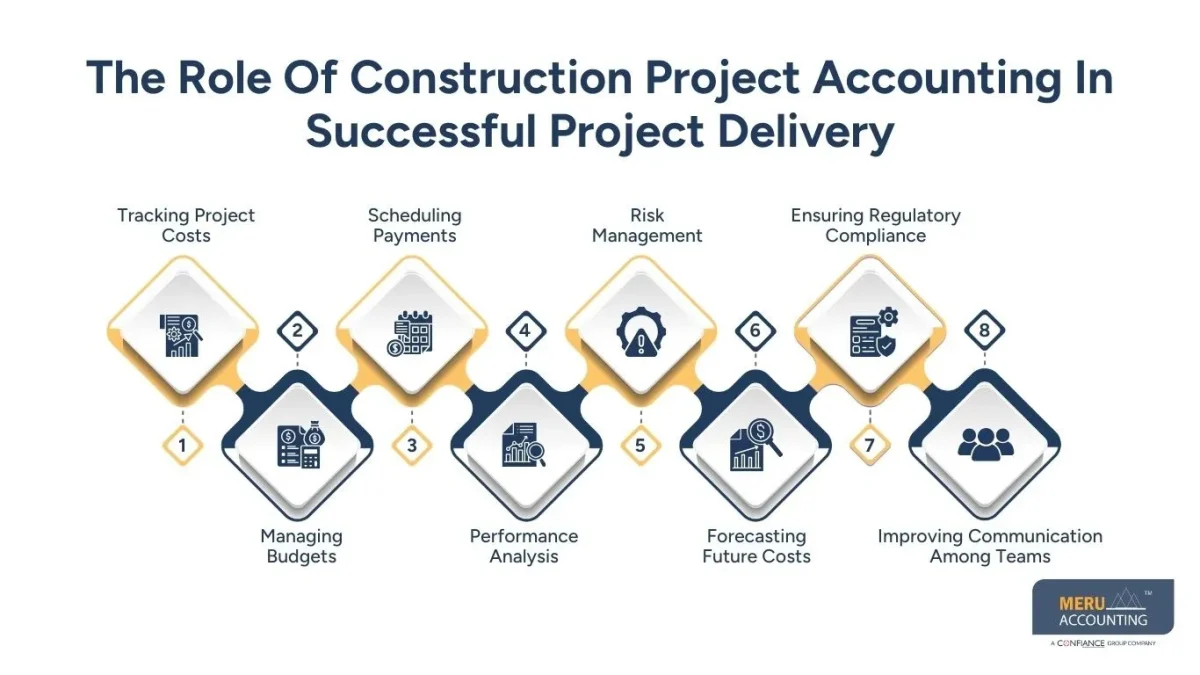
The Role Of Construction Project Accounting In Successful Project Delivery
Tracking Project Costs
Construction project accounting ensures every expense, from labor to materials, is accurately tracked for each project. It helps in maintaining project budgets and financial transparency.
Managing Budgets
With proper project accounting, companies can monitor budgets and avoid unexpected expenses that could derail the project. Accurate budgeting improves planning and resource allocation.
Scheduling Payments
Timely payments to subcontractors and suppliers are crucial. Construction project accounting ensures payment schedules are met, preventing delays and maintaining good supplier relationships.
Performance Analysis
By analyzing project-specific data, companies can identify inefficiencies and improve resource management for future projects. Performance analysis also helps in making smarter financial decisions.
Risk Management
Project financial management in construction helps in forecasting potential financial risks, allowing project managers to take preventive actions. Risk management reduces losses and keeps projects on track.
Forecasting Future Costs
Project accounting provides insights into future project expenses, helping companies plan accurately for upcoming projects. Forecasting ensures resources are allocated efficiently
Ensuring Regulatory Compliance
Construction project accounting tracks expenses and revenues in line with local regulations. This helps companies avoid penalties and maintain legal compliance
Improving Communication Among Teams
Accurate project accounting data allows different teams, including management, finance, and field staff, to stay informed. Clear communication helps projects run smoothly and reduces misunderstandings.
Benefits Of Accurate Construction Accounting
Enhanced Profitability
Accurate accounting ensures all costs are recorded and billed correctly, improving profit margins. It also highlights areas where expenses can be reduced.
Better Cash Flow Management
Keeping track of expenses and payments ensures projects have the funds they need at the right time. This prevents project delays and supports timely completion.
Reduced Errors And Disputes
Proper records minimize mistakes and prevent disagreements with clients or contractors over costs. Clear documentation also makes audits and reviews easier.
Clear Project Insights
Project managers can see where money is spent and make adjustments to keep the project on track. These insights support better planning for future projects.
Simplified Tax Filing
Accurate records make tax filing easier and ensure compliance with local and federal regulations. It also helps avoid penalties and legal complications.
Common Challenges In Construction Project Accounting
Managing Multiple Projects
Keeping track of costs across several projects can be overwhelming without proper systems. Effective accounting helps prioritize tasks and resources.
Tracking Labor Costs
Accurately recording wages, overtime, and subcontractor payments is complex but necessary for project profitability. Errors in labor accounting can impact budgets significantly.
Material Cost Fluctuations
Price changes in materials can affect budgets. Construction project accounting must adjust for these variations to maintain accurate financial records.
Equipment Management
Costs for equipment rentals, maintenance, and repairs must be monitored carefully. Proper accounting prevents unexpected equipment expenses from affecting project finances.
Delayed Billing
Late invoices can cause cash flow problems. Project accounting helps ensure timely billing and smooth financial operations.
Best Practices For Effective Construction Accounting
Use Project-Based Accounting Software
Software designed for construction accounting simplifies job costing, expense tracking, and reporting. It also allows teams to collaborate and share real-time data.
Maintain Detailed Records
Keep receipts, invoices, and contracts organized to ensure accurate financial tracking. Proper records also make audits and reporting more efficient.
Regularly Review Financial Data
Frequent financial reviews help catch errors early and provide insights for decision-making. This also allows proactive adjustments to project budgets.
Train Staff On Accounting Procedures
Educating staff on proper accounting practices reduces mistakes and ensures compliance. It also improves overall team efficiency and accountability.
Separate Project And Company Finances
Keep project expenses distinct from overall company accounts for clarity and accurate reporting. This helps in evaluating each project’s true profitability.
How Meru Accounting Supports Construction Companies
Managing construction finances can be complex and time-consuming. Meru Accounting provides expert solutions to simplify financial management and ensure every project stays on track.
Specialized Construction Accounting Services
Meru Accounting provides comprehensive construction accounting services tailored to each project’s needs. We ensure every project’s finances are properly managed.
Expert Construction Project Accounting
Our team ensures precise construction project accounting, including cost tracking, payroll, and billing. Accurate accounting supports timely project delivery.
Customized Reporting
Meru Accounting generates reports that help project managers understand financial health and make informed decisions. Reports are easy to read and actionable.
Compliance Assistance
We help construction companies stay compliant with tax regulations and industry standards. Compliance reduces risks and builds client confidence.
Efficient Cost Management
Our solutions help optimize project budgets, reduce errors, and improve profitability. Proper cost management ensures long-term project success.
Contact Meru Accounting to streamline your construction project finances and ensure accurate tracking of every expense. Let our expert team help you stay on budget, compliant, and on schedule for every project.
Key Takeaways
- Construction accounting is critical for tracking costs, managing budgets, and ensuring project success. Accurate accounting supports timely project completion.
- Accurate financial records prevent budget overruns, improve cash flow, and maintain client trust. They also help identify potential risks early.
- Construction project accounting focuses on project-specific financial tracking, offering insights that guide decision-making.
- Implementing best practices and using professional accounting services like Meru Accounting enhances project delivery. Proper accounting contributes to better profitability and efficiency.
FAQs
Construction accounting tracks all project-related financial activities like labor, materials, and equipment. It is important because it keeps projects on budget and ensures profitability.
It monitors expenses for each project individually, helping control costs and prevent overspending. It ensures timely project delivery by keeping finances organized.
Construction financial management focuses on project-specific costs and long-term projects. Regular accounting tracks overall company finances and general expenses.
Detailed financial records help pay subcontractors and suppliers on time. It avoids cash flow issues that could slow down the project.
Professionals ensure precise cost tracking and compliance with tax rules. This leads to smoother project delivery and better profitability.


