


Construction bookkeeping is a critical part of running a growing construction business. Without accurate bookkeeping, companies can face financial confusion, delayed projects, and missed opportunities for growth.
By implementing proper bookkeeping practices, construction companies can maintain clear financial records, improve decision-making, and ensure profitability.
With the construction industry involving multiple projects, subcontractors, and materials, managing finances can quickly become complex.
Effective construction bookkeeping not only tracks every dollar spent but also provides insights into project performance, cash flow, and overall business health, empowering companies to grow with confidence and control.
What You Will Learn From This Blog
- The basics of bookkeeping for construction companies
- How construction bookkeeping helps in managing project costs
- Techniques for payroll, invoicing, and cash flow management
- Tools and strategies to keep financial records organized
- How Meru Accounting can support your construction business
How Meru Accounting can support your construction business
Importance of Accurate Records
Basic bookkeeping for construction company ensures all financial transactions, including expenses, revenue, and payroll, are recorded properly. Accurate records reduce errors and provide insights for better financial planning.
Categorizing Expenses
Construction businesses deal with multiple costs like materials, labor, and equipment. Separating these expenses helps in tracking project costs and evaluating profitability per project.
Tracking Revenue Streams
Revenue in construction often comes from multiple projects simultaneously. Recording revenue accurately ensures companies know which projects are profitable and which need attention.
Maintaining Job Cost Reports
Job cost reports are a crucial part of basic bookkeeping for construction company. These reports track each project’s costs, helping managers stay within budget and avoid overspending.
Complying with Regulations
Proper bookkeeping ensures companies meet tax and legal requirements, avoiding penalties and audits. It also helps in preparing financial statements accurately.
Enhancing Decision Making
With organized bookkeeping, construction companies can make informed decisions about future projects, investments, and resource allocation.
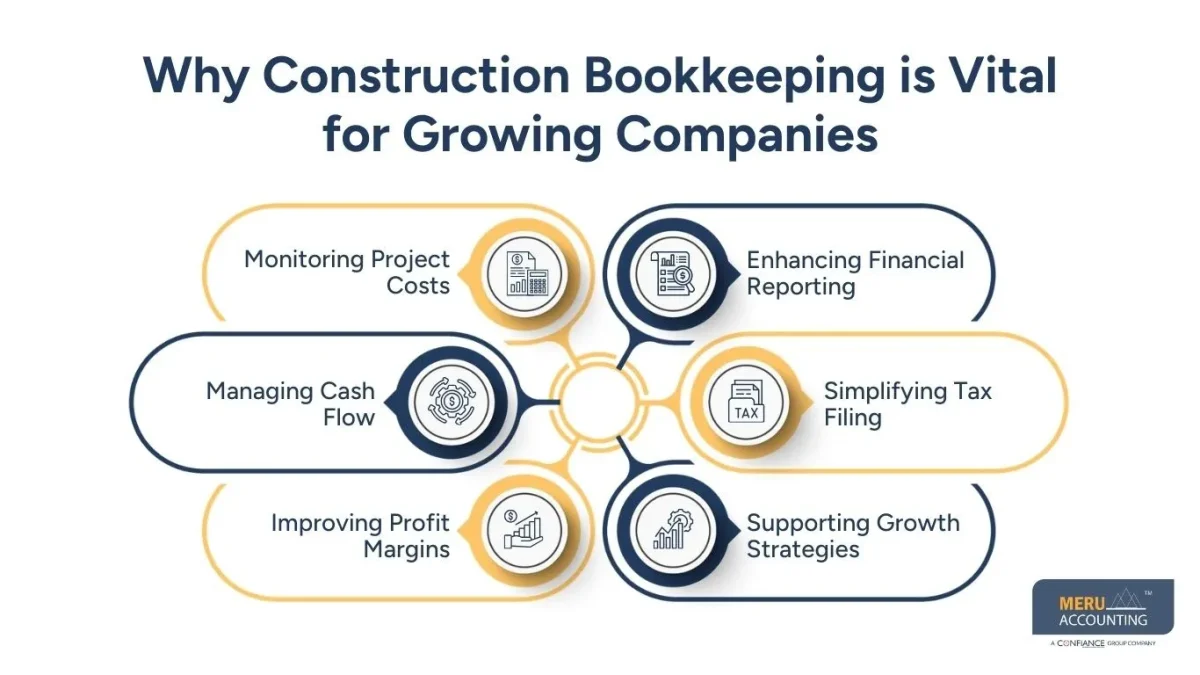
Why Construction Bookkeeping is Vital for Growing Companies
Monitoring Project Costs
Construction bookkeeping allows businesses to track costs for each project. Knowing expenses in real-time helps prevent budget overruns and ensures profitability.
Managing Cash Flow
Growing construction companies often face cash flow challenges. Implementing basic bookkeeping for construction company practices helps monitor cash inflow and outflow, ensuring bills and salaries are paid on time.
Improving Profit Margins
Tracking every expense and revenue source through construction bookkeeping enables companies to identify profitable projects and reduce costs in less profitable ones.
Enhancing Financial Reporting
Accurate basic bookkeeping for construction company ensures financial statements reflect the true position of the business, making it easier to secure loans or attract investors.
Simplifying Tax Filing
With well-maintained construction bookkeeping records, tax filing becomes easier and reduces the risk of errors that can lead to penalties.
Supporting Growth Strategies
Construction bookkeeping provides a clear picture of a company’s financial health, helping leaders plan expansions, hire new staff, or invest in equipment efficiently.
Optimizing the Chart of Accounts for Construction Financial Management
Organizing Accounts
A properly structured chart of accounts categorizes all transactions, making financial data easier to analyze.
Project-Based Accounts
Setting up project-specific accounts is an essential step in basic bookkeeping for construction company, helping track costs and revenue for each project separately.
Expense Categorization
Separate accounts for labor, materials, and subcontractors ensure precise tracking and reporting.
Revenue Tracking
Creating accounts for different types of income, such as fixed-price contracts or time-and-material projects, provides clarity on revenue streams.
Regular Review
Regularly reviewing and updating the chart of accounts ensures it remains relevant to the business’s needs.
Simplifying Reporting
An optimized chart of accounts makes generating financial reports faster and more accurate, saving time for management.
How to Track Project Costs and Implement Job Costing Effectively
Recording Direct Costs
Track labor, materials, and equipment costs for each project. This ensures accurate cost allocation and pricing.
Assigning Overhead Costs
Allocate overhead expenses, such as office rent and utilities, to projects to understand true profitability.
Using Job Costing Software
Construction bookkeeping is simplified with software that tracks costs by project and provides real-time insights.
Monitoring Budget vs. Actual
Compare budgeted costs to actual expenses regularly to identify areas of overspending.
Adjusting Project Plans
Use cost reports to make informed decisions, such as adjusting timelines or sourcing materials differently.
Reporting Profitability
Job costing helps determine which projects are profitable, guiding future project selection.
Why Efficient Payroll and Subcontractor Management Matters
Accurate Payroll Records
Keep detailed records of employee hours, wages, and benefits to avoid payroll errors. Accurate records also provide a clear audit trail and support financial reporting.
Managing Overtime
Track overtime costs to ensure labor expenses stay within budget. This helps prevent unexpected labor expenses from affecting project profitability.
Subcontractor Payments
Record subcontractor invoices promptly to avoid disputes and ensure timely payments. Maintaining consistent records strengthens relationships and ensures project continuity.
Tax Compliance
Proper payroll bookkeeping ensures compliance with tax regulations and avoids penalties. It also simplifies year-end reporting and reduces the risk of audits.
Streamlined Payment Processes
Organized payroll management saves time and reduces errors in payments. Efficient processes free up resources to focus on project execution.
Employee Satisfaction
Efficient payroll increases employee satisfaction and reduces turnover. Timely and accurate payments contribute to higher morale and workforce stability.
How to Optimize Invoicing and Manage Accounts Receivable
Timely Invoicing
Send invoices immediately after project milestones are met to ensure prompt payment. Prompt invoicing helps maintain steady cash flow and reduces the risk of late payments.
Tracking Outstanding Payments
Monitor accounts receivable regularly to identify overdue invoices. Regular tracking allows for early intervention and keeps projects financially on track.
Payment Terms
Set clear payment terms to prevent delays and improve cash flow. Clearly defined terms also help manage client expectations and reduce disputes.
Automated Reminders
Use accounting tools to send reminders automatically, reducing administrative work. Automation ensures consistent follow-ups without increasing staff workload.
Recording Payments
Update records immediately when payments are received to maintain accurate bookkeeping. Accurate recording provides a real-time view of available funds for ongoing projects.
Customer Communication
Clear and regular communication with clients about invoicing helps reduce disputes and delays. Open communication strengthens client relationships and builds trust.
How to Streamline Accounts Payable and Vendor Expense Management
Recording Bills Promptly
Log all vendor bills to track due dates and avoid late fees. Prompt recording ensures accurate cash flow management and prevents missed payments.
Categorizing Expenses
Organize expenses by type, such as materials, equipment, or subcontractors, for clarity. Proper categorization allows for better budgeting and expense analysis.
Payment Scheduling
Plan payments to optimize cash flow while maintaining good vendor relationships. Strategic scheduling ensures funds are available when needed and strengthens supplier trust.
Using Accounts Payable Software
Accounting software simplifies managing multiple vendors and tracking payments efficiently. It also reduces manual errors and saves valuable administrative time.
Regular Reconciliation
Reconcile vendor statements with internal records to prevent errors or discrepancies. Regular checks maintain financial accuracy and help identify issues early.
Negotiating Terms
Good vendor management can include negotiating payment terms to improve cash flow. Effective negotiation can reduce costs and create more favorable financial arrangements.
Why Budgeting and Cash Flow Management Is Essential in Construction
Creating Accurate Budgets
Construction bookkeeping helps develop realistic budgets based on historical data and project forecasts.
Monitoring Cash Flow
Track cash inflows and outflows to avoid shortages and ensure smooth operations.
Identifying Cost Overruns
Regularly compare actual expenses to budgets to spot and correct overspending.
Planning for Contingencies
Include a contingency fund in budgets to handle unexpected costs efficiently.
Forecasting Future Needs
Use cash flow projections to plan for equipment purchases, labor hiring, or project expansions.
Supporting Growth
Budgeting and cash flow management provide a clear financial roadmap for growing construction companies.
How Meru Accounting Can Help Construction Companies
Meru Accounting specializes in construction bookkeeping, helping companies maintain accurate records, streamline financial processes, and stay compliant with regulations. Our team assists with:
- Basic bookkeeping for construction company to manage day-to-day finances
- Job costing and project tracking for profitability analysis
- Payroll and subcontractor management to ensure accurate payments
- Accounts receivable and payable management for cash flow optimization
- Budgeting and financial planning to support growth
Contact Meru Accounting to keep your construction finances accurate and organized. Let our experts handle your bookkeeping so you can focus on growing your projects with confidence.
Key Takeaways
- Construction bookkeeping is essential for tracking costs, managing cash flow, and maintaining profitability.
- Basic bookkeeping for construction company includes recording expenses, revenue, and payroll accurately.
- Optimizing the chart of accounts and implementing job costing improves financial management.
- Efficient payroll, invoicing, and accounts management save time and reduce errors.
- Budgeting and cash flow monitoring support growth and help plan for future projects.
- Partnering with Meru Accounting provides expert guidance and support for all construction bookkeeping needs.
FAQs
Construction bookkeeping is the process of recording, organizing, and analyzing financial transactions for construction projects and companies.
It helps track costs, manage cash flow, prepare taxes, and make informed decisions for business growth.
It involves keeping records of income, expenses, payroll, and project costs to maintain financial clarity.
Job costing tracks project-specific costs, helping managers stay within budget and improve profitability.
Yes, Meru Accounting provides full construction bookkeeping services, including payroll, accounts management, job costing, and financial planning.


