



For construction companies, managing finances can be more challenging than managing projects. This is where construction bookkeeping software becomes essential. Unlike general accounting tools, specialized software helps track project costs, labor, materials, and payments accurately. Relying on outdated methods can lead to errors, missed deadlines, and lower profitability.
Even if your team is small today, as your projects grow, the complexity of financial management grows too. This blog will explain why construction bookkeeping software is not just supportive but necessary for construction businesses of all sizes.
What You Will Learn From This Blog
- How construction accounting becomes complicated as companies grow.
- The limitations of spreadsheets and manual bookkeeping for construction projects.
- Key signs that indicate it’s time to switch to construction bookkeeping software.
- How bookkeeping and payroll services for construction companies can complement your software.
- Features to look for in the right software to improve decision-making and profitability.
By the end of this blog, you’ll have a clear understanding of when construction bookkeeping software becomes a must-have.
Introduction to Construction Bookkeeping Software
Construction bookkeeping software is a specialized financial management tool designed specifically for the construction industry. It goes beyond basic accounting by integrating project management, labor tracking, and cost allocation.
It helps construction businesses stay organized while handling complex financial activities tied to projects.
Project-Centric Accounting
It focuses on each project separately, helping you monitor budgets, expenses, and revenue per site. This makes it easier to understand which projects are profitable and which need cost control.
Labor and Material Tracking
Tracks hours worked, subcontractor costs, and materials used to ensure accurate job costing. This reduces guesswork and helps prevent cost overruns during the project lifecycle.
Invoice and Payment Management
Handles client invoicing and tracks payments, reducing delays and errors. It also improves cash flow by ensuring invoices are sent and followed up on time.
Integration With Payroll
Many solutions integrate with payroll to manage wages for employees and subcontractors efficiently. This ensures workers are paid correctly while meeting tax and compliance requirements.
Reporting and Insights
Generates reports that help owners and managers make informed decisions on projects and finances. These reports offer clear visibility into costs, revenue, and overall financial performance.
Why Construction Bookkeeping Gets Complicated as You Grow
As construction businesses scale, bookkeeping challenges increase due to multiple projects, workers, and suppliers. More activity means more transactions, which makes manual tracking difficult and risky.
Multiple Projects at Once
Handling finances for several sites simultaneously increases the risk of errors, especially without construction bookkeeping software to separate and track job costs accurately. Costs can easily be assigned to the wrong project if records are not updated regularly.
Labor Cost Variations
Tracking hourly wages, overtime, and subcontractor payments becomes harder without software.
Different pay rates and work hours add complexity to payroll calculations, especially for companies not using bookkeeping and payroll services for construction companies.
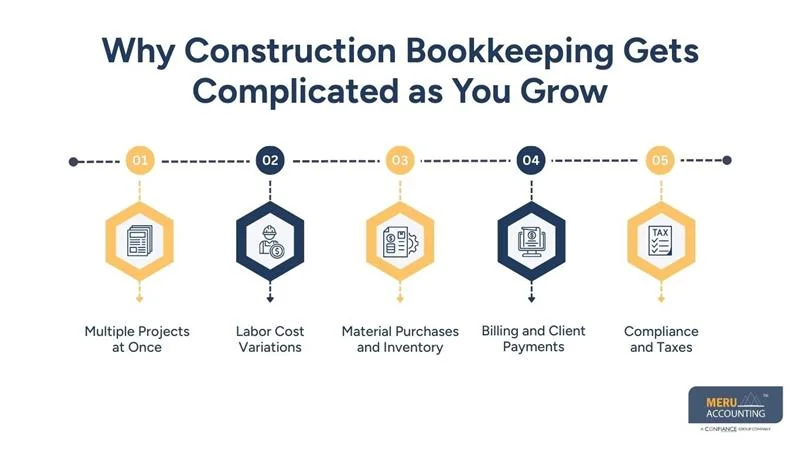
Material Purchases and Inventory
Managing large quantities of materials across projects can be confusing without a system. Missing or misplaced records can lead to overspending or shortages on job sites when construction bookkeeping software is not used for material tracking
Billing and Client Payments
Invoices may get delayed or duplicated, affecting cash flow. Late payments can create financial pressure and slow down daily operations.
Compliance and Taxes
Keeping up with tax requirements and regulations becomes more complex as your business grows. Errors in compliance can result in penalties and additional administrative work.
When Spreadsheets and Manual Processes Still Work for Construction Bookkeeping
Small contractors or firms with few employees might manage with spreadsheets initially before transitioning to construction bookkeeping software as operations expand. This approach works best when operations are limited and easy to monitor.
Single Project Focus
If your business handles one project at a time, spreadsheets can track expenses effectively. There is less risk of mixing costs between different jobs.
Limited Staff
With fewer workers, payroll tracking is simpler and may not yet require full bookkeeping and payroll services for construction companies. Manual tracking of wages and work hours is easier to control at this stage.
Low Transaction Volume
When the number of invoices and purchases is small, manual processes remain manageable. Fewer transactions reduce the chances of missing or incorrect entries.
Budget-Friendly Option
For startups, spreadsheets reduce upfront software costs while still tracking key finances. This allows new businesses to focus their spending on project execution.
Manual Oversight
However, manual work increases the chance of human error as soon as projects expand. Mistakes can grow quickly when workloads increase and timelines overlap.
Key Challenges Unique to Construction Accounting
Construction accounting has challenges that other industries rarely face. These challenges increase the need for accurate tracking and detailed financial records.
Job Costing Complexity
Each project has unique costs that must be tracked accurately for profitability. Missing or incorrect cost data can lead to wrong profit calculations.
Subcontractor Management
Payments, contracts, and compliance for multiple subcontractors add complexity, often requiring bookkeeping and payroll services for construction companies to stay organized.
Retainage Management
Managing withheld payments until project completion is critical to avoid disputes. Clear records help ensure retainage is released on time and correctly.
Change Orders
Adjustments in project scope affect budgets and require accurate bookkeeping. Untracked change orders can quickly reduce project profits.
Equipment and Depreciation
Tracking tools, machinery, and depreciation requires precise records. Inaccurate tracking can affect asset value and tax reporting.
When Construction Bookkeeping Software Becomes Essential, Not Optional
Knowing when to upgrade from spreadsheets to software is vital. As business activity increases, manual systems can no longer handle daily financial demands.
Multiple Active Projects
When projects overlap, software helps prevent misallocation of funds. It ensures each project’s costs and income are recorded separately and clearly.
Growing Workforce
As labor costs and payroll complexity increase, software ensures accurate wage processing.
It also helps track overtime, benefits, and subcontractor payments properly.
Frequent Billing Errors
Software reduces human error in client invoices and payments. Accurate billing improves client trust and speeds up payment cycles.
Regulatory Compliance
Automated tracking helps avoid penalties related to taxes and labor laws. It keeps records ready for audits and regulatory checks.
Real-Time Financial Visibility
Managers gain instant insight into project costs, profits, and cash flow, which is difficult manually. This visibility supports better planning and faster decision-making.
Increased Volume Of Transactions
As purchases and payments grow, manual entry becomes time-consuming and risky. Software helps manage large volumes of financial data without confusion.
Need For Accurate Job Costing
Precise job costing becomes critical to understand true project profitability. Construction bookkeeping software tracks labor, materials, and overhead costs in real time.
Cash Flow Management Challenges
Delayed payments and rising expenses can strain finances. Bookkeeping software helps track receivables and payables to maintain steady cash flow.
The Role of Bookkeeping and Payroll Services for Construction Companies
Even with software, many construction firms benefit from outsourcing financial tasks. This approach allows business owners to focus more on projects and operations.
Expert Handling
Bookkeeping and payroll services for construction companies ensure compliance and accuracy. Experienced professionals understand construction-specific rules and reporting needs.
Time Savings
Outsourcing reduces the administrative burden on in-house teams. Staff can spend more time on project management instead of paperwork.
Integration With Software
Professional services often integrate seamlessly with construction bookkeeping software for complete financial control. This creates a single, organized system for all financial data.
Payroll Accuracy
Experts calculate wages, benefits, and taxes correctly, preventing legal issues. Accurate payroll builds trust with workers and subcontractors.
Financial Guidance
Outsourced professionals can provide insights to improve profitability and budgeting. They help identify cost issues before they affect project outcomes.
Key Features to Look for in Construction Bookkeeping Software
Choosing the right software determines how well your construction finances are managed. The right features help reduce confusion and improve daily financial tracking.
Job Cost Tracking
The system should track costs for labor, materials, and subcontractors per project. This helps identify cost overruns early and protect profit margins.
Payroll Integration
Helps manage employee and subcontractor payments efficiently. It reduces manual payroll work and lowers the risk of payment mistakes.
Invoice and Billing Management
Automates invoice creation and payment tracking to reduce errors. Timely and accurate billing supports steady cash flow.
Reporting Capabilities
Generates financial reports, helping managers make informed decisions. Clear reports make it easier to review project and business performance.
Mobile Accessibility
Access project and financial data from anywhere for quick updates. This is useful for managers working on job sites or traveling.
How the Right System Improves Profitability and Decision-Making
The benefits of construction bookkeeping software extend beyond record-keeping. It supports smarter planning and stronger financial control.
Better Budget Management
Helps avoid cost overruns by monitoring expenses against project budgets. Managers can adjust spending before problems grow.
Reduced Errors
Automates calculations, reducing human errors in financial data. Accurate records lead to better financial decisions.
Faster Invoicing
Speeds up billing and ensures timely client payments. Faster payments improve overall cash availability.
Insightful Analytics
Provides reports that guide strategic decisions on projects and growth. These insights help focus on the most profitable work.
Improved Cash Flow
Tracks receivables, payables, and labor costs to maintain a healthy cash position. Better cash flow supports smooth project execution.
How Meru Accounting Supports Construction Businesses
At Meru Accounting, we help construction firms manage their finances efficiently with a combination of software and services. Our goal is to simplify financial processes while supporting long-term business growth.
Customized Software Setup
We implement construction bookkeeping software tailored to your projects and workflows. This ensures the system matches how your team works on real job sites.
Full-Service Bookkeeping
Our team provides bookkeeping and payroll services for construction companies, ensuring compliance and accuracy. We handle daily financial tasks so you can focus on managing projects.
Project Cost Analysis
We help monitor labor, material, and overhead costs to identify profit opportunities. Clear cost tracking helps prevent budget overruns.
Real-Time Reporting
Gain insights into your projects anytime with our reporting solutions. Timely data helps you make quick and informed decisions.
Ongoing Support
Our experts provide continuous support for software updates and financial queries. You always have access to professional guidance when needed.
Ready to bring clarity and control to your construction finances? Contact Meru Accounting today to get expert support tailored to your construction business needs.
Key Takeaways
- Construction bookkeeping software becomes essential when projects, workforce, and finances grow complex.
- Spreadsheets work for small operations but create errors as your business scales
- Outsourced bookkeeping and payroll services for construction companies complement software for accuracy and compliance.
- Look for features like job costing, payroll integration, billing, and reporting in your software.
- Using the right system improves profitability, cash flow, and decision-making.
FAQs
Construction bookkeeping software becomes essential when a company starts handling multiple projects, larger teams, and higher expenses. At this stage, manual tracking often leads to errors and delays.
Yes, small construction companies can use construction bookkeeping software to track job costs, invoices, and payroll. It helps maintain clear financial records and supports growth planning.
Construction bookkeeping software is built for project-based work. It tracks job costs, labor, materials, and retainage, which regular accounting software does not handle well.
Yes, many companies still use bookkeeping and payroll services for construction companies along with software. These services help ensure accuracy, tax compliance, and proper payroll processing.
Construction bookkeeping software tracks labor, materials, and overhead costs for each project. This helps construction companies understand project profits and control future costs.


