



Construction business accounting plays a crucial role in helping construction companies manage their finances, control costs, and reduce project losses. With proper accounting practices, construction businesses can gain a clear understanding of their project expenses, identify areas where losses occur, and make informed decisions to improve profitability.
By implementing construction business accounting effectively, companies can track every dollar spent on materials, labor, and overhead, ensuring that budgets are adhered to and resources are used efficiently.
This not only minimizes unexpected expenses but also provides a solid foundation for planning future projects with greater accuracy and confidence.
What You Will Learn From This Blog
- The importance of construction business accounting in reducing project losses.
- Common types of project losses in the construction industry.
- Key accounting principles and strategies tailored for construction projects.
- How effective accounting practices can improve cost management and profitability.
- Practical steps to implement accounting in construction projects.
Understanding Construction Business Accounting
Definition of Construction Business Accounting
Construction business accounting refers to the process of recording, analyzing, and reporting financial transactions specifically for construction projects. It involves tracking project costs, overheads, labor expenses, and revenue to ensure projects are financially viable.
Differences From Standard Accounting
Unlike general business accounting, construction accounting focuses on project-based cost tracking and progress billing. It ensures that every project’s financial performance is closely monitored.
Importance for Construction Firms
By maintaining proper construction business accounting, companies can avoid cost overruns, identify inefficient spending, and plan project budgets more accurately.
Types of Records Maintained
Construction business accounting includes maintaining records of materials, labor, subcontractor payments, equipment costs, and overhead allocations. Accurate record-keeping is essential to reduce losses.
Role in Decision Making
Accounting in construction provides data-driven insights that help management decide whether a project is profitable, needs adjustments, or should be halted to prevent further losses.
Understanding Project Losses in the Construction Industry
What Are Project Losses
Project losses occur when the expenses of a construction project exceed its revenue, a key issue addressed through effective construction business accounting practices. This can be due to poor cost estimation, unexpected material costs, or labor inefficiencies.
Common Causes of Project Losses
- Underestimated Project Costs: Miscalculating initial expenses can lead to overspending.
- Material Price Fluctuations: Changes in material prices can increase project costs unexpectedly.
- Labor Inefficiency: Unproductive labor or high overtime costs affect project budgets.
- Delayed Projects: Delays often lead to extra costs in labor, equipment, and materials.
- Poor Project Management: Lack of accurate tracking and reporting can result in financial losses.
Financial Impact
Project losses directly affect a construction company’s profitability, cash flow, and ability to invest in new projects, making accurate accounting in construction essential for long-term stability.
Indicators of Potential Losses
Red flags such as consistently high overhead costs, unexplained budget variances, or late payments can indicate possible project losses.
Importance of Preventing Losses
Early detection and prevention of project losses are essential to sustain a construction business and maintain competitive pricing.
Key Principles of Construction Business Accounting
Accrual Accounting
Accrual accounting records expenses and revenue when they are incurred, not when cash changes hands. This principle helps track the true financial status of projects and is a fundamental method used in accounting in construction.
Job Costing
Job costing involves tracking costs for each project individually. This allows management to see which projects are profitable and which are losing money.
Budget Monitoring
Regular monitoring of project budgets helps in identifying overspending and taking corrective action immediately, which is a critical goal of accounting in construction.
Progress Billing
Progress billing ensures that clients are billed according to the percentage of work completed, improving cash flow through structured construction business accounting practices. This improves cash flow and reduces the risk of non-payment.
Accurate Record-Keeping
Maintaining detailed records of materials, labor, and subcontractor payments ensures transparency and prevents errors that can lead to losses.
Compliance With Tax Regulations
Proper accounting ensures that the business follows tax laws and avoids penalties that can add to project costs.
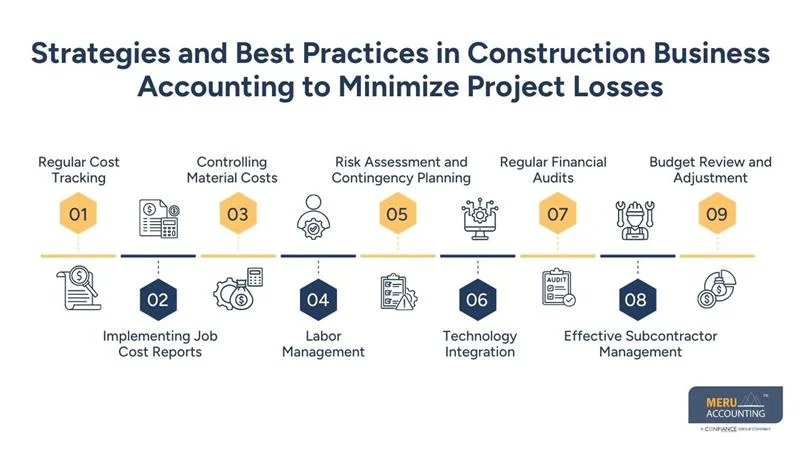
Strategies and Best Practices in Construction Business Accounting to Minimize Project Losses
Regular Cost Tracking
Monitor project expenses daily or weekly to identify variances from the budget. This helps prevent overspending before it becomes a problem. Consistent tracking also allows early detection of cost overruns so corrective actions can be taken promptly.
Implementing Job Cost Reports
Job cost reports provide detailed insights into each project’s financial performance, making it easier to identify loss-making areas. These reports help prioritize resources and adjust strategies to improve profitability.
Controlling Material Costs
Negotiate supplier contracts and track material usage to prevent waste and overspending. Keeping a record of material consumption also helps plan purchases more efficiently and reduce idle stock.
Labor Management
Use timesheets and payroll tracking to monitor labor costs accurately and avoid unnecessary overtime. This ensures that staffing levels are optimized and labor expenses are aligned with project budgets.
Risk Assessment and Contingency Planning
Include a contingency budget for unexpected costs to minimize losses caused by unforeseen events. Assessing risks in advance allows companies to prepare solutions and avoid project delays.
Technology Integration
Use accounting software designed for construction to automate reporting, track costs, and improve accuracy in construction business accounting. Automation also reduces manual errors and saves time for the finance team to focus on analysis.
Regular Financial Audits
Conduct periodic audits of project accounts to detect errors, discrepancies, or potential fraud early. This ensures that project finances remain accurate and reliable.
Effective Subcontractor Management
Track subcontractor contracts, payments, and performance to prevent delays and cost overruns. Clear agreements reduce disputes and unexpected expenses.
Budget Review and Adjustment
Continuously review project budgets and adjust for changes in labor, material, or overhead costs. This keeps projects aligned with financial goals and minimizes losses.
Managing Overhead and Operational Costs Through Accounting
Identifying Fixed and Variable Costs
Separate fixed costs (rent, insurance) from variable costs (materials, labor) to understand their impact on each project. This helps in forecasting expenses and managing project budgets more effectively.
Allocating Overheads Accurately
Distribute overhead costs fairly among projects to avoid underestimating project expenses. Accurate allocation ensures that each project reflects its true cost and profitability through effective accounting in construction.
Reducing Waste
Accounting in construction helps identify inefficiencies, such as unused materials or idle labor, and take corrective measures. Minimizing waste lowers project costs and increases overall efficiency.
Supplier and Subcontractor Management
Track payments to suppliers and subcontractors carefully to prevent overpayments and delays. This strengthens vendor relationships and ensures timely completion of project milestones.
Budget Adjustments
Regularly review operational costs and adjust budgets to maintain profitability across projects. Proactive budget updates prevent overspending and keep projects financially on track.
Cash Flow Planning
Proper accounting ensures that the company has enough cash to cover project expenses, avoiding delays and penalties. Effective cash flow management also allows for smooth operations and uninterrupted project progress.
The Impact of Construction Business Accounting on Profitability
Improved Cost Control
By accurately tracking costs, construction business accounting helps prevent overspending and improves project margins.
Better Decision Making
Reliable financial data allows management to make informed decisions on project continuation, pricing, and resource allocation.
Early Detection of Losses
Accounting in construction provides real-time insights, helping identify potential losses before they escalate.
Enhanced Project Planning
With accurate accounting data, companies can forecast costs more effectively and plan projects to avoid financial shortfalls.
Increased Client Confidence
Transparent accounting practices reassure clients that projects are managed professionally and financially responsibly.
Long-Term Profitability
Consistent use of construction business accounting improves overall profitability by reducing waste, errors, and losses across multiple projects.
Best Practices for Accounting in Construction Projects
Maintain Detailed Project Records
Document all transactions, from material purchases to labor payments, to track project costs accurately. Thorough records make it easier to review project performance and resolve discrepancies quickly.
Regular Financial Reviews
Conduct weekly or monthly reviews to compare actual expenses with budgeted amounts and identify discrepancies. Frequent reviews help catch issues early and keep projects on track financially.
Monitor Subcontractor Payments
Keep track of subcontractor invoices and payments to avoid disputes and ensure timely work completion. This ensures accountability and helps maintain smooth project progress.
Use Cost Codes
Assign cost codes for each type of expense to simplify reporting and analysis. Cost codes make it easier to identify where money is being spent and manage budgets effectively.
Track Change Orders
Monitor all project changes to update budgets and prevent unexpected cost overruns. Proper tracking ensures that all project modifications are reflected in financial planning.
Implement Internal Controls
Establish checks and balances to prevent errors, fraud, or misuse of funds within projects. Strong controls safeguard company resources and maintain financial accuracy.
How Meru Accounting Supports Construction Businesses
Tailored Accounting Solutions
Meru Accounting provides customized construction business accounting services to accurately track project costs, manage budgets, and reduce financial losses.
Our solutions are designed to fit the unique needs of each project, ensuring maximum efficiency and accuracy.
Detailed Job Cost Analysis
Our experts prepare comprehensive job costing reports to identify overspending, monitor profitability, and optimize project performance.
This analysis helps management make informed decisions and prioritize cost-saving measures.
Regular Financial Reporting
We deliver timely financial statements and project updates, keeping management informed for better decision-making.
Consistent reporting also allows for early detection of budget variances and potential losses.
Overhead and Expense Management
Meru Accounting ensures precise allocation of overheads and helps control operational costs across all projects.
By closely monitoring these expenses, companies can prevent unnecessary overspending and maintain profitability.
Risk Monitoring and Contingency Planning
We assist in assessing project risks and preparing contingency plans to minimize potential financial losses.
Proactive risk management safeguards projects from unexpected challenges and keeps finances under control.
Advanced Accounting Technology
Using specialized accounting tools for construction, Meru Accounting ensures accurate records, faster reporting, and actionable insights.
Automation and digital tracking reduce errors and free up time for strategic financial planning.
Take control of your construction project finances today with Meru Accounting’s expert services. Contact us now to streamline your accounting, reduce project losses, and boost profitability.
Key Takeaways
- Construction business accounting is essential to track costs, manage budgets, and reduce project losses.
- Understanding project losses and their causes is the first step to effective financial management.
- Accurate record-keeping, job costing, and progress billing are vital for controlling project expenses.
- Regular monitoring and reporting help detect potential losses early.
- Implementing best practices with the help of professional services like Meru Accounting can improve profitability and long-term success.
FAQs
Construction business accounting tracks project costs, revenues, and expenses to ensure financial control. It helps reduce project losses and improve profitability.
By monitoring expenses, labor, and materials, accounting in construction identifies overspending early and allows timely corrective action.
Project losses often come from material cost increases, labor inefficiency, delays, or poor financial tracking during construction.
It provides detailed cost insights, tracks progress billing, and helps plan budgets accurately to reduce losses and increase profits.
Construction companies should review accounting records weekly or monthly to track expenses, spot potential losses, and stay on budget.


