



When a contractor starts a project, they often focus on timelines, labor, and materials. But one of the biggest risks that can disrupt a project is a cash shortage. This is where contracting company accounting becomes a powerful tool.
With the right accounting for contracting company systems, contractors can predict cash shortfalls before they happen and take action early.
In this blog, we will explain how contracting accounting helps contractors plan better, manage money smarter, and stay confident even when projects get complex.
Contracting company accounting also helps contractors stay organized and avoid costly mistakes that happen due to poor financial visibility. By keeping track of every expense and payment, contractors can make informed decisions and keep their business stable.
What You Will Learn From This Blog
- Why is contracting company accounting essential for contractors
- Common reasons contractors face cash shortfalls
- How contracting company accounting improves cash flow visibility
- How project-based accounting helps track money in and out
- How accurate cost tracking prevents cash surprises
- How accounting aligns expenses with project timelines
- How to control overhead costs using contracting company accounting
- How Meru Accounting can help contractors manage cash flow
Introduction to Contracting Company Accounting and Cash Flow Planning
Contractors often face cash flow issues because money does not always come in when bills need to be paid. A project may be profitable on paper, but if payments are delayed, contractors can quickly run out of cash. This is where contracting company accounting becomes essential.
With the right accounting for the contracting company system, contractors can see which projects are profitable, when payments are due, and what expenses are coming up. This helps them plan ahead and avoid cash shortfalls.
By tracking cash flow regularly, contractors can also identify patterns like seasonal slowdowns or recurring cost overruns. This allows them to make smarter decisions, such as adjusting payment terms, scheduling purchases more strategically, or negotiating better rates with suppliers.
Why Contracting Company Accounting Is Critical for Contractors
Contractors work on multiple projects at once. Each project has its own costs, timelines, and payment terms, which makes accounting for contracting company essential. Without proper accounting, it becomes hard to track:
- Project profitability and performance
- Projects that are losing money
- Unpaid invoices and overdue payments
- Upcoming expense deadlines
- Expected cash depletion dates
Contracting company accounting helps contractors see the full financial picture, and accounting for contracting company improves cash flow clarity. It gives them real numbers, not guesses. When contractors can see their cash flow clearly, they can make better decisions.
Common Reasons Contractors Face Cash Shortfalls
Many contractors face cash shortages for the same reasons. Here are the most common ones:
Late Payments from Clients
Even if a contractor completes work on time, payment delays can create a cash gap, which the accounting for contracting company can detect early.
Underestimated Project Costs
If a project costs more than expected, contractors may run out of cash before they finish. Proper accounting helps track costs accurately and alerts contractors early.
Poor Job Costing
If contractors do not track costs per project, they may not know which jobs are profitable. Contracting company accounting helps track expenses by project, giving a clear view of profitability.
Overhead Costs
Overhead costs like rent, utilities, insurance, and payroll continue even when projects slow down. Without proper accounting, these costs can eat up cash quickly.
Unplanned Expenses
Unexpected costs like equipment repairs or material price increases can create cash gaps. Accounting helps prepare for these risks by tracking trends and setting budgets.
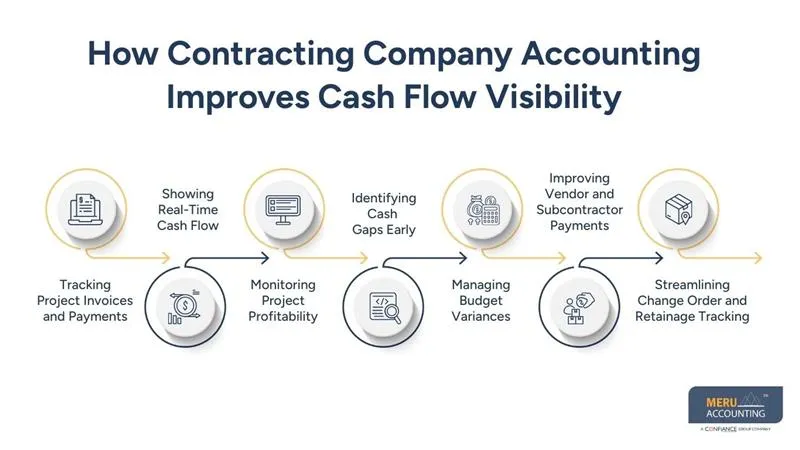
How Contracting Company Accounting Improves Cash Flow Visibility
Cash flow visibility means knowing exactly where your money is going and when it will come in, and accounting for contracting company provides this clarity.
Tracking Project Invoices and Payments
Accounting systems track all invoices and payment dates. Contractors can see which clients are late and which projects need follow-up.
Showing Real-Time Cash Flow
With proper accounting, contractors can view cash flow reports that show cash coming in and cash going out. This helps predict future cash needs.
Monitoring Project Profitability
By tracking costs and revenues per project, contractors can see which projects are profitable and which are draining cash.
Identifying Cash Gaps Early
Accounting reports can show cash shortages before they happen. This gives contractors time to adjust plans, delay expenses, or request early payments.
Managing Budget Variances
Contracting accounting helps compare actual expenses against planned budgets. This makes it easy to spot budget overruns and take corrective action before cash becomes tight.
Improving Vendor and Subcontractor Payments
Accounting for contracting companies helps you track vendor invoices, due dates, and payment terms.
Contractors can prioritize payments based on cash availability and avoid late fees or strained supplier relationships.
Streamlining Change Order and Retainage Tracking
Proper contracting company accounting tracks change orders and retainage amounts separately.
This ensures contractors know how much money is tied up in pending approvals or held back, improving cash flow planning.
Understanding Project-Based Cash Flow Using Contracting Company Accounting
Every project has a unique cash flow pattern, and accounting for contracting company helps track each one clearly. Contracting company accounting helps contractors understand this pattern by tracking:
- Contract value
- Payment terms
- Project costs
- Labor costs
- Material costs
- Subcontractor costs
When contractors track these details per project, they can predict:
- When cash will be needed
- When will cash come in
- Which projects will cause cash shortages
- How to plan for upcoming expenses
For example, if a project requires heavy material purchases early on, the accounting system can show that cash will be tight in the first few months. Contractors can then plan to arrange financing or schedule purchases later.
Role of Accurate Cost Tracking in Contracting Company Accounting
Accurate cost tracking is a key part of contracting company accounting. Without it, contractors may think a project is profitable when it is not.
Why cost tracking matters
- Shows the real cost of labor for every project.
- Tracks material costs accurately to avoid unexpected overspending.
- Records subcontractor expenses to monitor project profitability closely.
- Identifies cost overruns early, before cash flow gets tight.
When contractors know the exact cost of each project, they can:
- Avoid underpricing
- Improve future project estimates
- Reduce cash surprises
- Improve project planning
Accurate cost tracking also helps contractors spot problems early. For example, if labor costs are higher than planned, accounting reports can show this early enough to take action.
How Contracting Company Accounting Aligns Expenses With Project Timelines
Contracting projects often have multiple phases, and accounting for contracting company helps match expenses with each phase.
How it works
- Expenses are recorded for each phase to track spending.
- Actual costs are matched with planned costs for accuracy.
- Cost delays are spotted early to avoid budget problems.
- Cash needs are planned for each phase of work.
This helps contractors know when they will need money. If expenses are expected early, contractors can plan ahead. If expenses are delayed, contractors can delay payments or adjust schedules.
How Contracting Company Accounting Helps Control Overhead Costs
Overhead costs are the expenses that keep the business running. These include:
- Rent
- Utilities
- Insurance
- Office supplies
- Salaries
If overhead costs are not controlled, they can drain cash fast. Contracting company accounting helps control overhead by:
- Tracking overhead expenses monthly
- Identifying unnecessary expenses
- Setting budgets for overhead costs
- Comparing actual expenses vs budget
When contractors manage overhead well, they reduce the risk of cash shortages even during slow project periods.
How Meru Accounting Helps Contractors Predict Cash Shortfalls
At Meru Accounting, we understand that contractors need clear cash flow visibility to succeed. Our team specializes in contracting company accounting and provides services that help contractors plan for cash needs.
Here is how Meru Accounting supports contractors:
Project-Based Accounting
Project accounting systems are set up to track costs and revenue per project. This shows which projects are profitable and which are not.
Cash Flow Forecasting
Cash flow forecasts are created to predict future cash needs and highlight potential cash shortfalls.
Invoice and Payment Tracking
Invoices and payments are tracked so contractors know which clients are late and which projects need follow-up.
Overhead Cost Management
Overhead costs are controlled through budgeting and expense monitoring to prevent cash drain.
Customized Reports
Easy-to-understand financial reports are provided, tailored for contractors. These reports help contractors make smarter decisions.
With Meru Accounting’s services, contractors can reduce financial stress and stay focused on project delivery.
Contact Meru Accounting today for expert contracting company accounting support and cash flow forecasting.
Key Takeaways
- Contracting company accounting helps contractors predict cash shortfalls before they happen.
- Tracking project costs and revenue per project improves cash visibility.
- Accurate cost tracking prevents unexpected expenses and cash gaps.
- Project-based accounting helps align expenses with project timelines.
- Overhead cost management reduces cash drain during slow periods.
FAQs
Contracting company accounting tracks income and expenses per project, so contractors can see when money will run out and plan ahead.
Signs include delayed client payments, higher-than-planned material costs, rising labor expenses, and missing project budgets. Contracting company accounting helps identify these early.
Contracting company accounting helps contractors create cash flow forecasts based on invoices, project costs, and payment schedules. This shows future cash gaps.
Project-based accounting shows exact costs and profit for each project, so contractors can avoid cash surprises and make smarter decisions.
Using job costing, progress billing, expense tracking, and cash flow forecasting in a contracting company’s accounting helps contractors predict and prevent cash shortfalls.


