



Contractor Payroll Rules for Different Industries
Contractor payroll plays a key role in how firms manage short term and skill based workers. Each industry follows its own payment cycle, legal norms, and rate logic. A rule that suits a construction site may fail in a media studio or IT firm. This makes it crucial to understand payroll rules that match each sector. When firms follow the right method, pay stays fair, clear, and risk free.
In many cases, contractor payroll also links with project planning and cost control. Payment errors can affect both profit and work pace. A clear payroll system helps firms plan future budgets with more ease. It also keeps contractor ties strong, which supports repeat work and better task output.
Why Industry Specific Payroll Rules Matter
Every industry has unique work depth and cost pressure. Some depend on hours worked. Others focus on output or skill value. Missing the right rule can cause pay delay, legal loss, or poor worker trust. When a firm knows its industry payroll needs, it avoids inaccuracies and errors. It also keeps the system stable and future ready.
Clarity of rules also helps firms adapt to law changes with less stress. It makes audits smoother and lowers risk of sudden fines. Firms that ignore these rules often face loss of time, money, and legal peace.
Key reasons these rules matter
- Prevent legal issues and penalty risk
- Keep pay fair and timely
- Improve worker trust and work morale
- Support clean audit and tax flow
- Help plan project cost with more control
- Reduce payroll disputes and confusion
Contractor Payroll vs Subcontractor Payroll
Contractor payroll handles pay for workers hired for a fixed task or time span. These workers are not full time staff. They manage their own tax and work terms.
Subcontractor payroll involves a third layer. A subcontractor works under a main contractor and may hire more workers. Pay links to project scope and role share.
Main difference points
- Contractor works directly with the firm
- Subcontractor works under a contractor
- Payment terms vary in both cases
- Tax duty and work control also differ
Core Concepts in Contractor Payroll
Strong contractor payroll rests on a few core ideas that shape how payment is planned, tracked, and delivered. These factors guide daily payroll tasks and long term pay planning.
Payment structure
Defines how and when the contractor gets paid. It may follow weekly, monthly, or task based flow. Clear payment terms avoid delays and reduce conflict at later stages.
Billing method
Decides if pay is based on hours, output, or phase delivery. This also affects how invoices are raised and approved.
Tax role
Clarifies who files tax and what form applies. It also guides tax cuts, tax return duty, and legal proof needs.
Compliance needs
Includes wage laws, overtime limits, and labor rules. These differ by industry and region.
Record tracking
Tracks work time, cost data, and payment history. Good records help during audits and legal checks.
Industry Specific Contractor Payroll Rules
Construction Industry Payroll Rules
Construction payroll is shaped by strict law and safety rules. Work often takes place in risky and high effort zones, which makes pay rules more detailed.
Key factors include
- Wage laws based on skill type and job role
- Overtime for long site shifts and holiday work
- Valid trade cards and safety permits
- Site risk pay and zone based rates
- Weather based work pay adjustment
- Skill premiums for trained roles
Failure to follow these may cause payroll blocks or fines. It may also affect future tender chances and site approval.
IT and Software Services Payroll Rules
This sector depends on flexible contract terms and project scope. Many workers serve multiple clients at the same time.
Important points include
- Hour based or project based billing
- Sprint or phase payment cycle
- Tax treatment based on worker status
- Skill bonus for high value roles
- Remote work and time zone pay issues
- Performance linked payout terms
A clear payroll flow helps tech firms stay lean and meet tight project schedules.
Healthcare Payroll Rules
Healthcare payroll needs strong compliance and license checks. Errors can affect both legal status and patient care quality.
Main rules include
- Valid medical licenses and role IDs
- Shift based pay for night duty and emergency work
- Legal duty hour limits
- Role based payment scale
- On call and standby pay logic
- Special allowance for high stress roles
Any gap can risk both pay flow and legal status and may affect service trust.
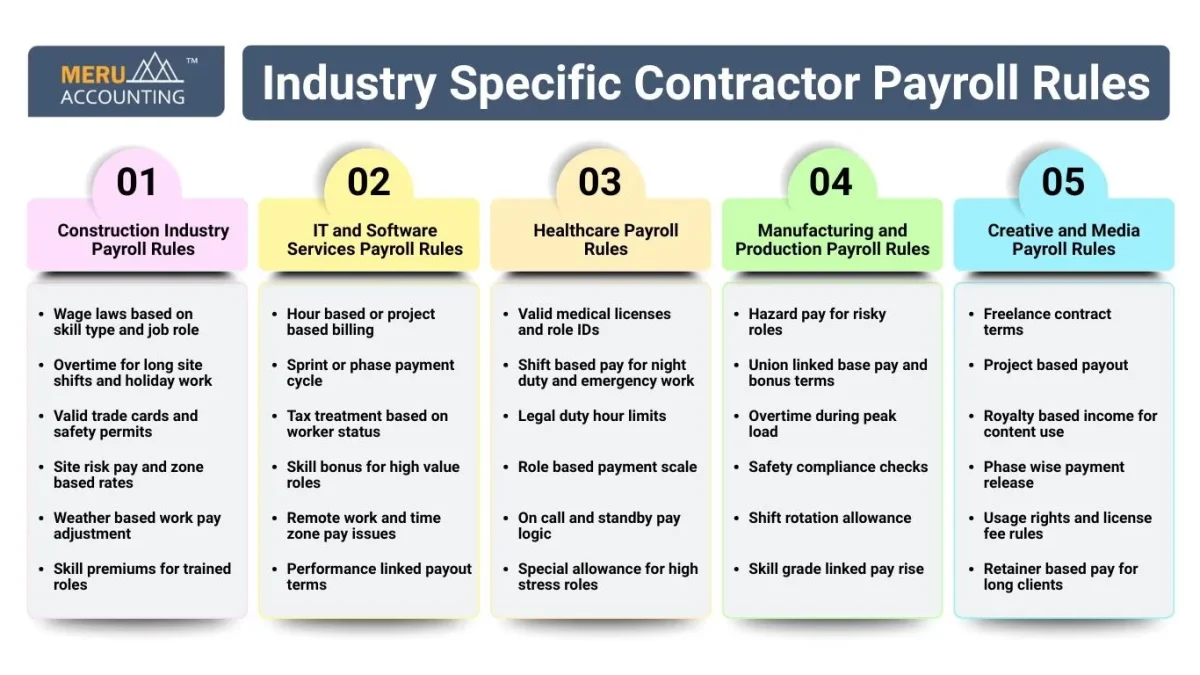
Manufacturing and Production Payroll Rules
This sector blends safety risk and union norms. Production peaks often push overtime and shift extra load.
Core rules include
- Hazard pay for risky roles
- Union linked base pay and bonus terms
- Overtime during peak load
- Safety compliance checks
- Shift rotation allowance
- Skill grade linked pay rise
Payroll errors here may lead to disputes or work stoppage that directly affect output flow.
Creative and Media Payroll Rules
This field runs on freelance and project based work. Pay often links with creative output value and usage rights.
Key points include
- Freelance contract terms
- Project based payout
- Royalty based income for content use
- Phase wise payment release
- Usage rights and license fee rules
- Retainer based pay for long clients
Clear contracts avoid future pay conflicts and income gaps.
Common Payroll Challenges Across Industries
Payroll faces many hurdles across sectors due to shifting work flow and varied law rules.
Tracking hours and project cost
Varied task flow makes cost tracking hard without smart tools. Manual logs often lead to errors and loss of data clarity.
Managing multiple contracts
Each contract has its own rate and scope, which raises error risk. Without a system, pay mismatch becomes common.
Overtime and special pay rules
Different sectors follow different overtime logic. Confusion here often leads to disputes.
Compliance and audit risk
Rule gaps may cause penalties or failed audits. Firms must stay updated to avoid sudden legal action.
Payment delay and dispute handling
Delayed pay harms trust and lowers work morale. Clear process helps manage such cases fast.
Best Practices for Managing Contractor and Subcontractor Payroll
Managing contractor and subcontractor payroll needs clear systems and steady control. Since each worker may follow different pay terms, firms must use smart steps to keep errors low and trust high.
Set clear contract terms from the start
Every contract should define pay rate, work scope, due dates, tax role, and overtime rules. When terms stay clear, confusion drops and payment disputes stay rare.
Use digital time and job tracking tools
Manual logs often lead to mistakes. Digital tools help track work hours, project cost, and task progress with better accuracy. This also supports fair billing and smooth audits.
Standardize payment cycles
Fixing regular pay dates helps improve trust and keeps cash flow steady. It also reduces delay pressure and follow up stress.
Maintain strong documentation
Store work records, invoices, tax forms, and approval proofs in one secure system. This helps during audits and legal checks.
Stay updated with compliance rules
Payroll laws change often. Review wage rules, tax norms, and labor acts on a regular basis to avoid penalties.
Separate contractor and subcontractor records
Each group follows different pay control and tax flow. Keeping them separate avoids data mix up and reporting issues.
Automate payroll where possible
Payroll software reduces manual load and improves speed. It also lowers error risk and keeps reports neat and ready.
Review and audit payroll data often
Frequent checks help detect errors early. This protects both profit and worker trust.
Train staff on payroll processes
Internal teams should know how payroll works. This boosts process clarity and lowers dependency risk.
Work with expert payroll service providers
Professional payroll partners ensure accuracy, compliance, and smooth flow. This saves time and protects business image.
How Meru Accounting Supports Contractor Payroll Management
Meru Accounting offers trusted payroll services for firms across all sectors. We understand the fine details of contractor pay rules and legal needs. Our team manages pay flow, tax records, compliance checks, and report setup. We help reduce payroll errors and keep your system clear and smooth.
Our approach focuses on industry fit solutions. We align payroll setup with your project goals and budget limits. From initial contract review to final pay release, we stay active at each step. With Meru Accounting, you gain peace of mind and a stable payroll system that fits your industry supporting steady growth.
Ready to simplify your contractor payroll process? Let Meru Accounting manage your payroll with care and precision. Contact our team today and move toward a smooth, stress free payroll system that supports your business growth.
FAQs
- What is contractor payroll in simple words?
Contractor payroll is the system used to pay people who work on a contract basis instead of as full time staff. It covers how their wages, fees, and taxes are handled. - How does contractor payroll differ from regular staff payroll?
Regular staff payroll follows fixed salaries and company benefits. Contractor payroll is more flexible and depends on contract terms, project scope, and agreed rates. - Why do payroll rules change across industries?
Each industry has different work risks, skill needs, and legal norms. So payroll rules shift to match these conditions. - What role do contracts play in contractor payment?
Contracts set the pay rate, work duration, and payment method. They act as a base for fair and clear payment. - Are contractors paid by hour or by project?
Contractors may be paid hourly or per project. This depends on the job type and the agreement made. - Who handles tax in contractor payroll systems?
In many cases, contractors handle their own taxes. Some firms may deduct tax as per law and process rules. - What are key payroll risks in construction work?
Common risks include wage errors, missed overtime, safety related pay gaps, and rule breaches. - How does overtime affect contractor pay?
Overtime raises the pay amount as extra hours are billed at higher rates set by law or contract. - Do IT contractors follow fixed payment cycles?
Most IT contractors follow set billing cycles like weekly or monthly, based on the service plan. - What payroll rules apply to healthcare staff on contract?
They must follow strict pay rules tied to shifts, licensing norms, and legal labor standards. - How does hazard pay impact manufacturing payroll?
Hazard pay adds extra money for risky work. It increases total payout in unsafe job roles. - What is the role of unions in contractor payment?
Unions help set fair rates and working terms. They protect contractor rights in many sectors. - How are creative freelancers paid for projects?
They are paid as per output, milestones, or final delivery, often based on creative value. - What are royalty payments in media work?
Royalties are ongoing payments made for repeated use of creative content like music or scripts. - How can firms track contractor work hours easily?
Time tracking tools and digital logs help record hours with more ease and clarity. - Why is compliance vital in contractor payroll?
Compliance avoids legal trouble and builds trust. It keeps payments fair and lawful. - Can payroll software handle multiple contracts smoothly?
Yes, modern payroll tools can manage many contracts and pay rules at once. - How does poor payroll affect contractor trust?
Late or wrong payments lower trust and harm long term work ties. - Is delay in contractor payment legal?
Delays may break labor rules and contract terms. It can lead to fines or disputes. - How can Meru Accounting improve contractor payroll efficiency?
Meru Accounting helps automate payroll with accurate processing, expert support, and smart tools that reduce errors and save time.
