




Small clinics face stress when scans must be done. MRI software helps staff plan scans and store files. Low-cost tools cut long-term work and reduce errors. Even small budgets can boost care and workflow fast.
MRI software lets staff work with less wait. Linking scans to billing and files is key. Small clinics need tools that staff can use quickly. MRI real estate software helps track rooms and machines.
Manual logs often cause errors and waste time. Staff spend hours on files instead of patient care. Low-cost MRI software can avoid future workflow problems. Clinics using software see scans done more quickly.
What You Will Learn From This Blog
- Learn about low-cost MRI software for small clinics.
- Explore step-by-step ways to set up financial management software.
- Discover how MRI real estate software helps track space.
- Understand ways to follow scans, schedules, and room use.
- Review common problems and simple methods to fix them.
- Find tips and FAQs to help staff work faster.
What is MRI Software?
MRI software is a tool used to manage MRI scans in hospitals and clinics. It helps plan and schedule scans, store patient records, and keep scan files in one place. This cuts down on manual work and lowers mistakes.
The software also helps staff manage their workflow. It shows the status of scans, tracks machine use, and can reduce patient wait times. Many systems update in real time, so staff can see which scans are done, in progress, or waiting.
Some clinic accounting software can make reports and show data clearly. Staff can check scan results and view patient info on secure online dashboards. This makes it easier for doctors, technicians, and radiologists to work together.
Clear viewing tools let staff see scans in detail and share results fast. With quick access to correct data, healthcare teams can make better choices, care for patients more effectively, and run their work smoothly.
Benefits of MRI Software
Low-cost MRI software can change how small clinics work. It helps staff do tasks faster, cut mistakes, and give better care when data is clear and correct.
1. Time Saved
Auto-planning tools cut errors and wasted time. Staff can finish work faster and help more patients each day.
2. Cost Control
Using MRI software well can lower extra costs. It stops unneeded spending on repeated scans or manual mistakes.
3. Accurate Data
Fewer mistakes happen in scans and patient files. Correct data helps staff make better choices for care.
4. Remote Access
Staff can see scans offsite when needed. This speeds up checkups and lets staff work with other clinics easily.
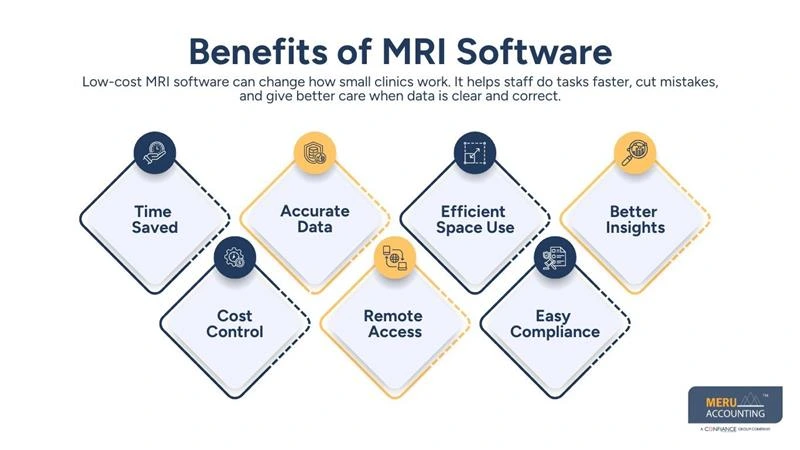
5. Efficient Space Use
MRI software shows how rooms and machines are used. Good scheduling can cut idle time and improve clinic work.
6. Easy Compliance
Software helps clinics follow laws without extra work. It keeps records ready for audits and lowers the risk of fines.
7. Better Insights
Reports show what works well and what slows work. This helps clinic managers make smart choices to run clinics better.
Manual methods can cause mistakes and stress staff. Bookkeeping software lets teams focus more on patients. With the right tools, clinics can run smoothly and lower staff stress over time.
Importance of MRI Software
Organizes Daily Work
MRI software brings order to daily clinic tasks. It helps staff plan scans and keep patient work clear.
Reduces Mistakes
It helps staff make fast and safe choices. Fewer errors mean better care and less time fixing problems.
Improves Patient Safety
Clinics using it give safer, more reliable care. Staff can check patient history and results quickly and clearly.
Tracks Room and Machine Use
MRI tools show idle rooms or machines. This lets staff plan better and avoid wasted equipment time.
Boosts Efficiency
Idle machines are spotted, and use improves quickly. Workflow moves faster, helping staff see and treat more patients.
Saves Money
Small clinics cut wasted time and lower costs. Resources are used wisely, reducing extra spending on daily work.
How to Install MRI Software in Your Clinic
Installing MRI software has clear, simple steps.
Step 1: Check Needs
List features your clinic really needs. Look at workflow, staff roles, and scan count.
Step 2: Pick Software
Compare tools by features, price, and help options. Pick one that balances cost with work efficiency.
Step 3: Install
Set up software on current systems with no downtime. Check hardware and link with billing tools safely.
Step 4: Train Staff
Teach staff to use schedules, scans, and reports. Hands-on guides help adoption and cut errors fast.
Step 5: Monitor & Update
Check the system daily and track improvements carefully. Update software during slow hours to avoid issues.
Step 6: Link With Other Tools
Connect MRI software with billing and patient files. Linked tools keep data smooth and easy for staff.
MRI real estate software runs alongside MRI tools. It tracks scanner use, room time, and machine checks.
Data from both tools cuts idle machines and delays. Using MRI real estate software with MRI software helps clinics track rooms and machines for faster service.
Common Challenges & How to Overcome Them
High Cost
Even small plans may seem high at first.
Solution: Use monthly or low-cost plans to save.
Staff Resistance
Some staff may not want to use new tools.
Solution: Give clear training and step-by-step help.
Data Move
Old patient files may not go to new system.
Solution: Use experts to move data safely.
Software Updates
Updates may stop daily work for some hours.
Solution: Run updates at off-peak hours for smooth work.
Limited Support
Some providers give slow or weak help.
Solution: Pick vendors with strong support and guides.
Linking Issues
Connecting MRI software with billing can be hard.
Solution: Hire help to set up the system fast.
Data Safety
Patient info may be at risk without good tools.
Solution: Pick software with encryption and law compliance.
Case Study / Real-Life Example
A small clinic in California used MRI software.
The tool tracked schedules, reports, and scans in one.
Patient wait times fell thirty percent in six months.
MRI real estate software tracked rooms and scanners well.
Costs fell, while staff were more happy and productive.
Billing errors fell, and admin work reduced fast.
Another small Texas hospital used MRI software with remote access.
Emergency scan choices became fast and correct immediately.
Space tracking cut idle machines by twenty percent.
The hospital keeps getting long-term gains in workflow.
Why Choose Meru Accounting for MRI Software Solutions
Meru Accounting uses MRI software to deliver clear and reliable accounting and bookkeeping services.
We help small clinics and businesses manage financial data with ease and confidence. Our work supports better planning and steady business growth.
Streamlined Accounting and Bookkeeping
We work with bookkeeping software data to keep financial records clean and well-arranged.
This helps track income, costs, and balances with better accuracy. Clear records also make reviews and reports easier to manage.
Cost-Effective Financial Management
Our services reduce the need for full in-house accounting teams. Clinic accounting software improves workflow while lowering errors and extra costs. This helps businesses save money while keeping strong control over finances.
Compliance and Financial Accuracy
We keep records in line with required accounting rules and standards. Regular checks help maintain accuracy and compliance. This also makes audits and reviews less stressful.
Expert Accounting Support
Meru Accounting reviews MRI software reports to share useful insights. We help spot trends and improve financial clarity. This supports better business choices and steady growth.
Key Takeaways
- MRI software boosts speed and data accuracy in clinics.
- Low-cost options exist for clinics with small budgets.
- MRI real estate software tracks rooms and scanner use.
- Right setup cuts errors and makes care better.
- Expert help keeps setup smooth and support easy.
- Training helps staff adopt tools and work faster.
- Linking to billing and patient tools improves work flow.
- Clinics see faster scan times after software use.
- Updates and monitoring keep system smooth for long term.
- Choosing the right tool avoids future admin problems.
FAQs
It helps track scans, patient files, and workflow fast. It also keeps records clear and cuts errors in daily work.
Yes, low-cost options exist for small clinics today. These cheap tools still have the key features clinics need.
It tracks rooms, scanners, and machines each day. This helps with scheduling and makes full use of resources.
Yes, training cuts mistakes and helps staff use it correctly. It also boosts staff confidence and speeds up daily work.
Yes, linking makes work faster and data more correct. It also cuts billing errors and keeps the money records smooth.


