

Running a law firm involves more than managing cases and clients. Efficient financial management is just as crucial to the success of a legal practice. Law firm accounting ensures that your firm keeps track of every transaction, monitors expenses, and maintains compliance with financial regulations.
Without a solid accounting system, law firms risk errors, missed opportunities, and compliance issues. In this blog, we will walk you through everything you need to know about law firm accounting and law firm bookkeeping, providing actionable insights to optimize your firm’s day-to-day finances.
What You Will Learn From This Blog
- A clear understanding of law firm accounting and its importance for every legal practice.
- The role of law firm bookkeeping in maintaining accurate and up-to-date financial records.
- Key financial components of a law firm, including trust accounts, operational expenses, and revenue tracking.
- Strategies to streamline daily accounting tasks and optimize financial operations for better efficiency.
- How accurate financial reporting can support informed decision-making and long-term planning.
- Tips for selecting the right professional or service to manage a law firm’s accounting needs effectively.
What Is Law Firm Accounting?
Law firm accounting is the structured process of managing a law firm’s financial activities. It involves tracking income, expenses, and client trust funds to maintain accurate financial records and ensure the firm operates smoothly.
While law firm bookkeeping focuses on recording financial transactions, accounting goes a step further by analyzing and interpreting those records. This helps law firms make informed decisions, plan budgets, and monitor financial performance effectively.
Compliance is a critical aspect of law firm accounting. Firms must adhere to local, state, and federal regulations, especially regarding client funds, taxes, and reporting requirements. Proper accounting practices help prevent errors, maintain transparency, and reduce the risk of legal issues.
Managing client trust accounts and cash flow is another key function. Regular reconciliation of trust accounts ensures client funds are handled accurately, while tracking cash inflows and outflows helps firms control expenses and plan for sustainable growth.
Importance Of Law Firm Bookkeeping In Modern Legal Practices
Accurate Financial Records
Law firm bookkeeping ensures that all transactions, including billable hours and expenses, are recorded correctly. This provides a clear picture of the firm’s overall financial health at any given time.
Helps Avoid Errors
Regular bookkeeping and accurate law firm accounting reduce mistakes in invoices, payroll, and taxes. Catching errors early prevents costly corrections and keeps finances reliable.
Supports Client Billing
Bookkeeping allows accurate tracking of billable hours and ensures timely invoicing. This helps maintain trust with clients and improves the firm’s cash flow.
Simplifies Tax Filing
With organized financial records, law firms can file taxes on time without missing deductions. Accurate records also make audits smoother and less stressful.
Provides Insight For Decisions
Well-maintained records give firm owners insights into financial health and resource allocation. This enables better planning for growth and investment opportunities.
Improves Cash Flow Management
Tracking daily transactions helps law firms monitor cash inflows and outflows, making it easier to maintain steady liquidity. It also helps identify potential shortfalls before they become problems.
Enhances Compliance And Accountability
Accurate bookkeeping ensures adherence to regulatory requirements and strengthens accountability for both client and firm funds. This builds credibility and reduces the risk of legal or ethical issues.
Key Components Of Law Firm Accounting
Revenue Tracking
Monitor income from clients, retainers, and other sources using law firm accounting to ensure accurate revenue reporting. Consistent tracking helps identify profitable clients and services for better resource allocation.
Expense Management
Track operational costs, including office rent, salaries, and utilities, for better financial control. This allows firms to identify areas where expenses can be reduced or optimized.
Trust Accounting
Manage client trust funds separately from firm revenue to maintain compliance. Regular reconciliation ensures client funds are safeguarded and avoids potential legal issues.
Payroll Management
Keep track of employee salaries, benefits, and deductions accurately. Proper payroll management ensures employees are paid on time and helps prevent errors in tax filings.
Financial Reporting
Generate reports like balance sheets, income statements, and cash flow statements for better decision-making. These reports provide a clear overview of the firm’s financial health and support strategic planning.
Optimizing Daily Financial Operations In Law Firms
Use Accounting Software
Adopting specialized software can make law firm accounting faster and more accurate. It also reduces manual errors and streamlines routine financial tasks.
Regular Reconciliation
Daily or weekly reconciliation of accounts using law firm accounting practices helps prevent errors and ensures accuracy. This keeps bank statements and records aligned, avoiding potential discrepancies.
Invoice Management
Maintain organized billing systems to track invoices, payments, and overdue accounts. Proper management improves cash flow and strengthens client relationships.
Expense Categorization
Properly categorize expenses to simplify reporting and tax preparation. It also makes it easier to identify cost-saving opportunities within the firm.
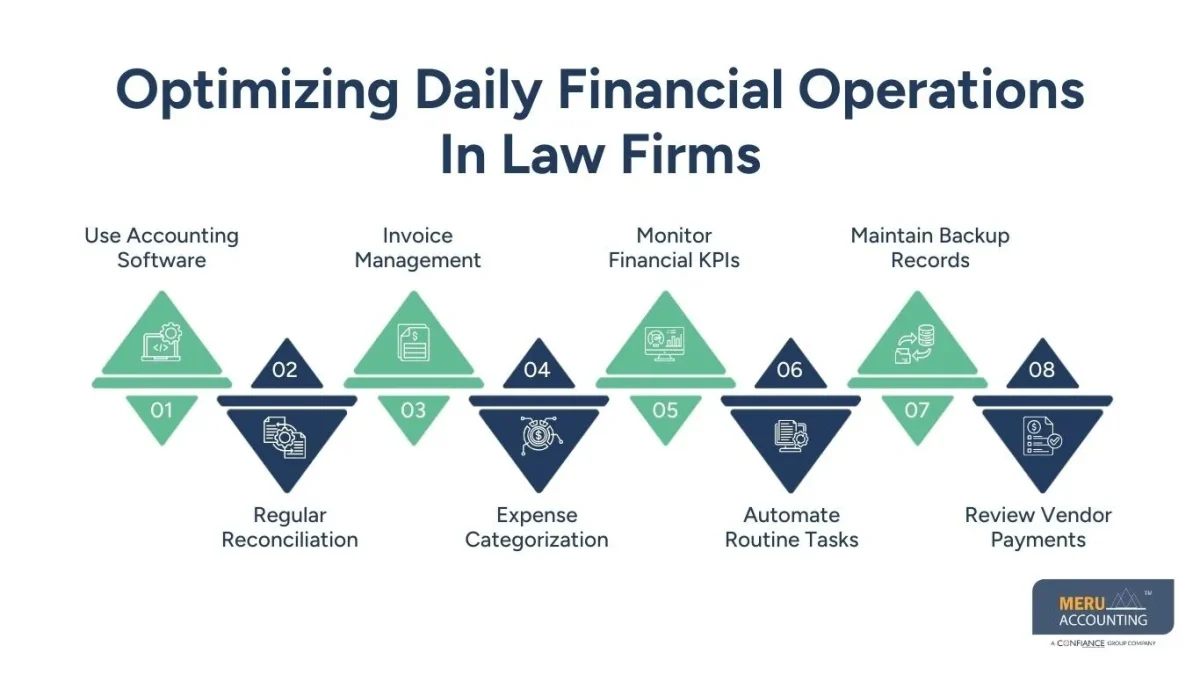
Monitor Financial KPIs
Keep track of key financial metrics such as revenue per lawyer, profit margins, and client billing efficiency. Monitoring these KPIs regularly supports informed decision-making and operational improvements.
Automate Routine Tasks
Automating recurring transactions, reminders, and reports saves time and reduces the risk of human error. This allows the finance team to focus on more strategic work.
Maintain Backup Records
Maintaining digital and physical backups of records is a key part of law firm accounting, ensuring data safety and providing peace of mind during audits or unexpected system failures.
Review Vendor Payments
Regularly reviewing vendor invoices and payments prevents overcharges and ensures timely settlements. This practice helps maintain good relationships and financial control.
How To Use Financial Reporting And Analysis To Make Better Decisions
Income Statements
Understand how your firm is performing financially and identify areas for improvement. Regular review of income statements helps track trends in revenue and expenses over time.
Balance Sheets
Evaluate the firm’s financial position by reviewing assets, liabilities, and equity. This provides a snapshot of overall financial stability and helps in planning for growth.
Cash Flow Statements
Track inflows and outflows to ensure your firm has enough liquidity to operate smoothly. Analyzing cash flow patterns helps anticipate shortages and manage day-to-day expenses effectively.
Client Profitability Reports
Analyze which clients or cases are most profitable and allocate resources accordingly. These insights help focus on high-value clients and optimize case management strategies.
Budget Analysis
Compare actual performance against budgeted figures using law firm accounting insights to adjust financial strategies. This ensures the firm stays on track with financial goals and identifies areas where spending can be controlled.
How To Optimize Law Firm Bookkeeping For Maximum Efficiency
Maintain Organized Records
Keep all financial records well-organized for quick access and verification. This helps reduce the time spent searching for documents and improves overall accuracy.
Automate Recurring Tasks
Use software to automate invoicing, payroll, and reconciliation processes. Automation also minimizes human errors and frees up staff to focus on more strategic tasks.
Set Clear Procedures
Define a clear workflow for financial transactions, approvals, and reporting. Clear procedures ensure consistency and make it easier to train new staff members.
Train Staff
Ensure that your finance team is trained in law firm bookkeeping best practices. Ongoing training helps staff stay updated on compliance rules and new software tools.
Regular Review
Review financial records periodically to identify errors and improve processes. Routine reviews also help spot trends, optimize operations, and support better decision-making.
How To Choose The Right Partner For Law Firm Accounting
Experience With Law Firms
Choose a provider with experience in law firm accounting to ensure they understand legal industry requirements. Experienced partners are more likely to handle trust accounts and compliance issues correctly.
Service Offerings
Look for comprehensive services, including bookkeeping, payroll, and tax filing. A full-service partner can manage all financial aspects in one place, saving time and effort.
Technology Integration
Ensure the partner uses up-to-date accounting software for efficient operations. Modern tools allow for better reporting, automation, and secure financial management.
Transparent Pricing
Select a service with clear pricing to avoid hidden costs. Knowing fees upfront helps plan budgets and prevents unexpected financial surprises.
Client References
Ask for references or case studies to assess the provider’s track record. Positive feedback from other law firms can provide confidence in their reliability and expertise.
Why Choose Meru Accounting as Your Partner for Law Firm Accounting
Expertise in Legal Accounting
Meru Accounting has extensive experience managing finances for law firms of all sizes. Our team understands the unique requirements of legal practices, including trust accounts and compliance regulations.
Customized Bookkeeping Solutions
We offer law firm bookkeeping services tailored to your firm’s specific needs. Each solution is designed to fit your workflow, ensuring efficiency and accuracy in daily financial operations.
Compliance Assurance
Our team ensures that all financial operations comply with local and federal regulations. This reduces risk and helps maintain trust with both clients and regulatory authorities.
Advanced Reporting
We provide detailed reports that help law firms make informed financial decisions. These reports give insight into revenue trends, expenses, and client profitability for better planning.
Ongoing Support
Meru Accounting offers continuous support to keep your law firm’s accounting accurate and up-to-date. Our experts are available to assist with queries, audits, and financial strategy guidance whenever needed.
Key Takeaways
- Law firm accounting is essential for financial stability and regulatory compliance.
- Proper law firm bookkeeping ensures accurate records of all transactions.
- Daily financial optimization improves cash flow and reduces errors.
- Financial reporting helps make informed decisions and plan for growth.
- Choosing the right accounting partner, like Meru Accounting, simplifies management and ensures compliance.
FAQs
Law firm accounting is managing all financial activities of a law firm, including income, expenses, payroll, and client funds. It is important to keep finances accurate, maintain compliance, and make informed business decisions.
Law firm bookkeeping records all financial transactions, helping law firms track expenses, bill clients correctly, and maintain organized records for smooth day-to-day operations.
Best practices include using accounting software, reconciling accounts regularly, monitoring cash flow, maintaining trust accounts accurately, and reviewing financial reports frequently.
A professional or specialized service, like Meru Accounting, ensures accurate bookkeeping, compliance with regulations, timely financial reporting, and guidance for making better business decisions.
Accurate accounting helps identify high-cost areas, track profitable clients and cases, manage expenses efficiently, and plan budgets, all of which contribute to better profitability for law firms.


