




Running a small business is rewarding, but it also comes with responsibilities, especially when it comes to taxes. If you want to protect your business from unnecessary IRS audits, the smartest move is to hire an accountant for small business.
A good accountant not only helps you file taxes correctly but also ensures your records are accurate, deductions are valid, and your financial practices are clean. This reduces audit risk and gives you peace of mind.
By working with a small business accountant, you gain more than just tax support—you gain a trusted financial partner. They help you stay organized throughout the year, identify potential issues before they become problems, and keep you compliant with IRS rules.
This proactive approach not only lowers audit risk but also strengthens your business’s financial health.
What You Will Learn From This Blog
In this blog, you will learn:
- How a small business accountant helps reduce IRS audit risk
- Common audit triggers for small businesses
- Key accounting mistakes that invite IRS scrutiny
- Recordkeeping best practices recommended by small business accountants
- How accountants help you claim deductions without raising red flags
- How accountants manage payroll and employee taxes
- Benefits of hiring a small business bookkeeper beyond audit protection
- How to choose the right accountant for your business
Why is it Necessary to Hire an Accountant for Small Businesses
Many small business owners try to manage their books themselves. While this may seem cost-effective, it can be risky. The IRS is more likely to audit businesses that have inaccurate tax filings, missing documents, or inconsistent financial records. When you hire an accountant for small business, you are investing in accuracy and compliance.
A small business accountant understands the rules and helps you stay organized, so you don’t make costly mistakes. This not only reduces audit risk but also helps you make better business decisions.
An accountant also helps you plan ahead and avoid surprises during tax season. They can review your financial situation throughout the year, spot potential issues early, and guide you on how to fix them before they attract IRS attention.
This proactive support keeps your business stable and reduces stress during tax filing.
How a Small Business Accountant Helps Reduce IRS Audit Risk
When you hire an accountant for small business, you are choosing someone who knows tax rules, filing deadlines, and audit procedures. A small business bookkeeper can help you by:
- Reviewing your financial records to ensure accuracy
- Preparing tax returns with correct calculations
- Ensuring deductions are valid and well-documented
- Setting up proper bookkeeping and accounting systems
- Responding to IRS notices professionally
- Keeping you updated on changes in tax laws
These steps make your business less likely to draw IRS attention.
Common Audit Reasons for Small Businesses
The IRS may audit a business for many reasons, but if you hire an accountant for small business, you can reduce these triggers. Common audit triggers include:
- Claiming unusually high deductions compared to income
- Failing to report all business income
- Showing inconsistent or unexplained expenses
- Keeping missing or incomplete financial records
- Having large cash transactions without proper documentation
- Making incorrect payroll filings or missing payroll taxes
- Reporting frequent losses year after year
A small business CPA helps you avoid these triggers by keeping your records clean and your filings accurate.
Key Accounting Mistakes That Invite IRS Scrutiny
Here are the most common mistakes that lead to IRS audits when you don’t hire an accountant for small business:
Misreported Income
If your income does not match what the IRS receives from customers or payment platforms, it raises a red flag.
Overstated Deductions
Claiming too many deductions without proper proof can attract an audit.
Incorrect Classification
Classifying personal expenses as business expenses is a major mistake.
Poor Recordkeeping
If you don’t have supporting documents, the IRS can question your expenses.
Payroll Errors
Incorrect payroll filings or missing employee taxes can trigger an audit.
When you hire an accountant for small business, these mistakes can be avoided easily. A small business accountant ensures everything is correct and supported by documentation.
How an Accountant Ensures Accurate Tax Filing
Tax filing involves many rules and deadlines. If you hire an accountant for small business, they help you stay compliant by ensuring every step is accurate and well-documented.
Matching Tax Returns with Your Books
An accountant reviews your financial records and makes sure your tax return reflects the same numbers shown in your books.
Reporting Income and Expenses Correctly
They ensure all income and expenses are recorded accurately and classified in the right categories.
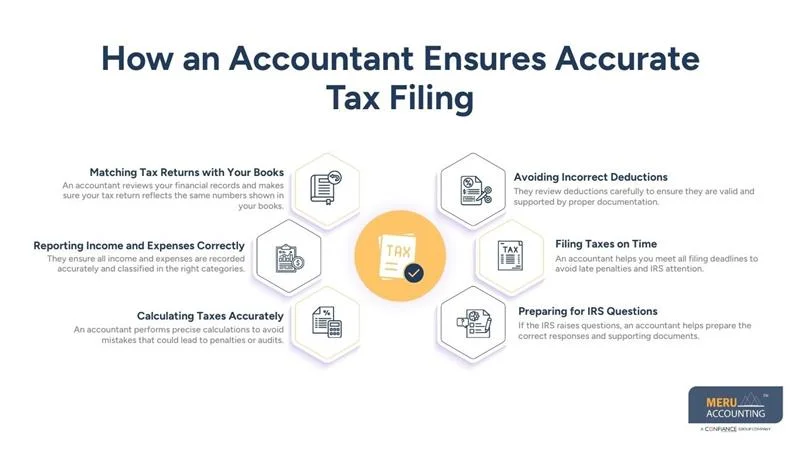
Calculating Taxes Accurately
An accountant performs precise calculations to avoid mistakes that could lead to penalties or audits.
Avoiding Incorrect Deductions
They review deductions carefully to ensure they are valid and supported by proper documentation.
Filing Taxes on Time
An accountant helps you meet all filing deadlines to avoid late penalties and IRS attention.
Preparing for IRS Questions
If the IRS raises questions, an accountant helps prepare the correct responses and supporting documents.
This accuracy reduces audit risk and ensures your business stays on the right side of tax laws.
Recordkeeping Best Practices Recommended by Small Business Accountants
If you hire an accountant for small business, a business accountant will recommend recordkeeping practices such as:
- Keeping all receipts and invoices
- Using accounting software to track transactions
- Maintaining a separate business bank account
- Saving payroll records and employee information
- Keeping records for at least 7 years
- Documenting the business purpose for each expense
When you hire an accountant for small business, they can help you set up a system that makes recordkeeping simple and efficient.
How an Accountant Helps With Deductions Without Raising IRS Concerns
Deductions can lower your tax burden, but they must be legitimate. When you hire an accountant for small business, a business accountant helps you claim deductions correctly by:
- Reviewing each deduction for validity
- Ensuring you have supporting documents
- Keeping records organized
- Avoiding suspicious or questionable deductions
- Ensuring your deductions match your business activities
This approach helps you save money without risking an audit when you hire an accountant for small business.
The Role of an Accountant in Managing Payroll and Employee Taxes
Payroll is one of the most common reasons businesses face IRS audits. A small business accountant helps by ensuring payroll is accurate and compliant.
Ensuring Correct Payroll Calculations
An accountant verifies payroll amounts, deductions, and withholdings to ensure employees are paid accurately.
Filing Payroll Taxes on Time
They ensure payroll taxes are filed and paid by the deadlines to avoid penalties.
Managing Employee Tax Forms
An accountant handles tax forms such as W-2s and 1099s, ensuring they are prepared and submitted correctly.
Tracking Payroll Records and Deductions
They maintain accurate payroll records and track deductions, benefits, and employee contributions.
Ensuring Compliance with State and Federal Rules
An accountant keeps your payroll process compliant with both state and federal regulations.
By managing payroll properly, you reduce the chance of an audit and penalties.
Benefits of Hiring a Small Business Accountant Beyond Audit Protection
When you hire an accountant for small business, you get benefits beyond audit protection, such as:
- Better financial planning and budgeting
- Improved cash flow management
- Accurate financial reports
- Timely tax filing
- Peace of mind knowing your books are correct
- Guidance on business growth
A business accountant is not just a tax helper; they are a business partner.
How to Choose the Right Accountant for Your Small Business
When you hire an accountant for small business, here’s how to choose the right small business accountant:
- Check their experience with small businesses
- Ask about their tax and bookkeeping services
- Verify their qualifications and certifications
- Ask for references or client testimonials
- Ensure they understand your business industry
- Confirm their fees and service terms
- Look for good communication and support
When you hire an accountant for small business, choose someone who fits your needs and understands your goals.
What to Expect After You Hire an Accountant for Small Business
Once you hire an accountant for small business, expect these key actions. They will review your books and tax records carefully.
- A review of your current financial records will happen. This helps identify mistakes before they become problems.
- The setup or improvement of bookkeeping systems will be done. Your accounts will stay organized and easy to track.
- Proper tax planning and filing support will be provided. They will help minimize taxes legally and safely.
- Regular financial reporting will help your decisions. You will get clear monthly or quarterly reports.
- Guidance on business growth will be offered. They will advise on budgeting and cash flow.
- Support for IRS queries will be available if needed. They will respond professionally to any IRS questions.
A small business accountant keeps records organized and reduces risks. This brings peace of mind during tax season.
Real-Life Examples: How Accountants Helped Businesses Avoid Audits
Here are a few real-life examples of how business accountants helped businesses avoid audits:
Example 1: Missing Income Issue
A small business owner forgot to report income from an online platform. The accountant identified the missing income and corrected the tax return, preventing a future audit.
Example 2: Unclear Deductions
A business owner claimed large deductions without receipts. The accountant helped organize receipts and separated personal and business expenses, reducing audit risk.
Why Choose Meru Accounting for Your Small Business
At Meru Accounting, we provide accounting and bookkeeping services that reduce IRS audit risk through accurate bookkeeping, tax planning, and compliance. When you hire an accountant for small business from Meru Accounting, you get:
Expert Small Business Accountant Support
Our team includes experienced business accountants who understand the unique financial needs of growing businesses.
Accurate Bookkeeping and Tax Filing
We maintain accurate books and prepare tax filings correctly to ensure your business stays compliant and audit-ready.
Assistance With Deductions Without Raising Red Flags
We help you claim deductions correctly, ensuring they are valid and properly documented to avoid IRS scrutiny.
Payroll Management and Employee Tax Support
Our team handles payroll processing, employee tax filings, and payroll compliance to reduce payroll-related audit risks.
Regular Financial Reporting and Planning
We provide regular financial reports and guidance so you can make informed decisions and stay organized.
Quick Response to IRS Notices
If you receive an IRS notice, our team responds quickly and professionally to help resolve the issue.
Our team has strong experience in handling small business finances, and we ensure your records are accurate and audit-ready.
Ready to reduce IRS audit risk and keep your finances accurate and compliant? Hire an accountant for small business from Meru Accounting today and get reliable support from experienced small business accountants.
Contact us now to discuss your needs and start protecting your business.
Key Takeaways
- Hiring an accountant helps reduce IRS audit risk by ensuring accurate records and tax filing.
- A small business accountant can prevent common audit triggers like missing income, incorrect deductions, and payroll errors.
- Proper recordkeeping and documentation are essential to avoid IRS scrutiny when you hire an accountant for small business.
- A good accountant helps you claim deductions correctly without raising red flags.
- Meru Accounting provides expert accounting services to protect your business and ensure compliance.
FAQs
Yes. A small business accountant helps ensure your tax returns are accurate, records are organized, and deductions are supported, which lowers the chance of an IRS audit.
They review your financial records, ensure correct tax filing, track deductions properly, manage payroll, and keep your books clean and compliant.
Costs vary based on services needed, but small businesses can expect to pay monthly or hourly fees. It is often cheaper than paying penalties for mistakes.
Keep invoices, receipts, bank statements, payroll records, and expense documentation. A business accountant can help set up a system for this.
It’s best to hire an accountant early, especially before tax season, or when your business grows, has employees, or starts handling complex transactions.


