




Running a small shop or firm is tough. You must sell, pay bills, track cash, and look after staff. One task that can make or break your work is keeping the books. Good books show what cash comes in and what goes out. They also help you plan and make smart choices. Many owners ask: should I hire bookkeeper or do the books myself? Both ways can work. The right one depends on your firm, your time, and your skill.
This blog will show you pros and cons of both the options, how much does it cost to hire a bookkeeper, and will also help you make the right choice.
Introduction to bookkeeping in a business
Books are the base of any firm. If your books are messy, you cannot tell if you are making cash or losing it. Clean books show profit, cost, and cash flow. They also make tax time less hard.
Some owners do bookkeeping of their business themselves to save cash. Others choose to hire bookkeepers to save time and cut errors. Each choice has pros and cons. The right choice depends on the size of your firm, how fast it grows, and if you like to work with numbers.
A small shop owner, for example, may track sales on a note pad at first. It works when the shop is small. But when sales grow or bills pile up, the note pad can get messy. Mistakes can cost cash or time.
Let’s get more into what it means to hire bookkeeper, the good and bad sides of DIY bookkeeping, how much does it cost to hire a bookkeeper, and how to pick the best path.
What Does It Mean to Hire Bookkeeper?
To hire bookkeeper means you get a trained professional to track your cash. Bookkeepers log all cash in and out. They check bank slips and make reports. They can also help with taxes.
Bookkeepers are not accountants. Accountants plan taxes, give advice, and check books. Bookkeepers handle day-to-day work. They make sure all cash is logged right.
For example, if you run a small shop, a bookkeeper will track each sale, each payment, and each bill. They match bank slips to sales. They make simple reports that show what parts make cash and which cost too much.
Another case: a small café owner may hire bookkeeper. The bookkeeper tracks coffee sales, staff pay, and bills for milk and sugar. They also track tips. The owner can then see which days make more cash and which days lose money.
With a bookkeeper, you can trust your books. You make choices based on facts, not guesswork. You can also plan growth with more confidence.
Managing Your Own Books: Pros, Cons, and Common Challenges
Many small owners start by doing their own books. It seems cheap, but it has good and bad sides.
Pros of DIY Bookkeeping
-
Save Cash
You do not pay a professional at first. -
Full Control
You see each sale, bill, and cash move. -
Learn Fast
You know where your cash comes from and goes. -
Quick Check
You can look at your numbers anytime.
Example: A small online shop owner may use a spreadsheet to track all orders and payments. This gives full control and saves cash for the first months.
Cons and Common Challenges
-
Time-Consuming
Books take hours each week. They take more as the firm grows. -
Mistakes Happen
Errors can occur in logging sales, bills, or taxes. Small errors can cost cash. -
Limited Skill
Bookkeepers know tools, rules, and smart ways to log cash. DIY may miss things. -
Stressful
Doing books yourself can take focus from sales, ads, or clients.
Example: The same online shop may grow from 50 orders per week to 200 orders. A DIY spreadsheet may get messy, and mistakes may cause lost cash or time.
DIY works for very small or simple firms. But as your firm grows, lost time and errors can cost more than hiring a bookkeeper.
Key Reasons to Hire Bookkeeper for Your Business
Here are the main reasons to hire bookkeeper:
Right Numbers
Books stay correct and match rules.
Save Time
Focus on work while a pro handles books.
Clear View
Reports show profit, cost, and cash flow. You see what works and what does not.
Handles Growth
Bookkeepers can track more sales and bills as the firm grows.
Less Stress
You worry less about mistakes or lost slips.
Example: A small retail shop has sales in-store and online. A bookkeeper tracks both, showing which channel makes the most cash and where costs are high. This helps the owner plan stock and ads better.
Tip: Even if you plan to DIY, you can hire bookkeeper once a month for a check-up. This can save cash and catch errors early.
How Much Does It Cost to Hire a Bookkeeper?
Many business owners ask: how much does it cost to hire a bookkeeper? It can change by:
- Skill – Pros with more experience charge more.
- Work Load – More sales and bills cost more to track.
- Place – Cost differs by city.
- Type – Full-time, part-time, or outsource services cost different amounts.
Small firms usually pay:
- $20–$50 per hour for part-time or freelance work
- $40,000–$60,000 per year for full-time staff
- $200–$500 per month for outsourced services
Example: A café with a small staff may pay $300/month for an outsourced bookkeeper to track sales, bills, and staff pay. The cost is less than hiring a full-time person.
Knowing the answer to “How much does it cost to hire a bookkeeper” helps you plan your cash and pick the best option. Outsourced work can cost less than full-time staff. You pay for what you need. A bookkeeper saves time, cuts mistakes, and may even help you save cash.
Hire Bookkeeper vs. DIY Bookkeeping: Cost Comparison
It helps to compare costs for DIY and hiring.
DIY Bookkeeping Costs
- Software: $20–$70 per month
- Your time: 5–10 hours per week
- Mistakes: Could cost cash in fines or missed cuts
Hiring a Bookkeeper Costs
- Hourly or monthly fees
- Fewer mistakes and more right numbers
- Reports ready for choice-making
- More time to grow the firm
Example: A small shop owner may spend 8 hours per week on books at $25/hour worth of personal time. Hiring a bookkeeper at $30/hour for 4 hours per week costs less time, fewer mistakes, and better reports.
Many owners find hiring a bookkeeper saves cash long-term. Mistakes, lost time, and missed cuts cost more than the fee for a pro.
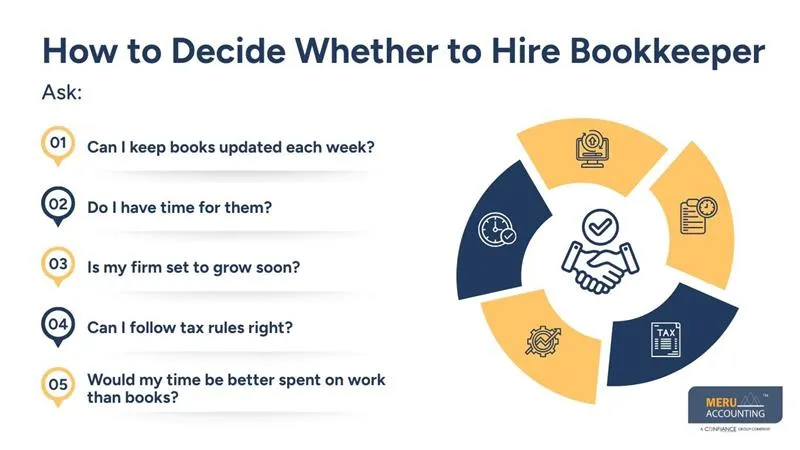
How to Decide Whether to Hire Bookkeeper
Ask:
- Can I keep books updated each week?
- Do I have time for them?
- Is my firm set to grow soon?
- Can I follow tax rules right?
- Would my time be better spent on work than books?
If “no” to any, it is wise to hire bookkeeper. Even a small, part-time bookkeeper saves time and cuts errors.
Tip: Keep a small log of tasks you do for bookkeeping. If it takes more than 5 hours per week, hiring a bookkeeper is worth it.
Outsourced Accounting and Bookkeeping Services by Meru Accounting
Meru Accounting gives full outsourced bookkeeping and accounting services for small and mid-size firms. We:
- Keep books right and up to date
- Make clear reports on cash, profit, and cost
- Give tips to save cash and boost profit
- Offer plans that fit your budget
Example: A small retail chain used to spend 10 hours weekly on books. After hiring a remote accountant from Meru Accounting, the chain cut bookkeeping time to 2 hours per week and found $500 in savings each month.
Outsource work costs less than a full-time hire in many cases. You do not need to worry about the question “How much does it cost to hire a bookkeeper?” when you choose us. We provide you professional help, more free time, and less stress. Contact Meru Accounting now and get started with our remote accounting and bookkeeping services.
Key Takeaways
- Books are key, DIY or pro.
- DIY may save cash but can cause errors and lost time.
- Hiring a bookkeeper gives right numbers, rule safety, and more time.
- Know the answer to “How much does it cost to hire a bookkeeper?” to plan well.
FAQs
Yes. Software helps, but cannot catch all errors like a pro.
$20–$50/hour or $200–$500/month for outsource plans.
Yes. Our remote services are part-time or short-term.
Bookkeepers track daily cash. Accountants plan taxes and give advice.
Check skill, tool use, and if they fit your firm. Meru Accounting offers flexible plans as per your needs.


