



Know the Fringe Benefits Tax (FBT) Ahead of 2026
Fringe Benefits Tax may impact many businesses in various ways. Companies may find understanding FBT crucial for financial planning. Employers may face additional costs if FBT rules are overlooked. Staff may indirectly experience changes in perks due to FBT. Businesses may benefit by preparing early for any upcoming changes.
Fringe Benefits Tax may include non-cash benefits given to staff. Examples may include company cars, housing, or entertainment perks. Calculating FBT correctly may prevent penalties and improve cash flow. Knowledge of FBT may allow firms to manage resources effectively. Planning ahead may make reporting and compliance simpler each year.
What is Fringe Benefits Tax (FBT)?
Fringe Benefits Tax may apply to benefits not paid in cash. These may include cars, loans, housing, and other perks. Businesses may need to report and pay FBT annually to the authorities. Understanding Fringe Benefits Tax may reduce mistakes and improve compliance. Companies may find planning essential to manage costs efficiently.
Examples of Taxable Fringe Benefits
Company Cars
Personal use may attract Fringe Benefits Tax. Usage logs may help calculate exact liability.
Staff Loans
Low or zero-interest loans may trigger FBT obligations. Proper record keeping may reduce errors.
Housing Benefits
Staff housing may be taxable under Fringe Benefits Tax. Clear agreements may prevent disputes.
Expense Reimbursements
Payments for personal expenses may fall under FBT rules. Detailed records may simplify reporting.
Entertainment Benefits
Staff meals or events may be taxable. Reviewing regularly may help control liabilities.
Who May Be Affected by Fringe Benefits Tax?
1. Small Businesses
Paying FBT
Even small firms may pay Fringe Benefits Tax if they provide non-cash perks to staff.
Planning
Knowing FBT helps plan budgets and use funds well.
2. Large Companies
Reporting Rules
Big firms face more steps for FBT reporting and rules.
Managing Costs
Awareness of Fringe Benefits Tax duties helps plan employee pay and perks efficiently.
3. Employees and Staff
Changes in Pay
Staff may see changes in pay or perks due to FBT.
Know Your Perks
Non-cash perks may affect total pay.
4. Why Understanding FBT Matters
Budget Control
Knowing Fringe Benefits Tax helps firms manage money effectively.
Follow the Rules
Staying aware lowers the risk of fines and errors.
Why Understanding FBT Ahead of 2026 Is Important
Anticipate Changes
Rules may change, affecting FBT calculations and payments. Staying updated may help avoid surprises.
Plan Budgets
FBT may impact cash flow and staff packages. Proper planning may reduce stress at year-end.
Ensure Compliance
Avoid penalties by staying aware of Fringe Benefits Tax rules. Regular audits may improve reporting accuracy.
Adjust Packages
Employee benefits may need changes to reduce FBT liability. Packages may be restructured legally for efficiency.
Forecast Costs
Estimating FBT may help improve financial decision-making. Businesses may better predict expenses with preparation.
How Fringe Benefits Tax May Be Calculated
1. Basic Calculation
FBT may use set formulas for cars and housing perks. The value depends on how much the benefit is used and its type.
2. Gross-Up Rates
Gross-up rates may change the amount the employer pays.
3. Professional Help
Employers may consult experts to calculate Fringe Benefits Tax accurately.
4. Regular Checks
Checking calculations often can stop mistakes and cut extra payments.
Common Mistakes Businesses May Make with FBT
Ignoring Minor Benefits
Small perks may accumulate a large FBT liability. Tracking all benefits may reduce errors.
Poor Record-Keeping
Missing logs may trigger audits or penalties. Digital systems may improve accuracy.
Misunderstanding Exemptions
Wrong assumptions may lead to unnecessary FBT payments. Clarifying rules may save costs.
Incorrect Calculations
Errors may inflate FBT amounts significantly. Regular checks may prevent misreporting.
Late Payments
Delays may attract fines and interest charges. Scheduling reminders may help with timely submission.
How Companies May Reduce FBT Liability
Salary Packaging
May allow staff to receive certain benefits tax-free. Careful planning may enhance satisfaction.
Use Exemptions Wisely
Some minor benefits may be exempt from FBT. Reviewing exemptions may reduce overall liability.
Monitor Personal Use
Personal use of company assets may increase tax. Logs may help reduce taxable amounts.
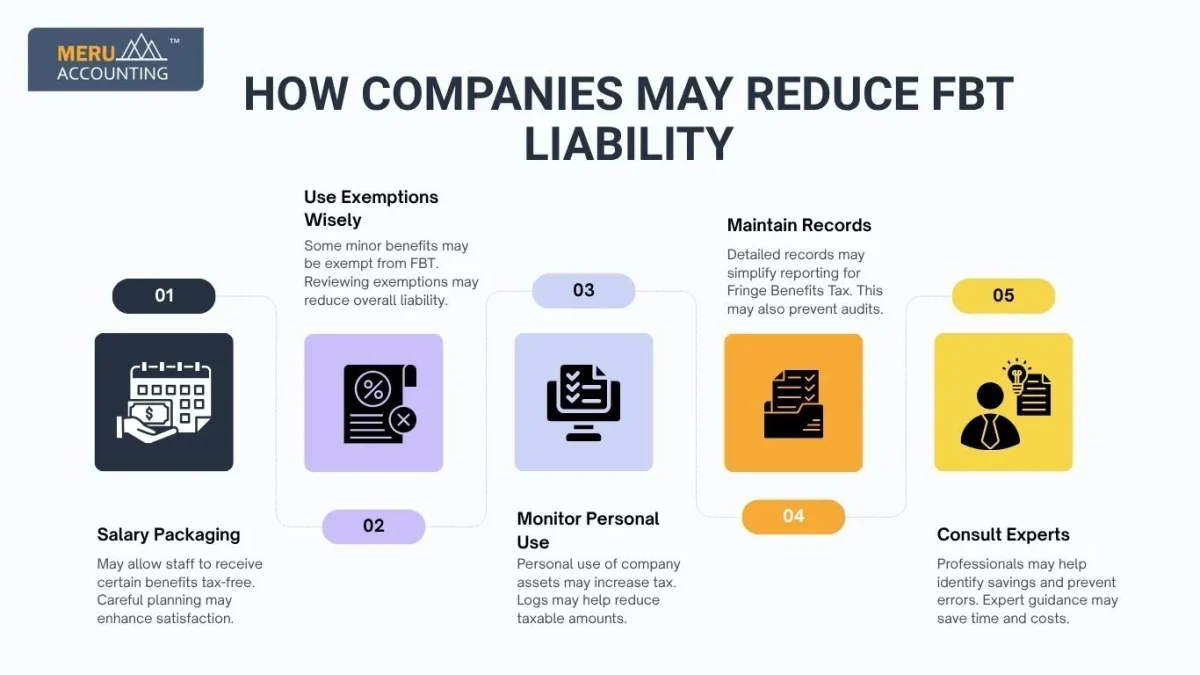
Maintain Records
Detailed records may simplify reporting for Fringe Benefits Tax. This may also prevent audits.
Consult Experts
Professionals may help identify savings and prevent errors. Expert guidance may save time and costs.
Record-Keeping Tips for Fringe Benefits Tax
Document All Benefits
Write each staff perk clearly every year. This makes FBT easy. Clear notes help avoid problems when filing FBT yearly.
Track Car Use
Keep logs of all work and personal trips. Good records may lower the car’s taxable value.
Record Expenses
List all staff payments with dates and details to ease Fringe Benefits Tax reporting.
Monitor Loans
Keep staff loan details and payments up to date. Timely notes prevent tax or accounting mistakes.
Review Each Year
Check all records before filing FBT each year. Early checks reduce errors and lower stress.
Fringe Benefits Tax Reporting Requirements
Filing Returns
FBT returns may need to be filed each year with tax authorities.
Reporting Values
The total taxable value of benefits may need to be reported.
Payment Schedules
Payment dates may change based on the size of the business.
Early Preparation
Firms may prepare Fringe Benefits Tax returns early to avoid penalties.
Record Keeping
Good records make reporting easier and cut admin work.
Key Considerations Ahead of 2026
Track Legislative Changes
New FBT rules may change your tax numbers this year. Keep updated to avoid any sudden tax problems later.
Plan Cash Flow
Save money to pay all possible FBT costs this year. Planning now will help prevent money stress for your firm.
Adjust Employee Packages
Change staff perks to cut FBT in a legal way. Tell staff clearly so they know the changes fully.
Review Existing Benefits
Look at the perks that may cause FBT in practice. Regular checks can help lower costs and save money.
Consult Professionals
Talk to experts to figure out FBT without extra stress. Their help can save your firm both time and money.
Plan Staff Benefits Tax for 2026
Good planning helps businesses pay less tax on staff perks. Start early to avoid large bills at year-end.
Check Current Staff Benefits
Look at all the perks given to staff this year. Find which perks may be taxed by the government rules. Decide if some perks can be changed or removed safely.
Use Salary Packages
Staff may get perks through a structured salary package. Some perks may not be taxed if set up correctly. Packages can help reduce the overall tax for your business.
Time and Report Benefits Right
Give perks at the right time in the financial year. Early planning can lower the peak-year tax for the company. Proper timing helps reduce tax risk and extra payments.
Common Perks That May Not Be Taxed
Knowing which perks are tax-free helps plan business spending.
Small Perks
Gifts, meals, or small rewards may not be taxed. Keep track of small perks to stay compliant with rules.
Work Tools
Items like computers, phones, and uniforms may not be taxed. Keep clear records to show items are used for work.
Car Perks
Cars used only for work may avoid paying tax. Logbooks help show staff car use is only for business. Proper records prevent extra tax for business car usage.
How Tax Can Affect Staff Packages
Tax rules may change how pay and perks are given.
Pay Changes
Employers may reduce cash if perks are taxable this year. Staff can still get value through proper tax planning.
Staff Perks and Motivation
Perks help staff stay happy and feel appreciated daily. Good planning reduces tax costs while keeping perks for staff. Businesses must balance staff happiness with overall tax expense.
Understanding Fringe Benefits Tax may help businesses plan efficiently ahead of 2026. Companies may reduce penalties by reviewing benefits and keeping accurate records. Staff packages may be adjusted legally to minimize FBT impact. Consulting experts may improve accuracy and save money in the long run.
Meru Accounting provides expert FBT planning and management services. We structure benefits to minimize taxable liability effectively. Our team performs accurate calculations and ensures proper reporting for businesses. We keep clients updated on FBT changes and compliance requirements. We have certified experts specializing in all aspects of FBT. Partner with us for efficient and cost-effective FBT solutions.
FAQs
1: What is Fringe Benefits Tax?
Fringe Benefits Tax is a tax on non-cash perks given to employees, like cars, housing, or entertainment.
2: Who must pay Fringe Benefits Tax?
Employers who provide non-cash benefits are responsible for paying FBT.
3: Dothe small businesses need to pay FBT?
Yes, even small firms may owe FBT if they give staff benefits.
4: Are company cars taxable under FBT?
Yes, cars used for personal purposes may trigger Fringe Benefits Tax.
5: Can staff housing attract FBT?
Yes, free or discounted housing provided to employees may be taxable.
6: Are loans to staff counted for FBT?
Low-interest or interest-free loans to employees may be included in FBT.
7: Are entertainment perks included in FBT?
Yes, meals, events, or other staff entertainment may be taxable.
8: Can salary packaging affect FBT?
Yes, structuring pay and perks correctly can reduce taxable Fringe Benefits.
9: Are minor benefits exempt from FBT?
Some small perks may be exempt, but strict limits and rules apply.
10: How is Fringe Benefits Tax calculated?
FBT is calculated based on the taxable value of benefits, using statutory formulas and gross-up rates where applicable.
11: How often must FBT be reported?
FBT is generally reported once a year to the tax authorities.
12: Can FBT rates change over time?
Yes, tax rules may update rates or the method of calculation.
13: Do employees directly pay FBT?
No, employers usually pay FBT on benefits provided to staff.
14: Is record-keeping important for FBT?
Yes, accurate records help ensure correct reporting and avoid fines.
15: Can professional advice help with FBT?
Yes, experts can ensure compliance, find exemptions, and reduce tax liability.
16: Can FBT affect employee satisfaction?
Indirectly, staff may notice changes in perks or benefits due to FBT costs.
17: Are all staff benefits included in FBT?
No, some benefits are exempt depending on type and value.
18: Can proper planning reduce FBT legally?
Yes, planning, exemptions, and salary packaging can lower FBT legally.
19: Can FBT increase business costs?
Yes, Fringe Benefits Tax may raise payroll and benefit costs if not managed.
20: Should businesses review FBT yearly?
Yes, an annual review helps manage liability, plan budgets, and stay compliant.
