




Proper law firm accounting is crucial for the success of any legal practice. With multiple clients, ongoing cases, and financial obligations, law firms need a clear and accurate accounting system.
Understanding how to manage daily finances efficiently helps law firms avoid errors, maintain compliance, and make informed business decisions. This guide covers everything you need to know to optimize your law firm’s accounting processes.
Effective law firm accounting not only ensures that your finances are in order but also frees up valuable time for attorneys and staff to focus on client work.
By implementing organized bookkeeping practices, law firms can track cash flow, monitor profitability, and quickly identify areas where costs can be reduced. Proper accounting becomes a tool for growth, stability, and long-term success.
What You Will Learn From This Blog
- The main principles of law firm accounting, including how to record transactions, track expenses, and manage revenue effectively.
- Practical tips for maintaining accurate daily bookkeeping to ensure smooth financial operations.
- How online accounting for law firms can simplify record-keeping, reduce errors, and save time.
- Best practices for managing client funds and trust accounts safely and in compliance with legal requirements.
- Common financial mistakes made in law firms and strategies to avoid them for better financial control.
Understanding Law Firm Accounting
Law firm accounting is the process of tracking, recording, and managing all financial transactions within a law firm. This includes billing clients, managing operational expenses, handling payroll, and ensuring timely tax filings.
A well-structured accounting system allows firms to keep a clear record of income and expenditures, which is crucial for smooth day-to-day operations.
Financial reporting is a core part of law firm accounting. By generating accurate reports, law firms can gain insights into their financial health, monitor cash flow, and make informed decisions. These reports also help identify trends, assess profitability, and plan for future growth.
A unique aspect of law firm accounting is trust accounting, which involves managing client funds separately from the firm’s own finances. Proper management of trust accounts ensures compliance with legal and ethical requirements and prevents misuse of client money.
Alongside this, tracking operational expenses such as rent, utilities, and software costs is essential for accurate financial management. Finally, recognizing revenue correctly and staying compliant with accounting standards and legal regulations are vital.
Correct revenue recognition ensures all client payments and case fees are recorded accurately, while regulatory compliance protects the firm from penalties and strengthens credibility with clients and stakeholders.
Understanding the Importance of Accurate Financial Management
Better Decision-Making
Accurate accounting allows law firms to make informed financial decisions. A clear view of cash flow and potential areas for growth supports smarter choices.
Avoiding Financial Errors
Proper record-keeping reduces the risk of miscalculations and missed payments. Every transaction is accounted for correctly and on time, ensuring reliable records.
Maintaining Client Trust
Clients trust firms that handle funds transparently and accurately. Consistent and clear financial management builds stronger long-term relationships.
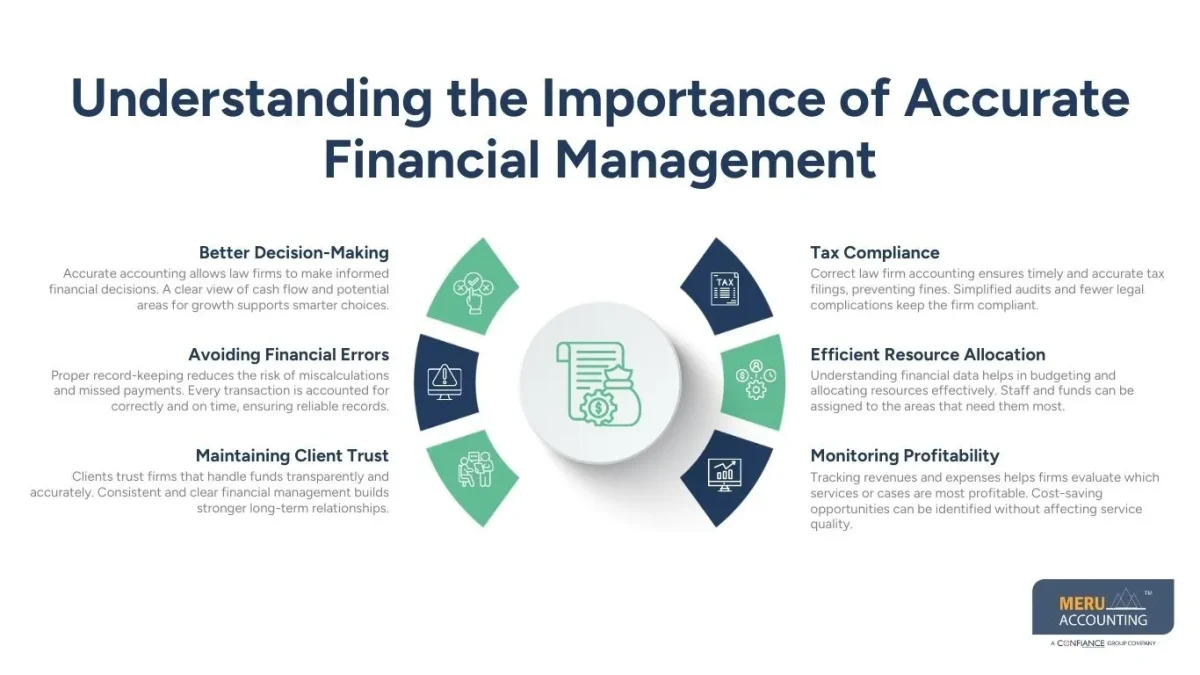
Tax Compliance
Correct law firm accounting ensures timely and accurate tax filings, preventing fines. Simplified audits and fewer legal complications keep the firm compliant.
Efficient Resource Allocation
Understanding financial data helps in budgeting and allocating resources effectively. Staff and funds can be assigned to the areas that need them most.
Monitoring Profitability
Tracking revenues and expenses helps firms evaluate which services or cases are most profitable. Cost-saving opportunities can be identified without affecting service quality.
Essential Components of Law Firm Accounting
Accounts Payable
This includes bills to vendors, office suppliers, and service providers. Timely payment of these accounts through effective law firm accounting helps maintain strong vendor relationships and avoid late fees.
Accounts Receivable
Tracking client invoices and outstanding payments is critical for cash flow management. Regular follow-ups ensure that the firm receives payments promptly and maintains liquidity.
Payroll Management
Salaries, benefits, and contractor payments must be accurately recorded. Accurate payroll ensures employees are paid on time and helps prevent compliance issues.
Trust Account Management
Proper segregation of client funds is essential for legal compliance. Maintaining detailed records of trust accounts protects both clients and the firm from financial discrepancies.
General Ledger
A comprehensive ledger records all transactions, ensuring accuracy in financial reporting. It provides a complete overview of the firm’s financial activity for auditing and analysis.
Financial Statements
Regularly generating income statements, balance sheets, and cash flow reports ensures clarity in operations. These statements help identify trends, evaluate performance, and plan for future growth.
Best Practices for Daily Financial Operations in Law Firms
Maintain Daily Records
Maintain daily records as part of effective law firm accounting to avoid errors and missed entries. Consistent daily updates provide an accurate view of the firm’s financial position.
Reconcile Accounts Regularly
Compare bank statements with your records to identify discrepancies early. Regular reconciliation helps detect mistakes and prevents cash flow issues.
Monitor Expenses Closely
Keep track of all operational and client-related expenses. Detailed expense monitoring ensures the firm stays within budget and maximizes profits.
Automate Where Possible
Use online accounting for law firms solutions to streamline repetitive accounting tasks. Automation saves time, reduces errors, and allows staff to focus on higher-value work.
Review Client Invoices
Ensure all billable hours and expenses are correctly invoiced to clients. Accurate invoicing improves cash flow and strengthens client trust.
Secure Financial Data
Protect accounting records with strong security measures to prevent unauthorized access. Maintaining secure data safeguards sensitive client and firm information from breaches.
Benefits of Using Online Accounting for Law Firms
Accessibility
Online accounting for law firms allows accountants to access financial data anytime, anywhere. Remote access ensures the firm can manage finances without delays, even outside the office.
Real-Time Updates
With online accounting for law firms, transactions are updated in real-time, ensuring accuracy and efficiency. Immediate updates help identify issues quickly and maintain accurate cash flow records.
Simplified Reporting
Generate reports quickly without manual calculations or delays. Reports provide insights into financial health and support informed decision-making.
Cost Savings
Reduces administrative overhead by minimizing manual bookkeeping tasks. Lower administrative costs free up resources for other important business activities.
Improved Accuracy
Automation reduces human error, especially in trust account management. Reliable data ensures compliance and protects client funds from mismanagement.
Enhanced Collaboration
With online accounting for law firms, teams can collaborate easily using cloud-based access to financial records. Multiple staff can work on the same data simultaneously without errors or confusion.
Advanced Tips to Optimize Law Firm Accounting
Use Accounting Software
Invest in dedicated law firm accounting software to streamline operations. Specialized software handles trust accounts, billing, and reporting efficiently.
Set Up Alerts
Automated alerts help track unpaid invoices and upcoming expenses. Timely reminders prevent missed payments and late fee charges.
Regular Audits
Conducting internal audits ensures compliance and identifies discrepancies. Audits help maintain accurate records and avoid financial penalties.
Track Time Efficiently
Integrate billing software with law firm accounting systems to record billable hours accurately. Precise time tracking ensures all client work is properly invoiced.
Implement Standard Procedures
Standard operating procedures reduce errors and improve accountability. Consistent practices make training staff and maintaining records easier.
Forecast Cash Flow
Predicting income and expenses helps firms plan and avoid financial shortages. Cash flow forecasting supports better budgeting and resource allocation.
Common Challenges in Law Firm Accounting and How to Overcome Them
Managing Trust Accounts
Keep trust funds separate and reconcile them regularly. Accurate trust management protects client funds and ensures legal compliance.
Late Client Payments
Implement clear payment policies and timely invoicing. Prompt collection maintains steady cash flow and reduces financial stress.
Complex Billing Structures
Use software that can handle multiple rates and client-specific billing. Automated billing reduces errors and saves time for staff.
Compliance Requirements
Stay updated with regulations and seek professional advice if needed. Following rules consistently prevents fines and protects the firm’s reputation.
Data Security
Use encrypted systems and limit access to sensitive financial data. Secure systems safeguard client information and prevent unauthorized access.
Handling Multiple Cases
Assign unique codes for each case to track expenses and income accurately. Proper case tracking ensures each project’s profitability is clear and measurable.
Why Law Firms Choose Meru Accounting for Expert Financial Management
Expert Law Firm Accounting
Meru Accounting specializes in managing law firm accounting with precision and care. Our expertise ensures accurate tracking of income, expenses, and client funds.
Customized Solutions
We tailor accounting solutions based on the size and requirements of your firm. Personalized approaches help firms manage finances efficiently and meet unique needs.
Online Accounting Services
Our team provides online accounting for law firms, allowing remote access to your financial records. Real-time updates make it easy to monitor cash flow and project finances from anywhere.
Trust Account Management
We ensure all client funds are tracked and handled according to legal requirements. Proper trust management safeguards client money and maintains regulatory compliance.
Reporting and Insights
Meru Accounting prepares accurate financial statements and actionable insights. Detailed reports help firms make informed decisions and plan for growth.
Dedicated Support
Our team is available to answer queries, reconcile accounts, and ensure smooth operations. Ongoing support allows law firms to focus on clients while finances remain organized.
Key Takeaways
- Law firm accounting is essential for managing finances, maintaining compliance, and ensuring profitability.
- Daily bookkeeping and accurate record-keeping prevent errors and improve decision-making.
- Using online accounting for law firms simplifies processes, enhances accuracy, and provides remote access.
- Meru Accounting offers expert services, including trust management, reporting, and customized solutions for law firms.
- Regular monitoring, automation, and proper financial controls are key to smooth law firm operations.
FAQs
Law firm accounting is the process of tracking income, expenses, and client funds. It ensures financial accuracy and legal compliance for smooth operations.
Daily bookkeeping helps law firms track payments, record expenses, and avoid mistakes in client billing.
Online accounting for law firms allows real-time access to records, simplifies reporting, and reduces errors in financial management.
Law firms manage trust accounts by keeping client funds separate, recording transactions carefully, and following legal regulations.
Financial records should be updated daily or weekly to ensure accuracy and timely reporting.


