




Law Firm Accounting is essential for the smooth operation of any legal practice. Maintaining accurate financial records ensures compliance with laws and protects client funds. One of the most sensitive areas is trust accounts, where mismanagement can lead to legal penalties and loss of client confidence.
Understanding common accounting errors can help law firms safeguard their trust accounts and maintain ethical financial practices. Accurate management of trust accounts not only prevents legal issues but also strengthens client confidence and supports the firm’s financial stability.
What You Will Learn From This Blog
- Common mistakes in law firm accounting that affect trust accounts.
- How trust accounting for law firms works.
- How CPAs can help prevent violations.
- Practical steps to maintain accurate financial records.
- Tools and techniques to manage trust accounts efficiently.
Understanding Trust Accounting For Law Firms
Trust accounting for law firms involves managing client funds separately from the firm’s operating accounts, which is a fundamental part of law firm accounting. This separation ensures that client money is never used for firm expenses and helps maintain clear and accurate financial records.
Keeping client funds separate is essential for compliance with state bar regulations and prevents accidental misuse. Accurate trust accounting also strengthens client confidence by showing that their funds are handled responsibly and transparently.
State bar associations monitor trust accounts closely, and any discrepancies can lead to penalties, fines, or even license suspension. Many law firms face challenges in reconciling trust accounts due to the high volume of transactions and the specialized knowledge required to manage them correctly.
Common Law Firm Accounting Errors That CPAs Warn About
Commingling Client and Firm Funds
Mixing client money with the firm’s operating funds is one of the most common and serious errors in law firm accounting. CPAs warn that this can lead to violations of trust account regulations.
Failure to Reconcile Accounts Regularly
Not reconciling accounts on a consistent schedule allows small errors to accumulate, resulting in discrepancies that may trigger audits.
Incorrect Recording of Transactions
Misclassifying deposits or disbursements is a common mistake in law firm accounting that can distort financial statements and create confusion when managing client funds.
Neglecting to Track Interest
Some trust accounts earn interest, which must be properly allocated to clients. Overlooking this can lead to compliance issues.
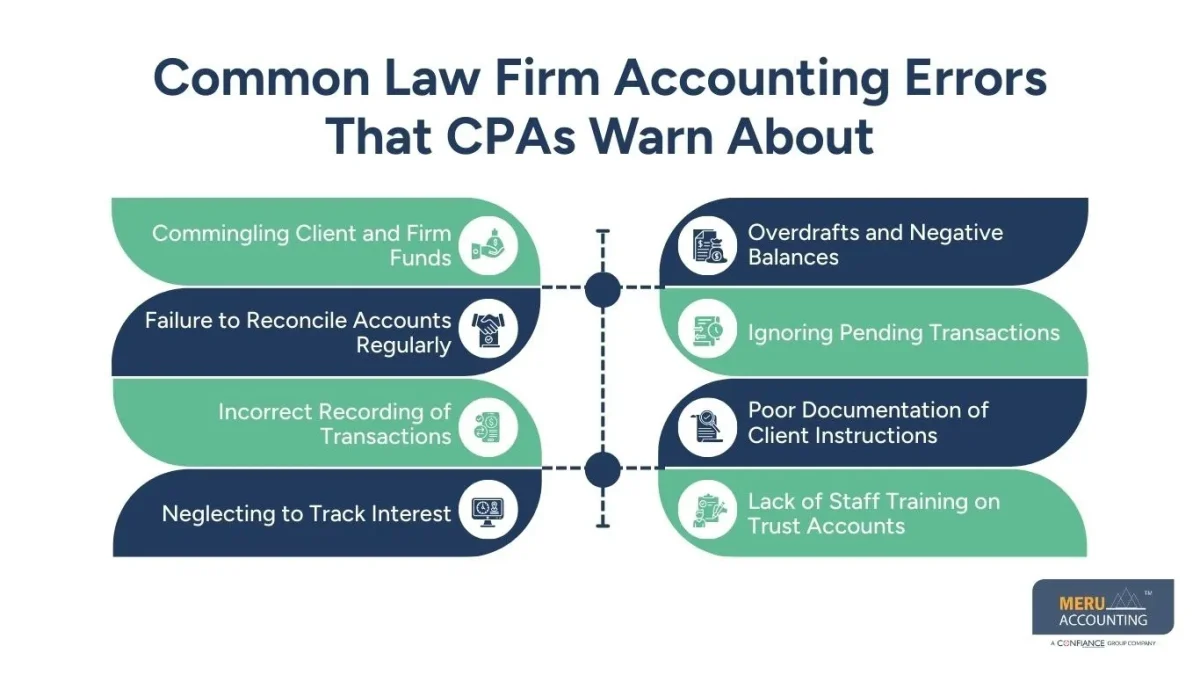
Overdrafts and Negative Balances
Allowing trust accounts to fall below zero can occur due to poor monitoring or timing issues, risking client disputes and penalties.
Ignoring Pending Transactions
Failing to account for outstanding checks or transfers may lead to inaccurate balances, a common challenge in law firm accounting, affecting your ability to manage client funds responsibly.
Poor Documentation of Client Instructions
Not keeping detailed records of client payment instructions can result in accidental misallocation of funds and disputes.
Lack of Staff Training on Trust Accounts
Staff unfamiliar with trust accounting for law firms rules may make errors when recording transactions or processing disbursements, putting the firm at risk.
Why Accurate Law Firm Accounting Is Critical For Client Trust
Maintains Professional Integrity
Proper law firm accounting demonstrates responsibility and professionalism in handling client funds.
Prevents Legal Penalties
Errors in trust accounting can lead to fines, audits, and sanctions from regulatory authorities.
Avoids Misallocation of Funds
Mismanaging funds can cause client disputes, delayed payments, or incorrect disbursements.
Supports Financial Planning
Accurate law firm accounting records help firms plan expenses, manage cash flow, and budget for future operations.
Protects Firm Reputation
Clients trust law firms to handle their money carefully. Errors in accounting can harm your firm’s reputation.
Understanding The Legal Requirements Of Trust Accounts
State-Specific Rules
Each state has its own regulations for law firm trust accounts, including recordkeeping, reporting, and permissible transactions.
Record Retention
Law firms must maintain detailed records of all deposits, withdrawals, and transfers for a set number of years as part of trust accounting for law firms compliance.
Deposit Requirements
Client funds must be deposited immediately upon receipt and cannot be used for operational expenses.
Accurate Disbursements
Only authorized disbursements are allowed from trust accounts, and these must match client instructions precisely.
Regular Audits
Law firms are subject to internal and external audits to ensure trust account compliance.
Timely Reporting to Clients
Law firms must provide clients with periodic statements showing deposits, disbursements, and balances to maintain transparency and trust.
How Mismanaged Trust Accounting Can Lead To Client Disputes
Delayed Payments
Errors in law firm accounting can delay client payments, causing dissatisfaction and potentially harming client relationships.
Incorrect Fund Allocation
Misallocation of funds may result in clients paying more or less than they should, leading to disputes.
Unauthorized Withdrawals
Using trust funds for operational purposes is illegal and can trigger severe penalties.
Overdrafts
Failing to monitor trust account balances may result in overdrafts, putting the firm at risk.
Loss of Client Confidence
Any accounting errors undermine client trust and may cause clients to leave or pursue legal action.
The Role Of CPAs In Preventing Trust Account Violations
Expert Oversight
CPAs help review and manage trust accounts to ensure accuracy and compliance with laws. Their expertise ensures all transactions follow legal and ethical standards, reducing the risk of violations.
Identifying Errors Early
Routine checks in law firm accounting help lawyers catch small errors early, preventing stressful client disputes and late-night scrambles before audits. Early identification helps prevent costly mistakes and protects client funds from mismanagement.
Guidance On Compliance
CPAs guide law firms on state-specific rules and reporting requirements. They also provide advice on best practices for recordkeeping and fund handling to maintain full compliance.
Reconciliation Assistance
They assist in reconciling accounts regularly, a critical part of trust accounting for law firms, ensuring client funds are accounted for correctly. Accurate reconciliation prevents overdrafts, misallocations, and potential audit issues.
Fraud Prevention
CPAs help implement controls to prevent unauthorized transactions and potential fraud. They design internal checks and procedures that strengthen the firm’s financial security.
Training And Staff Education
CPAs often train law firm staff on proper trust account procedures. Educated staff are less likely to make mistakes, reducing the risk of accidental violations.
Audit Preparation Support
CPAs prepare law firms for both internal and external audits. They ensure all records, statements, and reconciliations are accurate and ready for review, minimizing compliance risks.
Frequent Bookkeeping Mistakes That Compromise Trust Accounting
Mixing Client Funds With Firm Funds
Combining client and operational funds is a common and dangerous mistake.
Skipping Regular Reconciliation
Failing to reconcile accounts often leads to unnoticed errors.
Incorrect Recording Of Transactions
Mislabeling deposits or disbursements creates discrepancies in trust accounting for law firms.
Neglecting Interest Tracking
Some trust accounts earn interest, which must be correctly recorded and reported.
Overlooking Pending Transactions
Ignoring pending checks or transfers can cause inaccurate balances and overdrafts.
How To Conduct A Proper Trust Account Reconciliation
Collect All Statements
Gather bank statements, client ledgers, and transaction records as part of routine law firm accounting practices to maintain accurate and compliant books.
Compare Deposits
Verify that all client deposits match the amounts recorded in the law firm’s books. This step prevents errors and maintains the integrity of trust accounting for law firms.
Check Disbursements
Ensure all withdrawals and payments align with client instructions and records. Proper tracking avoids unauthorized or accidental use of client funds.
Resolve Discrepancies
Investigate and correct errors immediately to maintain accurate trust accounting for law firms. Prompt resolution minimizes legal and financial risks.
Document Reconciliation
Maintain clear records of reconciliations for audits and regulatory compliance. Well-documented reconciliations provide proof of accurate fund management.
Review Outstanding Transactions
Check for any pending checks or transfers that have not cleared the bank. Accounting for these ensures the reconciliation reflects the true balance of client funds.
Verify Interest And Fees
Ensure any interest earned on trust accounts is correctly allocated and any bank fees are recorded. Accurate tracking of these elements prevents discrepancies in client balances.
Top Accounting Tools For Managing Law Firm Trust Accounts
Specialized Law Firm Software
Software like Clio, TimeSolv, or CosmoLex helps manage client funds and track transactions.
Cloud Accounting Platforms
Cloud-based platforms allow secure access, real-time updates, and multi-user collaboration.
Automated Reconciliation Tools
Automation reduces errors by matching deposits and withdrawals with client records.
Reporting Features
Tools that generate compliance reports make audits easier and ensure transparency.
Integration With Billing Systems
Integration ensures that trust account balances reflect client invoices accurately.
How To Avoid Overdrafts And Negative Balances In Trust Accounts
Regular Monitoring
Check trust account balances frequently to avoid unintentional overdrafts. Frequent monitoring helps identify potential issues before they become serious.
Set Minimum Balance Alerts
Alerts notify you when funds fall below a certain level to prevent negative balances. These alerts provide a proactive way to manage client funds safely.
Plan Disbursements Carefully
Schedule disbursements only after confirming sufficient funds are available. Proper planning prevents accidental overspending and protects client funds.
Maintain a Buffer
Keep extra funds in trust accounts to accommodate unexpected transactions. A buffer ensures that small fluctuations do not lead to overdrafts.
Review Pending Transactions
Always account for outstanding checks or payments to ensure accurate balances. This step ensures that reconciliations reflect the true available funds.
Limit Access to Authorized Personnel
Restrict who can initiate withdrawals or transfers from trust accounts. Limiting access reduces the risk of accidental or unauthorized overdrafts.
Regularly Update Accounting Software
Ensure your accounting software is up to date and accurately reflects all transactions. Modernized systems can help detect low balances before they cause problems.
Why Choose Meru Accounting?
Managing law firm accounting, especially trust accounts, can be complex and time-consuming. Mistakes can lead to penalties, client disputes, or even legal issues. Meru Accounting offers expert services to ensure your firm’s finances are accurate, compliant, and stress-free.
Expert Law Firm Accounting Services
Meru Accounting specializes in law firm accounting, ensuring your trust accounts are compliant and accurate. Our team stays updated on state rules and best practices to protect client funds.
Trust Accounting For Law Firms
We provide detailed trust account management, including reconciliations, reporting, and audits. This ensures every client transaction is correctly tracked and documented.
Error Detection And Correction
Our CPAs identify accounting errors early and provide practical solutions. Fixing mistakes promptly prevents disputes and maintains your firm’s reputation.
Custom Reporting
We generate reports tailored to law firms, simplifying compliance with state regulations. These reports make audits and client reporting easier and stress-free.
Peace Of Mind
With Meru Accounting handling your trust accounts, you can focus on serving clients while avoiding financial risks. You can trust that your funds are managed responsibly.
Audit Preparation Assistance
Meru Accounting prepares your firm for internal and external audits. We ensure all records, reconciliations, and reports are ready, giving you confidence and compliance assurance.
Key Takeaways
- Law firm accounting requires careful attention to detail, especially with trust accounts.
- Trust accounting for law firms protects client funds and maintains compliance with regulations.
- CPAs play a critical role in detecting errors and preventing violations.
- Regular reconciliation, accurate recordkeeping, and proper tools help avoid common mistakes.
- Meru Accounting provides professional services to ensure your law firm’s financial integrity and client trust.
FAQs
Law firm accounting is the process of managing a law firm’s finances, including client funds, expenses, and revenue, to ensure accuracy and compliance.
Trust accounting ensures client funds are kept separate from the firm’s funds, preventing misuse and legal violations.
Trust accounts should be reconciled at least monthly to detect and fix errors early.
Yes, CPAs provide oversight, error detection, reconciliation, and guidance on compliance with state rules.
Errors can cause client disputes, penalties, fines, and damage to the law firm’s reputation.


