




Running a law firm is challenging, not just because of legal complexities but also due to financial management. Law firm accounting services are essential for legal professionals who want to ensure accurate bookkeeping, proper trust account handling, and timely payments.
By using these services, law firms can reduce errors, improve cash flow, and focus more on client services rather than financial headaches. With the right law firm accounting services, legal professionals can also gain valuable insights into their firm’s financial health.
From tracking expenses to generating detailed reports, these services make it easier to plan budgets, manage client funds responsibly, and make informed business decisions that support growth and stability.
What You Will Learn From This Blog
- Understand how law firm accounting services help legal professionals manage finances efficiently.
- Learn proper handling and management of trust accounts to stay compliant.
- Identify common payment errors and discover ways to prevent them.
- Explore tools and software that improve accounting accuracy and reduce mistakes.
- Get guidance on choosing the best accounting software for small law firms.
- Gain practical tips to confidently manage your law firm’s finances.
Understanding Law Firm Accounting Services
Law firm accounting services are specialized financial management services created specifically for law firms. They cover a range of essential tasks, including bookkeeping, trust account management, billing, and compliance with legal regulations. These services ensure that all financial transactions are recorded accurately and managed efficiently.
Legal professionals need these services because law firms handle client funds differently from other businesses. Mistakes in managing trust accounts or payments can lead to financial penalties, regulatory issues, and loss of client trust.
By using expert accounting support, firms can minimize errors and maintain smooth financial operations. Beyond compliance, law firm accounting services play a key role in financial management and decision-making. They help track expenses, generate accurate reports, and manage client payments.
With clear and reliable financial data, law firm owners can make informed decisions about resource allocation, staffing, and strategic investments, ensuring the long-term stability of their practice.
Core Components of Law Firm Accounting Services
Bookkeeping
Proper bookkeeping is the foundation of law firm accounting services. It ensures every transaction is recorded accurately, from client payments to operational expenses.
Trust Account Management
Managing client funds requires strict compliance. Law firm accounting services monitor trust accounts to prevent misallocation or errors.
Billing and Invoicing
Automated billing ensures clients are invoiced correctly, reducing disputes and improving payment timelines.
Payroll Management
These services also handle payroll for lawyers and staff, including tax deductions and benefit calculations.
Financial Reporting
Regular financial reports provide insights into the firm’s profitability, helping legal professionals plan for growth.
Tax Compliance
Proper accounting ensures timely filing of taxes and adherence to all legal requirements, reducing the risk of penalties.
Common Trust Account Mistakes and How to Avoid Them
Mixing Personal and Client Funds
A common mistake is using trust funds for personal or business expenses. Expert law firm accounting services prevent this by maintaining strict separation.
Late Deposits
Delays in depositing client funds can create compliance issues. Accounting services schedule timely deposits to avoid penalties.
Inaccurate Record-Keeping
Incomplete or wrong records can lead to trust account discrepancies. Professional accounting services ensure precise documentation.
Misallocated Payments
Allocating payments to the wrong client account is common. Accounting services track every transaction carefully to prevent mistakes.
Ignoring Regulatory Updates
Trust account regulations change frequently. Experts stay updated to ensure the firm remains compliant.
Preventing Payment Errors and Optimizing Cash Flow
Timely Billing
Sending invoices promptly improves payment cycles and reduces overdue balances.
Monitoring Receivables
Tracking unpaid invoices helps law firms manage cash flow and take timely action on late payments.
Automating Payments
Using accounting tools can automate recurring payments, minimizing human errors.
Reviewing Payment Records
Regular reviews detect inconsistencies before they become major issues.
Financial Forecasting
Predicting future expenses and income allows law firms to plan better and avoid financial stress.
Comprehensive Solutions Offered by Law Firm Accounting Services
End-to-End Bookkeeping
From recording transactions to reconciling accounts, accounting services cover all bookkeeping needs.
Trust and Client Account Management
Experts manage client funds securely, preventing legal and financial issues.
Tax Planning and Filing
Accounting services assist in tax planning, minimizing liabilities, and ensuring timely filing.
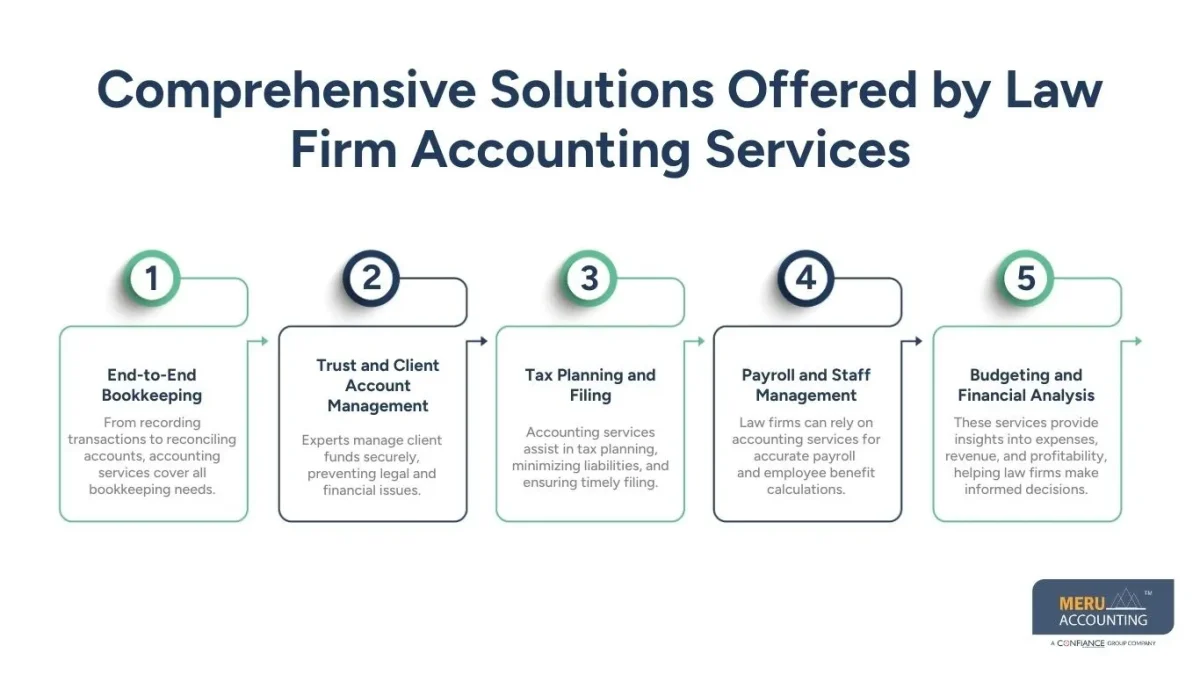
Payroll and Staff Management
Law firms can rely on accounting services for accurate payroll and employee benefit calculations.
Budgeting and Financial Analysis
These services provide insights into expenses, revenue, and profitability, helping law firms make informed decisions.
Choosing the Best Accounting Software for Small Law Firms
Importance of Software
Using the best accounting software for small law firms ensures accurate financial records and efficient operations.
Key Features to Look For
Look for software that handles trust accounts, billing, reporting, and payroll efficiently.
Cloud-Based Options
Cloud solutions offer real-time updates, secure data storage, and accessibility from anywhere.
Integration with Other Tools
The right software should integrate with practice management and banking tools for smooth operations.
User-Friendly Interface
Software should be easy to use for lawyers and administrative staff with minimal accounting knowledge.
Popular Options
Some of the best accounting software for small law firms include Xero, QuickBooks, and specialized legal accounting tools.
Ensuring Financial Accuracy with Expert Accounting Services
Regular Account Reconciliation
Law firm accounting services reconcile accounts regularly to detect errors early.
Audit Support
These services prepare all records in case of internal or external audits, reducing stress and penalties.
Risk Management
Accounting professionals identify financial risks and implement measures to minimize them.
Detailed Reporting
Comprehensive reports provide clarity on revenue, expenses, and client funds.
Compliance Assurance
Experts ensure all financial activities comply with legal and regulatory standards.
The Role of Outsourced Accounting in Modern Law Firms
Outsourced accounting allows law firms to focus on legal work while experts handle financial management. It reduces errors and ensures compliance with trust account rules.
Cost Efficiency
Hiring a full in-house accounting team can be expensive. Outsourcing provides expert services at a fraction of the cost.
Access to Expertise
Professional outsourced accountants are trained in law firm accounting services, giving firms specialized knowledge in trust management, billing, and tax compliance.
Scalability for Growing Firms
Outsourced accounting services can scale with your firm’s growth, providing more support during busy periods without long-term hiring commitments.
Improved Financial Accuracy
With experienced accountants managing your books, payment errors and reporting mistakes are minimized, giving legal professionals confidence in their financial data.
Focus on Core Legal Work
By outsourcing accounting, lawyers and staff can dedicate more time to client service and case management rather than financial management tasks.
Essential Tips for Legal Professionals Managing Accounting
Keep Trust Accounts Separate
Always separate client funds from operational accounts to prevent mistakes and regulatory violations.
Maintain Detailed Records
Record every transaction, including small payments, for transparency and audit readiness.
Monitor Cash Flow
Regularly review inflows and outflows to prevent liquidity issues.
Use Reliable Accounting Software
Investing in the best accounting software for small law firms simplifies bookkeeping and reduces errors.
Seek Professional Help
Hiring a law firm accounting services ensures accurate financial management and compliance.
How Meru Accounting Supports Legal Professionals
At Meru Accounting, we specialize in law firm accounting services designed to simplify financial management for legal professionals.
Customized Accounting Solutions
We understand that each law firm is unique. Our team tailors accounting services to meet your specific requirements.
Trust Account Expertise
Meru Accounting ensures accurate handling of client funds, minimizing risk and ensuring compliance.
Efficient Billing and Payment Management
We help law firms streamline invoicing, track payments, and maintain smooth cash flow.
Tax Compliance and Advisory
Our experts assist with tax planning, filings, and strategy, keeping your firm compliant and financially healthy.
Support with Software Implementation
We guide law firms in choosing and implementing the best accounting software for small law firms, enhancing efficiency and accuracy.
Reliable Reporting and Insights
Our detailed financial reports provide the clarity you need to make informed business decisions.
Key Takeaways
- Law firm accounting services are crucial for legal professionals to manage trust accounts, payments, and compliance.
- Common trust account and payment errors can be avoided with expert accounting services.
- Choosing the best accounting software for small law firms improves efficiency and reduces mistakes.
- Meru Accounting provides tailored solutions to ensure accurate financial management and peace of mind for law firms.
FAQs
Law firm accounting and bookkeeping services help legal professionals manage finances, including trust accounts, billing, payroll, and taxes. They are important because they prevent errors, ensure compliance, and help law firms run smoothly.
Experts track all client funds, maintain separate accounts, and ensure accurate record-keeping. This reduces the risk of misallocated funds or legal violations.
The best accounting software for small law firms is one that manages billing, trust accounts, payroll, and financial reports. Popular choices include Xero, QuickBooks, and legal-specific tools.
These services automate invoicing, track outstanding payments, and reconcile accounts regularly, helping law firms maintain steady cash flow and avoid payment delays.
Yes, outsourcing ensures professionals handle bookkeeping, trust accounts, taxes, and payroll accurately. This allows lawyers to focus on client work while reducing financial mistakes.


